Even without Sanusi around, the momentum created by his arrest cannot be stopped (pic courtesy of NST)
Sanusi is an intelligent person. What he lacks is finesse and decorum. There is nothing classy about him. Like other politicians, he forgets that he has been chosen to represent the voters to serve in HRH’s government. Not his government, not his party’s government. It is the Sultan’s government. He can have fights with others, but he should never drag the Malay Rulers into his quarrels.
But as crude and rude as he may be, he hits the right notes with the people of Kedah, and those in the Malay heartlands. He is right about asking for a fair compensation for not being able to develop the Muda basin to make Kedah more palatable to investors in order to create more job opportunities. He is also right in saying that legally Pulau Pinang still belongs to the Sultanate of Kedah.
The Malay voters see him as a fighter, one man fighting against the whole Federal government. The police may have the right to arrest him, but sending 20 men at 3am shows lack of tact on the part of the police. The timing was totally wrong no matter the excuse. They knew where to find him. All they had to do was wait and escort him to the courthouse.
After all, he had been charged on two counts which are bailable offenses. The Anwar administration, above all, should have known this. They have mustered lots of experience in this matter, being subjected to raids and arrests prior to 9 May 2018.
Now, Sanusi has emerged from the courthouse a martyr. Even if he is absent, there is no stopping the momentum.
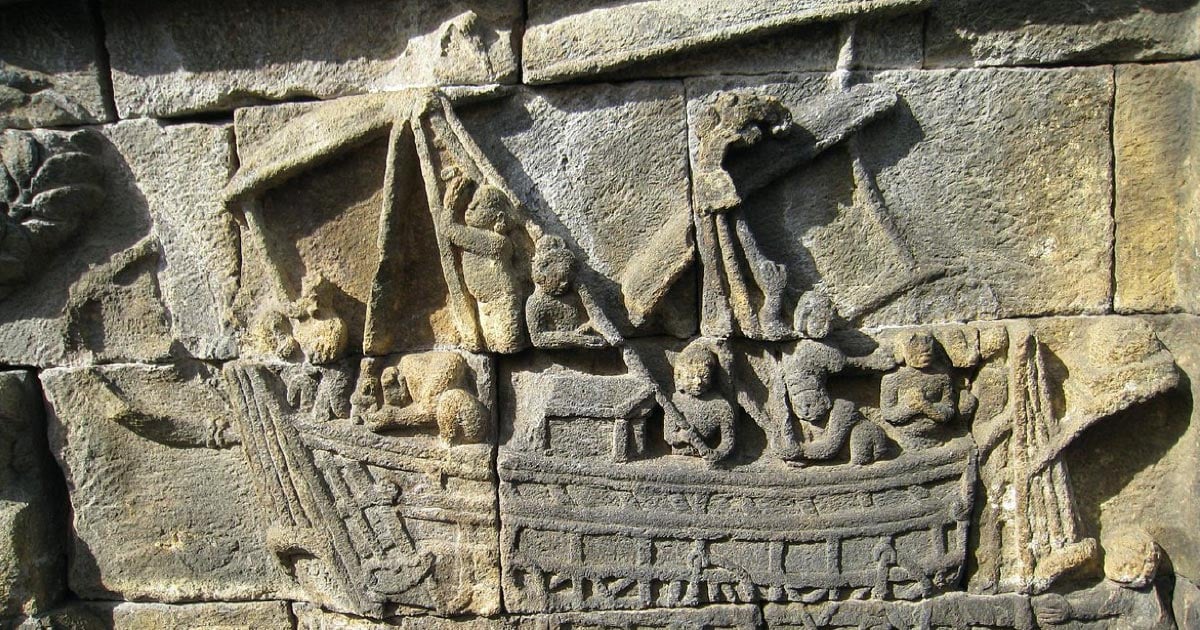
Srivijaya was a maritime trade centre. Source – Anandajoti
In 1912, British engineer, adventurer, travel-writer and later, television show host Carveth Wells arrived in Pulau Pinang to do a survey for the construction of railroads and roads in the Malay Peninsula. After arriving in Prai, he saw several salt-water crocodiles on the shore. In his book Six Years in the Malay Jungle he mentioned how the locals believe that when a crocodile leaves the sea and enters the mangrove swamp, it turns into a wild dog.
That may seem absurd to us all now but that and other theories of spontaneous generation, such as dirty rags kept in closets will turn into rats, were popularly accepted for two millenia. It was people like Pasteur and others who provided new scientific evidence to disprove of those absurd theories.
CHALLENGING ESTABLISHED BELIEFS
Just as how those in my generation were told that Malaya was colonised by Britain and that Melaka was established in 1400, through new evidences obtained by the release of classified documents, we know now that we were never a colony of Britain and that Melaka was founded circa 1262.
New evidences can shake the core of our historical beliefs. There were so many things that we did not know about our “independence,” and we believed everything the school text books had told us. In the end we knew that the Federation of Malaya Agreement, 1957 was all about the transfer of executive powers back to the Malay Rulers, and then to be delegated to a cabinet of ministers chosen from the various elected representatives, who then replace the British officers to serve the Rulers and their subjects. Merdeka was just a political cry to rally the voters of Malaya to support the Alliance rather than the Independence of Malaya Party who first used ‘Merdeka‘ as its election slogan.
What the above had done was to change the whole perception of the formation of this nation. Then it answers the rude claim by a certain politician in 2011 that the policemen who died in the Bukit Kepong tragedy in were ‘British Dogs.’
SHAKING THE CORE
The late Tony Horwitz who authored the non-fiction book ‘Confederates in the Attic,’ a book addressing the American Civil War, was very thorough in his research and was considered to be one of the authorities of the subject. He visited virtually all the major battle sites.
One day he met anthropologist Paul Hawke at a major battle site in Shiloh, Tennessee and the latter shook his belief. Hawke explained that previous interpretations of the battle of Shiloh did not include one major artefact – the ground itself. The interpretations were made based on first hand accounts: accounts of Civil War veterans who gathered at the site in the past.
And as the New York Public Library narrated, the loudest, most influential, and most repetitive veterans—and the ones with the most to gain—spoke with writers and journalists and their accounts were taken as the true accounts of the event, and passed on to future generations in newspaper accounts and diaries.
But Hawke found that first hand accounts and reports did not match the written histories. After the battle of Shiloh, General Ulysses Grant ordered that the dead be buried on the line—meaning where they fell. As an anthropologist, Hawke went and looked for the burial ground and found that they did not align with generally accepted history.
The same treatment must be applied to the findings at Sungai Batu. If previous samples dated in 2009 were found to have originated from 788 BCE, yet later with more advanced and sophisticated technology found that they existed only a millenium later, the latter has to be accepted. Historical interpretations are not cast in stone. The latest findings would have to be peer-reviewed by others who are authorities in the matter before they can be accepted. And that process is already academic. It has been accepted that the Sungai Batu iron-smelting industry had flourished only after the Common Era.
CHARTING THE PAST FOR OUR FUTURE THROUGH TECHNOLOGICAL ADVANCEMENTS
With history evolving, through emerging technologies, new methods, narratives, and influences, what sense do we make of the attempts to tell the truth to others as it is seen through thoughts and biases? This is the question that we must ask ourselves and answer, as more and more evidences will be available to us that will change the narrative that we believe in today.
And it is only up to us as lay persons and academicians, to accept the latest findings with an open mind to bring to the present what has made us what we are today.
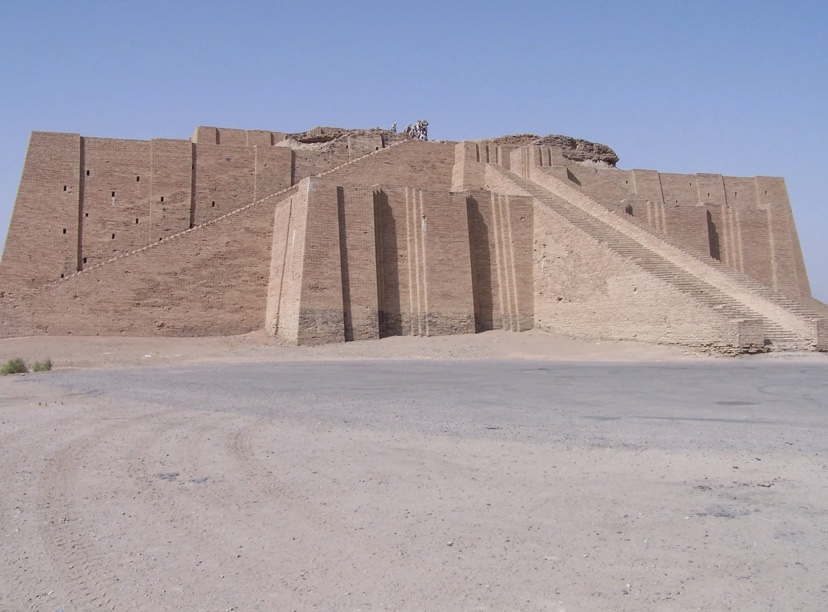
Did King Shalmaneser I of Assyria order the construction of a Ziggurat in Qalah (Kedah) in 1,300BCE? Or was it some place else in Mesopotamia with the same name?
Imagine that you are in Melaka just after it was conquered by Alfonso de Albuquerque. The year is 1512 CE. They were building the Fortaleza Velha, otherwise known as A Famosa. And then next to the fortress is a building similar to the Petronas Twin Towers.
Would that have made any sense?
When researchers from the Universiti Sains Malaysia headed by Professor Dr Mokhtar Saidin discovered a vast ancient iron-smelting complex in 2009 in Sungai Batu, Kedah, and carbon-dated samples showed that they had originated from the year 788 BCE, I was elated. It was proof that there was an advanced metal-age Malay civilisation that had existed 2,800 years ago.
But something was not right. When cross-referenced, there were things that did not jive.
Ancient Kedah was not located along the Maritime Silk Road that connected the Indian continent with China during that time. Trade circa 5th century BCE still passed overland through the Isthmus of Kra instead of through the Strait of Malacca. The latter only emerged as a trade route first century CE. It only flourished in the 6th and 7th centuries CE. And this is the view that even the UNESCO holds.
Therefore, iron-smelting industries could not have existed in Ancient Kedah before the first century CE. We were still very much a bunch of Neolithic people in 788 BCE. All the other archaeological sites in the peninsula of that era, when cross-referenced, confirmed that fact.
Yes, we are proud that there was a very important ancient entrepôt located in Kedah’s Bujang Valley, but that came almost a full millennium later.
In an interview with the New Straits Times (Ancient Seaport of Sg Batu, NST, May 23, 2016), Dr Mokhtar said that the brick riverside jetty, ritual monuments (candi) were built in the 2nd century CE, while the iron smelting sites were used from the 1st century CE.
Not only that, he even went on to mention an unsupported point that the name Qalah – the ancient Arabic name for Kedah – is inscribed in ancient Mesopotamian scripts from 1,300 BCE. The Assyrian King Shalmaneser I founded Qalah (also spelt Kalah or Kalhu, and Calah in the Bible).
An inscription of the script in the Akkadian language can be found in the British Museum which reads as follows:
“Shalmaneser, great king, strong king, king of the universe, king of Assyria, son of Ashurnasirpal (II), great king, strong king, king of the universe, king of Assyria, son of Tukultï-Ninurta (II), who was also king of the universe and king of Assyria: construction of the Ziqqurat of Calah.” (Brick of Shalmaneser III, lines 1 to 7).
If indeed Shalmaneser I ordered the construction of a Ziqqurat in Ancient Kedah, if Calah is indeed Kedah, then three questions need to be answered. First, where is the Ziggurat or its remnants? Second, why do archaeologists and historians all over the world agree that Calah is now Nimrud, Iraq? Third, Shalmaneser I ruled over Assyria in 13 century BCE. Sungai Batu, as claimed, existed only in 7th century BCE. Why is there a 500-year discrepancy?
Just as we have Kota Bharu in Kelantan, we also have a Kota Bharu in Perak. We have at least four more in Indonesia. When the Imperial Japanese Army landed in Kota Bharu on December 8, 1942, I am positive that that did not happen in Perak, just as Calah or Kalah, or Qalah mentioned either in the Brick of Shalmaneser or in the Bible is not referenced to Ancient Kedah.
Furthermore, researches show that trade between Mesopotamia and Ancient Egypt only occurred around 400 BCE while trade with the Indus Valley happened around 300 BCE. It is very doubtful that they had any trade links with Ancient Kedah in 788 BCE.
On the claim made by Dr Mokhtar that there has not been any researcher doing work at the Sungai Batu site, the Global Archaeology Research Centre at the Universiti Sains Malaysia has clarified with CNA that there is a team that is continuing Dr Mokhtar’s legacy headed by protohistorian Dr Nasha Rodziadi Khaw. Dr Nasha is also an expert on early civilisations in Malaysia and Southeast Asia.
I was also told by Dr Nasha, when I met him early in June 2023 at the USM, that the work continues with whatever evidences and artefacts that have been collected thus far. Out of 97 sites identified in Sungai Batu, 54 have been excavated. The other 43 will be left for future researches and when the technology has improved.
No ancient ships have ever been found, let alone seen. They had found an artefact, a nail, that could have been used on ships but could also have been used on other wooden structures. No excavation was ever done because they could not confirm if there actually are ancient vessels in the swampy area near the ancient riverside jetty. Excavations are expensive, and funds are also needed at other sites such as at Bukit Choras, some 45 kilometres to the north.
The four samples that were dated during Dr Mokhtar’s excavation in 2009 have been identified as outliers – in archaeology-speak, anomalies or aberrations. They were found among the hundreds of samples from one of 54 excavated sites, while the rest of the sites have been dated to around 2 CE when technologically-advanced dating was done in 2019.
Dr Mokhtar was still two years away from retirement, and should know about this as he was still the Director of the Global Archaeological Research Centre then.
When we started off with the discovery of the Sungai Batu sites in 2009, we were delighted that it was dated to 788 BCE. But 10 years later, with advanced technology, peer reviews and cross-references, this has now become 2AD.
Therefore, it is only prudent to save the other 43 sites for a future research using more advanced methods.
We are very proud of Dr Mokhtar’s discovery of the ancient iron-smelting area in Sungai Batu, but until new evidences surface we have to accept the reality that the area only became an industrial trading port after 1 CE, not 788 BCE.
Yes, there was an advanced Malay civilisation that was involved in a massive iron-smelting industry in the Bujang Valley, but that was 2,000 years ago, not 2,800 years ago, and they were certainly not linked to Mesopotamia.
The fact is that those ancient Malays were a tolerant, progressive and welcoming lot, allowing traders from the Indian continent to come trade, stay, and pray.
That is the spirit that we should all try to emulate in our quest of nation building.
(This article was first published by The Mole) and updated locally at 5.42pm, June 5, 2023).
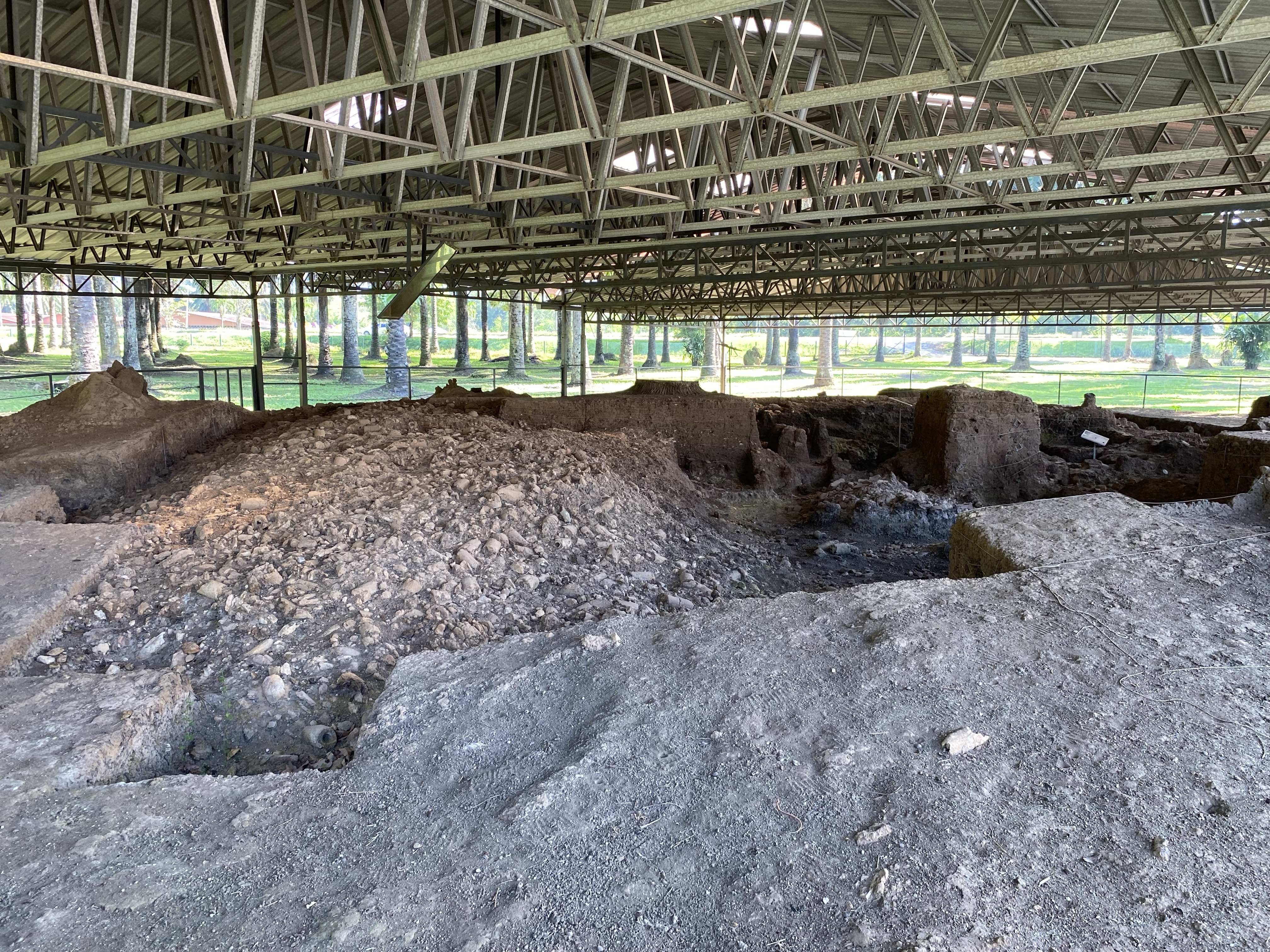
Peninggalan puing berjuta relau beserta Tuyere di tapak arkaeologi Sungai Batu.Gambar ini diambil oleh penulis pada hari Ahad, 11 Jun 2023dalam lawatan ke tapak tersebut
Semasa penemuan bukti industri peleburan besi zaman prasejarah di Sungai Batu diumumkan pada tahun 2008, ramai orang begitu teruja terutamanya orang Melayu. Saya merupakan salah seorang daripada kumpulan tersebut. Malah, apabila dikhabarkan terdapat artefak yang ditemui yang ditarikhkan kepada tahun 788 Sebelum Masihi (S.M), ianya memberi gambaran suatu tamadun Melayu yang begitu hebat yang telah wujud lebih awal berbanding tamadun Rom. Malah, pentarikhan tersebut bermakna tamadun Melayu yang hebat ini telah wujud 1,600 tahun sebelum Candi Borobudur dibina dan 1,800 tahun sebelum Angkor Wat wujud.
Kemudian wujud pula di media sosial kisah-kisah dongeng yang diwujudkan bukan sahaja terhad kepada mengukuhkan bukti tamadun Melayu silam yang hebat seperti kisah Iskandar Zulkarnain, kisah perdagangan besi dengan Empayar Rom, tetapi penemuan candi-candi berkait dengan agama-agama benua kecil India juga telah melahirkan suatu kepercayaan bahawa ianya merupakan bukti Tanah Melayu ini dihuni terlebih dahulu oleh orang dari benua kecil India berikutan penaklukan oleh Raja Chola. Sejauh manakah kebenaran kepercayaan-kepercayaan tersebut?
KRONOLOGI PRASEJARAH TANAH MELAYU
Sejarah dan arkaeologi adalah merupakan disiplin-disiplin yang wajib dilandaskan dan diasaskan berdasarkan fakta, dokumen, penemuan sahih serta kajian perbandingan dengan lain-lain data, fakta, penemuan sahih di rantau ini. Ini kerana lain-lain rantau atau kawasan mempunyai garismasa kemajuan yang berbeza.
Garismasa kemajuan masyarakat Melayu kuno atau prasejarah meletakkan zaman Palaeolitik (Zaman Batu Lama) di Tanah Melayu di antara 1.83 juta tahun dahulu (melalui penemuan tapak Palaeolitik di Bukit Bunuh, Lenggong, Perak) dan 10,000 tahun dahulu (dengan penemuan Lelaki Perak juga di Lenggong). Pada zaman ini, orang Melayu Kuno masih menggunakan peralatan yang diperbuat daripada batu untuk berburu, mengetuk dan memotong daging.
Kemudian tiba zaman Neolitik (Zaman Batu Baharu) yang tiba sekitar 4,500 tahun dahulu. Di zaman ini, Melayu Kuno sudah pandai membuat peralatan daripada tanah liat seperti mangkuk, takal, gelang, manik. Mereka juga sudah mempunyai kepercayaan dan mengebumikan orang mati dengan cara lurus ataupun melunjur. Mereka juga tinggal di penempatan yang lebih kekal (gua-gua) dan berkemungkinan telah mula bercucuk tanam pada skala kecil serta membela binatang, berbanding cara nomadik masyarakat Palaeolitik.
Zaman Neolitik di Tanah Melayu tiba sekitar 4,300 dan 2,000 tahun dahulu, manakala di Sabah dan Sarawak pula ia tiba sekitar 3,000 dan 2,000 tahun dahulu. Masyarakat Neolitik pernah hidup di Gua Sagu, Kuantan, Pahang sekitar 885 S.M. Di Gua Dayak, Lenggong, Perak pula masyarakat Neolitik pernah tinggal di sana sekitar tahun 340 Masihi. Ini bermakna, sekiranya masyarakat Zaman Logam Sungai Batu sudah wujud dan berdagang hasil besi pada tahun 788 S.M, ianya berada dalam garismasa zaman Neolitik di mana masyarakat setempat masih menggunakan peralatan yang diperbuat daripada batu hingga 1,128 tahun selepas tahun 788 S.M.
Kita harus fahami walaupun Tamadun Yunani dan Lembah Indus telah lama menggunakan besi dan gangsa, ia tidak bermakna seluruh dunia turut lalui zaman yang sama. Sebagai contoh, zaman logam di Tanah Melayu bermula sekitar 2 Masihi hingga 5 Masihi. Ada pun gendang gangsa pernah ditemui di Sungai Tembeling di Pahang, Gua Harimau di Perak, Lembah Bernam di Selangor, dan di Batu Burok di Terengganu, kesemuanya ini merupakan gendang Dong Son yang datangnya dari Dong Son di Vietnam dan ditinggalkan oleh para pedagang sekitar 500 S.M hingga 500 Masihi.
Ada sebab kenapa Vietnam dan Thailand lalui Zaman Logam lebih awal berbanding Tanah Melayu dan Indonesia. Ini adalah disebabkan oleh laluan perdagangan Barat ke Timur tidak melalui Selat Melaka hinggalah sekitar 2 ke 3 Masihi. Ini merupakan garismasa Lembah Bujang menjadi pelabuhan perdagangan yang terkenal. Ini mungkin disebabkan penemuan bijih besi bermutu jenis Hematite dan Magnetite di kawasan tersebut.
Sebelum itu, perdagangan hanya melibatkan rempah ratus dan barangan tidak berat seperti tembikar. Maka, laluan pedagang adalah merentasi Segenting Kra. Hanya setelah perdagangan melibatkan hasil besi, maka Selat Melaka menjadi laluan kapal-kapal dagang.
Masyarakat zaman Neolitik masih wujud di Indonesia dalam zaman sejarah moden. Contoh, Pulau Enggano di barat Sumatra masih wujud di abad ke-19, manakala masyarakat Neolitik masih wujud di Papua, Irian Jaya dan di Pulau Sentinel di Lautan Andaman. Ini adalah bukti perkembangan dan pembangunan sesuatu zaman bagi setiap masyarakat mahupun sesebuah rantau.
PERDAGANGAN DENGAN EMPAYAR ROM, KETIBAAN ISKANDAR ZULKARNAIN, DAN LEMBAH BUJANG HASIL EMPAYAR CHOLA?
Di antara dakwaan yang berkitar di dalam Jaringan Sejagat termasuklah dakwaan bahawa Empayar Rom pernah mempunyai hubungan perdagangan dengan Lembah Bujang dan telah menggunakan besi yang dibeli dari lembah tersebut untuk membuat pedang dan perisai tenteranya.
Sepertimana yang telah diterangkan di atas, industri peleburan besi di Sungai Batu berlaku sekitar tahun 2 Masihi hingga 5 Masihi. Empayar Rom wujud sekitar tahun 753 S.M dan berakhir pada tahun 1453 dengan jatuhnya kota Konstatinopel ke tangan Bani Othmaniah di bawah Sultan Mehmed II. Namun, wujud perdagangan di antara empayar tersebut dengan India dan China. Peta yang dilukis oleh Ptolemy pada tahun 2 Masihi menunjukkan laluan dagang darat (Laluan Sutera) untuk ke Serica dan laluan laut untuk ke Qin. Perdagangan ketika ini melibatkan sutera dan bulu binatang.
Teks Yunani Períplous tis Erythrás Thalássis (Pelayaran Mengelilingi Laut Merah) yang ditulis pada Abad Pertama tahun Masihi menyebut bagaimana para pedagang sutera belayar hingga ke Tamala, sebuah bandar di Myanmar yang terletak ke Barat Laut Semenanjung Tanah Melayu, dan kemudiannya menyeberangi Segenting Kra untuk ke Teluk Siam dan belayar seterusnya ke pelabuhan utama Qin iaitu Cattigara (kini Óc Eo di Barat Daya Vietnam).
Ini membuktikan bahawa perdagangan timur-barat pada Abad Pertama tahun Masihi masih hanya melibatkan barangan yang ringan yang boleh dibawa merentasi laluan darat (Segenting Kra) seperti sutera dan bulu binatang. Maka, Sungai Batu masih belum wujud sebagai sebuah pelabuhan terkenal, dan Selat Melaka masih belum menjadi laluan utama para pedagang.
Bagaimana pula dengan Iskandar Zulkarnain?
Beliau dilahirkan pada tahun 356 S.M dan meninggal dunia pada tahun 323 S.M, iaitu sekitar 400 hingga 500 tahun sebelum Sungai Batu menjadi pusat perdagangan terkenal dengan industri peleburan besi.
Walaupun sekiranya Sungai Batu telahpun wujud mengikut pentarikhan asal 788 S.M, paling jauh pernah Iskandar Zulkarnain dan bala tenteranya sampai ialah di Sungai Hyphasis (kini Sungai Beas di Himachal Pradesh, timur-laut India) bilamana tenteranya telah lakukan dahagi kerana enggan untuk terus mara ke timur, dan memaksa Iskandar untuk berpatah balik ke Yunani. Maka, agak mustahil bagi Iskandar mahupun isterinya untuk pernah menjejakkan kaki di Sungai Batu dalam usianya yang singkat (sekitar 33 tahun sahaja).
Bagaimana pula dengan pengaruh Empayar Chola?
Kawasan Lembah Bujang hanya dipengaruhi oleh Empayar Chola semasa pemerintahan Rajendra Chola I (di antara 1,014 Masihi dan 1,044 Masihi), iaitu
1,000 tahun setelah Sungai Batu menjadi pusat perdagangan besi terlebur, dan Lembah Bujang sebagai pelabuhan utama di rantau ini.
Ketiadaan penemuan sebarang struktur besar seperti Angkor Wat, Borobudur, atau seperti di Mohenjo-daro bermakna sifat Lembah Bujang sebagai pelabuhan dagangan tidak berubah menjadi pusat pentadbiran sebuah kerajaan Hindu India. Sebarang candi yang wujud, sebagai contoh di kawasan Pengkalan Bujang dibina menggunakan batu-bata tanah liat dan bersaiz kecil. Pentarikhan struktur-struktur tersebut juga menandakan bahawa pembinaan struktur-struktur tersebut dilakukan lebih kurang dalam masa yang sama, iaitu sekitar abad ke 10-11 Masihi, lebih kurang garis masa pengaruh kerajaan Chola di Kedah.
Ini agak baharu sekiranya dibandingkan dengan Candi Bukit Batu Pahat yang terletak dalam lingkungan 10 kilometer ke barat laut Tapak Arkeologi Sungai Batu yang terbina sekitar abad ke 7 Masihi. Hanya Candi Bukit Choras di Kota Sarang Semut, sekitar 40 kilometer ke utara Tapak Arkeologi Sungai Batu dibina sekitar abad ke 4 Masihi, semasa industri peleburan besi di Sungai Batu sedang rancak.
Penemuan-penemuan di atas memberi kita kewarasan untuk membuat rumusan-rumusan seperti berikut :
adalah mustahil untuk masyarakat Melayu Kuno untuk menghasilkan jongkong besi pada tahun 788 S.M apabila masyarakat Melayu Kuno di kawasan tersebut ketika itu menjalani kehidupan bersifat Neolitik. Empat sampel yang pentarikhannya 788 S.M itu berkemungkinan telah dibawa dari luar.
pada tahun 788 S.M laluan pedagang dari Timur ke Barat adalah melalui Segenting Kra. Kedah belum menjadi pelabuhan terkenal. Tiada aktiviti perdagangan secara besar-besaran berlaku di Semenanjung Tanah Melayu sebelum Tahun Masihi.
teknologi peleburan besi ini besar kemungkinan dibawa dari luar, terutamanya dari benua India.
Raja/Ketua yang ada di kawasan Lembah Bujang telah menyediakan sumber manusia untuk menjalankan industri peleburan besi, serta industri-industri sampingan seperti pembuatan ketuhar peleburan dan Tureye, pembuatan batu-bata dari tanah liat, penyediaan makanan, dan tenaga buruh am.
Kehadiran candi-candi Buddha, Hindu, Animistik yang wujud sebelum kedatangan pengaruh kerajaan Chola di kawasan pesisiran laut lebih cenderung kepada membuktikan bahawa candi-candi tersebut disediakan oleh kerajaan yang ada pada ketika itu untuk menarik minat para pedagang luar, dan agama asing tidak banyak mempengaruhi masyarakat setempat. Ianya juga bukti masyarakat Melayu Kuno bersifat terbuka dan amalkan sikap bertoleransi.
KESIMPULAN
Kita tidak boleh menafsir sejarah dengan menggunakan emosi atau sentimen kenegaraan, keagamaan mahupun perkauman. Sudah tentu kita semua akan berbangga sekiranya wujud masyarakat Melayu Kuno yang maju pada tahun 788 S.M. Bayangkan pada zaman Kesultanan Melaka telah wujud satu bangunan setinggi menara Merdeka 118 sedangkan lain-lain bangunan di sekelilingnya diperbuat daripada kayu- hebat, tetapi tidak masuk akal.
Kita perlu menafsir sejarah menggunakan dokumen-dokumen, bukti-bukti nyata dan ketara, bukti-bukti yang disokong oleh lain-lain penyelidikan.
Sejarah adalah bersifat tidak menentu. Apa yang nyata pada hari ini bakal berubah apabila lain-lain bukti ditemui. 10,000 tahun dahulu manusia percaya bumi ini berbentuk leper. Penemuan abad ke-16 membuktikan bumi ini bulat. Sekian lama kita diajar bahawa Melaka dibuka sekitar tahun 1400. Pada tahun 2010, terdapat bukti kukuh Melaka dibuka pada tahun 1262.
Pada tahun 2008, kita digembirakan dengan berita wujudnya masyarakat Melayu Kuno yang maju di Sungai Batu sekitar tahun 788 S.M. Teknologi dan penyelidikan terkini pada tahun 2019 membuktikan bahawa tarikh tersebut sebenarnya ialah sekitar tahun ke-2 Masihi.
Itu bukti-bukti setakat ini. Mungkin dengan kewujudan teknologi yang lebih canggih di masa hadapan, apa yang kita ketahui hari ini juga akan berubah.


 SeaDemon Says
You must be logged in to post a comment.