
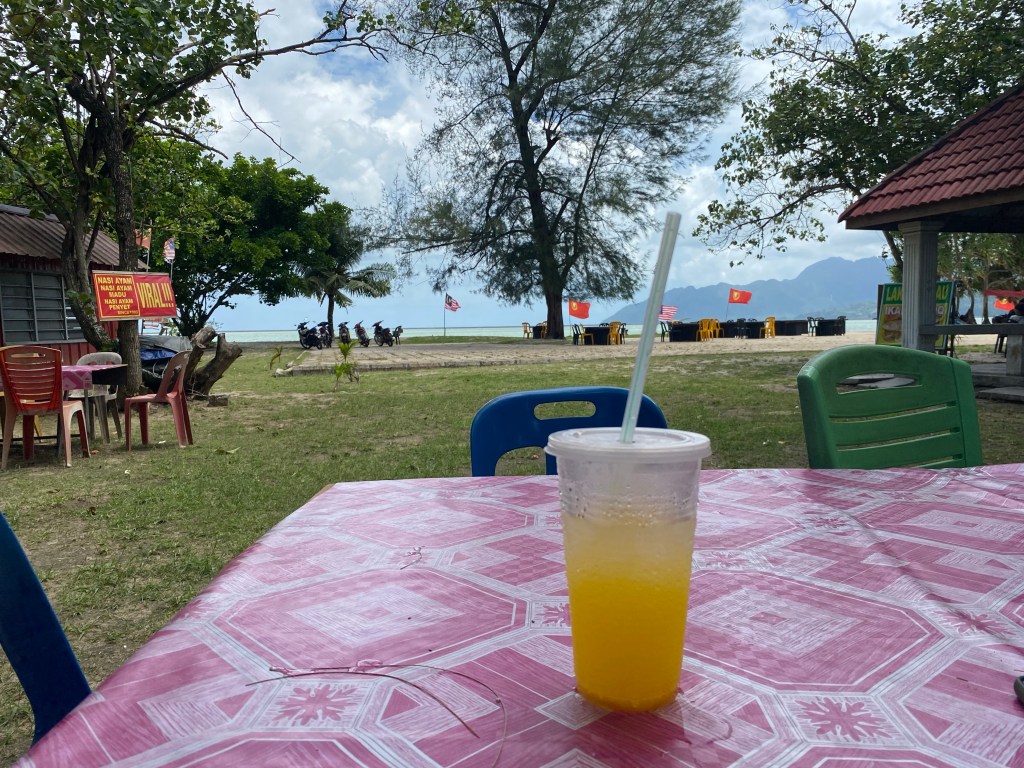
I often travel to the islands off Peninsular Malaysia – to the East Coast islands whenever I go scuba diving, and to Langkawi to get away from KL-stress.
It is given that in general, prices of food and accommodation are higher on the islands due to the cost of transporting goods from the mainland, and that the number of rooms are limited, especially on the east coast islands.
The difference between Langkawi and the east coast islands of Perhentian, Redang and Tioman is that you have the luxury of choosing where to eat and where to stay in Langkawi as it is larger in size compared to the rest. If you stay away from the tourist areas, it can be cheaper than in KL.
For example, during the recent LIMA 2023, the five of us stayed there for nine days: two days before the exhibition started, five days during the exhibition, and two days after the exhibition ended.
The fully-air-conditioned homestay that we stayed in cost us only RM1,400 (RM31.11 per person per day). And it was located less than ten minutes away from the airport. It came with a washing machine, so we did our own laundry. There was hot water shower, too! It also came with Wi-fi and ASTRO, a full kitchen with microwave oven and a 250-litre refrigerator.
We also rented a Perodua Axia for the whole duration at RM90 per day (RM18 per person). we filled RM40.00 worth of petrol into its tank only once (RM0.90 per person per day).
For breakfast, we’d drive to the stalls at the nearby kampungs. Roti Canai Kosong would cost you RM1.50, Nasi Lemak with Ikan Bilis, Sambal and half an egg would cost you RM2.00. Lunch that consists of steamed white rice, Asam Pedas Ikan Pari, Mixed Vegetables and Sotong Goreng cost me RM15.00 with drinks. Dinner was about the same. That’s about RM35.00 per day.
The cost of living per day per person in Langkawi for us was RM85.00, flights excluded. Now, the above was during super-peak season.
Compare that to Pulau Perhentian Besar. A cheap accommodation (a room) would cost you around RM180 per night (RM90 per person). No TV and little else. A plate of Nasi Goreng Bodo (just fried rice and with hardly anything else inside) is RM8.00. Nasi Goreng Special is RM20.00. Maggi Soup is RM15.00. That comes to about RM122 per day per person.
Generally, it would be the same on Perhentian Kecil.
In Pulau Redang, Nasi Lemak is RM15.00. Half Boiled Egg is RM6.00, Toast is RM5.00. The rest are about the same as in Perhentian. A cheap air-conditioned room is around RM150 per night (RM75 per person), that would be as mediocre as the ones in Perhentian. A day would cost RM135 per person.
In Tioman, you could get a basic room at RM125 per night (RM62.50). A meal can cost between RM20 to RM40 per person (about RM80 to RM160 per day per person).
It costs RM74 return by bus to Mersing from KL, a six to seven hour journey. You need to go on a ferry to get to Tioman from Mersing which will cost you RM70 return., another 1.5 hour journey. That’s RM144 per person.
To get to Pulau Redang you would have to get on a bus to Kuala Terengganu which will cost you RM88 return (six to seven hour journey), and another 1.5 hour journey by ferry that will cost RM110 return. That comes to RM198 per person.
To get to Pulau Perhentian, a 8-hour bus journey to Kuala Besut can cost about RM100 return. It costs RM70 return from the jetty to the islands making the total travel cost RM170.
It costs RM90 return on a 7-hour bus journey to Kuala Perlis and RM46 return by ferry from Kuala Perlis on an hour’s journey. That makes RM136 per person.
You can also opt to go via Kuala Kedah. And if you have extra to spare, you can try other modes of travel. Plus, there is so much more than just the beaches in Langkawi! You can find out more about travelling to Langkawi and the things to do there by visiting this webpage.
Looking at the comparisons, Langkawi is definitely value for money compared to the rest of the islands. No doubt each island has its strengths and weaknesses, and there are business owners that charge tourists exorbitantly, but Langkawi has so much more to offer, and you have other alternatives to shop and eat there.
Thus, it makes me wonder why is Langkawi being subjected to negative publicity? Is it because the state government is administered by people who, headed by an outspoken Menteri Besar, are not aligned to the Federal government? That would be unfair – punishing the people of Langkawi for making their democratic decision.
What is democracy then?
 SeaDemon Says
You must be logged in to post a comment.