
My previous posting is deemed relevant.
On 30th October 2012, the UMNO Youth called on the government to defer the implementation of the Automated Enforcement System (AES) to review the weaknesses in the implementation of the system, and the suitability of the location of the AES cameras deployed.
Looking at my Twitter timeline, I see that many are afraid of how the AES might impact the livelihood of the road users. Which means that the implementation of the AES, albeit still in its infancy, has already begun to have an impact on the attitude of road users. Anyhow, of course there will be those who would oppose it for the sake of opposing.
According to MIROS, passenger cars including SUVs, and four-wheeled drive vehicles are the most common types of vehicles involved in the overall investigated cases for 2007 through 2010. Motorcycles are among the lowest vehicle type involved in the investigated cases throughout the said period. Straight and flat roads also contributed higher number of accidents compared to curved roads throughout the same period. 60 percent of those accidents were contributed by speeding, next highest was risky driving, both are factors/offences that could be detected by the AES.
Opponents may argue that the quality of our roads are not up to international standards. However, the World Economic Forum’s 2012 Global Competitiveness Report states that Malaysia’s road quality is ranked 21st out of 139 countries and scored a 5.7 out of 7. In comparison, save for Singapore, we scored better than Thailand, Indonesia, the Philippines and Vietnam, so much so that the Department of Public Works and Highways (DPWH) of the Philippines said that the government of the Philippines would look at Malaysia “as a benchmark in terms of quality of roads.”
Are our speed limits too slow then? Both Japan and Australia have speed limits lower than ours at 100km/h. As a matter of fact, you are only given a lee-way of three per cent over and above the posted speed limit before you are sent to jail. In the US, speed limit on the highways is capped at 70mph, a mere 2km/h more than ours.
What about our weather? Or lighting? Throughout the MIROS study period from 2007 through 2010, most accidents occur in fair weather and during day time.
Our only problem is enforcement. In my opinion, our enforcement of traffic rules has a lot to be desired. It is always a favourite talk that the traffic policemen are always out there to squeeze a RM50 note or two out of you when they stop you. The problem is, most of those who whine about this fact are mostly those who make no qualms about giving bribes. The AES allows enforcement to take place automatically. A habitual traffic offender or a habitual bribe-giver would not have the opportunity to “slow-talk” or bribe a policeman, and best of all, these traffic policemen can be deployed to help law-abiding citizens brave the jam better during rush hour times.
The argument that the locations of the AES cameras are unsuitable or may be overkill considering the number of cameras deployed versus the number of accident-prone areas listed by the police is without substance. Are those who argue on that point implying that drivers will not speed or accidents will not occur at other stretches where accidents are less likely to happen?
The other argument that AES cameras would contribute to more accidents happening is also baseless. Am I to believe that a driver would be looking out for the AES cameras rather than pay attention to the road? How many accidents have happened because drivers look out more for the more mobile policeman with the speed gun? Perhaps these people ought to provide the statistics to back their claim within the next 24 hours :).
And how effective is the AES in reducing the number of accidents?
In 2008 in the UK, Robert Gifford, executive director of the Parliamentary Advisory Council for Transport Safety said, “A four-year evaluation of their effectiveness concluded that 100 lives were saved every year.” The same study concluded that there was a 40% reduction in the number of deaths and injuries on roads with speed cameras. Road deaths, he says, fell below 3,000 for the first time last year and speed is a contributing factor in one in three road deaths. If you go back 10 years ago, “70% of drivers driving in free-flow traffic broke the 30mph speed limit. Now it’s 49%. There has been a big decrease in the deaths of pedestrians, and that is partly due to cameras in urban areas.” There are 6,000 speed cameras deployed in the UK.
In Australia, the New South Wales state government has conducted its first annual review of the effectiveness of speed cameras, finding more than 95 per cent of them are having a positive effect on reducing fatal crashes and injuries. Fatalities fell by 87 per cent and crashes by 38 per cent in the areas around fixed speed cameras, according to a report released in July 2012 by the NSW Centre for Road Safety.
In the five years before the cameras were installed, there were 3959 crashes in the zones around these speed cameras, resulting in 61 deaths and 2124 injuries. But in the recent five-year period, there were 2451 crashes, resulting in eight fatalities and 1344 injuries. The acting general manager of the centre, Marg Prendergast, said the report proved cameras were overwhelmingly effective. The report also found that the number of infringements dropped over time, suggesting the cameras motivated people to slow down.
So, why is there a call for a deferment of the AES? Why is this call made nine years after the study into its implementation was made? And what do the opponents of the AES mean by suggesting that the government ought to study the implementation of the AES thoroughly? Do they mean that the government had hastily jumped into doing something after nine years of mulling about the system? Is the speed of the implementation going to kill the Barisan Nasional’s chance of obtaining a simple majority during the next general elections? Or is the speed of the call for the deferment going to kill BN’s chance of obtaining a simple majority for flip-flopping on its drive to save lives?
What would kill with speed BN’s chances of obtaining a simple majority? The government flip-flopping on a policy laid out by an MCA Minister after being pressured by half-past-six young turks from UMNO. It would only mean the government thrives on a populist approach with blatant disregard for the voters’ safety; AND that UMNO has not shelved its perceived bullying of other BN component members (paragraph added at 0945 hours, 1 Nov 2012).
And for those who think that the AES will only enrich cronies because you have nothing better to think of other than using the same line for different BN-bashing lines, stop speeding, abide by the law, then you don’t get summoned, and none of your money will go to the cronies. Simple, right?
Implement the AES. If there is improvements to be done to its system, do it as you go along, for the journey towards safety is a never-ending journey.
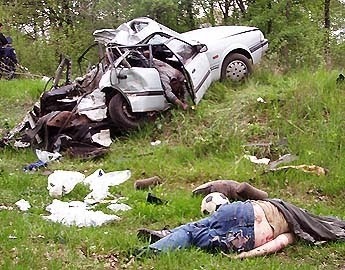
Remember, speed kills. Someone might just hit your child or spouse, or parents and kill them, so think about it!
 The anger towards the AES system (pic by Fella Firdaus)
 The anger towards Teresa Kok (pic courtesy of Mynewshub)
 SeaDemon Says