
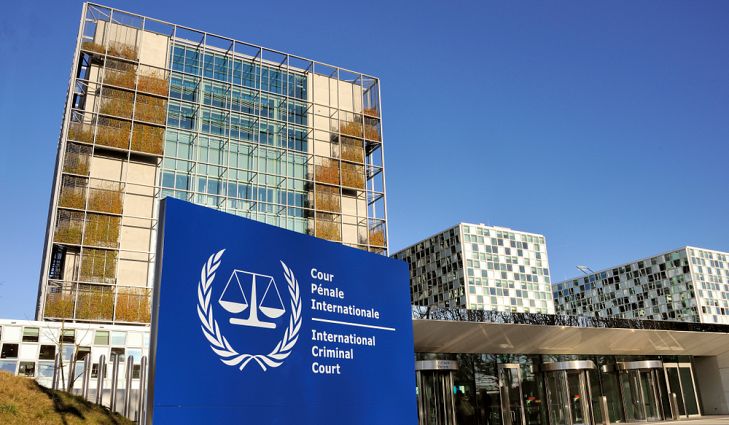
We have ratified, but have we withdrawn?
AS we all know, Prime Minister Tun Dr Mahathir Mohamad had announced on April 5, 2019 Malaysia’s intention to withdraw from ratifying the Rome Statute of the International Criminal Court.
However, just a week ago Foreign Minister Saifuddin Abdullah said that it is only a dead end for ICERD, but not for the Rome Statute (Jalan mati buat ICERD tapi bukan Statut Rome, kata Saifuddin – Free Malaysia Today, 23 April 2019).
Parliamentary Opposition Leader Ismail Sabri Yaakob hit out at the Foreign Minister the very next day. In a blog post, Ismail asked if the Foreign Minister still wants the Rome Statute ratified and what is the Pakatan Harapan government’s agenda? (Menteri Luar Masih Mahukan Statut Rom Diratifikasikan. Apa Agenda PH? – dsismailsabri.com, 24 April 2019).
What I find most interesting among all the points that were brought up by the Opposition Leader are the date when the statute comes into force for Malaysia, and the period of withdrawal from ratification.
Paragraph 1 of Article 126 of the Rome Statute states that the Statute shall come into force on the first day of the month after the 60th day following the ratification. For Malaysia, that date falls on June 1, 2019.
Paragraph 1 of Article 127 states that a State Party may, by written notification, withdraw from the Statute. The withdrawal shall take effect ONE YEAR after the date of receipt of the notification.
What the above means is that come June 1, 2019, Malaysia becomes a State Party. Any withdrawal following that date will only take effect ONE YEAR AFTER the receipt of the written notification. Until the withdrawal comes into effect, Malaysia is obliged to honour the Rome Statute.
Enter Article 7 Paragraph 1
At a glance, the ICC does not cause a nation’s sovereignty to diminish. Unlike the International Human Rights Law, the International Criminal Law does not directly impact national constitutional arrangements.
However, according to an expert in International Criminal Law, Rupert Elderkin, when International Criminal Law comes into play, it may perform quasi-constitutional functions, in particular offering the only means under public international law to remove state officials from office when they are believed responsible for the most harmful abuses of power (Elderkin, R. (2015). The impact of international criminal law and the ICC on national constitutional arrangements. Global Constitutionalism, 4(2), pp. 227-253).
The Attorney-General can argue that the Yang DiPertuan Agong will not be affected if Malaysia decides to declare war against another nation. Maybe not so. That is the least of my worries. It is Article 7 (Crimes Against Humanity) that I am more concerned about.
This Article deals with any act when committed as part of a widespread or systematic attack directed against any civilian population, with knowledge of the attack that includes persecution against any identifiable group or collectively on political, racial, national, ethnic, cultural, religious, gender, or crimes of apartheid.
Persecution means the intentional and severe deprivation of fundamental rights contrary to international law, while the crime of apartheid is explained as an institutionalized regime of systematic oppression and domination by one racial group over any other racial group or groups.
I can name several Articles in the Federal Constitution, and the numerous policies aimed at protecting the special rights of the Malays and Bumiputera, as well as the special position of Islam, that are already against Article 7 of the Rome Statute.
The Malay Rulers act as a shield in their respective states for protecting the religion of Islam. If a Sultan refuses to appoint a state assemblyman whom he thinks has the majority support of the Dewan, as the Menteri Besar, on grounds that the latter is not a Muslim, then the Sultan is already acting in direct contravention of Article 7.
In the case of HRH The Sultan of Selangor and the issue of the use of “Allah” in Bibles five years ago, although the State’s religious affairs department acted in accordance with a state enactment that was made under the state’s constitution, that, too, would have contravened Article 7 of the Rome Statute.
It is immaterial whether or not the State’s constitution or enactments contravene the Federal Constitution. It can only be so when a Constitutional Court deems it to be.
Can the Agong and Malay Rulers be prosecuted?
But will the Yang DiPertuan Agong and the Malay Rulers still be protected from prosecution by the ICC? Or, can they be prosecuted by the ICC?
The Malay Rulers know of the policies and Articles that give Islam its status as the religion of the Federation; that give special status to the Malays and Bumiputeras over others; that makes Malay the national language – all of which come under their protection.
One can argue that since the Malay Rulers are constitutional in form, they cannot be held responsible, as argued by the Attorney-General saying that the Agong cannot declare war and is therefore not accountable. However, the Eighth Schedule of the Federal Constitution clearly states their executive powers.
Although the Latin phrase actus reus non facit reum nisi mens sit rea is the common law test for criminal liability meaning the act is not culpable unless the mind is guilty, it also means that a crime can be committed not only through one’s intention, but also through the knowledge that one’s action or inaction would contribute the same.
In Prosecutor vs Tihomir Blaškić (ICC Appeals Chamber, 29 July 2004), the ICC Appeals Chamber held that “the person who orders an act or omission with the awareness of the substantial likelihood that a crime will be committed in the execution of that order, has the requisite mens rea for establishing liability under Article 7(1) pursuant to ordering. Ordering with such awareness has to be regarded as accepting that crime.”
In other words, there is no legal requirement of an ideology, plan or policy to articulate the mens rea applicable to crimes against humanity. In this context, the Malay Rulers can be found culpable to promoting and enforcing policies and plans that oppress targeted race or religion, while holding the supremacy of one race or religion.
In the words of Catherine Gegout, and Associate Professor in International Relations, Faculty of Social Sciences at the University of Nottingham,
“The ICC can prosecute any individual anywhere in the world, but for suspected criminals who are citizens of a state which has not ratified the ICC Statute, a United Nations Security Council (UNSC) resolution is necessary.” (Gegout, C. (2013). The International Criminal Court: limits, potential and conditions for the promotion of justice and peace. Third World Quarterly, Volume 34, 2013, Issue 5, pp. 800-818).
How effective can ICC prosecute will depend on how cooperative a State Party is. If the government, as the executive branch of a State Party, decides to cooperate with the ICC and have a Malay Ruler tried by the ICC, then It could.
So, what is the government’s intention?
If there is something that may affect the status of Islam as the religion of the Federation, the special privileges of the Malays and Bumiputera, the National Language, and the status and functions of the Malay Rulers, it is imperative that the government bring it to the Malay Rulers to be deliberated.
By going quietly and ratifying the Rome Statute without first bringing the matter to the attention of the Malay Rulers is an act that contravenes the Federal Constitution. The Malay Rulers have every right to be consulted, to warn and to encourage. The cabinet members all took an oath to serve in His Majesty’s government, a Malaysian government; not a political party’s government.
So, what was the intention of ratifying the Statute? To take Myanmar to the ICC? China for the mistreatment of the Uighurs
Most importantly – June 1, 2019 is getting nearer each day. Why has the government not sent the formal letter to the Secretary-General of the UN to notify of Malaysia’s intention to withdraw from ratifying the Statute? How difficult can drafting a letter be? Does it need more than 25 days to draft one?
Or is the announcement by the Prime Minister 26 days ago a form of strategic withdrawal that will only see a letter sent days, weeks, months or years after June 1, 2019 that will see Malaysia bounded for another year after?
(This article first appeared on The Mole)
 SeaDemon Says
You must be logged in to post a comment.