In another step for Malaysia into strengthening ties with its neighbours, the Royal Malaysian Air Force (RMAF) plays its part by strengthening its cameraderie with its Indonesian counterpart, the Tentara Nasional Indonesia – Angkatan Udara (TNI-AU).
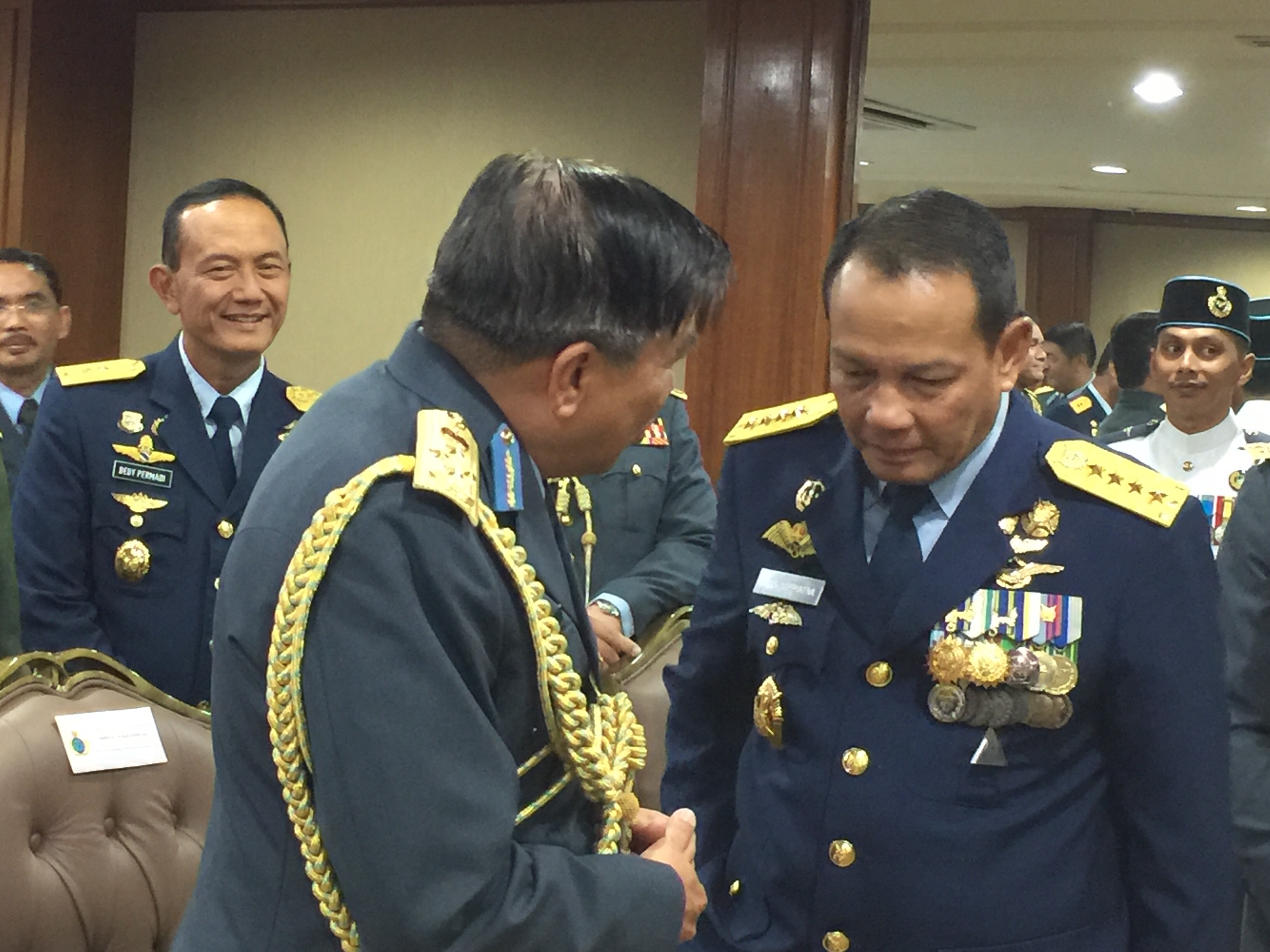
Seri Paduka Baginda Yang Di Pertuan Agong Almu’tasimu Billahi Muhibbuddin Tuanku AlHaj Abdul Halim Mu’adzam Shah Ibni Almarhum Sultan Badlishah as the Field Marshall and Commander-in-Chief of the Malaysian Armed Forces saw it fit to bestow upon the Chief of Staff of the TNI-AU, Air Chief Marshal Agus Supriatna, the honorary award of the Darjah Panglima Gagah Angkatan Tentera (PGAT).
To present the award on behalf of His Majesty was the Deputy Minister of Defence, Dato’ Sri Mohd Johari bin Baharum. The ceremony was held at the Ministry of Defence in Kuala Lumpur.
Air Chief Marshal Agus Supriatna saluting Dato’ Sri Mohd Johari bin Baharum after receiving the Darjah Panglima Gagah Angkatan Tentera
ACM Agus began his military career in 1983 and became a A-4 Skyhawk pilot from the No.11 Squadron based at the Lanud Iswahjudi Madiun (Iswahyudi Air Force Base) in East Java town of Maospati in the Magetan Province. He was promoted to his current post in 2015.
ACM Agus who is on a two-day working visit to Malaysia also paid a coutesy call to the RMAF Chief, General Tan Sri Dato’ Sri Roslan bin Saad TUDM at the latter’s office.
The ceremony was attended by senior officers from the RMAF, the Royal Malaysian Navy, the Malaysian Army as well as members of the TNI-AU delegation.
Good neighbours and brothers-in-arms: Chief of RMAF General Tan Sri Dato’ Sri Roslan bin Saad TUDM having a chat with his TNI-AU counterpart Air Chief Marshal Agus Supriatna at the Ministry of Defence
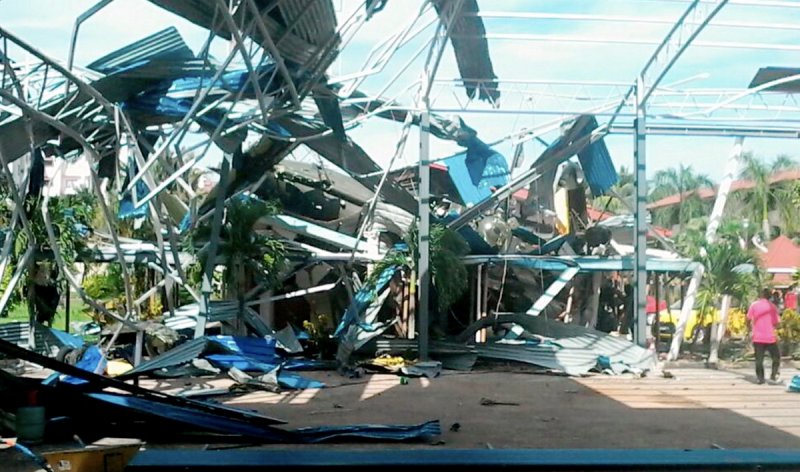
Helikopter Sikorsky S-61A4 Nuri milik TUDM yang telah melakukan pendaratan cemas di SMK Balung, Tawau
Hari ini saya diajukan beberapa soalan dari berbagai pihak mengenai kejadian yang melibatkan sebuah pesawat helikopter Sikorsky S-61A4 Nuri milik TUDM di Sekolah Menengah Kebangsaan Balung, Tawau. Untuk memudahkan penulisan, izinkan saya menulis dalam bentuk soalan-soalan yang telah diajukan kepada saya:
SOALAN 1: Media telah menggunakan perkataan “terhempas” namun pihak TUDM menggunakan istilah “mendarat cemas.” Boleh Kapten terangkan perbezaan kedua-dua istilah tersebut?
Istilah “terhempas” menggambarkan suatu situasi diluar kawalan. Sebagai contoh, pesawat mengalami kegagalan sepenuhnya fungsi alat kawalan yang mengakibatkan sesuatu pesawat itu terus jatuh diluar kawalan (uncontrolled descent).
Akibat kejadian “terhempas” kebiasaannya akan mengakibatkan kemusnahan total kepada kerangka pesawat, disertai kehilangan jiwa dan/atau kecederaan parah kepada majoriti penumpang.
“Mendarat cemas” ataupun “pendaratan kecemasan” ialah suatu tindakan yang dilakukan sebagai respon kepada sesuatu kejadian kecemasan, contohnya respon juruterbang kepada kegagalan fungsi enjin pesawat. Dalam kejadian semalam pada pengamatan saya, juruterbang telah bertindak untuk cuba mendaratkan pesawat di suatu tempat lapang di antara dua blok sekolah menggunakan kaedah “auto-rotation” namun telah tidak cukup masa untuk mencapai kawasan tersebut. Siasatan oleh pihak TUDM akan memberi lebih pencerahan mengenai kejadian ini.
SOALAN 2: Pada pendapat Kapten, apa punca kejadian? Adakah ia boleh dielak?
Semua kejadian boleh dielak. Namun kita tiak boleh menjangkakan sesuatu yang bakal berlaku walaupun semua langkah telah diambil untuk mengelak sebarang kejadian yang tidak diingini. Contoh terbaik: Lewis Hamilton terpaksa keluar dari perlumbaan F1 di litar Sepang baru-baru ini walaupun sedang mendahului para pesaing lain akibat kerosakan enjin walaupun penyelenggaraannya amat baik. Hanya siasatan terperinci dapat memberi gambaran punca kerosakan kepada pesawat Nuri tersebut dan juga kereta yang dipandu Lewis Hamilton tempoh hari.
SOALAN 3: Masalah teknikal dikatakan antara punca kejadian. Adakah wujud faktor tersebut atau Nuri itu sendiri tidak boleh diselenggarakan lagi kerana usianya yang sudah lanjut?
TUDM, sayap udara TLDM dan Pasukan Udara Tentera Darat mempunya rejim penyelenggaraan pesawat yang amat baik. Usia lanjut sesebuah pesawat itu tidak banyak memainkan peranan sekiranya penyelenggaraan adalah baik.
SOALAN 4: Adakah pesawat Nuri kita terlalu tua dan tidak sesuai lagi untuk latihan memandangkan komponen dan besi pesawat sudah uzur dan haus seperti didakwa sesetengah pihak?
Masih banyak varian Sikorsky S-61 yang masih digunakan di seluruh dunia termasuk juga yang digunakan oleh State Department Amerika Syarikat. Malah ianya juga salah satu helikopter yang digunakan untuk mengangkut Presiden Amerika Syarikat. Tentera Udara DiRaja New Zealand masih menerbangkan pesawat Hercules C-130 mereka yang sudah berumur 51 tahun. Usia pesawat bukan merupakan faktor.
SOALAN 5: Apakah sudah sampai masa Nuri digantikan bagi megelakkan insiden yang sama berlaku? Jika tidak, adakah Nuri masih lagi perlu digunakan?
Nuri adalah pesawat yang masih diperlukan. Aset-aset Nuri TUDM juga kini diserapkan ke dalam Pasukan Udara Tentera Darat untuk tujuan “air mobility.” TUDM menggantikan pesawat Nuri bukan kerana usia atau masalah penyelenggaraan tetapi adalah kesesuaian peranan yang dimainkan oleh TUDM seperti Combat Search and Rescue, Special Forces Insertion and Extraction yang memerlukan helikopter berperanan khusus. Pesawat Nuri juga telah melalui beberapa proses penambahbaikan kerangka dan avionics untuk menentukan ianya selaras dengan keperluan masa kini. Ini termasuk peningkatan upaya gearbox, bilah kipas utama dan bilah kipas ekor dan pautan data digital. Malah peningkatan upaya pesawat Nuri dengan memperkenalkan “glass cockpit” atau kawalan digital sepenuhnya yang sesuai digunakan dengan teropong kegunaan malam (night-vision goggles) telah dilakukan untuk sesetengah pesawat Nuri.
Ini menunjukkan pesawat Nuri masih lagi relevan, terutama untuk tujuan pengangkutan saiz sederhana atau penghantaran platun infantri ke medan.
SOALAN 6: Apa nasihat, cadangan, pandangan Kapten kepada TUDM demi masa depan aset seperti Nuri dan keselamatan pengguna helikopter tersebut?
Kementerian Pertahanan perlu menentukan “end-user” mendapat bajet yang diperlukan untuk menentukan perolehan, pengoperasian dan penyelenggaraan aset-aset bukan sahaja TUDM, malah untuk Angkatan Tentera Malaysia amnya, dapat diteruskan dengan baik dan memenuhi doktrin Angkatan Tentera Malaysia.
Pesawat Sikorsky S-61A4 yang telah diserap oleh Pasukan Udara Tentera Darat
Despite lesser budget, the annual joint exercise between the Royal Malaysian Air Force (RMAF) and the Royal Malaysian Navy (RMN) dubbed ANGSA (short for ANGkasaraya and SAmudra) for 2017 will be executed as planned. Asked at the closing ceremony of Exercise ANGSA 11/16, Chief of the RMAF General Tan Sri Roslan bin Saad TUDM said that there is no necessity for the joint exercise to be put on hold.
“Both the Air Force and the Navy who will become the host for next year’s exercise will ensure that the budget will meet the requirements of the objectives of the exercise,” he told reporters at the No.18 Squadron’s auditorium. “It is important that the Malaysian Armed Forces grasps its interoperability requirements especially when such need arises.”
On the question of the replacement of the medium-range surface-to-air missile for the RMN’s Laksamana-class corvettes, Vice-Admiral Dato’ Anuwi bin Hassan TLDM said the RMN Commanders Committee Meeting shall discuss the replacement of the ASPIDE system.
Exercise ANGSA 11/16 involved a Command Post Exercise and for the first time sees the involvement of elements of the Malaysian Army.
General Tan Sri Roslan bin Saad TUDM, Chief of the RMAF
“We would like to see at least a 20 percent participation of the non-Bumis in the RMAF,” said the Chief of RMAF, General Tan Sri Roslan bin Saad TUDM to reporters after witnessing the Farewell Parade for Major General Dato Ahmad Tarmizi bin Elias TUDM, the outgoing Chief of Staff (Administration) at the Air Force Training Institute in Ipoh.
“Right now, they number between 5 percent to 10 percent in a force of about 15,000,” he added. “We need all the expertise that we can get as we have aircraft with high technology, electronics, computers where they can contribute their skills and expertise in the defence of the nation.”
“20 percent is not the ceiling but that is the minimum level of non-Bumi participation that we would like to see in the RMAF.”
Low pay is the excuse given for not joining the Air Force which is not the case. Diploma holders could earn a basic pay of between RM2,300 to RM3,000, while degree holders start at RM3,600. On top of that there are allowances that they can be eligible for depending on the trade they are in. This does not include other perks such as free medical and dental treatment at the various Armed Forces Medical Centres as well as housing. Even a recruit could earn up to RM1,200 inclusive of service and special service allowances upon completion of training.
The RMAF used to have about three non-Bumi generals (from the rank of Brigadier General) out of a total of 10 back in the 1980s. In the current line up there are only three out of about 40. The non-Bumis have to realise that they have as much responsibility as the Bumis do in defending this nation. Among the youngsters we could see how non-Bumi children partake in physical games such as paintball, or electronic war games on computers but this however does not translate into their participation in the Armed Forces in general. To say that the military (and the police) are Bumi organisations is not true at all – the large number of Bumis in these services only reflect the unwillingness of the non-Bumis to serve their nation.
On the issue of cross-border encroachment, on the part of the RMAF, General Roslan reiterates that the RMAF is and will continue to support enforcement operations in the ESSZONE together with other agencies that make up the ESSCOM. ESSCOM is not just about the RMAF but encompasses all border protection agencies such as the Army, Navy, Police, the MMEA, Customs and the Immigration department.
General Roslan hopes that the media could play a bigger role in making the Armed Forces attractive to the general mass and hope to see better participation of the non-Bumis in each of the services.
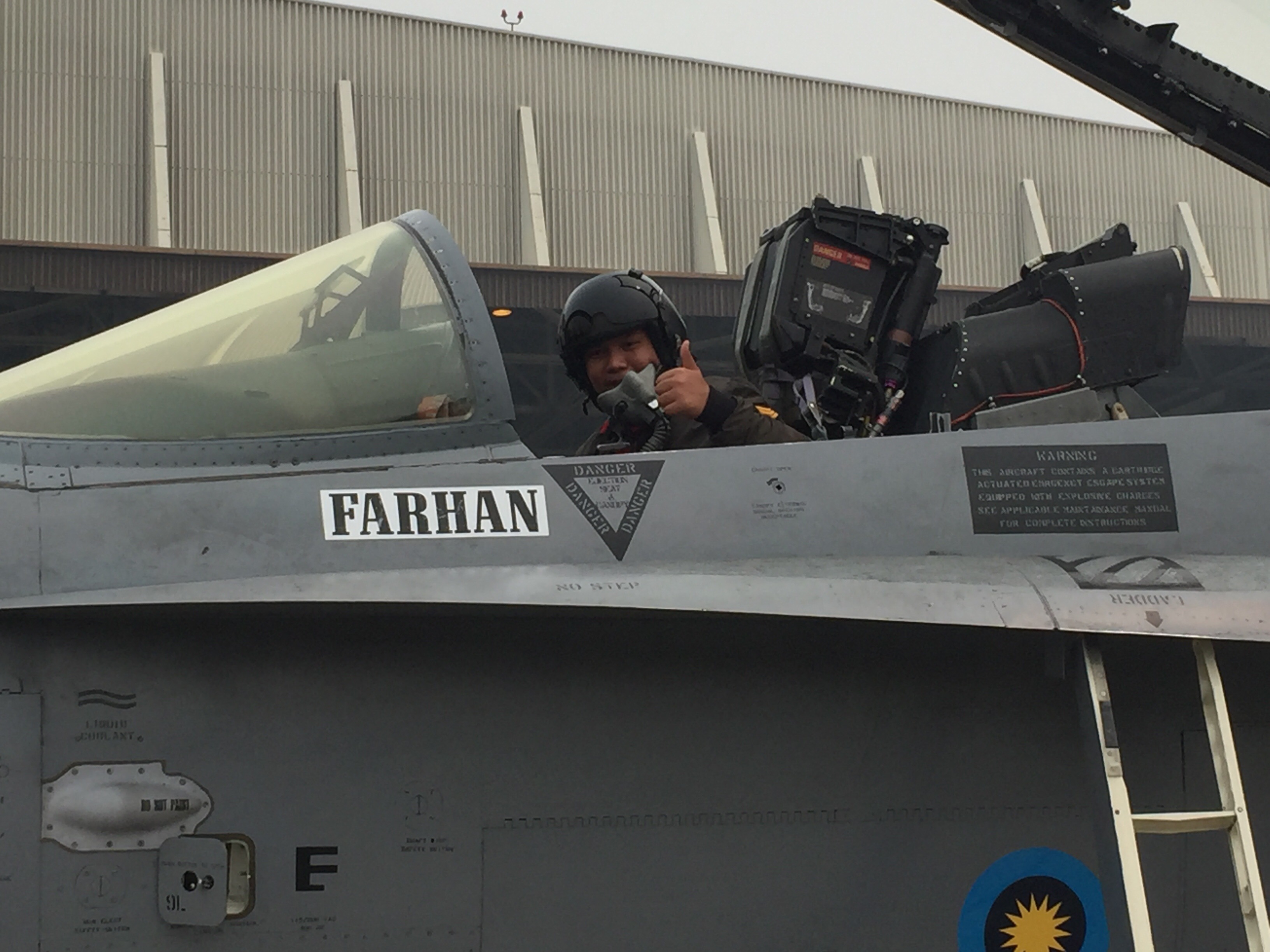
13-year old Muhammad Farhan Najmi bin Johari from Jasin, Melaka, dreamt of soaring high in the skies as a fighter pilot in the Royal Malaysian Air Force. His dream, however, was dashed when he was diagnosed as having Germ Cell Tumour, a condition that would definitely deprive him of his future.
In conjunction with the 59th Merdeka Day celebration’s theme ‘Sehati Sejiwa‘ and in line with the Royal Malaysian Air Force’s tagline ‘We Are One‘, the RMAF collaborated with a non-governmental organisation called ‘Make A Wish Malaysia‘ to grant Farhan’s wish.
Muhammad Farhan Najmi bin Johari
Farhan who is the third among three siblings was referred to ‘Make A Wish Malaysia‘ by his doctor. According to Irene Tan, CEO of Make A Wish Malaysia, children between the age of 3 to 18 when referred, residing in Malaysia who have been diagnosed with life-threatening medical condition are eligible to have their wish granted. The child’s presiding physician will then have to certify if the child is medically eligible.
Among those whose wish was granted was 9-year old Aqilah whose dream was to become a flight stewardess. Make A Wish Malaysia made her dream come true in 2010 partnering with Malaysia Airlines and Pelangi Beach Resort, Langkawi.
Aqilah’s dream was to become a flight stewardess
Representing the RMAF, Chief of Staff of Air Region 1, Brig Gen Dato Abd Manaf bin Md Zaid TUDM in his speech said the RMAF is always committed to support members of the public whenever possible as this also serves to remind the public that the RMAF is one with them.
Farhan inside the cockpit of a RMAF F-18
Farhan’s father, Encik Johari, was choked with tears of happiness that his son’s wish has finally been made true.
We wish Farhan a speedy recovery, long life, and every success in his life. Thank you to Make A Wish Malaysia and the Royal Malaysian Air Force for granting his wish.
Farhan with his family, staff of RMAF Subang and the team from Make A Wish Malaysia
Will the 58th Air Force Day see the full retirement of the MiG-29N?
2016 has seen the Royal Malaysian Air Force lose two of its valuable assets – a CN235 transport aircraft, and a MB-339CM lead-in fighter trainer. To top that, there is still no announcement of a stop-gap measure to replace the MiG-29N.
The shortfall is very noticeable especially among observers whom have noted that in regional exercises, the RMAF would normally commit four fighters per squadron while a neighbour could easily muster ten.
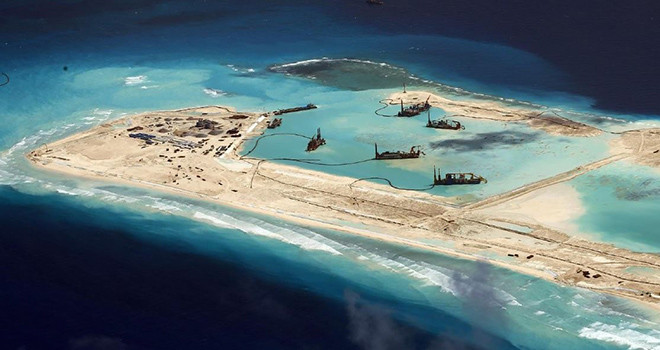
The Royal Malaysian Navy has recently embarked on its Littoral Combat Ship program. This has been a long-awaited program given that China has forward bases in the Spratlys after reclaiming some 1,170 hectares. Commercial aircraft have been landing at the airstrips built there, we know what those airstrips are able to handle.
The Falklands War of 1982 and the Force ‘Z’ disaster closer to home on 10th December 1941 are poignant reminders that air superiority and the element of surprise are critical in modern air and naval warfare. Without the MiG-29s or their replacements force projection is somewhat limited. Maritime Patrol Aircraft play an important role in locating enemy surface assets, while airborne tankers will allow air assets to have longer loiter and patrol capabilities. As written in a previous article an Airborne Early Warning system would also help the RMAF to “see beyond” what it currently could. The RMAF has been in want of AEW assets since the 1980s, a dream yet to be fulfilled.
Also important would be a mobile radar in the Peninsular with at least three in Sabah and Sarawak would enhance our air defence capabilities. Passive radar system would also enhance aircraft identification process.
Importantly everything should be at a minimum operational and combat readiness level of seventy percent. And this number should include the spares we need to run these systems.
The RMAF has very good and skilled human assets but without the tools needed to make the organisation combat-effective. Again, it is hoped that the government can pay serious attention to the needs of the Armed Forces – the RMAF in particular. A stop-gap measure with over 70 percent operational and combat readiness is what the government needs to assist the RMAF with.
Only then the RMAF would truly be “Sentiasa Di Angkasaraya.”
Happy 58th Anniversary, RMAF. We hope your dreams will soon come true.
China’s build-up in the South China Seas brings this region closer to a conflict
“We need to look at what we see as the threats. What you see is the story unfolding in Syria and Iraq and which fighter is not there at the moment? You’ve got the Super Hornets, you’ve got the Typhoons and yet it is still unfolding before our very eyes. And secondly, the threat from IS is different from our traditional terrorist threats that we have faced in the past, don’t compare with the threats that we’re facing from IS.”
Those were the words uttered by the Malaysian Defence Minister on the eve of the recent Langkawi International Maritime and Aerospace exhibition that concluded on the 21st March 2015. He added:
“You will see the gatling gun that we have fitted on our A109s and maybe the threat that we face just requires a gatling gun.”
Many defence practitioners, analysts, journalists and bloggers such as I, felt as if the military had been let down when we heard those very words uttered on board the Royal Malaysian Navy’s frigate, KD Jebat. Malaysia has been seeking for the replacement of the MiG-29N fleet for the longest time, and now it has been stalled again. Furthermore, the fight against the IS is first and foremost a counter-insurgency warfare that falls within the purview of the Home Ministry, with the Defence Ministry in a supporting role.
It would be good to note, too, that missing from the airshow for the first time at LIMA ’15 are the Smokey Bandits, the RMAF’s aerobatics team that consists of the Mikoyan-Gurevich MiG-29Ns. It was looked forward to, and missed by many.
In March of 2013, the PLA-N sent its largest and most modern amphibious assault ship, a destroyer and two guided-missile frigate to James Shoal (Beting Serupai), 80km off the coast of Bintulu in Malaysia’s state of Sarawak, to conduct an oath taking ceremony there. The PLAN sailors and marines pledged to “defend the South China Sea, maintain national sovereignty and strive towards the dream of a strong China.” Just 80km off Malaysia’s coast, this flotilla went unchallenged by the Royal Malaysian Navy or by the Malaysian Maritime Enforcement Agency vessels.
The RMAF Su-30MKMs are about the only MRCA capable of taking on the PLAN or PLAAF but lack miserably in numbers
While the Minister focuses on the IS threat, which really should be looked at by the Home Ministry and not Defence as it involves counter-insurgency warfare, both the Royal Malaysian Navy and the Royal Malaysian Air Force are in dire need of more capable assets. Without the MiG-29Ns and the F-5E Tiger IIs, the RMAF is down to just 18 Sukhoi Su-30MKM Flankers and 8 F/A-18 Hornets, supported by 14 BAe Hawk 208 and 6 BAe Hawk Mk 108. Of course, that is if the serviceability rate is at 100 percent.
The Royal Malaysian Navy’s combat power is represented by 2 Scorpene submarines, 2 Frigates (with 6 to be constructed), 6 corvettes, 6 offshore patrol vessels, and 8 missile boats. Although the Royal Malaysian Navy could give any enemy a bloody nose if required, without air superiority achieved, there will be a repeat of what happened to Force Z in 1941. The RMN is also somewhat impaired given that its OPVs are fitted-but-not-with strike-capable weapons such as anti-air and surface-to-surface missiles.
The Kedah-class OPVs have been fitted-but-not-with SSMs (Photo courtesy of BERNAMA)
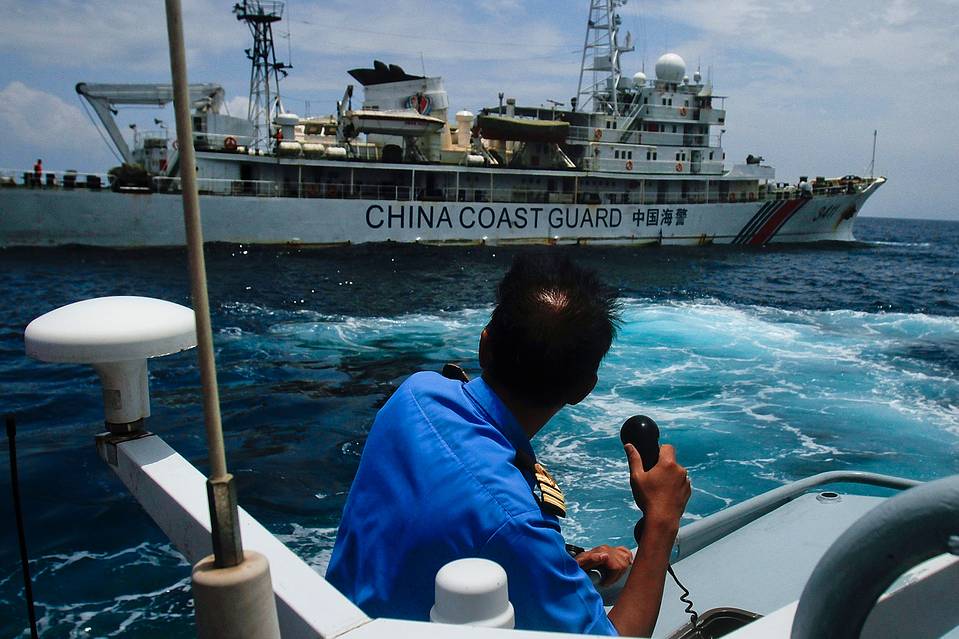
Underscoring its intention to subjugate the other claimants especially Malaysia, the Chinese Coast Guard was found in the vicinity of the Luconia Shoals, 150km off Miri, early this month. With a large to cover, both the Royal Malaysian Air Force as well as the Royal Malaysian Navy are very much lacking in assets.
A Malaysian vessel intercepts a Chinese Coast Guard cutter at the Luconia Shoals off Sarawak, Malaysia – picture courtesy of WSJ
In his speech during the recent Air Force Day celebration, General Dato’ Sri Roslan bin Saad RMAF underlined three approaches to ensure that the RMAF stays on top of the game:
The amalgamation of assets and organisation: this approach gives focus to the readiness of aircraft and radar systems. Through the Chief of Air Force’s Directive Number 19, several action plans have been formulated to ensure that the serviceability rate for aircraft and radar systems remain high.
Enhancement of Human Resource: this is done by raising, training and sustaining the RMAF’s manpower by increasing its specialisation and competency levels.
Optimisation of Available Resources and Finance: this is by formulating a strategy to ensure that resources and finances are being managed properly and are well managed.
General Dato Sri Roslan bin Saad RMAF, the Chief of Air Force, delivering his speech at the Air Force Day parade at the Kuantan Air Base.
In my opinion, the amalgamation of assets should also include the reactivation of the Mikoyan-Gurevich MiG-29N Fulcrum as well as the Northrop F-5E Tiger II fleets. With limited funds available for the addition of more interceptors as well as MRCAs, perhaps the RMAF should get the MiG-29Ns back online in a reduced number. The final number of MiG-29Ns maintained by the RMAF was ten. Perhaps eight is a credible size to maintain. We know that engine hours is no longer the issue with the MiG-29Ns. If budget constraint is a concern, no upgrades are needed for now. They can still perform their MRCA role with what is readily-available, and perform as Smokey Bandits when needed. It would be worthwhile to note that the Indian Air Force has upgraded its much-older MiG-29Bs to the MiG-29UPG, at par with Russia’s MiG-29SMTs but sporting western avionics. I am more than sure that Malaysia’s Aerospace Technology Systems Corporation Sdn Bhd (ATSC) could propose an upgrade to the MiG-29Ns. These upgrades would be cheaper than a total fleet purchase which negotiations will take years to conclude.
The Republic of Korea Air Force (RoKAF) maintains more than 400 F-5E Tigers in its inventory while the Republic of China Air Force (RoCAF) maintains more than 200. These old analog interceptors are based near where the threats are. The most interesting point about the F-5Es are that they run on analog systems and require less time from cold start to interception. Malaysia had about 16 F-5Es and 2 RF-5E Tigereye that could do Alert 2 standby for first interception while the Alerts 5 and 7s could come and back them up later. Two squadrons could still be maintained perhaps in Kuching with an FOB set-up in Miri and Labuan for F-5E detachments.
The two suggestions above is for the RMAF to consider while it waits for budget and arrival of the new MRCA.
It is of no secret that while Dassault Aviation has been promoting its Rafale MRCA heavily in Malaysia especially, the fighter jocks of the RMAF prefer the F-18Ds that they have; and if any addition is to be made to its MRCA fleet, it should be the F-18Ds. End-users’ opinions and evaluation must be seriously considered.
The other threat that faces Malaysia is the potential insurgency in Sabah’s ESSZONE. While “helicopters with Gatling guns” may be considered an answer, a helicopter is slow to get away from a fire-fight. Time and time again we have seen how rebels in the southern Philippines who are also responsible for the kidnappings as well as skirmishes in Sabah brought down military helicopters.
The real answer is in a platform that can deliver enough payload at high speed and conduct effective strafing of known enemy positions. The RMAF should consider reactivating the Light Attack Squadron (LAS) that was used in counter-insurgency warfare in the 1980s and early 1990s. The Pilatus PC-7 Mk II, while acting as the aircraft for the LIFT program (Lead-In Fighter Training), can also be used as both counter-insurgency warfare aircraft as well as in support of the roles taken up by the Hawks 108 and 208 as well as the Aermacchi MB-339CM. Economy-of-effort has always been part of the Principles of War and still holds true today. Having the experience in the LAS I believe will make them better pilots for the F/A as well as MRCA roles as they progress later.
RMAF BAe Hawks and Aermacchi MB-339CM light fighter/lead trainers flying past during the Air Force Day parade
The RMAF also lacks the eye-in-the-sky. From the days when I joined the RMAF in the 1980s, the AWACS have always been sought after but never procured. An AWACS provides the RMAF as well as the RMN a good detail of what is happening both in the sky and at sea. Four AWACS with good loiter endurance based in Kuching working round-the-clock should suffice. Kuching is at the nearest point between Borneo and the Peninsular, and covers the South China Sea easily. On top of this, Maritime Patrol Aircraft with anti-ship and anti-submarine capability should be made available for the RMAF. This is to complement the RMN in its role especially in the South China Sea.
I am not sure but I believe we cannot see much of what is beyond the Crocker range in Sarawak. Mobile radar systems could be stitched along the range to provide better coverage of what goes beyond the range. The data can be fed via satellite or HF system. The RMAF’s HF system is more than capable of providing accurate radar picture of the area.
The Malaysian Army’s “top secret” Vera-E passive radar system should also make its data available and fed into the RMAF’s current air defence radar system to enhance the capability of the the latter. There is nothing so secret about the Vera-E. Several keys tapped on Google and one would be able to find out about the Malaysian procurement of the system. I am flabbergasted that the Malaysian Army has yet to share the Vera-E data with the RMAF.
The government should also allow the RMN to look into procuring available assets from the USN that are capable to deter PLAN assets from entering sovereign waters unchallenged. Apart from capital assets. the RMN should look into converting some of its smaller assets such as the CB-90s and RHIBs into Unmanned Surface Vessels (USV) with 30mm stabilised weapons and targeting system complemented by a STRIKE-MR fire-and-forget missiles that could be operated remotely to conduct swarm attack on larger enemy units. Using the USV swarm tactic, the RMN should look at the tactics used by the Liberation Tigers of Tamil Elam (LTTE) to sink larger Sri Lankan naval units. Using the CB-90s as well as the RHIBs for swarm warfare at shoals and atolls controlled by Malaysia in the South China seas fits with the concept of “working with what we have and not what we feel we should have.” Swarm forces can neutralise or deter larger forces from advancing further, while the USV concept does not need the unnecessary loss of lives to achieve its objective.
I urge the government to reconsider the budget put forth by both the RMAF and the RMN. Budget constraint should not be a reason the military is not allowed to enhance their current capabilities. The warfare doctrine based on the principles of selection and the maintenance of aim must be respected if the Malaysian military, in particular the RMAF and RMN, is to achieve its objectives which mainly is to act as deterrence from potential belligerent forces. If the RMAF and RMN are not allowed to be strong, Malaysia will always be bullied at the South China Sea diplomatically.
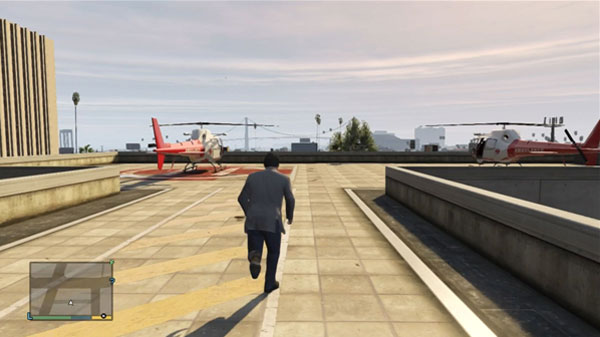
Franklin slams on the brakes of his Truffade Adder, exits his car and gets into a lift (or elevator, depending on the part of the world you are from) all the way to the rooftop of a building in Los Santos where he boards a helicopter on the rooftop helipad. A simple press of the R2 button and he’s off into the air. He flies above the serene Mount Gordo without any problem, then lands the helicopter at the airfield in Sandy Shores before hijacking a Canis Mesa listening to East Los FM. That is how simple flying a helicopter is to some…especially on their Grand Theft Auto V game.
Franklin runs to a chopper – picture courtesy of Gametipcenter
If only life is as simple as according to the whiners out there. Unfortunately, it is not.
Many whine and complain about the late response by the military, Fire and Rescue Services Department, police etc., to rescue stranded climbers on top of Mount Kinabalu after a M5.9 earthquake killed 19 climbers, trapped more than a hundred others, and damaged or destroyed buildings in Ranau, southeast of the mountain. An Australian climber even lambasted the Malaysian authorities to the world’s press. On Facebook, keyboard pilots echo the psychotic behaviour of the Australian climber, criticizing the so-called delay in response by the authorities.
So why can’t a Franklin just fly the helicopter to the peak of Mount Kinabalu? The only Franklin I knew who flew close to Mount Kinabalu was my squadmate, Lieutenant Gabriel Buja Joel RMAF, who rescued British SAS who got lost near the mountain in 1995. For that he was awarded the Air Force medal (Pingat Tentera Udara) and a medal from Her Majesty Queen Elizabeth II. In 2003, Gabriel was unfortunately killed near Lawas, by another mountain.
What am I getting at?
Mountain Waves Turbulence! It is the unseen nightmare that has brought down a number of airliners and helicopters, including late Gabriel’s, and damaged a whole bunch more worldwide. It is so violent and unforgiving that the Federal Aviation Authority (FAA) of the US had issued a specific instruction just for mountain flying. To safely fly above a mountain pass, a clearance of at least 2,000 feet above the highest pass an aircraft is to cross. On top of that, mountain flying is not recommended if the winds aloft are greater than 25 knots as potentially dangerous turbulence as well as strong up and down drafts are likely to occur. I will go deeper into this later.
On 10th January, 1964, a Boeing B-52H Stratofortress strategic bomber (tail number 61-023) had its vertical stabilizer (or tail if you want to) sheared off by mountain waves after flying above the Rocky Mountains at 14,000 feet.
B-52H Nr 61-023 without its vertical stabilizer on 10th January 1964 – courtesy of Talkingproud
On 9th December 1992, a DC-8 aircraft of the American International Airways had its Engine No.1 sheared off by mountain wave turbulence.
The DC-8 of the American International Airways that lost an engine – courtesy of University Corporation for Atmospheric Research
Both aircraft and crew above were lucky to make it back alive. Others like Gabriel weren’t so lucky.
The late Gabriel )3rd row, right most) and the writer (3rd row, second from right) during a jungle warfare exercise in January 1988
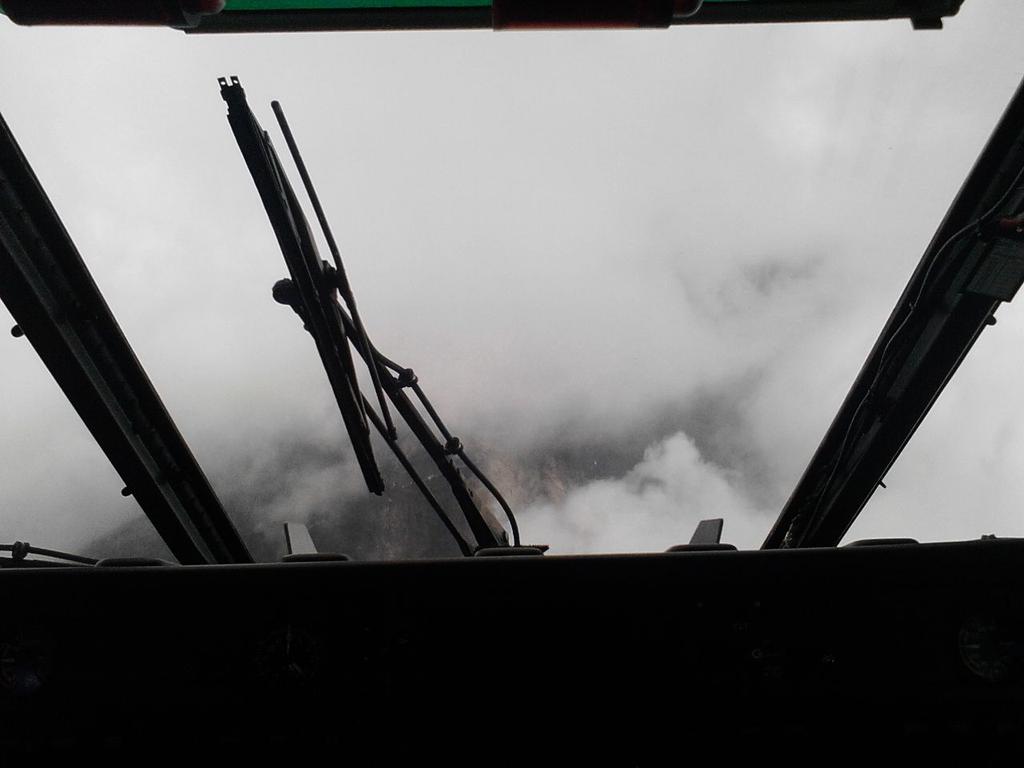
Most of the time, those who frequently look at Mount Kinabalu from far could see streams of clouds occasionally envelope the mountain. Let me show you a photo taken from one of the rescue helicopters that attempted to land at Laban Rata:
Visibility from a rescue chopper headed towards Mount Kinabalu – courtesy of @ayaqjagung on Twitter
The visibility can change drastically and in Alaska, many pilots and passengers have perished thinking the visibility would remain clear all the time.
But the weather was clear and the stranded climbers could see all the way down!
Did they watch what was above? Clear visibility also means high winds have pushed away the clouds. What you need to look above are those thin, long clouds that we who have our feet firmly planted on the ground and head that stays on our neck unlike those who suffer from psychosis call Lenticular clouds.
Lenticular clouds formation caused by mountain wave turbulence – courtesy of the City University of New York
As you can see, beneath the lenticular clouds are what meteorologists call rotor – a turbulent horizontal vortex generated around the “troughs” of mountain wave activity. Rotors could either push an aircraft upwards, or slam it down to the ground as shown in the diagram below:
The effects of rotor turbulence on aircraft – courtesy of Flight Safety Australia
In the end, the helicopters did manage to get to Laban Rata to bring down bodies and some of the injured victims. Of course not to the instance wanted by the climbers.
Yes, the Kinabalu Park guides are the heroes in this most unfortunate tragedy. Why them and not the soldiers or pilots or firemen or the police? They are the ones with the best knowledge of the area. Even of some trails have been cut off, they would still be able to find their way up and down the mountain because they are most familiar with the area. I salute them, as I salute the other rescuers who have and still are risking their lives trying to bring down the stranded climbers as well as bodies of the victims.
So, stop whining and forget what you have watched on TV or in the movies. Life does not work like how the directors want you to believe. And helicopter flying is nothing like how Franklin does it in GTA V.
For the residents of the town of Manik Urai in Kelantan, the image below taken late in December of 2014 will forever be etched inside their mind.
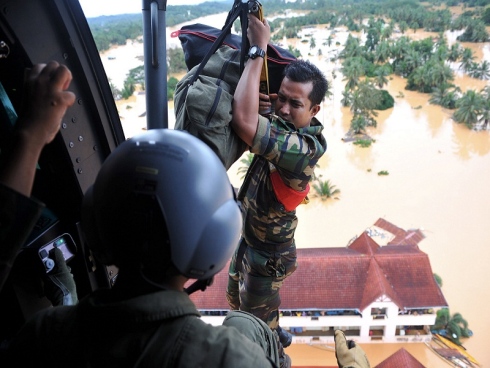
An RMAF PASKAU with essential supplies is lowered from an EC725 helicopter onto a school in Manik Urai, Kelantan where hundreds of flood victims were trapped
From its humble beginning 57 years ago playing a supporting role in the war against insurgency, the Royal Malaysian Air Force has evolved into a force that is respected and also to be reckoned with. From the days of the Scottish Aviation Twin Pioneer that was used for communications and support of ground operations, the RMAF’s Sukhoi Su-30MKM multi-role combat aircraft (MRCA) of today have been pitted against one of the best in the USAF’s arsenal: the F-22 Raptor. However, the image above brings us back to earth as to how the RMAF also is one with the people of the nation.
On the 1st of June this year, the RMAF will celebrate its 57th anniversary.
The RMAF Sukhoi Su-30MKM in action
Promoting “We Are One” as this year’s anniversary celebration theme, RMAF Chief General Dato’ Sri Roslan bin Saad TUDM outlined the concept of the theme in a recent press conference as a culture to develop human capital; symbolises an image of the RMAF that is formidable, courageous and patriotic; incalculating a sense of belonging to the RMAF, and; responsible to the RMAF as an organisation. The transformation plan for the RMAF would include the consolidation of assets and organisation, strengthening the human resources, and optimisation of financial resources.
In order to achieve these objectives, General Roslan outlined six main items that need attention and accentuation. They are:
to increase the level of readiness
to develop human capital
strengthening of leadership and administration
strengthening of the organisational structure
increasing togetherness and colloborations
emphasis on safety and welfare
“We Are One” essentially means that within the RMAF every men and women will have equal opportunity to develop and progress free from prejudice towards their trade, race, and gender. This is to avoid resentments that may have surfaced in the past towards the general-duty pilots by other trades whereby posts belonging to “less-glamorous” trades were taken away and given to the more “glamorous” trades. This caused the RMAF to lose experienced officers, men and women over the years. In the context of the Malaysian Armed Forces the theme points to the complementary role the RMAF provides to other services, while in the national context the RMAF is one with the Malaysian people and the government in providing its assets in support of other government agencies as well as other external and international agencies in peacetime as well as in disaster-relief roles. The above picture as well as the roles played by the RMAF in providing medical evacuation for critical patients as well as the ferrying of the body of victims of the MH17 tragedy underscores the one-ness of the RMAF with the Malaysian people.
An RMAF Mikoyan-Gurevich MiG-29NUB flying alongside the C-130H the writer was in
On another development, the RMAF is still seeking to replace its Mig-29 Fulcrum fleet with another MRCA. In the meantime, the RMAF will see how best to ensure that the Mig-29s remain a potent force while waiting for the arrival of the next fleet of MRCAs. The recent arrival of the Airbus A400M Atlas to supplement the RMAF’s fleet of C-130H Hercules transport aircraft has allowed the RMAF to enhance its airlift capability from one that is tactical to a level that is strategic.
The first of four Airbus A400M Atlas arrived on the 14th March 2015 at the Subang Airbase
General Roslan also added that the public perception of the RMAF has been encouraging. The increase in the number of visits of the RMAF website; very good response in the application for jobs in the RMAF as well as for each of the intakes; attendance by the public at Open Days at the various air bases and at aerial shows are among the indicators of good public response towards the RMAF.
The Chief of the Royal Malaysian Air Force, General Dato’ Sri Roslan bin Saad TUDM at the recent RMAF’s 57th Anniversary press conference
When asked about the recent arrests of IS symphatizers within the Malaysian Armed Forces, General Roslan informed that although it falls under the purview of the Malaysian Armed Forces Headquarters, the Royal Malaysian Air Force actively monitors its men and women for such characters and steps are in place to combat such threats within the organisation. The human capital development and the promotion of one-ness with the organisation are among the steps taken to ensure that the men and women of the RMAF continue to remain loyal not just to the RMAF, but also to the King an Country.
Programs lined up to celebrate the RMAF’s 57th anniversary include a blood donation program, a golf tournament, special prayers session for each religion for the men and women of the RMAF, while the 57th anniversary parade will be held at the Kuantan Air Base on 1st June 2015.
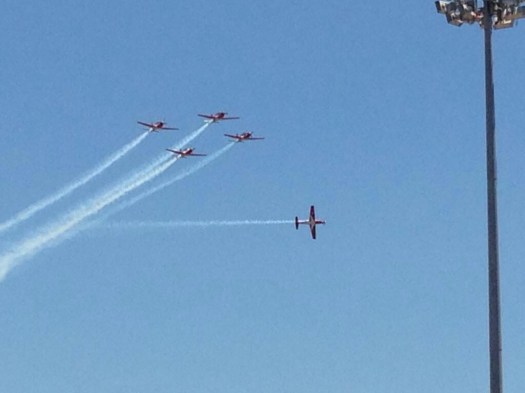
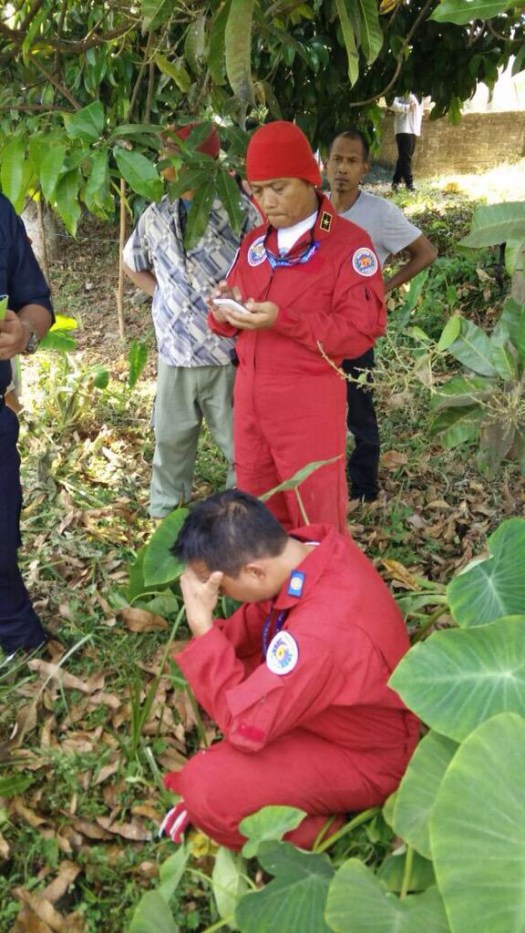
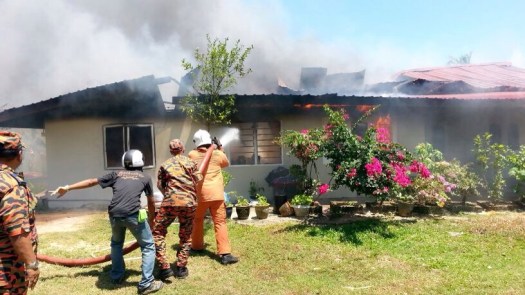
Two days before the opening ceremony of the Langkawi International Maritime and Aerospace 2015 (LIMA 2015), two KT-1B Wongbee aicraft belonging to the Indonesian Air Force’s Jupiter Aerobatic Team clipped wings in what seemed to be an “opposing solo” maneuver and crashed off site, with one aircraft hitting the ground causing two houses to catch fire. All four pilots ejected safely.
The Yogyakarta-based team are here in Langkawi to perform at LIMA 2015 and were practising when the incident occured. All pilots are safe while no injury has been reported on the ground. The pilots were evacuated by a RMaF EC-725 and the Fire and Rescue Services Department’s Mi-172 helicopters.
This is the second incident involving aerobatic teams during practice for a LIMA series. In 1991, a RMAF Pilatus PC-7 from the Tamingsari aerobatics team crashed into the back of a house in Kepala Batas, Alor Setar, Kedah while performing a twinkle at the end of a “bomb burst” formation for the inaugural LIMA exhibition. The pilot died on the spot.
The aerial displays will carry on in spite of the incident.
Sources of photos: Twitter, Agendadaily and Berita Harian.
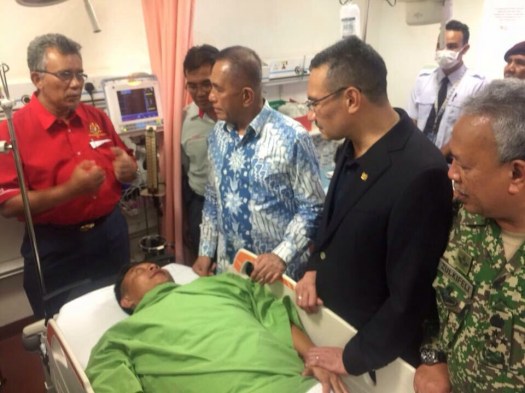
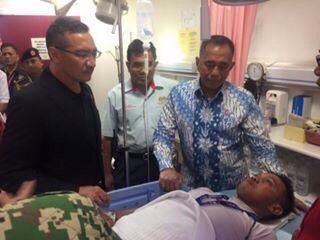
In a related development, the Defence Minister of Malaysia, Hishammuddin Hussein, and the Defence Minister of Indonesia, Gen (Rtd) Ryamizard Ryacudu, visited the pilots who are being treated at the Langkawi Hospital. Both Malaysia and Indonesia will conduct a joint investigation into the incident.






















 SeaDemon Says
You must be logged in to post a comment.