Malaysia’s Next Fighter Is Only Part of the Answer

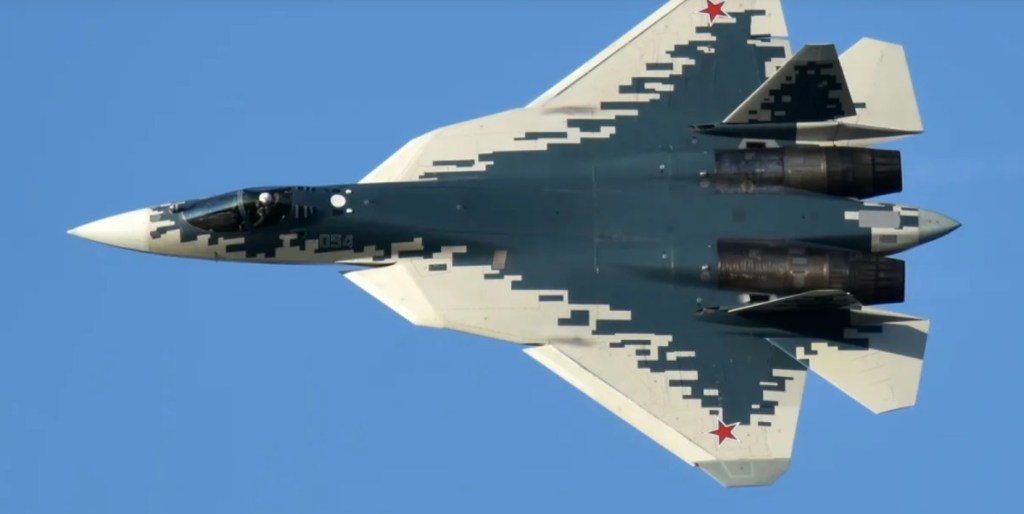
Against a future threat built around stealth fighters, long-range missiles and networked sensors, the RMAF’s decisive investment may be the system surrounding its MRCA—not merely the aircraft itself. (Image courtesy of regtechtimes.com)
Against a future threat built around stealth fighters, long-range missiles and networked sensors, the RMAF’s decisive investment may be the system surrounding its MRCA—not merely the aircraft itself.

Ask any Air Defence operator in Malaysia, their dream would be to have eight aircraft on Alert 15 status with the pilots remain suited up in nearby ready rooms while maintenance crews maintain pre-flighted jets on the tarmac. In the digital era, this would probably be the best case scenario save for, perhaps Alert 5, if they are already on Quick Readiness Alert. Gone are the days when Malaysia could scrambled fighters with analog systems in just two minutes.

But since having eight aircraft on Alert 5 can, theoretically, be achievable once the Royal Malaysian Air Force receives its eighteen advanced KAI FA-50M Block 20 light combat aircraft from South Korea beginning later this year, what would back these as the mainstay of Malaysia’s air power projection?

“The question is no longer which fighter is best. It is what air-defence architecture gives Malaysia’s fighters the best chance of surviving, seeing and fighting in a contested battlespace.”

Malaysia will eventually have to make one of the most consequential defence procurement decisions of the coming decade: what should replace the Royal Malaysian Air Force’s Su-30MKM and F/A-18D fleets? Defence Minister Mohamed Khaled Nordin said in May 2026 that evaluation of a new Multi-Role Combat Aircraft (MRCA) is expected to begin around 2030, with the existing Sukhois and Hornets expected to leave service around 2035. CAP55 envisages two MRCA squadrons, while the first FA-50 light combat aircraft are due to enter the force from the end of 2026.

It is tempting to frame the coming competition as a familiar beauty contest among aircraft: Rafale, F-15EX, Eurofighter Typhoon, F-35A, or perhaps a renewed Russian proposition. Each offers a different combination of range, payload, sensors, weapons, survivability, industrial access and political conditions. Yet by the time Malaysia makes its decision, asking which aircraft is “best” may already be the wrong question.

The reason is China’s rapidly changing combat-air ecosystem. Open-source assessments by the Royal United Services Institute estimated roughly 300 J-20 fifth-generation fighters in service by mid-2025, with production accelerating sharply. More important than the number alone is the combination of low-observable aircraft, advanced electronic warfare, datalinks, airborne and ground sensors, and increasingly capable long-range air-to-air missiles such as the PL-15, with the PL-16 and PL-17 adding further depth.

A Malaysian fighter operating over the South China Sea therefore cannot be considered in isolation. A conventional fighter may possess an excellent AESA radar and a formidable beyond-visual-range missile, but if an adversary’s wider sensor network detects, identifies and distributes its position before it can establish a sufficiently precise track on a low-observable opponent, the tactical contest has already begun on unfavourable terms.

The May 2025 India-Pakistan aerial fighting offered a useful warning. Reuters’ subsequent reconstruction of the engagement that resulted in the loss of an Indian Rafale emphasised not simply the performance of Pakistan’s Chinese-made PL-15 missile, but the kill chain around it: sensors and datalinks helped create the firing opportunity. The lesson for Malaysia should not be reduced to “one missile defeated one fighter.” The more important lesson is that a network can magnify the effectiveness of the aircraft and weapon connected to it.

What the candidates actually offer?

The Rafale remains an attractive balanced proposition. It combines a sophisticated electronic-warfare suite, Meteor beyond-visual-range missiles, multirole and maritime-strike capability, and twin-engine redundancy useful for extensive over-water operations. Its weakness in the specific J-20 problem is not that it is an inadequate fighter, but that it is not a very-low-observable aircraft. Against a stealthy opponent supported by a mature sensor network, first detection and first shot become harder to guarantee.

The Eurofighter Typhoon brings exceptional air-to-air performance, strong kinematics and Meteor. It is an outstanding interceptor and has matured into a capable swing-role aircraft. But it confronts broadly the same detection-asymmetry problem as other non-stealth fighters.

The F-15EX approaches the problem differently. Its virtues are endurance, a powerful radar, very large weapons capacity and the ability to carry a substantial number of air-to-air missiles. In a networked force it could be especially valuable as a heavily armed rearward “missile truck,” receiving targeting information from other sensors rather than having to penetrate deepest into the contested area itself. Its size and radar signature, however, make it a poor platform for trying to out-stealth a J-20.

The F-35A is qualitatively different because low observability, passive sensing, sensor fusion and networking are central to its design. It would not make the J-20 problem disappear, and public information cannot support simplistic claims about which stealth fighter would detect the other first. But the F-35 addresses the central operational problem more directly: surviving and gathering information in a battlespace where the opponent is also trying to minimise its detectability. For Malaysia, the complications would include US approval, security requirements, infrastructure, sustainment arrangements and long-term dependence on the F-35 support ecosystem.

A renewed Russian option would have one obvious Malaysian attraction: the RMAF already possesses deep experience with the Flanker family. Malaysia could conceivably seek a much more ambitious industrial arrangement involving local manufacture of selected spares, deeper engine and avionics overhaul, and perhaps a regional maintenance role. Russia has accepted significant localisation elsewhere. But a new major Russian combat-aircraft purchase would introduce sanctions exposure under the United States’ CAATSA framework, while support chains and access to Western technology would have to be weighed carefully. US guidance has historically distinguished routine maintenance and spares for existing Russian equipment from major new purchases or qualitative upgrades.

The real procurement is the network

The more important conclusion is that none of these aircraft should be bought as an isolated answer. Eighteen sophisticated fighters without the systems that allow them to see farther, communicate securely, remain airborne longer and survive enemy targeting would represent an incomplete investment.

Malaysia’s geography makes this especially important. Peninsular Malaysia and Sabah and Sarawak are separated by the South China Sea. A small fighter force must cover enormous distances and cannot be everywhere at once. Airborne early warning and control (AEW&C), modern ground-based surveillance, secure datalinks, electronic warfare, aerial refuelling, dispersed and hardened operating bases, ground-based air defence and adequate stocks of modern beyond-visual-range missiles all multiply the value of each fighter.

The RMAF is already moving in this direction. In June 2026, the service said air-defence radars were being established at Bintulu, Bukit Puteri and Bukit Lunchu, together with an air-surveillance radar on Pulau Layang-Layang, specifically to improve early warning and close surveillance gaps. The Chief of Air Force has also described incoming capabilities in the context of an integrated deterrence strategy rather than as stand-alone platforms.

That approach should become the organising principle of the MRCA programme. An AEW&C aircraft should not merely be an optional add-on after the fighter contract has consumed the budget. Nor should secure datalinks, electronic warfare, missile stocks, maintenance resilience and dispersal be treated as secondary procurement lines. They are part of the weapon system.

There is also a paradox. AEW&C aircraft and tankers dramatically increase fighter effectiveness, but China’s development of very-long-range air-to-air weapons is partly intended to threaten precisely these high-value support aircraft. Malaysia would therefore need to think about where such assets orbit, how they are protected, how information is distributed if one is forced away, and how ground and airborne sensors back one another up. Resilience matters as much as reach. When you take these into account, eighteen is no longer a feasible minimum number of combat aircraft to procure.

Industrial sovereignty matters too

The Russian question raises a broader issue that should apply to every bidder: industrial sovereignty. Malaysia should ask not only what an aircraft can do on delivery day, but what happens in year fifteen when a radar module fails, an engine requires overhaul, a supplier faces sanctions or export restrictions, or a software upgrade becomes necessary.

Local production does not have to mean building an entire fighter in Malaysia. For a fleet of only 18 aircraft, complete assembly may make little economic sense. More useful could be guaranteed access to technical data, local manufacture of high-failure-rate components, deep maintenance and overhaul capability, meaningful technology transfer, long-term stocks of critical spares and clearly negotiated rights to modify or integrate selected systems. A fighter that is spectacular on paper but chronically unavailable is not air power.

Familiarity and commonality

Perhaps, it would be more palatable if Russia proposes the Sukhoi Su-57E as part of a larger fleet-and-industrial package rather than simply offering Malaysia 18 new fighters. Russia needs to address Malaysia’s concerns about supply-chain and logistics, especially in view of the predicament the latter faces with its ongoing war in Ukraine. In that form, buying more than 18 aircraft could potentially make better economic sense on a per-aircraft and whole-fleet basis.

There is already some movement in precisely this direction. At DSA 2026, Rosoboronexport explicitly marketed the Su-57E to Malaysia, arguing that it shares the same systems and weapons with Malaysia’s Su-30MKM fleet. Russia has also publicly described Malaysia as a longstanding military-technical partner and highlighted the existing Malaysian MRO infrastructure.

The economically interesting proposition: 24-36 Su-57E, not 18

Eighteen aircraft is essentially a one operational squadron with limited depth once aircraft start undergoing maintenance, upgrades and training are taken into account. A purchase of perhaps 24 or 36 Su-57Es changes the economics because Malaysia could amortise the fixed costs of simulators, training, ground-support equipment, weapons integration, technical documentation and infrastructure over substantially more aircraft.

For illustration—not a price quotation—suppose establishing an Su-57E ecosystem costs $1 billion in fixed infrastructure, training, spares and integration costs. Spread across 18 aircraft, that is about $55.6 million per aircraft before buying the aircraft themselves. Across 36, it becomes $27.8 million.

But the really interesting possibility is combining the acquisition with Malaysia’s existing 18 Su-30MKMs.

Malaysia is already investing in keeping those aircraft flying. The domestic SLEP undertaken by ATSC is intended to keep them operational for roughly another decade, and the government has specifically said doing this work domestically saves money compared with sending the aircraft back to Russia.

In my opinion, the MKMs should not merely receive a life extension. This is where Russia would need to offer Malaysia a genuine mid-life combat-system modernisation.

The aircraft remain valuable large fighters. Malaysia has also accumulated considerable domestic expertise: ATSC’s Sukhoi Technical Centre already handles scheduled and unscheduled servicing, structural repair, modifications, radar-related work and AL-31FP engine module changes.

A Russian proposal could therefore involve upgrading the MKMs in Malaysia while expanding Malaysian industrial participation.

I would look for radar/sensor improvements, modern electronic warfare and self-protection, mission-computer and cockpit upgrades, secure datalinks, improved identification systems, newer Russian air-to-air weapons, and integration with the Su-57E’s wider combat network.

Interestingly, Russia is already marketing its new RVV-SDM medium-range air-to-air missile for the Su-57E and says it can be adapted to other Russian aircraft after modification. This creates an intriguing division of labour:

Su-57E: penetrating/forward sensor, counter-air and high-end interceptor.

Su-30MKM: large-payload “missile truck” comparable to the F-15EX, maritime strike aircraft and long-range multirole platform.

The Su-57E could detect, classify and distribute targeting information while the MKMs contribute weapons from farther behind. That would make the older aircraft much more useful than treating them simply as fighters waiting for retirement.

The question Malaysia should ask

By 2030, Malaysia should resist turning the MRCA selection into a contest of maximum speed, radar range, missile range or air-show manoeuvrability. Those figures matter, but modern air combat increasingly depends on who constructs the more complete picture of the battlespace and converts that information into a firing opportunity first.

The relevant benchmark is therefore not simply Rafale versus Typhoon versus F-15EX versus F-35A—or a Russian alternative. It is the complete Malaysian system surrounding whichever aircraft is chosen.

If funding is finite, there may even be circumstances in which 18 less extravagantly equipped fighters embedded in a robust national sensor and command network provide greater defensive value than 18 exquisite fighters operating with inadequate airborne warning, thin missile stocks and limited networking. Conversely, a high-end stealth aircraft may justify its premium if Malaysia builds the architecture required to exploit its sensing and information-sharing advantages.

The RMAF’s next MRCA should consequently be selected as one node in an integrated air-defence system stretching from ground radar and Pulau Layang-Layang to AEW&C, fighters, surface-based air defence and command networks across both halves of Malaysia.

The aircraft will remain important. But against a future threat represented not just by the J-20, PL-15 and the network behind them, the decisive advantage may belong not to the country that buys the most impressive fighter, but to the one that best connects everything it has.

Once the Air Defence operators have their eight aircraft to scramble, what would be the ones ready on Alert 15 to support them?


There Is Nothing Wrong With Our Sukhois

When the Defence Minister revealed to the world that we only had four Sukhoi Su-30MKMs that could fly out of the 18 that we have, I kept quiet because no one was interested in listening. This problem of the Sukhois had already been anticipated by both the Royal Malaysian Air Force (RMAF) and by defence observers such as myself.

The RMAF was never told by Russia that once the fighters reach their 10th year, a major maintenance was required before they reach another milestone.

This problem had been anticipated from a couple of years back, even as early as under the leadership of the previous Chief of RMAF. The RMAF had since then made sure that all the other assets could make up for the Sukhois being offline for some time.

Today, news portal Free Malaysia Today reported an anonymous RMAF source saying that the problem of the Sukhois is not the weakness of the organisation’s maintenance regime, but more because of the way the Russians do business.

The deal with Russia for the Sukhois were made in 2003 during the final year of the administration of the 4th Prime Minister, and were delivered to the RMAF in 2007 and 2009. Receiving good support initially, Russian bureaucratic ways soon set in and made things difficult.

Although Western countries have offered Malaysia their fighters, buying from them always come with strings attached. When we purchased our earlier Boeing F/A-18 Hornets, the US did not allow them to come with the advanced weapons. We only received those after the Russians sold us their version of those weapons.

Coupled with slashed budgets, the RMAF had found it difficult to ensure that the Su-30MKMs undergo their 10th year undisclosed maintenance.

Russia needs to learn to rid itself of the bureaucracy that riddles its defence industry if it wants to continue having developing nations’ trust. Else there is no choice but for their air forces, including ours, to seek fighters elsewhere.

Defence: LIMA ’17 To Be More Exciting

The Langkawi Maritime and Aerospace Exhibition 2017 will be more exciting than the previous editions because there is a marked increase in floor space as a result of the re-introduction of the Maritime Segment at the Resorts World, Langkawi.

There will be the array of Unmanned Aerial Vehicles (UAV) and Autonomous Underwater Vehicles (AUV) that will be on display such as the United States Air Force MQ-1 Predator, United States Navy MQ-8 Fire Scout, Thales Fulmar Mini-UAV, SAAB AUV 62AT, and the TBN UAV from Ukraine.

The Malaysian Maritime Enforcement Agency (MMEA) will be debuting the newly-received offshore patrol vessel ‘KM Pekan’ donated by the Japanese government.

LIMA ’17 has confirmed 555 exhibitors from 36 countries and is expecting over 180,000 trade and public visitors from all over the world. LIMA ’17 will be held from 21 to 25 March 2017 in Langkawi. This year will mark the 14th edition in its 27 year history and is expected to be the best and biggest one to date.

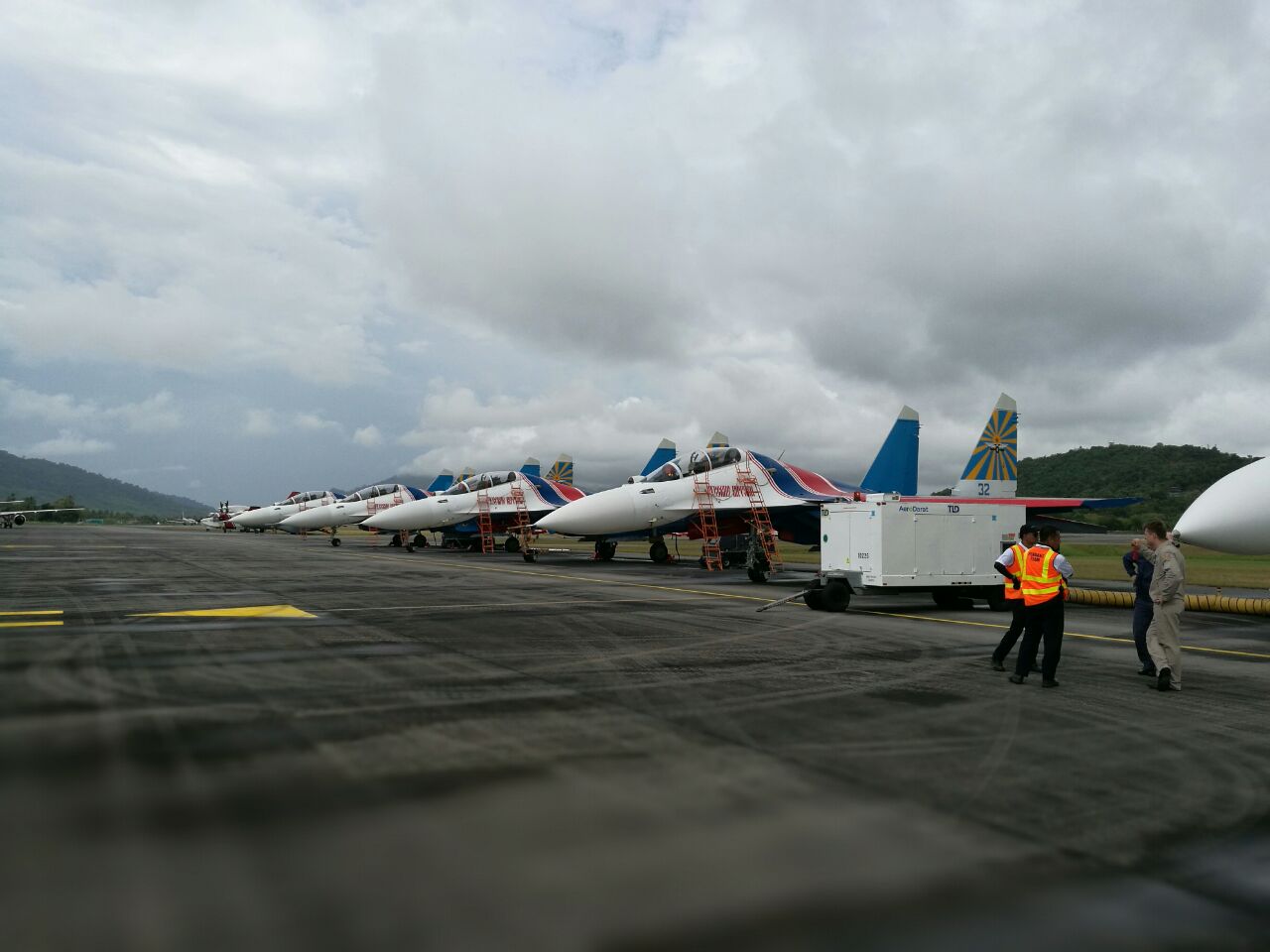
Irkut Corporation of Russia will be featuring the Russian Air Force’s aerobatic team ‘Russian Knights’ in their spanking new Sukhoi Su-30SM.  This would be the return of the Russian Knights’ to LIMA and their first tour outside the Russian Federation in the Su-30SMs.

Sukhoi Su-30SMs of the Russian Knights at the Langkawi International Airport

Irkut will also be featuring its scout/attack helicopter, the Kamov Ka-25 “Alligator.”

Irkut Corporation will be featuring aircraft models of the entire Irkut product line will be presented at the UAC stand: the Su-30SME fighter, the Yak-130 and Yak-152 training aircraft, and the new MC-21 commercial liner.

Irkut Corporation comes under the Russian pavillion which is under the charge of JSC Rosoboronexport, which is a part of the Rostec State Corporation. Rosoboronexport is in-charge of the united Russian stand at LIMA’17 showcasing over 500 products from 20 enterprises of the defence industry complex of the Russian Federation.

LIMA’ 17 also serves as the perfect platform to encourage further co-operation between Malaysia and regional & global allies in both the maritime and aerospace industries, specifically on asset acquisition as Armed Forces around the world are modernizing their asset bases. For example, the Chiefs of Navy Roundtable Talk at LIMA’17 this year will bring together 12 Chiefs of Navy and 24 representatives to discuss about “Naval Capability Based Acquisition Reform”. Subsequently, the LIMA’17 Air Chiefs Conference will also be taking a similar approach this year, and the attending Chiefs of Air Force and other senior air delegations will be tackling the “Air Force Capability Based Acquisition Reform”.

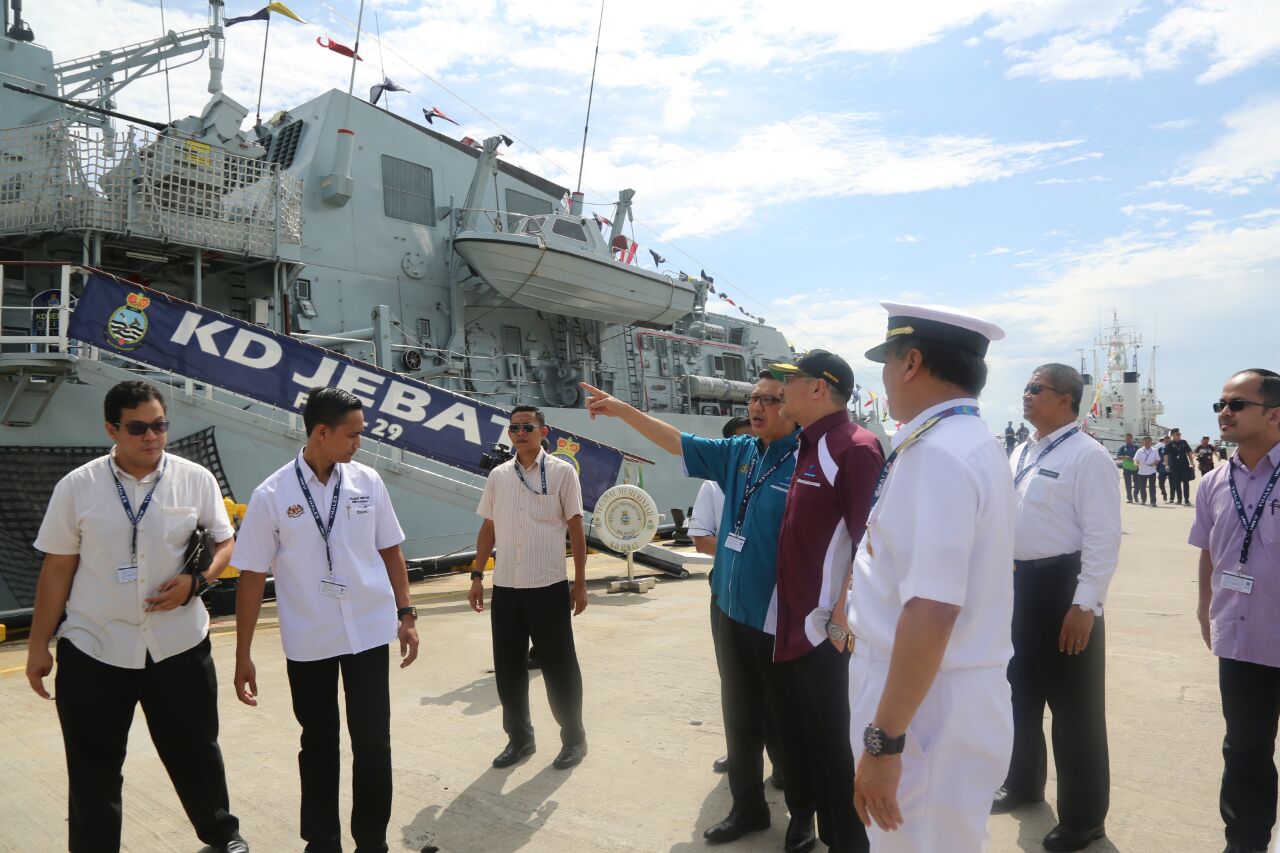
The Ministers of Defence and Transport viewing the preparations at the Maritime Segment before the Press Conference cum High Tea on board the Royal Malaysian Navy frigate KD Jebat

Another first for LIMA 17 will be the involvement of youths from across the country. The Ministry of Youth and Sports, together with the Ministry of Defence have invited over 500 young individuals from Briged Sukarelawan Khidmat Negara (BSKN), Universiti Pertahanan Nasional Malaysia (UPNM), Universiti Teknologi Mara (UiTM) Perlis, Parlimen Belia Malaysia, iM4U, Gabungan Pelajar Melayu Semenanjung (GPMS), Majlis Belia Malaysia (MBM) and our Reserve Officer Training Unit (PALAPES). They will be attending a Comprehensive Educational Tour throughout LIMA ’17 and attend engagement sessions with leaders in the defence sector. On the final day, a Transformasi Nasional 2050 (TN50) Townhall Dialogue on defence to encourage the youth to play a larger role and capture their aspirations about the future of Malaysia’s security.

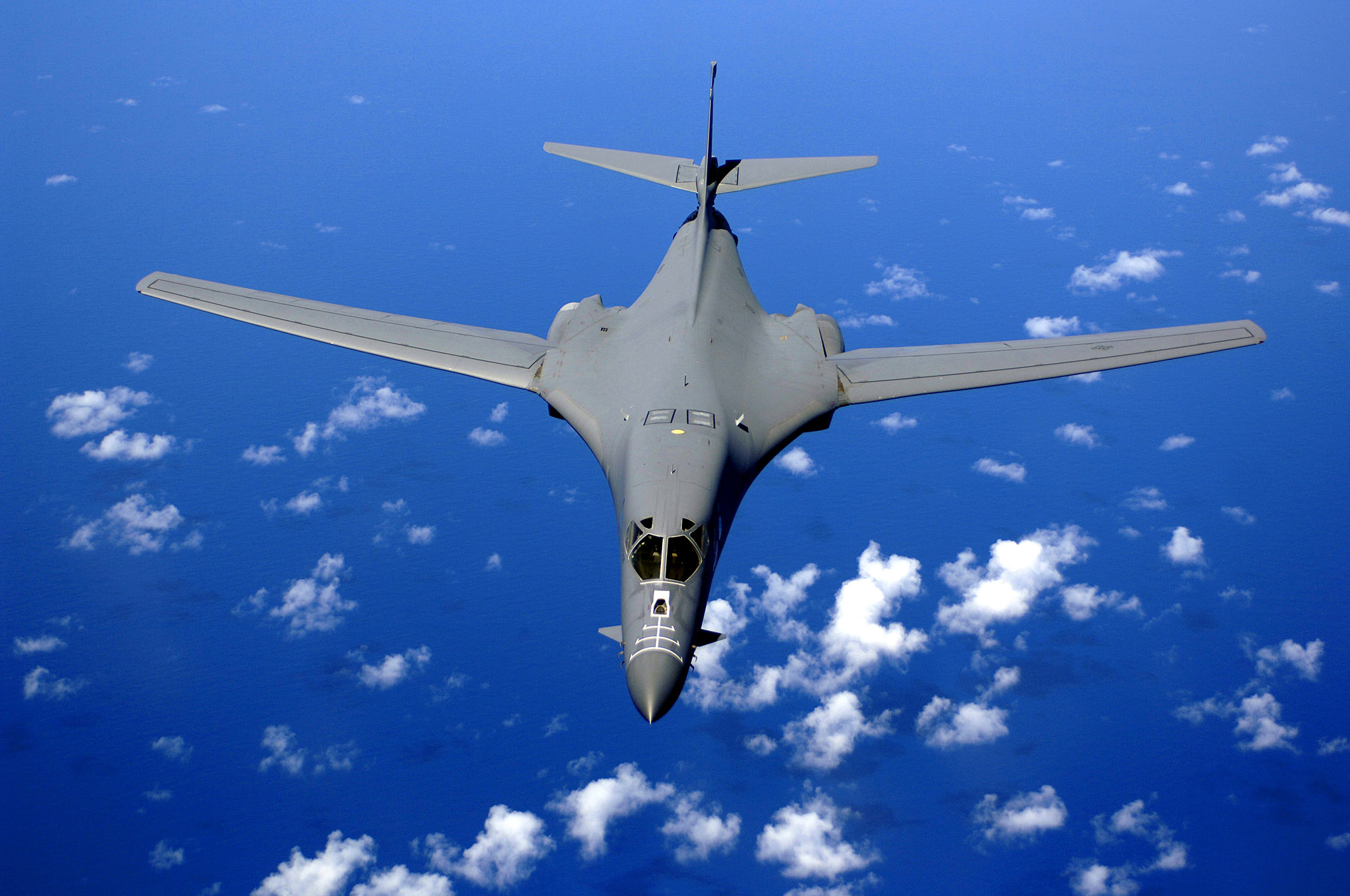
ANDERSEN AIR FORCE BASE, GUAM — A B-1B Lancer soars over the Pacific Ocean after air refueling training here Sept. 30. The B1B Bomber is deployed to Andersen Air Force Base, Guam, as part of the Pacific Commands continuous bomber presence in the Asia-Pacific region, enhancing regional security and the U.S. commitment to the Western Pacific. The B1 is from the 37th Bomb Squadron, Ellsworth Air Force Base, South Dakota. (U.S. Air Force Photo by Staff Sgt. Bennie J. Davis III)

Other than the Russian Knights, the Black Eagles, the aerobatic team of the Republic of Korea Air Force will be making a first-time appearance this LIMA. The Black Eagles’ performance involves 9 KAI – T50B jet aircrafts. LIMA 2017 will also see the TNI-AU’s Jupiter as part of the aerobatic demonstrations on show. Our very own Royal Malaysian Air Force’s SU-30 MKM and F/A 18D jets, the Rafale from France, the Gripen 39C/D from Thailand and 2 Supersonic B-1 Bombers from the United States Air Force will also perform flypasts during the exhibition.

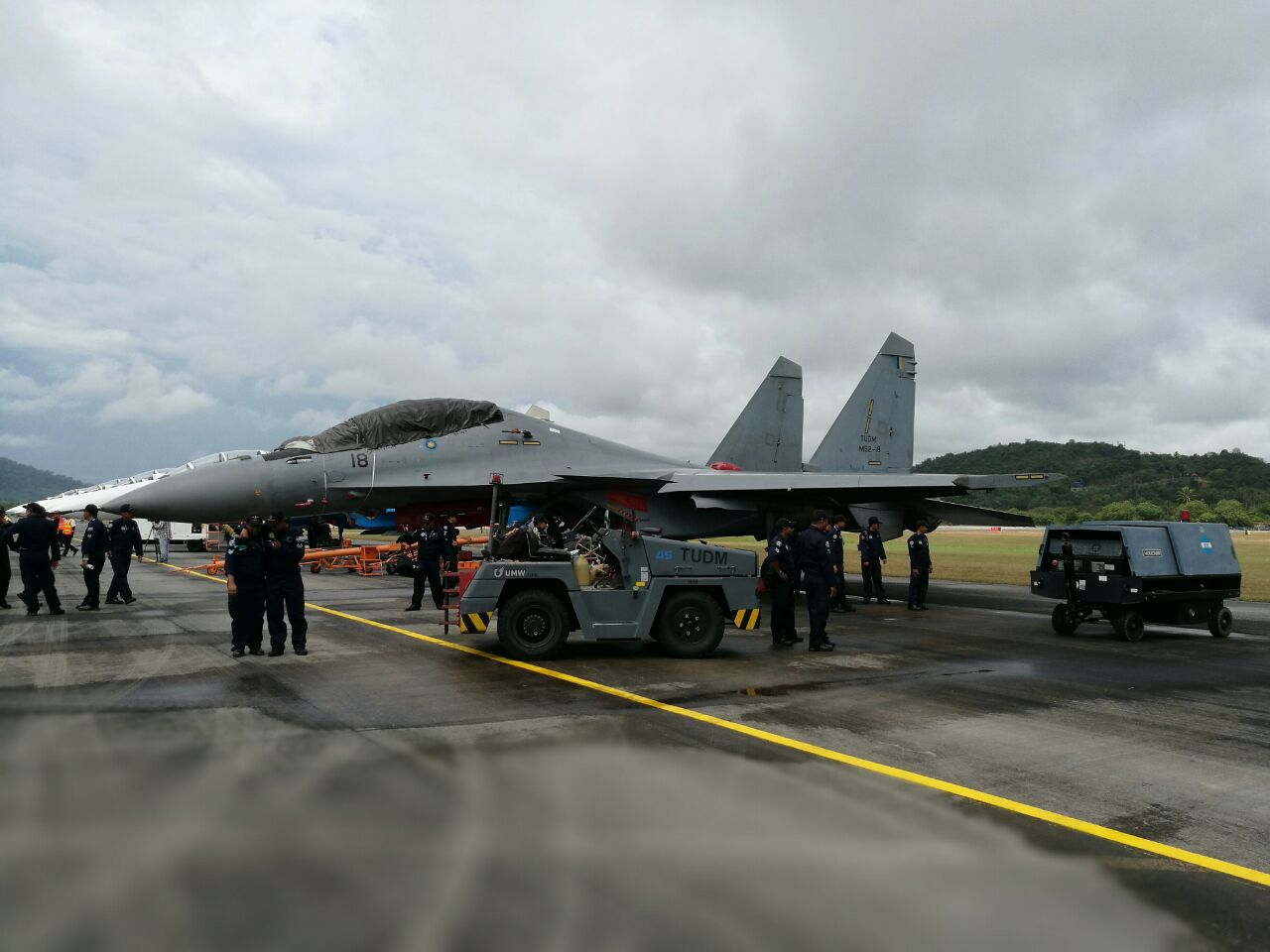
The Royal Malaysian Air Force’s Sukhoi Su-30MKM will be performing solo aerial displays throughout the five-day exhibition in Langkawi

Trumped

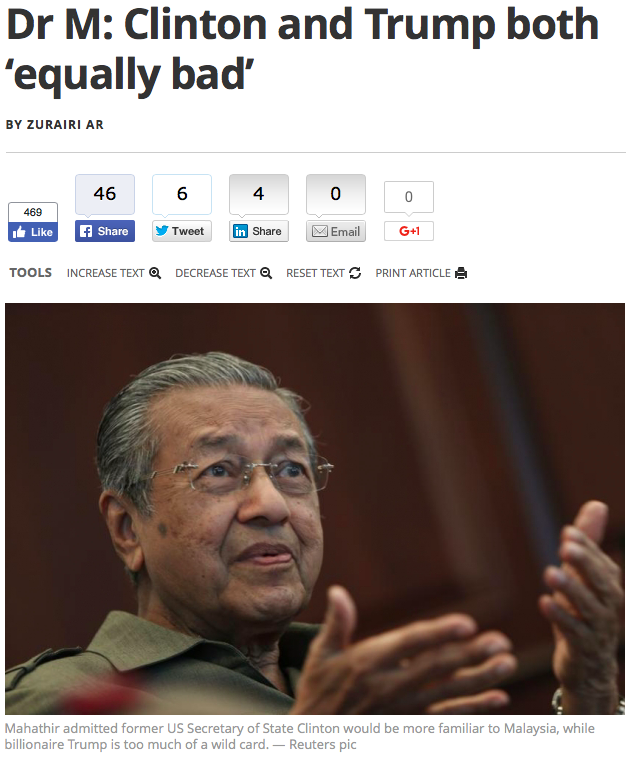
Donald Trump is the 45th President of the United States of America

A few hours before Hillary Clinton conceded defeat, signs were everywhere that she was heading down the abyss.  On Twitter people were talking about moving to Canada while the Canadian Immigration website crashed for reasons not yet known to us.  Hillary finally conceded defeat making Trump the President-elect.  The next four years of his Presidency is going to be worth watching.

I can understand how the supporters of the Democrats feel right now, my home state of Selangor fell to what was the Barisan Alternatif in 2008 and the first 24 hours was filled with uncertainties.  In the end, it was business as usual albeit having to sufer the occasional water outtages as well as incompetent solid wastes collection contractors.  Other than that the state runs on autopilot while the politicians in charge of the state are busy giving ceramahs non-stop.

Trump has promised to make America great again.  To make America great again America’s military would also be made great.  It also means that America’s businesses will be given priority over foreign-owned ones.

How does this augur for Malaysia?

Firstly, the Republican-heavy Congress would not pass the Trans-Pacific Partnership Agreement as Trump sees the TPPA as a vehicle that would allow Asian businesses to take over the American economy.  If it were to go ahead a major tweaking of the TPPA needs to be done – tariffs would be raised to favour the American economy and that would not go down well with the other potential TPPA partners.  Anyhow, with the TPPA still not ratified, Trump is likely to hold to his pledge to withdraw the United States from the free-trade agreement.  The good thing from that would be Malaysia’s continued hold on its protectionist policies aimed at preserving the Bumiputra rights as well as the protection for local industries.

Malaysia’s manufactured exports to the US saw an increase by 13 percent recently.  With Trump favouring the great American economy, this would be greatly affected since Malaysia’s economy is 90 percent reliant on exports.  Nomura Holdings in early July 2016 in a report titled ‘Trumping Asia’ bluntly said that if Trump wins, Asia loses.  The Philippines would be the country in the South East Asian region that would be most affected by Trump’s Presidency while Malaysia is fourth after Indonesia.

Chart image from Boomberg with source from Nomura

It is not surprising then to see Prayuth Chan-O-Cha of Thailand, Lee Hsien Loong of Singapore, Duterte of the Philippines and Najib Razak of Malaysia visit China in May, September, mid October and end October respectively to strengthen economic ties and increase trade with China.  These leaders must have predicted that the Democrats would lose to the GOP and knew that if trade is not increased with the largest Asian economic power these nations would stand to lose.  Purchasing the Chinese corvettes was definitely a good decision now given that any purchase from the Western powers would come with lots of strings attached.

China is not without danger because of Trump’s Presidency.  With levels breaching the USD 600 billion level, China is the US’s largest trading partner, and as President, Trump could impose punitive duties that includes a 15 percent tariff on China for a maximum of 150 days without having to go to Congress for approval.

Militarily, Trump had made a statement on China’s expansion in the South China Sea. “We have rebuilt China, and yet they will go in the South China Sea and build a military fortress the likes of which perhaps the world has not seen,” Trump said. “Amazing, actually. They do that, and they do that at will because they have no respect for our president and they have no respect for our country.”

I am of the opinion that the term “We have rebuilt China” used by Trump is the large balance of payments deficit that the US has with China.  If the US could ‘prove’ that China is a currency manipulator, which the US Treasury could easily declare without needing the approval of the Congress, it could trigger a range of trade restrictions against China – a form of pressure for China to ‘respect’ the US as required by Trump to make America great again.  Which is why the visit by Najib Razak to China recently was not an act of ‘kow-towing‘ to a Big Brother, but rather saying “Malaysia is a friend, how can you (China) help us so we can help you?”  China now needs its South East Asian neighbours as well as Russia as its allies.

We have stepped into an era that will be filled with surprises and not less scarily challenging.  The only consolation is that George Soros who finances both the Hillary campaign machinery as well as the Opposition and pro-Opposition organisations in Malaysia will find it hard to thrive.  Perhaps as a gesture of goodwill Trump should look into the affairs of the Open Society Institute and how its financing of the Arab Spring has given rise to the terrorist activities in North Africa, the Middle East as well as in South East Asia and take criminal action against the OSI.

As Tharman Shanmugaratnam, Singapore’s Deputy Prime Minister said early this year, “We are all discovering Donald Trump, as he is himself: there is a stream of consciousness approach to policy pronouncements. One can only hope that it evolves towards addressing the strategic interests of the United States in the world.”

There may be a side to Donald Trump that we have not yet seen.  Others with better insight into things would probably have a better read of his character.  Of course, I am not talking about the Pribumi supremo. He never has anything good to say.

Madman
Madman

Trump would also need friends as China does, and he would look at nations with leaders who are level-headed as they are smart.  I was about to end this post when I saw this Tweet on my timeline:

A tweet by Jonathan Head, BBC's Southeast Asia correspondent
A tweet by Jonathan Head, BBC’s Southeast Asia correspondent

Apparently, not only is Najib Razak a golf buddy of Barack Obama.  He is also Trump’s favourite Prime Minister, as signed on a photograph taken of the two of them.  As I said, leaders have to have foresight and know what is best for the country he leads.  And a line in Shakespeare’s Henry VIII that reminds me exactly of this situation:

Heat not a furnace for your foe so hot that it do singe yourself.

Najib Razak's looking forward to meeting Trump...again
Najib Razak’s looking forward to meeting Trump…again

I call that a masterstroke from a great Statesman.

MH17

  
It stares at you. It is dead, has been so for the past 15 months, victim of a struggle it never was a part of. Yet you cannot avoid the stare and today we know why.

A couple of hours after the MH17 went down, I was asked to appear on a TV channel to try and make sense of what was happening. I finally left the studio at 6.30am saying that a BUK system had downed the aircraft.

We know now that it’s true. The 9M-MRD was downed by a proximity-fused BUK. Conspiracy theorists were quick to jump the gun saying a Su-25 Frogfoot did it using its cannons while others posted a video of a plane going down somewhere in India and passed that off as the MH17.

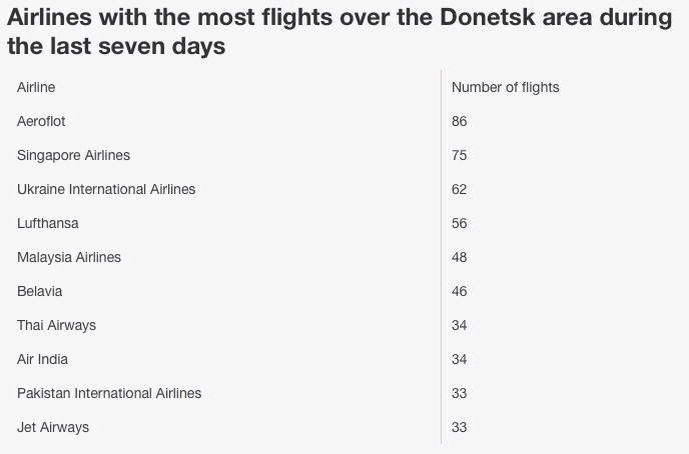
There were no bombs on board, no were there bullet holes on any part of the fuselage. In fact Malaysia Airlines too cannot be faulted for flying in that area because 61 carriers flew there, with 160 aircraft flying there on that fateful day itself until the airspace was declared off-limits.

When the announcement was made by the Dutch Safety Board, everyone thought it would be the day we would know who the perpetrators are. When no such detail was given, families were left disappointed. Some journalists and even a cabinet minister asked on social media why have the perpetrators been allowed to go scot-free?

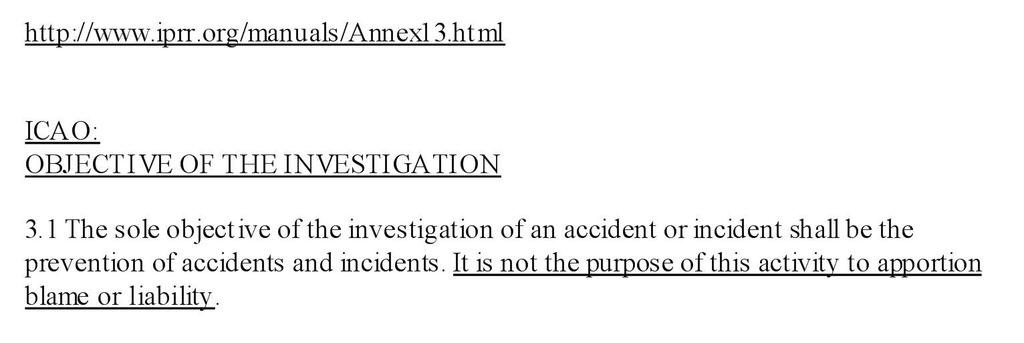
This is the Dutch Safety Board. It operates in accordance with Annex 13 of the ICAO guidelines as follows:

  
The investigation team was only to find out hownthe plane was brought down and if there were weaknesses in the system that could have prevented the incident from happening – and learn lessons to prevent recurrence. To find the perpetrators is the job of another investigation team that looks at the criminal aspects of the MH17 incident.

We all want to know who made 9M-MRD stare at us like in the photo above. But that is not for us to know tonight. That will come at a time I hope that is not too far in the future.

I am glad that the cockpit crew did not know what happened to them. It was swift. It was in the microseconds. I am not too happy that some had a minute or slightly more to digest what was happening. I don’t even want to imagine those last moments.

And we wouldn’t have known anything much had we not been able to retrieve the black boxes as well as most of the bodies of the victims if not for these two men who worked in an unorthodox manner to secure them.

While everyone else was figuring on how to get to Donetsk, these mostly-forgotten two paved the way for our team to get there.


In A Way, It Is A Great Aidil Fitri

One after another tragedy befell us. 2014 struck us as annus horribilis. Our faith in the capability of this nation was tested again and again, and at times for many it seemed as if we are the laughing stock of the world.

One man surprised me: Najib Razak. I for one did not think that he would be able to keep his head above the turbid waters created by the MH17 incident where world powers and their allies were already showing fists to each other, while Malaysia looked helpless in the middle. Out of nowhere, Najib appeared on television screens almost worldwide, announcing that Malaysia had secured the two black boxes, the bodies retrieved, and unlimited access to the crash sites. And it seemed for a long second, everyone in the world paused and wondered how could this nothing nation secure such a deal?

I have always maintained that if the parties involved in the conflict are eager to prove their innocence, they should cooperate. That was exactly what Alexander Borodai did. Malaysia did not care for the conflict. All Malaysia want is to be able to send back fathers, mothers, grandfathers, grandmothers, sons and daughters back to their loved ones; therefore it was important for Malaysia to speak to who seems to be in-charge of the area and situation, not necessarily recognising who is who in Eastern Ukraine.

A simple but decisive stroke of diplomacy by the least expected nation’s Prime Minister has brought about all but a final closure to the MH17 episode. Najib Razak, in my eyes, has proven himself a worthy leader, a diplomat to be respected. As for MH370, search will recommence next month earliest, and we hope to have good news from that as well although it may seem all but futile.

At least, in the case of MH17, Malaysians can have a great albeit sombre Aidil Fitri. At least we know they will be coming back. And we pray the same for those on board the MH370.

Dato’ Seri Najib, I thank you and seek your forgiveness for not having faith in your handling of the MH17 tragedy. Not only have you proven that I was wrong about you, you went on to prove you are far better than the leaders of the developed nations.

Selamat Hari Raya Aidil Fitri, Maaf Zahir dan Batin.

The Knee Is The Limit

20140720-151753-55073081.jpg

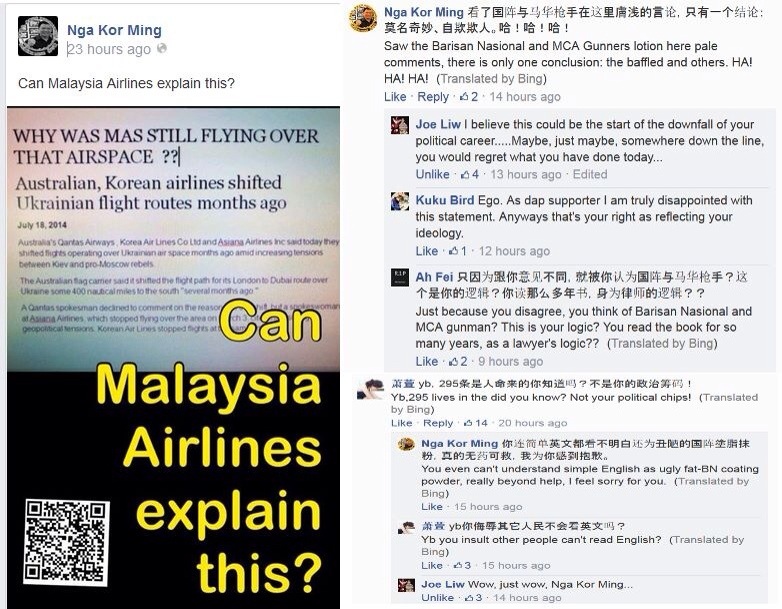
Every time a crisis hits Malaysia, the knee seems to be the limit of many, not just in Malaysia, but also around the world. Therefore, in just four months, we see more brain-in-the-knee experts rear their empty ugly skull. While in the MH370 tragedy, I personally knew one person on board, I know two people who have lost family members on board the MH17 – one lost five family members, the other lost six. As usual, many keyboard experts would put the blame on the pilot who strayed from the intended flight path because he was fasting; on Malaysia Airlines for allowing MH17 to fly into a “Red Zone” when other airlines skirted the area; and some even concluded that the aircraft, registration 9M-MRD, broke apart in mid-air because of poor maintenance. Before I begin, let me congratulate DAP Member of Parliament, Nga Kor Ming, for having made it to the “Idiots of the Year” list, two years in a row for posting this:

20140720-152918-55758995.jpg

Let us go through the items one-by-one:

Was MH17 Flying Through A No-Fly Zone?

No.

The International Civil Aviation Organisation (ICAO) has confirmed that that particular airway (much like our highways on ground) was a safe route. In fact, when during a PC by the Malaysian Transport Minister it was mentioned that Malaysia Airlines no longer flies that airway because the airway has now been closed, the ICAO refuted this saying the airway is still open. However, the agency that is diverting flights away from East Ukraine is Eurocontrol, the airspace management agency for Europe. Prior to the incident, the Ukrainian agency for airspace management cleared any flight to fly above 32,000 feet. When MH17 was shot down, she was flying at a supposedly safe altitude of 33,000 feet.

There was a Notice to Airmen (NOTAM) issued but does not cover the area the MH17 was flying through.

20140721-163646-59806037.jpg

Therefore, the area was never a “No-Fly Zone.”

MAS Pilots Are Irresponsible As They Fly According To Their Whims And Fancies

Pilots do not fly according to their whims and fancies and like the roads you drive on, similarly there are airways above where the police watches you on every road and passes you to another policeman to watch you when you leave one road to enter another. The police would even tell you at what speeds are you allowed to fly and at what height. Every flight would require an approved flight plan. This flight plan is then submitted by the airline’s flight operations department or equivalent to the airspace management organisation which in the case of Amsterdam, falls under Eurocontrol which will then coordinate with the various Flight Information Regions to seek approval from them for MH17 to fly through. Once approved, the pilots would study the approved flight plan, concur with it, punch it into their flight management system and fly according to the plan save for some minor variations due to traffic or weather.

This is hardly the kiasu driving you undertake when you drive your girlfriend inside your mom’s car.

MAS Is Irresponsible For Allowing MH17 To Fly Into A No-Fly Zone/Zone of Conflict

Firstly, it was not a No-Fly Zone as explained above. Secondly, that has always been the route taken by most airlines going to northwestern Europe from most of Asia and vice versa. The only thing that has changed is the conflict that is taking place in the Donetsk region.

Yes, Ukrainian MILITARY aircraft have been shot down there prior to the downing of the MH17. I placed emphasis on the word MILITARY. All were shot down using the IGLA MANPADS (Man Portable Air Defence System) – in short, a shoulder-launched surface-to-air missile. This system can reach an altitude of 6,000 meters (19,700 feet). So, aircraft flying at 6,100 meters (20,000 feet) and above are generally safe. The Ukrainian authorities even added another 12,000 feet safety buffer by creating a minimum altitude of 32,000 feet. The MH17 was flying at 33,000 feet.

MAS Is Irresponsible For Not Redirecting Flights Away From Ukraine Like Other Airlines Have Including Singapore Airlines and QANTAS

Oh, really?

Where was the danger?

Let me show you the airlines that flew over Ukraine over the week preceding the downing of the MH17:

20140721-170903-61743019.jpg

See if Singapore Airlines is not in the list. In fact, a Singapore Airlines Airbus A380 was just 25km away from the MH17. They were lucky, we were not:

20140721-171047-61847660.jpg

So, why are some Asian airlines not in the list?

This is how you view the Earth:

20140721-171155-61915541.jpg

Unfortunately, this is how Earth looks like (without the stand):

20140721-171256-61976666.jpg

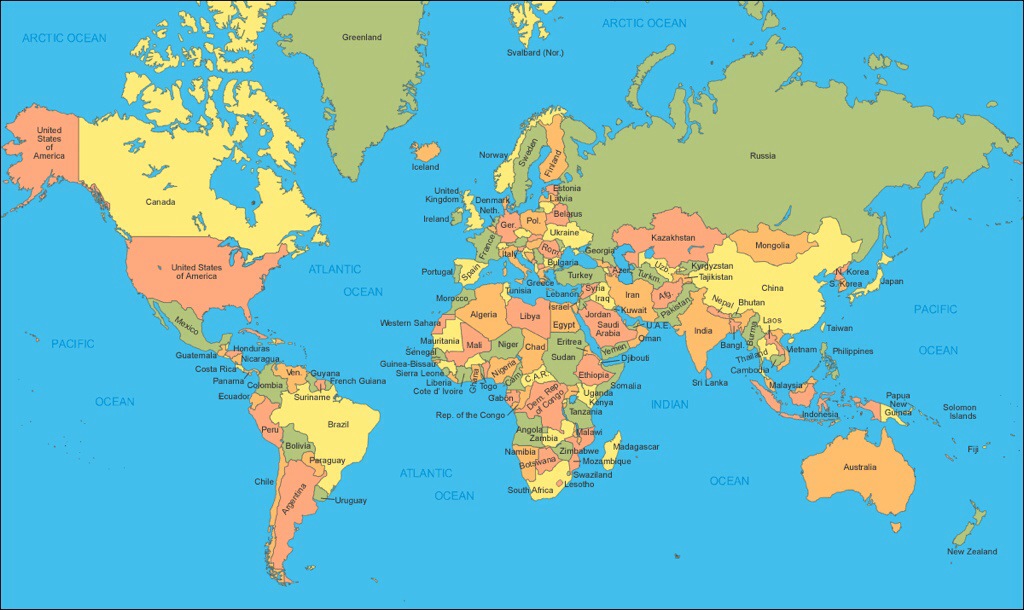
Routes are derived from the shortest path calculated using the Great Circle Line. This is Navigation 101 for Idiots. Which is why some northeastern Asian flights miss Ukraine totally to get to northwestern Europe, unlike those from Southeast Asia INCLUDING SINGAPORE AIRLINES.

Oh, what about QANTAS coming from down under?

Oh, yes. QANTAS mentioned that it has avoided Ukrainian airspace for months. In fact, since April 2013! This is because QANTAS, according to the Sydney Morning Herald in January 2013, has stopped flying the Great Kangaroo Route. This means that QANTAS Flight QF1 no longer flies to London Heathrow. Instead, QANTAS flies its passengers wanting to go to Europe through its code-sharing partners in Singapore, Hong Kong, Kuala Lumpur, Bangkok, Dubai etc through the Star Alliance and One World Alliance that MAS is a member of.

No biggie there as to why QANTAS is so safe now, is there?

The Russian Separatists Shot MH17 Down, Even The US Says So

Really?

No one knows right now who shot the flight down and using what weapon system. The biggest suspect now is the BUK M-1 medium-range surface-to-air system that both Russia and Ukraine have. It is not a system that you can just plug-and-play upon purchase as extensive training has to be given in order to effectively use this system. That pretty much rules out the Separatists. That leaves us with Ukraine and Russia.

Russia, already pressured by the West for Simferopol, Crimea and Donetsk, and its opposition to the Ukraine wanting a NATO membership, has a lot to lose by allowing the shooting down of the MH17. In 2012, while global arms sales by the top 10 defence companies shrunk by 4.3 percent, Russia’s increased by a whopping 28 percent. With Malaysia seeking for multi-role combat aircraft to replace the MiG-29N, Russia has a lot to lose.

Ukraine meanwhile has a lot to gain from this if you look at this from another angle. It would receive the recognition it would want from the world in its fight against the Donetsk separatists, and get all the international backing to apply pressure against the Russians.

So, what about the US of A being sure that all evidences that have yet to be obtained point to Russia?

Remember the Iraqi WMDs?

I leave that to your imagination, as long as your brain is not where the top X-Ray image shows it to be.

Meanwhile, stop bashing Malaysia Airlines and grow up!