The Lessons of Sungai Batu – Final Part

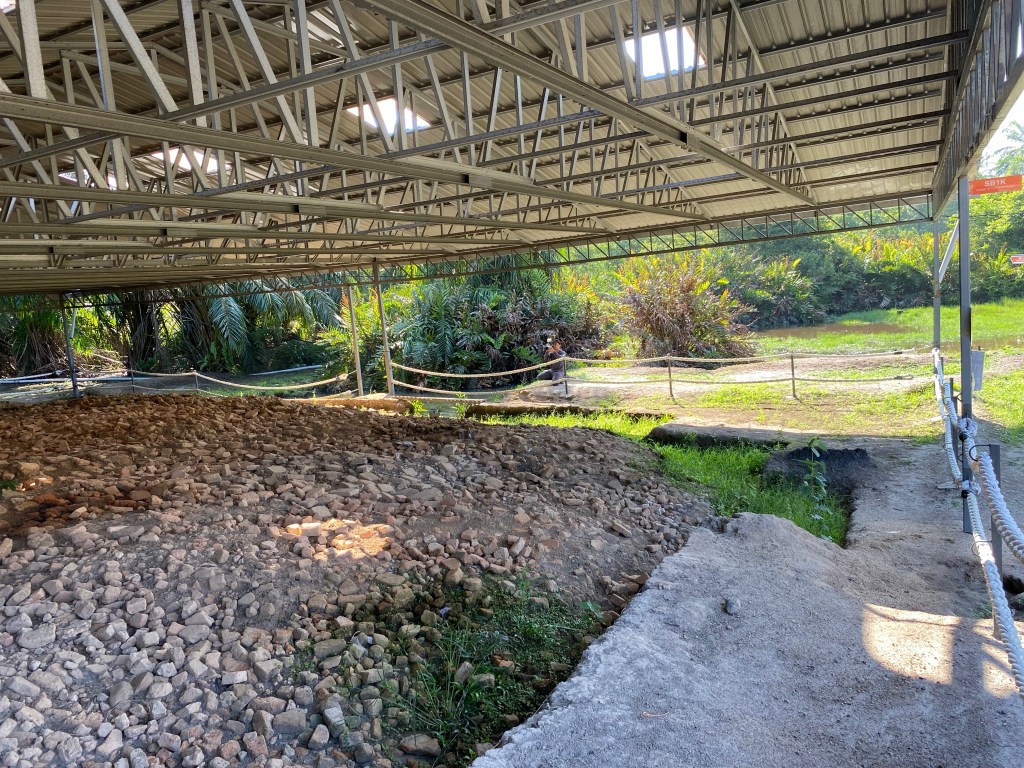
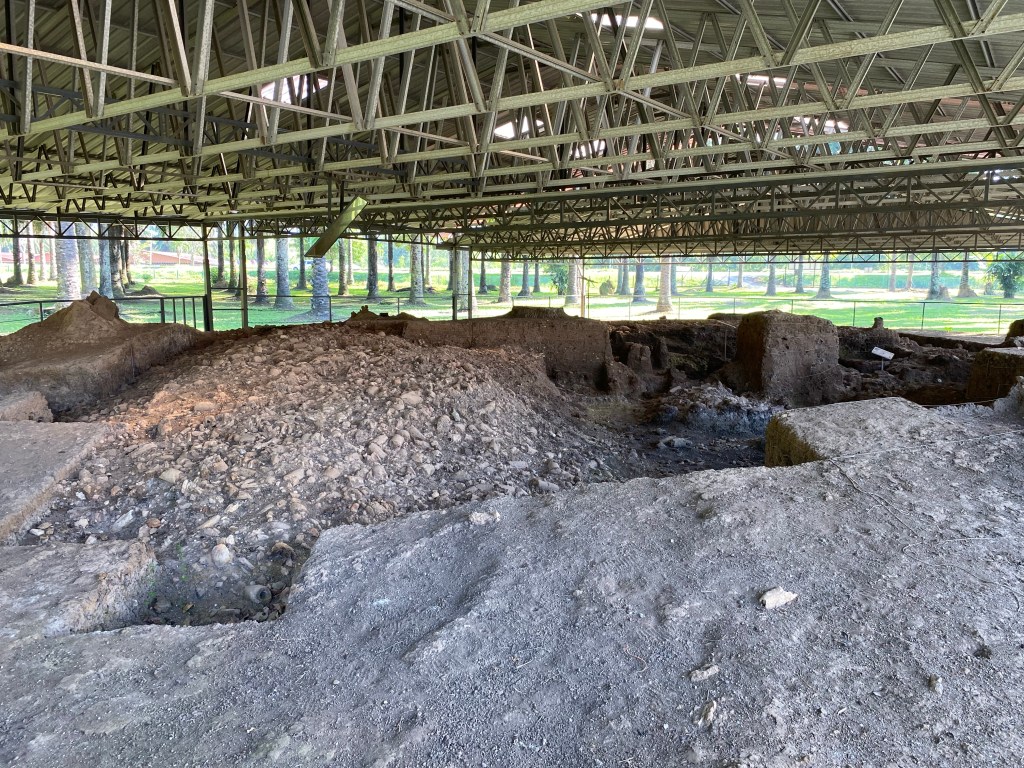
Remnants of at least a million smelting furnaces with Tuyere were found at this site alone at the Sungai Batu Archaeological Complex in Semeling, Kedah

THE Malay world burst with joy when the discovery of the Sungai Batu archaeological site was announced. 

Imagine finding out that your ancestors were very technologically advanced 800 years before common era, 300 years before the birth of the Roman Republic that preceded the Roman Empire.

I was one of them.

Somehow, that finding did not fit into the larger picture. Other regional ancient iron smelting sites only existed around the first and second centuries of the common era – a difference of 1,000 years. 

True enough, a study made 13 years after the discovery found that the sample dates inaccuracies were due to a small number of dating results used in the earlier analysis.

If that is the case, then whose iron-smelting technology was used?  South India’s. 

Sungai Batu was already a known international trading port by 2 C.E. Similar iron-smelting sites in Khao Sam Kaeo, Ban Don Phlong (both in Thailand) and Sriksetra (in Myanmar) were on the decline.  Iron artefacts such as tools for iron-smelting found at Sungai Batu were not produced there.

They were brought there by the South Indian traders.

And the Malay Ruler of Sungai Batu must have provided the manpower for the iron-smelting industry, and had the candis built for the Hindu and Buddhist traders to attract them to the Bujang Valley.

This would explain the construction of the candis— same-sized clay bricks, and constructed at about the same time. They were constructed to provide a good climate for foreign investments. Investments enriched the nation and kept the people happy.

As for religion, the Malays were generally animistic. If, at all, there was any conversion, it was all at a low level where the workers were exposed to the foreign religions, or partook in rituals.

Perhaps the locals participated with the Hindu traders in reciting the Ganesha Sloka prior to commencement of work going ‘Vakra tunda Maha kaaya. Soorya-koti sama prabha. Nir vighnam kuru e Deva. Sarva-karyeshu Sarvadaa.

There is no evidence that they were practising Hindus or Buddhist because there is an absence of any form of deities or structures from that era inland to support that hypothesis.

Up until about four decades ago, Malays still practised age-old animistic rituals such as invoking the spirits of the padi fields, and float little boats containing offerings for spirits of the sea (melayarkan Ancak) at the beginning of the Muslim month of Safar.

But what can we deduce and learn from all the above is that Ancient Kedah and its people were respectful, tolerant and open to new social and cultural practices; they were innovative and quick to accept and adapt to new technologies; it was also possible that Ancient Kedah thrived on multiculturalism as it was a melting pot, and this was the identity that was built in the Bujang Valley area.

Finally, Ancient Kedah was more of a confederation as opposed to the federation that we have now.

Each archaeological site existed because of what they had, but worked closely together to ensure that each of the Bujang Valley entrepôt thrived.

Forward 2,000 years, we have a federation of states that competes with one another economically.

The competitions could be healthy, but in some cases, they are not; we are a melting pot but we are not one. We respect and tolerate each other because the laws tell us to, not because we earn the tolerance or respect; and to make matters worse, we do not have innovation. 

We have blueprints for our industries but they remain as blueprints. We have a 38-year old car industry that has not made it elsewhere; we have an aviation industry that came with the very first edition of LIMA, but we have yet to see even a light commercial aircraft being built.

We have a shipbuilding industry that has failed its customers a number of times, and still relies heavily on government bailouts. 

Multinational manufacturing companies have left and are leaving our industrial zones.

Yes, there is a lot that we can learn from Sungai Batu. We still don’t know much.

The above is based on the most recent data and current findings. Sadly, there are so many other related sites that are not within the gazetted area that are being destroyed.

The government needs to step in in a more serious manner to preserve these sites, and the others as well. 

More funding is needed to preserve and learn about our past, because although life must be lived forward, it has to be understood backwards.

If we do not understand our past according to the narrative based on facts and data, then nation-building and building of the Malaysian identity can never be fully achieved.

(This article was first posted on The Mole ).

Part 1 can be found here.

Part 2 can be found here.
The Lessons of Sungai Batu – Part 2

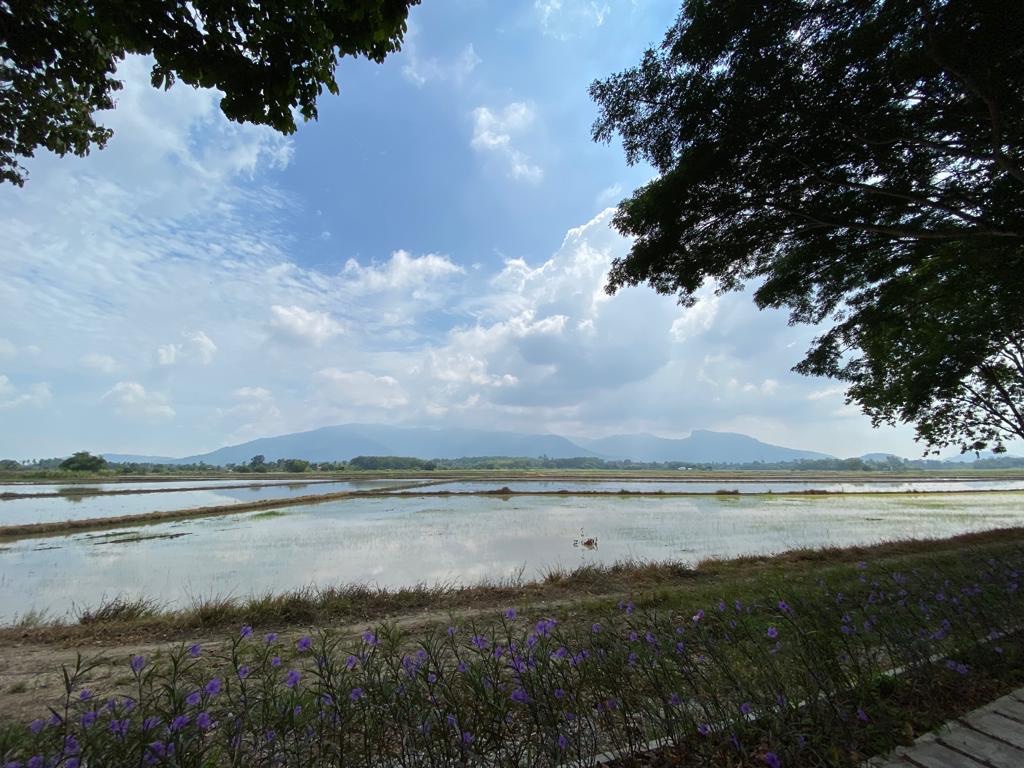
Gunung Jerai as seen from the ancient trading port of Pengkalan Bujang. 2,000 years ago this would have been a view of the sea.

IN the previous write-up the importance of a narrative conforming to the latest data and findings was highlighted.

The latest data and findings also have to fit into the region’s bigger picture. If, as in the joke mentioned, the Hindus had found a fibre optic cable beneath an ancient temple, a comparative study of the region’s historical development of that era should tell us whether or not that finding fits into the whole logic.  

Therefore, it is important for us to understand the evolution of man and the technology they had in order to understand the intricacies of Sungai Batu. 

Like the rest of the world, the people of the Malay peninsula had undergone several eras or ages of development.

The early Palaeolithic age began about 1.83 million years ago, and this finding was made through the discovery of a 3 sq. km. Palaeolithic site at Bukit Bunuh in Lenggong, Perak. 

This early Palaeolithic age lasted till about 10,000 years ago. The stone tools associated with this era are mostly Oldowan assemblages that included pounders, choppers and scrapers, made mainly by the Homo Habilis and Homo Erectus species of archaic human beings.

These tools were improved to Acheulean assemblages during the Upper Lower Palaeolithic stage by the early archaic Homo Sapiens to include hand axes, and other stone tools that had the ability to skin and butcher game, as well as cutting of wood.

The Perak Man existed during the Upper Palaeolithic stage. The now-resident of the Lenggong Archaeological Museum was an Australomelanesoid who lived in the area 10,000 years ago.

It was during his time that Mousterian stone tools were refined and took pointed forms or have sharpened blades and were attached wooden handles, and were used for hunting and used as spears.

Then came the Neolithic age. The people of this age produced more complex tools and accessories such as earthenware, bracelets and other adornments. They have beliefs, customs and rituals.

Unlike their Palaeolithic ancestors who bury their dead in foetal positions, the Neolithic people bury theirs straight.

They live in more permanent settlements, and most probably were engaged in farming as well as livestocks.

According to archaeological studies, the Neolithic age arrived in Malaysia around 4,500 years ago.

In the peninsular, Neolithic settlements date back between 4,300 and 2,000 years ago. 

In Sabah and Sarawak they were around between 3,000 to 2,000 years ago. In Perak, the Neolithic people who lived in Gua Dayak in Lenggong, Perak were there around 1,610 B.P (B.P is Before Present, with its base set in 1950 C.E or Common Era), and that translates to around the year 340 C.E. 

The Neolithic people of Gua Sagu near Kuantan, Pahang were there around 2,835 B.P or 885 B.C.E.

This goes to show that the people of the peninsular were still in a Neolithic age, and the dating of Sungai Batu as a civilisation that were already into iron smelting to 783 B.C.E certainly does not fit into the bigger picture. 

Therefore, iron smelting in the Sungai Batu/Bujang Valley area could have begun in the second century C.E as it did in other areas of the ISEA region.

The Strait of Malacca was also not a preferred trade route during that period. 

East-West trade mostly crossed the Isthmus of Kra in Thailand to get to the other side.

 Iron ingots could not have been traded back then as the weight would have been a hindrance for the overland travel. 

The Strait only became a trade route after the first century C.E. 

While Roman artefacts have been found in northern Vietnam and in China, they all dated after the first century C.E and some came from the Antonine period (between 96 C.E to 192 C.E).

Trade between Rome and the East mostly centred in India and China where silk and spices were sought from.

Alexander the Great (356 B.C.E to 323 B.C.E) only made it up till the Hyphasis river (now the Beas river) in India before his army mutinied, refusing to march farther east.

He never made it to Ancient Kedah.

Meanwhile, the area only came under the Chola dynasty influence during the reign of Rajendra Chola I (between 1,014 C.E to 1,044 C.E), more than a millennium after the existence of the Bujang Valley maritime polity.

Even then, the absence of any Cholan or large Hindu structure of the period to substantiate the claim of a major Cholan influence, or the Indianisation of Kedah. Even the famous Candi Batu Pahat was dated to the 6th and 8th Centuries C.E.

The decline of the Bujang Valley’s maritime importance was due to two main factors— one, the environmental and geomorphological changes to sea levels in the area.

The lowering of sea levels causing the sea line to recede further west rendered the areas of Sungai Batu and Pengkalan Bujang inaccessible to traders. It is possible that after the decline of maritime trade, the ancient Malays shifted their economic activity to agriculture. 

Two, the decline of the Srivijayan empire and the rise of Melaka as an important trading port in 1262 contributed to the end of the role of Ancient Kedah and especially the Bujang Valley as an important trading port.

The above shows that it is virtually illogical for a Neolithic community in the Bujang Valley to have begun its Metal Age era while the rest of the area was still populated by Neolithic people. 

It is illogical for the Roman Empire to have traded with Ancient Kedah for iron ingots in 783 B.C.E as the trade route did not flow through the Strait of Malacca.

It is illogical for Alexander the Great to have set foot in Ancient Kedah as his farthest advance was to a river in northern India. 

And it is illogical for the Bujang Valley industries to have been part of the Cholan empire as it had existed 1,000 years before Chola’s Rajaraja I was even born.

(This article was first published in The Mole )

The Lessons of Sungai Batu – Part 1

The ancient jetty at Sungai Batu was paved with clay bricks to withstand the weight of iron ingots transported to awaiting ships. This photo was taken on Sunday, 11 June 2023

THERE was a joke that went around at the turn of the century. It was about India and Pakistan’s quest for national and religious-identity supremacy.

The Indians wanted to prove that they have been superior in innovations since the dawn of time, started excavating inside an ancient temple. Three metres down, they found a fibreoptic cable. Stumped, by the unexpected discovery the Indian government’s spokesman quickly announced to the world media: the Hindus were the first to introduce Internet broadband.

Not to be outdone, the Pakistanis started digging inside their most ancient mosque. Three metres down, they found nothing. They dug deeper to six metres and still found nothing. The Pakistani government spokesman quickly announced to an anxious global media: the Muslims were the first to introduce wireless broadband.

Although the above is only a joke, it resembles the fantasy-filled narratives that have been flying around in the world wide web surrounding the discovery of the Sungai Batu archaeological site in 2008.

 Although archaeology is often filled with romanticism, self/racial-pride, national pride, it has to be approached rationally. It is a science, and science must be backed by substantiated data, peer-reviews, comparative studies. It must fit into the general timeline. The chronology must fit. Sentiments and sentimental notions should be cast aside when dealing with history.

In the above joke, the discovery of a fibreoptic cable beneath an ancient temple does not mean that fibreoptic cable had existed before the construction of the temple began; the non-discovery of anything does not mean one can simply create a narrative just to prove that one’s national, racial or religious pride need to be boosted.

Since its discovery in 2008, Sungai Batu has been revered and referred to as, among others, a technologically-advanced Malay civilisation, a massive Hindu-Cholan settlement, a settlement of the soldiers of Alexander the Great.  However, studies since then have proven that those narratives do not fit the timeline nor logic.

The problematic narrative first arose with the dating of an iron artefact to 783 B.C.E. This was when the notion that a technologically-advanced Malay civilisation had existed, pre-dating most known civilisation.  The problem lies with the timeline. The rest of the region would still be in a Neolithic stage where people still rely on stone tools and earthenware. 

Just like the claim of a Cholan conquest of Ancient Kedah does not fit any documented timeline. 

While there is evidence of Buddhist-Hindu structures, it is doubtful that there were overwhelming number of Indians who lived there as a result of a conquest, nor is there evidence that the ancient Malays subscribed to any of the religion which had their structures there. There needs an understanding of the levels of propagation and acceptance of religions of the people, based and compared to the proven norms of that era.

Hence, a narrative for the civilisation of the Bujang Valley needs to conform to the latest data and findings. This shall be discussed in Part Two of this article.

(This article first appeared on The Mole ).

BOLEHKAH LIMBUNGAN KAPAL TEMPATAN DIPERCAYAI?

OPV1 Tun Fatimah masih belum diserahkan kepada APMM

Sudah lebih enam tahun kontrak pembinaan tiga buah kapal OPV untuk Agensi Penguatkuasaan Maritim Malaysia (APMM) dimeterai. Walaupun kapal pertama telah diluncurkan turun ke atas air, ianya masih belum diterima oleh pihak APMM.

Sepatutnya, kapal OPV1 sudah diterima pada bulan Mac tahun ini setelah didesak oleh pihak pengurusan tinggi APMM pada awal tahun, namun syarikat menunda tarikh penyerahan kepada bulan Julai.

Malah, Menteri Dalam Negeri, Datuk Seri Saifuddin Nasution Ismail sendiri telah meminta syarikat berkenaan menyerahkan kapal kedua dan ketiga pada bulan Oktober tahun ini dan awal tahun hadapan tanpa lengah-lengah lagi.

Pernah diutarakan oleh mantan Ketua Pengarah APMM yang lalu bahawa APMM amat berhasrat untuk mempamerkan kapal OPV1 di pameran LIMA 2023 yang mula berlangsung hari ini. Namun, APMM bukan pihak berwajib untuk memberi kata putus bila kapal tersebut boleh diserahkan. Jawapannya terletak dengan pihak pengurusan projek kapal tersebut. Bukannya APMM.

Maka, ini berbalik kepada soalan yang saya ajukan kepada Menteri Pertahanan, Datuk Seri Mohamad Hasan semalam: adakah kerajaan akan mengubah dasar perolehan aset-aset keselamatan dengan membenarkan syarikat-syarikat luar negara yang track recordnya lebih baik untuk membina kapal-kapal kita?

Bolehlah kita terus percayakan syarikat-syarikat GLC yang acap kali gagalkan kehendak pengguna, dan berselindung di sebalik status GLC?

Tepuk dada, tanya selera.

What Is There To Negotiate?

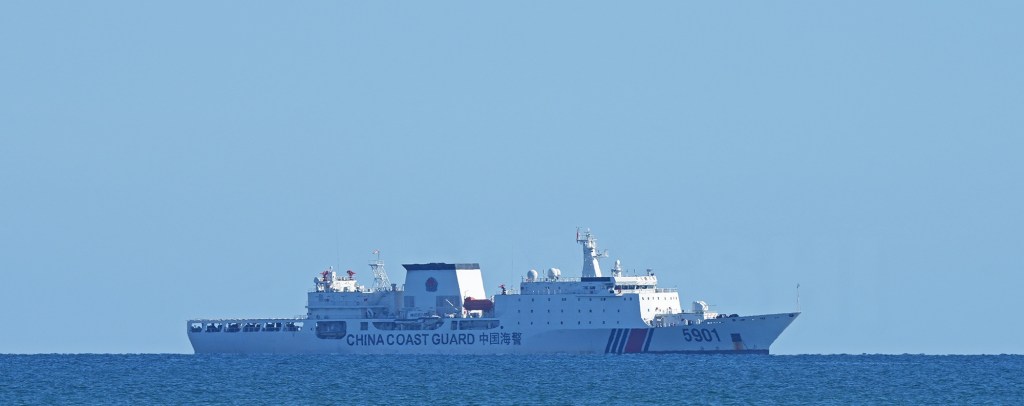
The 165-meter Chinese Coast Guard cutter Zhong Guo Hai Jing 5901 is the largest coast guard vessel in the world, and was spotted loitering some 60 nautical miles off Bintulu

Malaysia is prepared to negotiate with China over a dispute between them in the South China Sea, Bernama reported on Monday, citing Prime Minister Datuk Seri Anwar Ibrahim.

As we are all aware, China claims virtually all of the 3.5 million sq. km of the waters of the South China Sea. Other claimants include Malaysia, Vietnam, Taiwan, Brunei and the Philippines, while Indonesia is an affected party through China’s blatant and frequent incursions.

“China is also staking claim over the area. I said as a small country that needs oil and gas resources, we have to continue, but if the condition is that there must be negotiations, then we are ready to negotiate,” he said.

Negotiate what?

Malaysia’s Exclusive Economic Zone (EEZ) is determined by Article 57 of Part V of the UN Convention on the Law of the Sea (UNCLOS) that was adopted in 1982. A total of 167 countries and the European Union are parties, and that includes China.

Article 57 states that the breadth of the EEZ shall not exceed 200 nautical miles from the baselines that have been used to measure a country’s territorial waters. Our waters are very definitely more than 200 nautical miles from China’s baseline shores, in case the government, especially the Ministry of Foreign Affairs whose advice the PM depends on, doesn’t know about our EEZ.

And only Malaysia has the sovereign right to explore and exploit, conserve and manage all the natural resources within its EEZ. Not any other country. Therefore by negotiating, are we not giving clout to China’s delusional nine-dash line?

Furthermore, there is a Permanent Court of Arbitration ruling made in the Philippines v China case in 2016 that has ruled against the latter’s claim over maritime areas within the nine-dash line. The Court ruled that China not only has China exceeded what is entitled under UNCLOS, but that China, among others, has no legal basis to claim rights to resources within the nine-dash line.

It is puzzling that the government does not know this, or has forgotten about it. I am surprised that it has also forgotten that the previous Pakatan Harapan administration in 2019 filed a formal submission to the United Nations Commission on the Limits of the Continental Shelf, detailing information on the limits of its continental shelf, beyond its 200-nautical-mile Exclusive Economic Zone (EEZ). China, as always, rejected Malaysia’s claim and asserted its sovereignty and rights in the South China Sea with vague and ambiguous arguments.

If China cannot respect our rights given to us through legal means, why should we even care about what they think of our waters? Or are we so hard up for them to turn the billions in MOUs from the PM’s recent visit there into contracts?

If that is the case, are we not selling off our sovereignty like during Najjb’s administration?

Melayu Tak Bertimbang Rasa?

Benarkah Melayu angkuh dan pinggirkan minoriti?

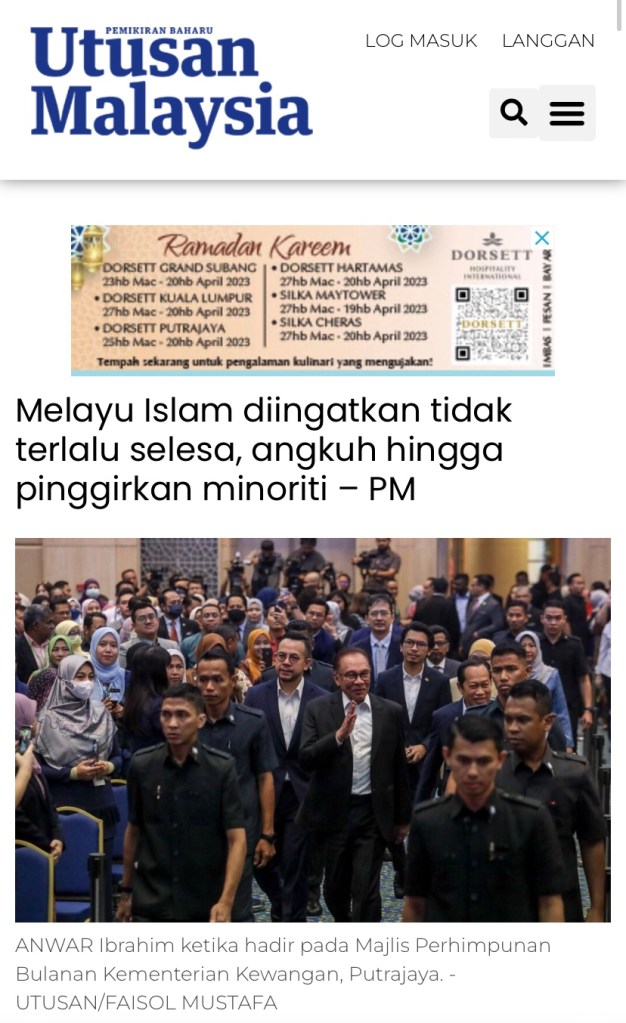
Melayu Islam diingatkan tidak terlalu selesa, angkuh hingga pinggirkan minoriti.”

Begitulah bunyinya tajuk utama akhbar Utusan Malaysia yang melaporkan perhimpunan bulanan Kementerian Kewangan yang dihadiri Perdana Menteri Datuk Seri Anwar Ibrahim.

Dalam ucapan beliau, Anwar mengingatkan orang Melayu Islam supaya tidak meminggirkan kaum minoriti. Kata beliau, “Ketika lawatan saya ke Kemboja baru-baru ini, saya berbuka puasa bersama Perdana Menteri Kemboja yang menganjurkan majlis iftar dengan 6,000 umat Islam. Umat Islam di Kemboja hanya 10 peratus, tetapi diberi penghormatan dan saya juga diberi peluang memberi ucapan dan ke masjid di sana.” (Utusan Malaysia – 4 April 2023).

Tidak pelik sebuah negara bukan Islam meraikan masyarakat beragama Islam. Meraikan kaum minoriti merupakan salah satu tanda aras demokrasi bagi setiap buah negara. Sebagai contoh, kerajaan Israel yang dikenali sebagai anti-Islam juga pernah mengadakan majlis berbuka puasa.

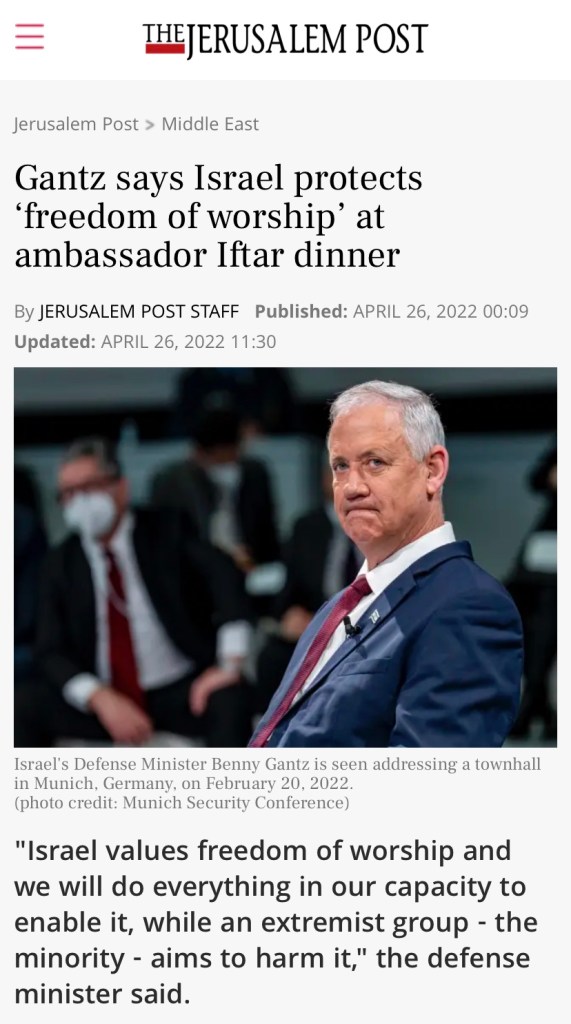
Israel menghargai kebebasan beragama dan akan lakukan apa sahaja untuk membenarkannya – Benny Gantz

Israel menghargai kebebasan beragama dan akan lakukan apa sahaja untuk membenarkannya,” kata Menteri Pertahanan Israel Benny Gantz tahun lepas (The Jerusalem Post – 26 April 2022).

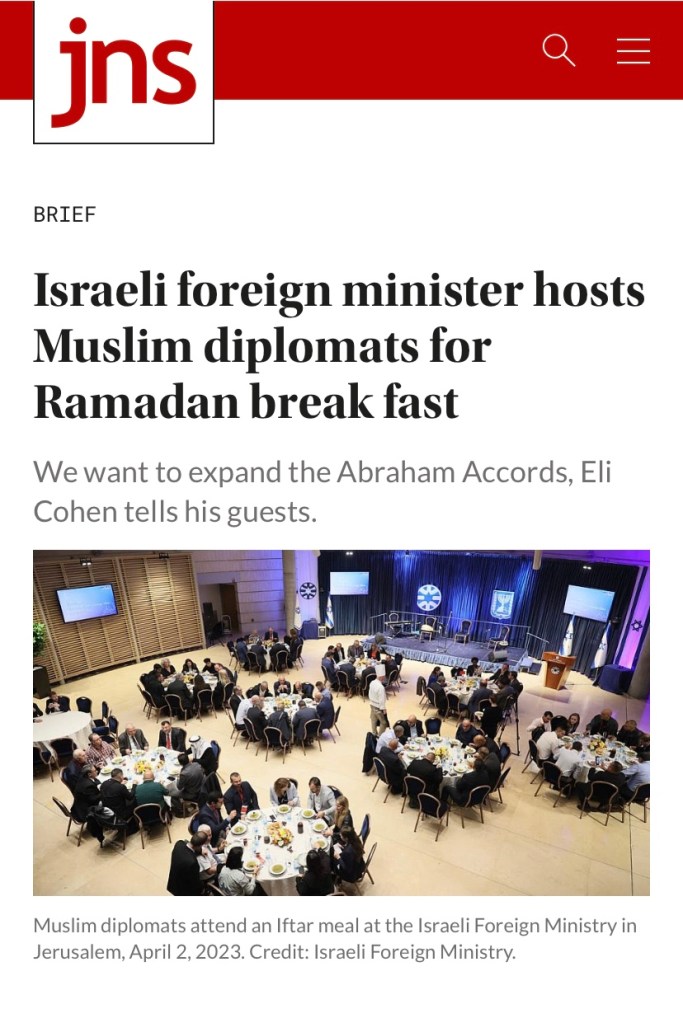
Saya lihat betapa pentingnya untuk kukuhkan hubungan di antara Israel dan negara-negara serantau dan kekalkan kebebasan beragama di Israel untuk penganut semua agama,” kata Menteri Luar Israel Eli Cohen semasa menganjurkan majlis berbuka puasa Ahad lepas (Jewish News Syndicate – 3 April 2023).

Saya lihat betapa pentingnya untuk kukuhkan hubungan di antara Israel dan negara-negara serantau dan kekalkan kebebasan beragama di Israel untuk penganut semua agama – Eli Cohen

Namun, apa realitinya? Pada hari Sabtu 1 April 2023, askar Israel menembak mati seorang pemuda Palestin di perkarangan Masjidil Aqsa.

Dari 18 hari hari cuti umum yang diumumkan kerajaan Kemboja, berapa harikah yang melibatkan lain-lain agama atau kaum? Jawapannya: 0.

Dari 15 hari hari cuti umum yang diumumkan kerajaan Israel, berapa harikah yang melibatkan lain-lain agama atau kaum? Jawapannya: 0.

Dari 12 hari hari cuti umum yang diumumkan kerajaan Kemboja, berapa harikah yang melibatkan lain-lain agama atau kaum? Jawapannya: 4 (tidak termasuk Thaipusam dan Good Friday).

Adakah Melayu tidak bertimbang rasa hingga wujudnya klausa-klausa dalam Perlembagaan Persekutuan yang menetapkan hak lain-lain kaum, contohnya Perkara 3(1) berhubung kebebasan beragama, Perkara 11, Perkara 152(1) dan 152(1)(a), dan juga Perkara 153?

Lihat sahaja Amerika Syarikat yang menganggap dirinya sebagai tiang seri demokrasi. Banduan Islam diberinya daging babi untuk berbuka puasa

Adakah ini bermakna Amerika Syarikat lebih bertimbang rasa berbanding Melayu Islam di Malaysia?

Saya rasa tak perlulah memperkecilkan orang Melayu dan agama Islam hanya untuk populariti. Itu namanya menghina.

Fair Winds and Following Seas

The American author John C Maxwell once said that a leader is one who knows the way, shows the way and goes the way. It describes the leadership style of the outgoing Director-General of the Malaysian Maritime Enforcement Agency (MMEA) Admiral (Maritime) Dato’ Mohd Zubil bin Mat Som who will go through mandatory retirement this Sunday.

Born in Lenggong, Perak (or London as he calls it, as it is close to Greece or Grik) on 19 March 1963, becoming the Director-General of Malaysia’s premier frontline agency that is safeguarding Malaysia’s maritime sovereignty as well as enforcing Malaysia’s laws and regulations in its maritime zones was never a dream of his, nor was it in his bucket list.

Commissioned into the Royal Malaysian Navy in 1981 and first served as a gunnery officer on board a 32-meter patrol craft. Both he and his wife endured a lot of hardship being in the Malaysian military family of the 1980s, when pay was small and bringing up children meant that a trip to the KFC required months of saving up and involved creative budgeting. He credited his wife’s patience and quiet character that had allowed him to go through tough moments with a peaceful mind.

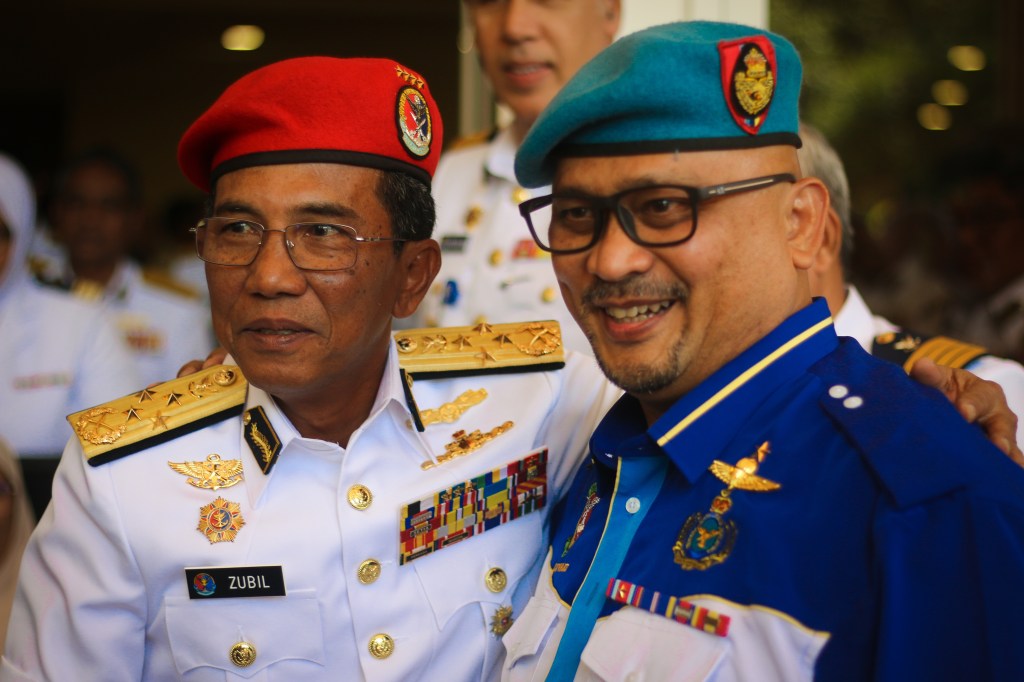
I took a photo with him during his farewell lunch on his last day in the office. “Put up this photo and write about the hard life we faced back then,” he said.

Well, Sir, that was about our lives then, when we earned RM750 a month living in places where house rents can cost RM800. The challenge is in the now. So, I shall focus more on how you faced those challenges while you were at the helm of the MMEA.

After 24 years and nine months in the navy, he was called up for another form of selfless national service: to help form the MMEA. That was in 2006. He had to leave the service he loved to help form an organise a new maritime organisation that operated (and still operates) mostly hand-me-down ships that were around even BEFORE he joined the navy!

He was posted to the two maritime areas that had the most numbers of breaches of maritime laws: the Southern Region as its Deputy Director (Operations) based in Johor, and Sabah and Labuan as the region’s Maritime Director. It was in Johor when he was given the Excellent Services Award by the MMEA for leading several operations against piracy, cigarettes smuggling, trafficking of migrants and encroachments by foreign fishing vessels.

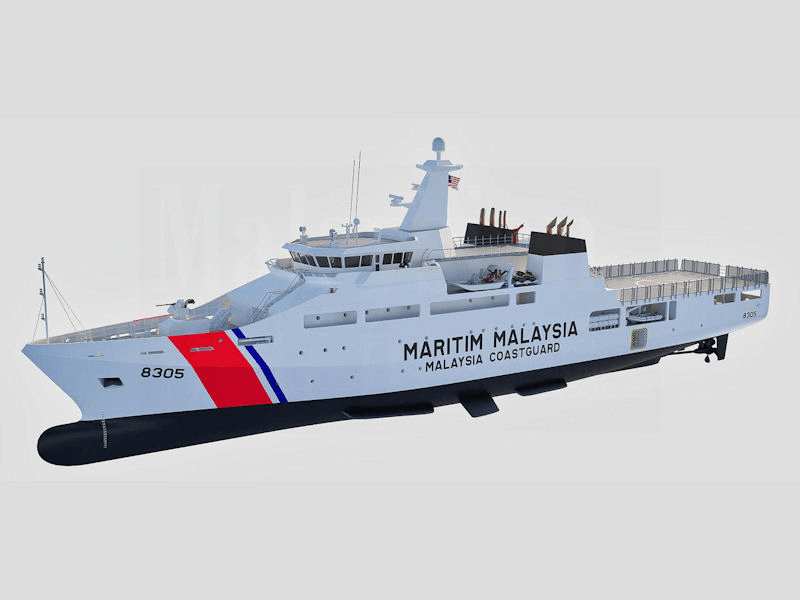
Dato’ Zubil was a no-nonsense leader. He did have his lighter moments and cracked jokes once in a while, but even then you could sense the stern tone in his voice. He did not mince his words and will fire away at those deemed responsible at point blank when he’s unhappy, especially in the current case of delays in the production and delivery of the MMEA’s three badly-needed offshore patrol vessels (OPV) to counter especially the China Coast Guard (CCG) menace in Malaysia’s exclusive economic zone (EEZ).

Just to remind us all that while China has built tens of its coast guard cutters that have been cruising in our waters, the MMEA only has four vessels that are classified as true OPVs that can maintain station for almost a month to challenge the presence of CCG cutters. Two are thirty years old presents from the Japan Coast Guard, while the other two are vintage RMN OPVs that are a year short of being 40 years old!

The MMEA is also understaffed. It is still short of 700 personnel out of the 4,000 approved posts! This proves challenging for the MMEA as it is no longer facing traditional maritime crimes.

In the past, we dealt with ‘traditional’ criminal threats. But now there are smuggling of cigarettes and immigrants, which are linked to money laundering,” he said to reporters after his farewell parade.

As a leader, he made sure he understood the various tasks of each of MMEA’s departments. Each department was like an extension of his arms for him to achieve the objectives of the organisation as a whole. The 16th anniversary of the MMEA occurred during the pandemic, and a virtual celebration was planned. He wanted the public to be able to learn more about the MMEA while staying at home and visit its assets with just a few clicks of the button. This task was handed out to the Corporate Communications Unit, and Dato’ Zubil would sit next to the graphic designers, be with the production team, learning about their concept look-and-feel, and giving inputs. He allowed his men and women to develop their creativity without interfering.

He also insisted on finding out the risks the MMEA’s rescue swimmers face when performing rescues. He underwent a training and then got on board a helicopter to perform winching onto and off from a fast moving patrol craft, not static winching. It was a risky operation, but “Danger” seemed to be Dato’ Zubil’s middle name.

Last year, a political columnist took a swipe at the MMEA for “wasting taxpayers money” on a very much needed maritime exercise. What the writer did not understand was that the exercise gave the MMEA an opportunity to enhance interoperability between surface and air assets, as well as giving commanding officers and navigation officers the opportunity to hone as well as refresh their skills and knowledge. The writer had used the exercise to hit out at the then-Home Affairs minister for being the cause of the wastage.

Upon reading the article, Dato’ Zubil turned on a dime and summoned me who was about 50 meters away.

Kau tulis dan balun dia ni sikit. Dah lah tak faham tugas kita, dia nak pesongkan pandangan pembaca pula (write something to whack this writer back. He doesn’t understand anything about our job, and he has the cheek to skew the views of his readers),” he instructed me. There I was on the forecastle of the OPV KM Arau typing away on my mobile phone while helicopters and planes were buzzing overhead.

And as a leader, Dato’ Zubil made sure that the MMEA would get the best and be left with a competent leadership. He left his two protégés: Vice-Admiral (Maritime) Datuk Saiful Lizan bin Ibrahim, and Vice-Admiral (Maritime) Hamid bin Haji Mohd Amin. They are the MMEA’s Deputy Directors-General of Logistics and Operations respectively.

Dato’ Zubil was given an emotional send-off at the MMEA Headquarters yesterday. We lined up to shake hands with him and to bid him farewell. When it came to my turn, he hugged me and said, “Boss, thank you for all your help. Keep assisting the MMEA.”

Then he held my shoulder and we posed for the cameraman.

As his vehicle moved, he wound down his window and told everyone, “Remember! Always be the best. And the best never rest.”

Fair winds and following seas, Dato’. And thank you for your leadership, your trust and thank you for your friendship. Enjoy your last day in the service at home as it is a Saturday.

And happy 60th birthday tomorrow. May you enjoy many more birthdays in the company of your family. And as instructed, below is a photo of us.

A Brilliant Jigsaw Puzzle

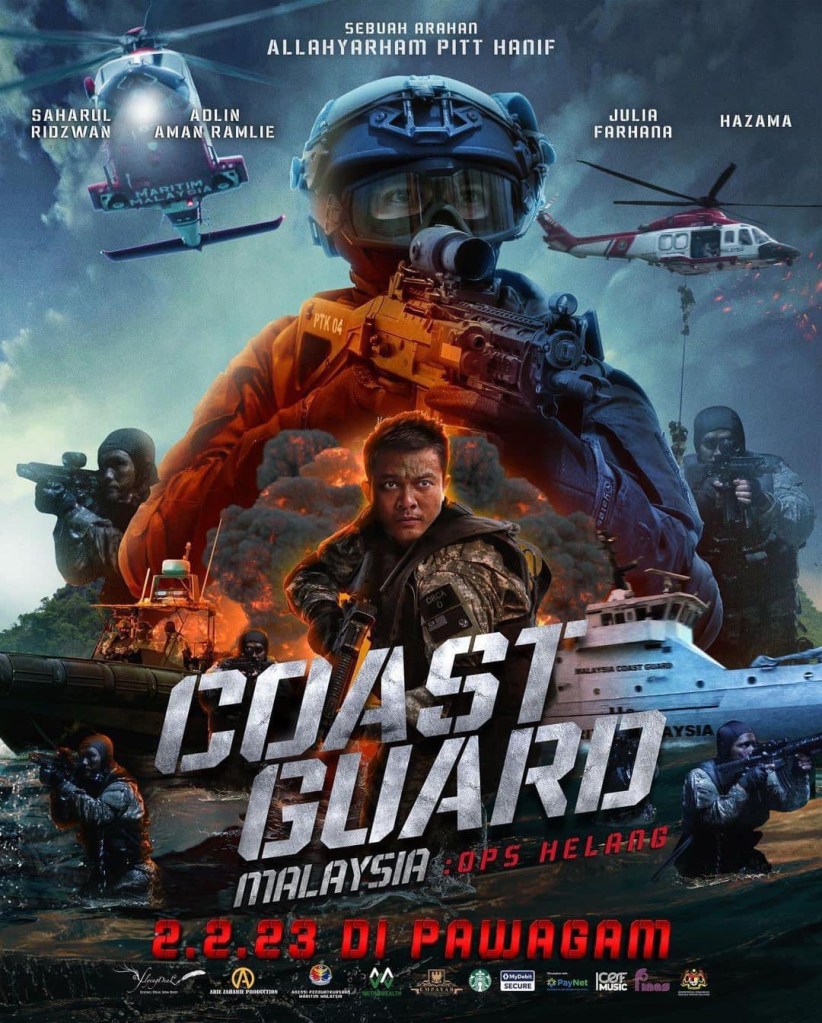
Coast Guard Malaysia: Ops Helang will begin its screening on 2 February 2023

“Not another military movie!”

That was a comment made by a critique when the first trailer of Coast Guard Malaysia: Ops Helang (CGMOH) was released in December 2022. CGMOH is the third local action movie to be released in recent times, after PASKAL The Movie (PTM, 2018) and Air Force The Movie: Selagi Bernyawa (AFTMSB, 2022).

But the comment made above, isn’t far off. CGMOH is not about the military, as the Malaysian Maritime Enforcement Agency (MMEA) otherwise known as the Malaysia Coast Guard is not a military force. In Malaysia, the Coast Guard is a para-military, multi-mission, maritime force that offers a unique blend of military, law enforcement, humanitarian, regulatory, and diplomatic capabilities.

However, being a former military officer, I had to keep an open mind watching CGMOH as I did with PTM and AFTMSB. Had it been in the real world, CGMOH would have been a short movie. But it is a movie, and therefore it required me to look at it solely from an entertainment perspective. But if you’re looking for a movie that gives you the bang for your bucks, then CGMOH wins hands-down. The fight scenes were good, the villains were truly in character. The whole movie was action-packed and fast-paced from the opening sequence.

The movie allows you a glimpse into what the MMEA does best – to guard, to protect, and to save.

The late Pitt Hanif directed the movie, assisted by Sham Mokhtar as the Director of Photography, while Producer Arie Zaharie did a brilliant job putting all the shots and pieces of the jigsaw puzzle together into a movie, without the presence of the movie’s director.

Coast Guard Malaysia: Ops Helang will be available at a cinema near you from 2nd February 2023.

Is it better than PASKAL The Movie? Yes!

Is it better than Air Force the Movie: Selagi Bernyawa? Far better!

I enjoyed it. So, go watch it!

5/5

Dear NGO, 619km equals to 340 nautical miles

The article published by The Vibes that did not bother to question logic.

A fool is made more of a fool, when their mouth is more open than their mind.

Anthony Liccione – American writer

Thus goes the saying.

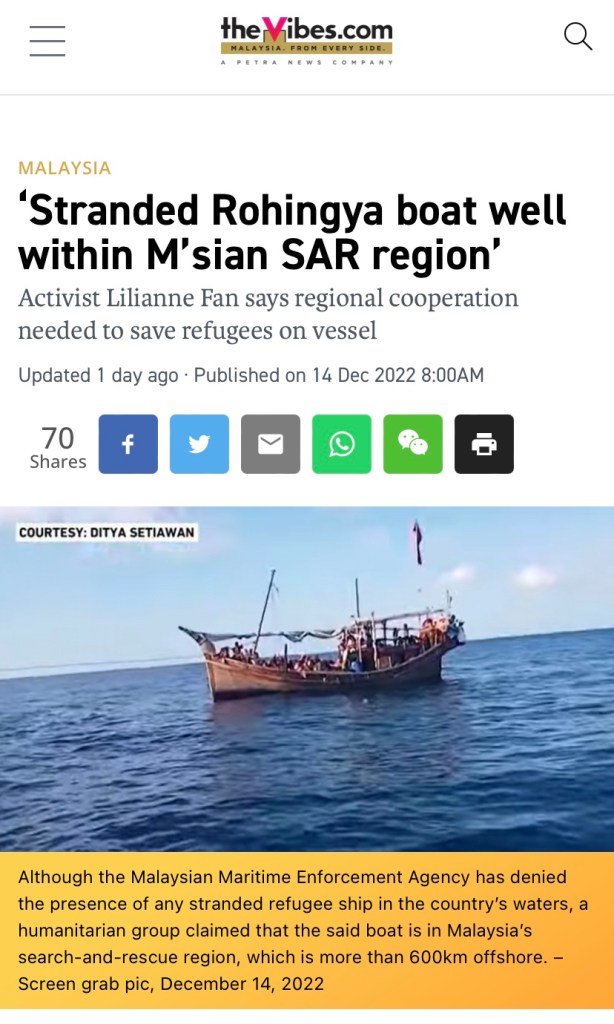
The Vibes published the above article where an NGO has accused the Malaysian Maritime Enforcement Agency (MMEA) of not taking any action to assist a boat filled with Rohingya undocumented migrants 619km from Langkawi, 388km from Ranong, Thailand, and 352km from Port Blair, India.

Yes, 619km from Langkawi.

Converting those figures to nautical miles, the boat is 340 nautical miles from Langkawi. Now, that is 140 nautical miles beyond Malaysia’s Maritime Zone which is a 200 nautical mile limit, which also means that the boat is 140 nautical miles beyond the MMEA’s jurisdiction.

It is also 12 nautical miles beyond Thailand’s maritime zone. But it is only 193 nautical miles from Port Blair.

So, which government should Asia Pacific Refugee Rights Network’s Rohingya Working Group chairman Lilianne Fan be barking at? Would she like to hazard a guess?

Even if, for example, a passenger liner is in distress at that given location and the Captain of the liner activates the Global Maritime Distress and Safety System (GMDSS), the signal would be picked up by one or more INMARSAT’s satellites, and based on the geographical location of the liner, the signal would be relayed to the nearest country’s maritime rescue coordination centre for response.

In other words, even though Malaysia is included inside the Maritime Search and Rescue Region (MSRR) where the boat with Rohingya undocumented migrants is, the signal would have been relayed to the rescue coordination centre of the Indian Coast Guard, located at the Coast Guard Regional Headquarters (Andaman and Nicobar) in Port Blair. NOT MALAYSIA.

If that logic has not sunken in, when your car breaks down on the North-South Highway near Sungkai, please call for a tow truck from Kota Bharu.

As for the comments by Médecins Sans Frontières, please know that the only ASEAN countries that have become States Parties to the 1951 Convention relating to the Status of Refugees and the 1967 Protocol are the Philippines and Timor Leste. Malaysia is not a signatory. The last time Malaysia allowed refugees to land, Malaysians had to bear the socio-economic cost of housing 252,390 South Vietnamese refugees from 1977 through 1991. And during that period, 4,535 babies were born to these refugees.

Had there not been a rioting that razed the refugee camp in Sungai Besi, signatory nations would probably still drag their feet over the issue today.

It is sad that between 160 to 180 Rohingya undocumented migrants may be at risk of dying at sea after fleeing the refugee camp in Bangladesh where they had escaped persecution by Myanmar authorities. This may sound harsh, but they have escaped the atrocities in Myanmar when they fled to Bangladesh where they had protection in the refugee camps. Why is there a need to flee to Malaysia or Indonesia?

Had the NGOs concerned spent a little bit of time reading facts than barking up the wrong tree, the boat would probably still be closer to help from Port Blair, and not flounder about helplessly facing the perils at sea.

The Sea Is Vast

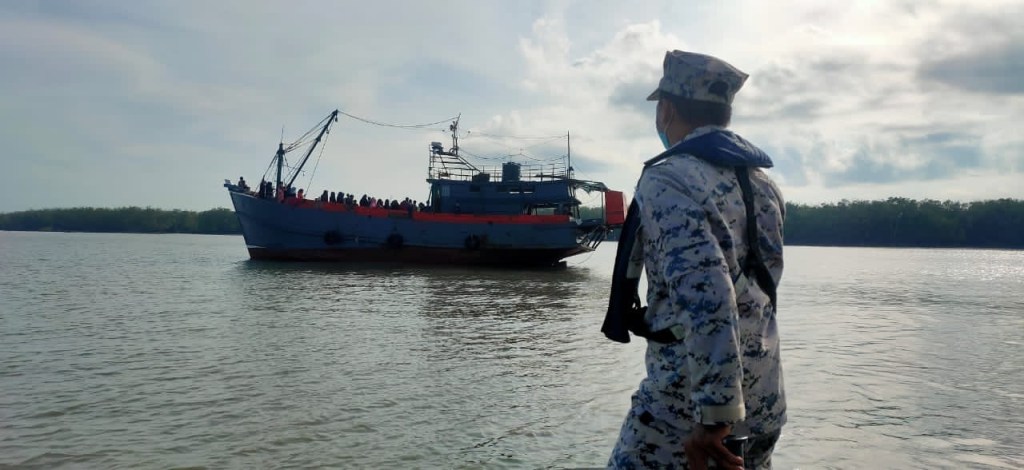
A MMEA personnel keeps a watch on the boat carrying 143 illegal immigrants near Kuala Kurau

A boat carrying 143 illegal immigrants from Bangladesh, including 134 Rohingya, was detained by authorities after it ran aground on a sand bar six nautical miles off Kuala Kurau, Perak yesterday. Almost immediately criticisms were leveled especially at the Malaysian Maritime Enforcement Agency (MMEA) and at other agencies for their failure to detect their presence in our waters.

Truth be told, the Straits of Malacca and Singapore (SOMS) are among the busiest sea lanes in the world. Because of the nature of the straits, they come under Malaysia, Indonesia and Singapore according to the United Nations Convention on the Law of the Sea (UNCLOS). Even the borders overlap each other depending on whose chart you are looking at while an average of 274 commercial vessels ply through on a daily basis, 66 being container ships alone.

Therefore, maritime authorities of each country keep a close eye on these vessels for both security and safety reasons. The MMEA has an elaborate radar surveillance system deployed throughout the country. Suffice to say that nothing goes unnoticed especially in the Strait of Malacca.

So, how did a boat with 143 illegal immigrants got to within six nautical miles before they were detained?

Two weeks ago the MMEA commenced Op Khas Pagar Laut aimed at further tightening our maritime borders during the Hari Raya Aidil Fitri festive season. In just a week, the operations has resulted in 32 vessels being detained resulting in seizures worth around RM10.6 million. 66 crewmen from seven Vietnamese fishing boats and 16 illegal immigrants were arrested before the arrival of this batch of 143.

With the commencement of the operations, the dragnet in waters off Pulau Pinang, Kedah, Perlis and Langkawi which are the favourite arrival spots for Bangladeshi and Rohingya illegal immigrants is tightened and almost impossible to get through.

Now that the waters there are off-limits, human smugglers then have to plan to deposit their human cargo farther south. All they had to do was to sail south skirting close to our 12-nautical mile limit, assuming the right to innocent passage, to a point before the strait narrows where another dragnet to prevent smugglers and illegal immigrants from Indonesia from entering.

And as long as they traversed the sea without entering our territorial waters, prejudicing our peace, good order, welfare and safety, they had the right to innocent passage.

The authorities were alerted the moment they digressed from their track and breached our 12-nautical mile limit at 4am, making for Kuala Kurau. Sending a boat out to intercept them at this juncture would prove detrimental as these smugglers are not without land-based informers watching the authorities. It would have taken almost 20 minutes for the boat to be intercepted, and before that could happen the boat would have been informed and have made its way back beyond our waters.

It was wise of the authorities to have waited until the boat had reached a point of no return before going out to intercept, and the effort was made easier due to the grounding of the boat on a sandbar. This is called ‘working smartly.’

Of course it would have been better for the MMEA to just deny them entry into our waters. That way we do not have to spend taxpayers money on illegal immigrants. But the Agency suffers from two critical things: criticism of such action by our own people in the past, and the lack of assets to do so.

To protect our people at the beginning of the pandemic our security forces were instructed to repair boats of illegal immigrants, provision them with fuel, food and water and make sure they leave our waters. The policy was very necessary then as it would take a year more before we started our vaccination program. But we were heavily criticised by human rights groups and, sadly, a small but media-social influential group among our own people.

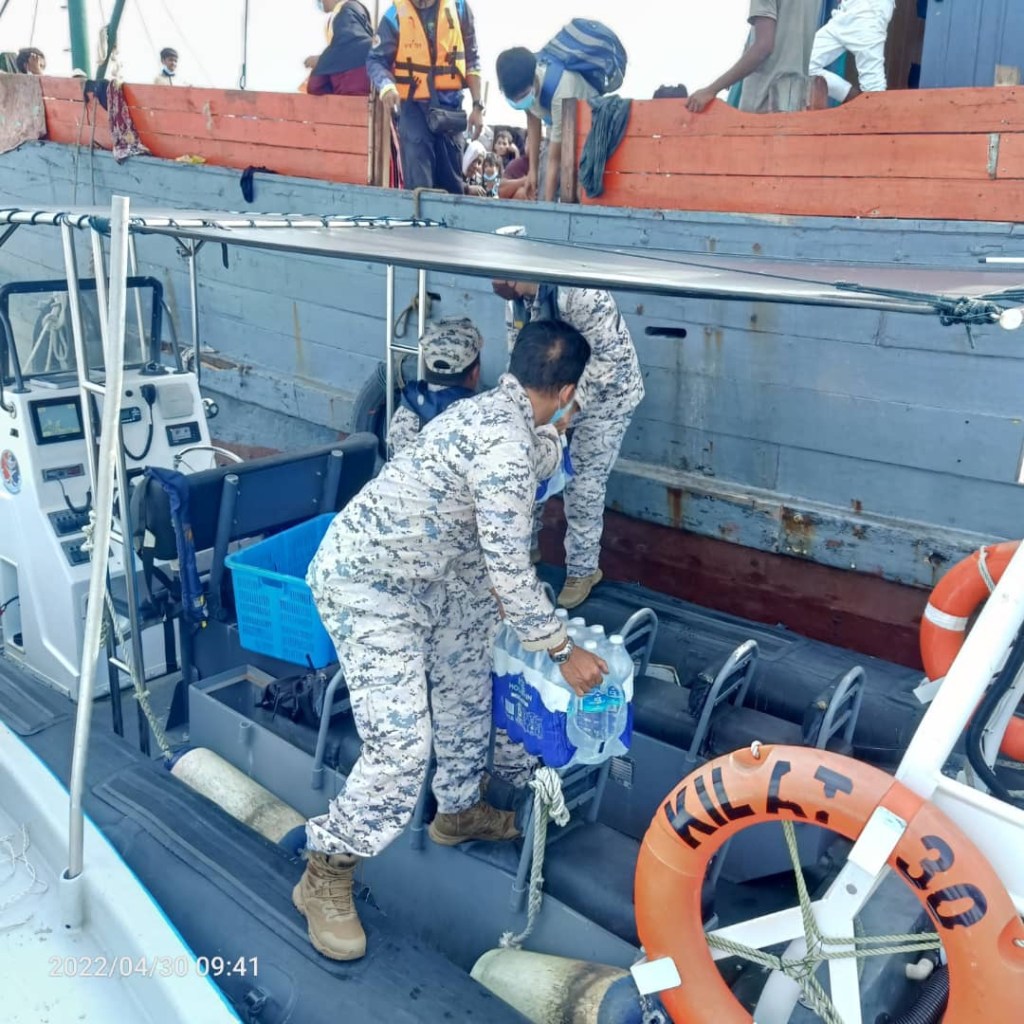
MMEA personnel from the Kuala Kurau Maritime Zone transfer drinking water to the boat carrying 143 illegal immigrants

We have never been without a heart. As mentioned, we provided these boats with enough fuel, food and water to last them more than a month, and even facilitated repairs. And because we have a heart we now have to spend another RM5,800 a day for food for the 143 recently-arrived illegal immigrants on top of the RM6.3 million that we spend daily just for food for the other 158,000. That comes to RM190 million a month on meals.

That amount equals to 3,386 PPRT homes for the low-income group – per month. And we spend that much on illegal immigrants. I have not factored in medical treatment costs, lodging, utilities and other costs as well. But that is okay as long as we satisfy a small group of people who champion the rights of illegal immigrants.

The MMEA has been operating for 17 years with limited resources because lawmakers in the Parliament do not understand the law they passed to create the MMEA. The government also lacks the political will to enforce this Act. As a result, the Agency now suffers from limited budget as it has to share whatever limited resources that has been given, with the 11 maritime-related agencies that should have been dissolved with the formation of the MMEA. Majority of its patrol boats are more than 40 years old.

In terms of waters to cover, each of the MMEA’s 180 small patrol boats has a 180 sq km to patrol while each of the 70 larger vessels cover 5,675 sq km.

In short, each of the 4,500 men and women of the MMEA has 124 sq km of waters to guard, protect and save.

In spite of that, in its 17-year existence the MMEA has contributed more than RM2.7 billion to the government’s coffers in terms of seizures, saved more than 10,000 lives and RM650 million worth in assets. It has to protect the same area that the Royal Malaysian Navy has to which is 556,285 sq km. Yet, the Royal Malaysian Navy received RM1.6 billion last year while the MMEA received only a fraction of that.

Therefore, given the dire limitations that the MMEA has and compare this to its achievements, the MMEA is a force to be reckoned with, thus should be supported in its never-ending struggle to acquire more assets and train more men and women in order to become a better organisation.

Imagine what it could become with the RM2.3 billion we spend a year feeding illegal immigrants had the amount been given to the MMEA instead.

The boat carrying 143 illegal immigrants coming alongside the Kuala Kurau jetty