Water, Water, Everywhere? Part 2

Dirty Water

Not too long ago if you go to a government office to get an application form, it would be left either in a tray or in a box for you to take and you would see each person taking more forms than they needed.  Some would end up as kacang puteh wrappers sold by kacang puteh peddlers on bicycles parked outside the very government office.

BECAUSE THEY WERE FREE!

Nowadays, you have to pay RM1 per form, and you can see that each person would take only one form.  Anything that is free has no value.

What I am getting at is, if you give something to someone for free, most of the time it would go to waste, or taken for granted.  The same goes to the free first 20 cubic meters of water given to residents of Selangor by the Pakatan Rakyat government.  In the words of Prof Dr Chan Ngai Weng (Universiti Sains Malaysia and Penang Water Watch):

“The water policy of that (Selangor) state is suicidal!”

He said this during the 1st Malaysian Water Association – Universiti Teknologi Malaysia Roundtable Dialogue titled “Water Has No Value” on Friday, 28th October 2011.

Interestingly, the Seceretary-General of the United Nations, Ban Ki-Moon also underscored this point.  On 3rd August 2011, he told the United Nations General Assembly that water, as Basic Human Right, has a market price.

“Let us be clear,” he asserted, “a right to water and sanitation does not mean that water should be free.”

Let us face the fact.  Water really has no value in Malaysia. On average the water tariff in Malaysia is at 20 US cents per liter or 60 sen.  An average person in Malaysia uses 203 liters per day.  In a month the person would be using up to 6 cubic meters of water.  An average Malaysian family (5 members) would then use up to 30 cubic meters per month.  Therefore, an average family will be paying RM18.27 per month for the use of treated water.  That is the equivalent of an hour and a half of calls from your mobile phone.  You cannot even take the NKVE from KL to Shah Alam and back on that amount.   Water tariffs in Malaysia simply does not meet the cost of producing treated water for the masses.  Therefore, the water service providers in Malaysia really need to look at restructuring the water tariff by increasing the tariffs to a level that reflects the cost price, and a surcharge for those who use more treated water than the national per capita average.  The public will also have to be educated on the cost of water treatment and production through engagement sessions with SPAN, NGOs and the service providers.

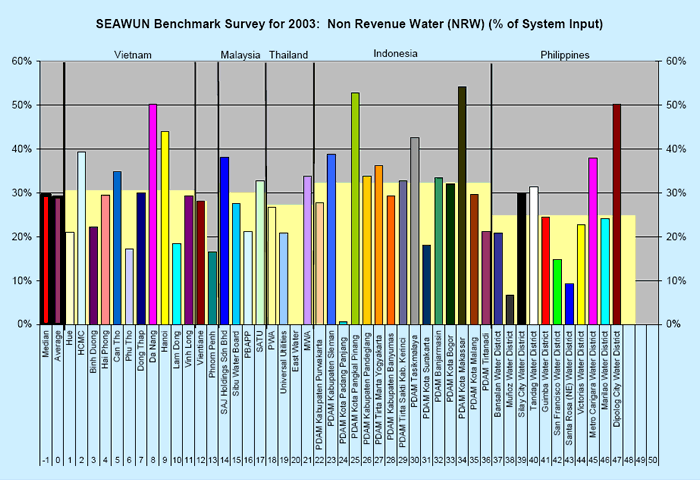
Apart from that, the service providers would also have to prove to consumers that it has taken steps to plug Non-Revenue Water (NRW).  Mind you, we have some 131,000km of water pipelines, 25% of those are made from asbestos-cement and they can easily deteriorate, crack or break altogether.  Our average NRW stands at 36%.  The Asian Development Bank stated that in Asian cities, the NRW averages 30% of water production, but ranges from 4% to 65%, posing as a deterrent to the recovery of production costs.  To plug NRW is costly but has to be done to the point where it would be economically viable to do so.  The panelists of the above dialogue agreed that 25% would be the acceptable level of NRW for Malaysia, and that should be the target for water service providers to achieve over the next few years.

South-East Asia's NRW 2003 (% of System Input)

Another challenge is to protect the water catchment areas.  The value chain starts at water catchment areas and therefore it is imperative that state governments take steps to protect these areas by gazetting them under a specific Act for Water Catchment Areas, and not as it is now, under the Forestry Act.  We often find water resources polluted by human activities in these areas such as logging (legal and illegal), farming, plantation, manufacturing, animal husbandry and indiscriminate dumping of rubbish despite having these areas gazetted under the Forestry Act.  Therefore, protecting water catchment areas is vital to ensure clean and continuous water supply.  The general public needs to be educated on the importance of preserving water catchment areas so they could act as the extra eyes and ears for enforcement authorities.

The biggest challenge, of course, is to depoliticize water.  Water, like the nuclear issue, should best be left to the experts, and not politicians who are self-proclaimed experts.  The current tussle on various water issues by both the ruling government and the opposition over the Langat 2 project is not helping, nor is the war on who has the lowest water tariffs.  When Penang increased its water tariffs, it was the best move yet it was politically lambasted by the BN government.  Face the fact: things are not getting any cheaper and the same goes to the treatment and supply of water.  And to the Selangor state government, stop hoodwinking the public any further.  Based on a projection up to July 2011, the water supply in Selangor is at 4,122 million liters per day (MLD) while the existing capacity is only at 4,326 MLD.  That gives us all a mere 1,204 MLD or 4.7% buffer.  If anything were to happen to any two water treatment plants in Selangor, our taps will run dry for several days at least.  Therefore, the Langat 2 treatment plant needs to be built like yesterday already.

Remember: Malaria, Tuberculosis, rising food prices, environmental degradation – all these have a common denominator: WATER.

Water, Water, Everywhere?

In 2002, the Likud Party won the Israeli General Elections and declared that it would object to the creation of a Palestinian state.  The issue: WATER.  Said Benjamin Netanyahu:

“A Palestinian state would control the aquifer, which gives us 30 percent of our water. Yes to a Palestinian state means no to a Jewish state, and yes to a Jewish state means no to a Palestinian State.”

That is how important water is to all of us, and I am constantly reminded of the hardship people in the Klang Valley had to go through during the water crisis of 1998, and the fact that it could happen again come 2014 (provided the Mayan Calendar’s gotten 2012 all wrong).  My fears are further underscored by this blog written by a friend who was a senior Water Engineer in pioneering Non-Revenue Water control work.

When Pakatan Rakyat gained control of Selangor in 2008, the first thing they did was to supply the first 20 cubic meter of treated water to consumers FREE OF CHARGE, a move I thought was foolish, unprecedented, and was definitely not carefully thought through of.  Nothing more than an election feel-good reward to those whom had vote for them, I believe it only encourages wastage of treated clean water as people do not have to pay for that first 20 cubic meters of water.

Then on 5th August of 2011, Elizabeth Wong, Selangor’s version of Fuziah Salleh of Kuantan (the former is the water “expert” while the latter is the nuclear “expert”) said in The Star that studies done on the growth in demand for water in Selangor by SYABAS was erroneous as it had relied too much on the National Water Resources Study (NWRS) conducted by the Economic Planning Unit in 2000.  That shows how shallow Eli Wong is, as SYABAS had used data collected over the last five years (2005 to 2010) to forecast the future of growth in demand for water.  In fact, Eli Wong went on to say that “… the “Water Demand approach” (SYABAS) used was based on the national GDP growth projection that varies according to the global economic market that has not been stable since the world economic crisis.”

Miss Wong, had you the ability to understand what you read, then you would know that the NWRS based its findings on four components: 1) Domestic Uses, 2) Commercial Uses, 3) Institutional Uses, and 4) Industrial Uses.  Only component (4)  uses GDP as a growth indicator for forecasting demands, and looking at what was written above by my friend, if the Selangor state government does not address this issue now, we may face a serious water shortage issue come 2014.

More alarming is Miss Wong’s continued feeding of misinformation over the Internet over the Selangorku website (SYABAS Gagal Turun Air Tidak Berhasil, Bekalan Air Bersih Terganggu) whether by default that she is ignorant of the water issue, or by design that this misinformation is fed to the masses to serve a much bigger agenda.

Air Tidak Berhasil or Non-Revenue Water for laymen like you and I actually means TREATED water that is lost through leakages in old pipes, theft and other methods, and not billed – cost was incurred to treat the water  but no revenue was able to be collected.  Eli Wong does not understand the economics of NRW.  To lower NRW level, it requires a form of investment. However, the economics of NRW is such that there comes a point where further lowering the NRW level will result in a cost that is too high for a water operator to bear.  The methods used to detect leaks etc is by no means cheap, nor is the replacement of old and faulty pipes.  Selangor is a huge state that the cost of replacing ALL these pipes would be beyond exorbitant.  For the same reason, Kelantan has less than 60% treated piped water supply coverage.  Penang on the other hand has a low NRW because it is far smaller compared to Selangor.  So, how does the PR-led Selangor state government plan to reduce NRW to 10 percent?  This is why the Federal Government has proposed for the building of the Langat2 plant for treating raw water supply from the neighbouring state of Pahang.  Without it, the current Selangor water buffer stands at 5 percent.  If any two water treatment plants in Selangor have to be shut at the same time, say for maintenance, then we will have serious water supply problems.

Water is a very important commodity in life.  Water is beyond necessity as it is life.  The Pakatan Rakyat’s gamble with this water issue should be seen as a gamble with the life of the rakyat.  And in my opinion, Eli Wong should just STFU and let the experts do their job.

In A Bowling Lane There Is A Gutter On Each Side

So it’s gutter-politics when you drag in the child/children of politicians to serve your cause.  Unfortunately, politics is like a bowling alley – there’s a gutter on each side of the lane.

Sample of (not limited to) websites from the holier-than-thou side:

http://www.detikdaily.net/v5/modules.php?name=Forums&file=viewtopic&t=26055

http://ikhwanhafiz.blogspot.com/2011/06/anak-rosmah-menikah-borat.html

http://milosuam.blogspot.com/2011/09/gempar-bakal-menantu-rosmah-anak.html

http://bagindareformasi.blogspot.com/2011/07/gambar-anak-najib-norashman-juga.html

http://anwaribrahimblog.com/2011/06/18/dr-tan-siapa-biaya-kos-pertunangan-anak-najib/

http://shaiful-hulusgr.blogspot.com/2010/06/parti-liar-anak-najib-dan-pemimpin-umno.html

http://www.ibnuhasyim.com/2011/06/kos-pertunangan-anak-najib-atas-nama.html

Pot calling the kettle “black”?

Colour Of Skin

When DAP’s ADUN for Kota Alam Shah in Selangor made an insulting remark about the Malaysian flag on National Day, there was an outcry and a call for him to be punished.  DAP did just that by suspending him from the party for six months.  This was later commuted to just a severe reprimand from the party’s “disciplinary committee.”  It was a punishment nonetheless.

DAP’s office holders are notorious for not respecting the Rukunegara, which was based on the Federal Constitution.

After the political Tsunami of 2008, several DAP’s assemblymen from Penang, Perak, Pahang, Johor, and most recently in Sarawak, refused to either don the official attire and/or the songkok.  The songkok, to them, symbolizes Islam, which is the official religion of Malaysia.  Several rulers were insulted by these people that the Sultan of Johor even made a remark about the behaviour of one who was thrown out of Johor’s Dewan.  Coincidentally, this same state assemblyman is now serving a six-month suspension for using the party’s money for his own interest (if this was done by a BN rep, they would have asked for a Royal Commission of Inquiry).

When the Chief Minister of Penang made a defamatory remark regarding the state of Johor, he too was let off without even a pinch given.

The difference between all the people mentioned above and the Kota Alam Shah’s rep is: the latter is not Chinese.

So much for a so-called multiracial party.

Donkey Hotey

Don Quixote was a Spanish fiction work written in the early 17th century about a middle-aged man whose pursuit of ideals was impractical and foolish.  It was from Quixote’s name that the adjectival form was derived: quixotic.

Quixotic is best used to describe the alternative budget offered by Anwar Ibrahim in Parliament, days before Prime Minister Najib Razak presented the government’s version.  One glaring carrot Anwar presented was setting the minimum wage for Malaysians at RM1.100 per mensem, while Najib’s government is still discussing the issue (or are they?).  Whatever it is, you can have a RM5,000 minimum wage level but it means nothing if all you can buy with it is a packet of asam boi.  Everyone should be thinking of how to increase the purchasing power of the Ringgit.

What was the Ringgit at versus the Greenback before Anwar’s superb fiscal policy as the Finance Minister almost destroyed the former? It was at around RM2.50 to a Dollar or something to that effect.  What are we at now? RM3 to a Dollar or somewhere there.  Simple minds would say that we’re still 50 cents off, therefore to a simple person like me, we have not fully-recovered from the 1997-98 Asian Financial Crisis.  Tun Dr M’s recovery plan which was to continue with what the opposition termed as “wasteful mega-projects” proved vital in helping ordinary Malaysians get back on their feet.  The local spillover effects from those projects were hardware stores get orders for construction materials, workers flock to Malaysia for jobs and spend their money at the local canteen set-up by the makcik who buys her ingredients from the local sundry shop and market.  Every one gets something out of a project, and every one including that makcik becomes a crony.  This is evident when trying to be a popular person, a certain sleeping Prime Minister stopped many mega-projects and caused the economy to slide down.  He learnt the lesson a hard way.

Najib’s budget makes Malaysia attractive for FDIs, and allows the lower income group to have more purchasing power.  When more money circulates in the economy, you create more jobs.  I’m no economist but I think that is how things work.  Setting a high minimum wage will only encourage traders to increase prices of essential goods, thus raising the inflation rate.  When inflation rate goes up, your purchasing power goes down.

Of course, PR is filled with things quixotic, but they are also notorious for not keeping promises made.  Let us take the promises made by PR in Selangor in its 2008 Elections Manifesto:

I want to know how many of you whose baby was born in Selangor has had an account set-up by the Selangor State Government with RM100 in it?

I want to know how many of you do not have to pay any form of fees for your pre-school children?

I want to know how many of  you have received between RM50 to RM100 for every child that you have to send to a nursery?

How many of your invalid kinsfolk has had a Takaful insurance subscribed by the State Government for them?

How many jobless single mothers with children below 12 years of age has received a fixed allowance of between RM150 to RM250?

How many farmers and fishermen have received a minimum wage of RM1,200 per month? (Co-incidentally, Anwar has reduced this to RM1,100!)

Those are among the promises made but have yet to be fulfilled by the Selangor State Government; yet, Anwar dared to make an even bigger promise through his quixotic budget.

Is Anwar a Don Quixote then?  At least Don Quixote’s loss of wits wasn’t as bad as the Donkey’s delirium.

Ong Boon Hua: Death of a Murderer

I hope he is dead.  At the time of writing, he is comatosed and dying in a hospital in Bangkok.

Finally.

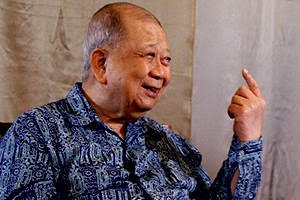
And it is this man I am talking about: Mr Ong Boon Hua, otherwise known as CHIN PENG.

Ong Boon Hua alias Chin Peng
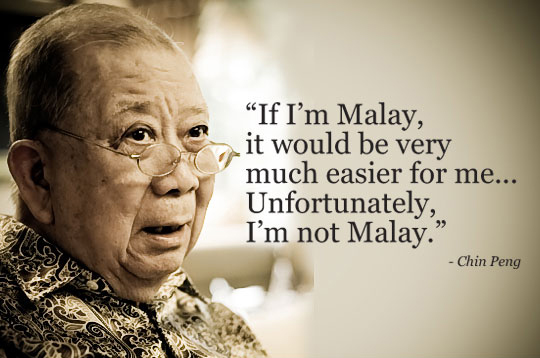
Ong Boon Hua alias Chin Peng: the Butcher of Malaya

If you think you see an old man in the picture above, let me remind you at one time he butchered Malayans (and subsequently Malaysians).

Chin Peng was born in Sitiawan, Perak on the 21st October 1924.  He embraced Communism when he was 15, and by the time he was 17, he not only led the underground cells of three Chinese secondary schools, workers, shop assistants and the domestic servants of European families, but was made a member of the Perak State Communist Committee.  He took over the leadership of the Communist Party of Malaya (CPM) in 1947 as its Secretary-General, replacing Lai Teck (a.k.a Loi Tek) who turned out to be a double-agent and had absconded with the Party’s funds.  But it was on the 16th June 1948 that Chin Peng was propelled to infamy, when CPM members in Sungai Siput, Perak, murdered three European plantation managers and started a state of Emergency that saw thousands of Malays and Chinese alike, displaced from the land and homes; 8,850 security personnel and 4,468 civilians were killed or wounded by the CPM from that point of time until the end of the First Emergency in 1960.  Chin Peng had, by 1953, retreated to South Thailand with his Central Executive Committee, and subsequently to China when the First Emergency was declared over.

To some, the struggle of the CPM was an act of anti-colonialism.  To these people who have very shallow understanding of the nation’s history, please read my previous postings on the CPM and whether or not the Malay Peninsula was “colonised”:

https://seademon.wordpress.com/2011/08/27/running-dogs/

https://seademon.wordpress.com/2011/08/31/domino-theory-part-1/

https://seademon.wordpress.com/2011/09/02/domino-theory-part-2/

https://seademon.wordpress.com/2011/09/04/domino-theory-part-3/

https://seademon.wordpress.com/2011/09/06/the-road-to-merdeka-persekutuan-tanah-china/

https://seademon.wordpress.com/2011/09/12/british-malaya/

Having said that, the struggle by the CPM was far from over.  On 17th June 1968, the Second Emergency commenced by the killing of 17 members of the security forces in Perak’s Kroh area.  This Second Emergency also saw the CPM dispatching two high-ranking police officers namely the late Tan Sri Abdul Rahman Hashim, who was the Inspector-General of Police on June 1974, and Tan Sri “Jimmy” Khoo Chong Kong, the Chief Police Officer of Perak a year later.  By the way, the Police finally apprehended the assassins.  Although the police believed that the same people were responsible for the murders of both Tan Sri Rahman and Tan Sri Jimmy Khoo, they were only tried for murdering the latter.  Read an account by Najib Rahman about his father’s assassination http://www.nst.com.my/nst/articles/Myfather_theIGP_wasgunneddown/Article/

Guess who defended Lim Woon Chong, who was one of the assassins, in court?  Find out here:  http://www.nst.com.my/nst/articles/11ccig/Article/

In this article http://www.malaysia-today.net/mtcolumns/no-holds-barred/43359-the-issue-is-chin-peng-is-chinese-and-not-malay , Raja Petra’s shallow way of thinking had made him conveniently blogged that since the Malaysian government has ties with THE China that supported the CPM, then there is nothing wrong with the CPM nor is there anything wrong with allowing Chin Peng to come back to Malaysia.  Would Germany have allowed Hitler to come back if he was still alive?  Raja Petra’s leaving out historical facts is a blatant act of trying to influence the shallow ones amongst his readers to think that he is right.  I would suggest he does more reading and find out why did China stop supporting the CPM LOOOOOOOOONNNNNNNNNNNG before the Hat Yai Accord was signed in December 1989. If he is too lazy to do any research, then he ought to read https://seademon.wordpress.com/2011/09/04/domino-theory-part-3/

If only Raja Petra knew of the KPI set by Zhou En-Lai to Chin Peng, then he would know why Chin Peng had said the following:

Chin Peng a Chinese, but not a Malaysian
Actually, Chin Peng would have won Malaya had he the support of the Malays, but he did not

So, Raja Petra, Najib Razak shaking hands with the Chinese, as did his father in 1974, had nothing to do with whether or not the Malaysian government agrees with Communism.  Anwar Ibrahim is very close to Paul Wolfowitz, the architect of the death of millions of Muslims since 9/11.  So was he implying that Anwar is anti-Islam? It was just a naughty attempt by Raja Petra to make the Chinese hate the Malays for not being sympathetic towards Chin Peng. Very seditious indeed, in my opinion.  Furthermore, what colonialism was Chin Peng fighting against from 31st August 1957 through 2nd December 1989?  Should Chin Peng have been allowed to return to Malaysia?  My answer would be a straight NO.

Do I have any sympathy for the man responsible for the deaths of thousands of Malaysians, disrupting the lives of tens if not hundreds of thousands more?  Should I even feel sorry for him since he is an old and dying man?  Not a hint. I hope he suffers and rots in whichever hell he belongs to.

So, to those who think that I am heartless for not feeling sorry for Chin Peng let me ask you a question.  Did the Jews weep when Hitler died?

Mr Ong Boon Hua, please die quickly.  I hope they cremate you and flush you down the toilet where you and your supporters belong.

Lim Gone Eh?

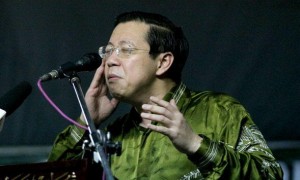
I wonder if Johoreans felt, for lack of better word, slighted when they heard what Penang Chief Minister Lim Guan Eng said recently to foreign journalists in Singapore about their state:

“Penang is visibly cleaner not only in terms of running an honest Government but also cleaner physically. Also safer and not to worry about safety in Penang. Penang was number one last year in terms of cutting crime by 27 per cent. For the first six months also cut crime by another 25 per cent. Whereas in Johor, a Singaporean is likely to get kidnapped. Won’t have that problem when you come to Penang.”

I’m afraid the Chief Minister was telling the truth about Penang’s crime statistics. In the Royal Malaysian Police website, Penang’s index crime saw a drop of 27.5% while Johor only saw a drop of 0.3% comparing the periods of Jan-May 2010 and Jan-May 2011. However, all states except Perlis and Pahang saw a drop in the percentage of index crimes for the given period.

Before the foreign journalist could say “Kudos, Guan Eng,” they should not forget that unlike its British counterpartS, the Royal Malaysian Police does not come under the control of respective states. In each state, the police is headed by the Chief Police Officer who is answerable to the Inspector-General of Police. In England there are 39 police forces in England alone; Wales has four while Scotland has eight. They are headed by their respective Commissioner or Chief Constable, who in turn report to the Home Minister.

Therefore, does Guan Eng have the right to gloat and bask in glory, claiming for the success which is not his?  The success of the police in reducing the number of index crimes in Penang and in other states is due to the leadership of the police force, not that of the respective state’s Great Ministers or Chief Ministers.  Furthermore, being a Chief Minister from a party that is part of a loose coalition of political parties that have very little or no respect for the men and women of the Royal Malaysian Police, Guan Eng ought to slap himself for having the balls to claim any credit.  For any FDI that goes to Penang post-August 2011, the supporters of Guan Eng et al should lick the boots of those men and women of the police force they constantly discredit and call names such as UMNO/BN Dogs so on and so forth, and say sorry to them.

A PR-friendly blog calling the police "DOGS"

Still doesn’t ring a bell, let us try another:

PR keeps calling men and women of the police as UMNO/BN dogs


Let us not forget that rabid creature, with no respect for the men and women of the police force, who bit a policeman who was discharging his duty:

The rabid creature that bit the police

So, Guan Eng, sorry but you did not do any tangible work to reduce the number of index crimes in Penang and could therefore NOT claim any credit for it.  Shame on you for that, and for failing to mention the fact that the number of index crimes in other states also went down.

Slap yourself, Guan Eng
“Aiya! Saya manyiak bolo!”

The Road To Merdeka – Whom Did The British Prefer?

For someone like A Samad Said to say that the Tunku was merely an independence receiver shows the works of a fiction-writer’s mind (Yahoo! News (from Malaysiakini): Pak Samad – Tunku Merely Independence Receiver)

“To me, Tunku was not an independence fighter. He was a receiver, the person approved by the British to ‘receive’ independence… the British felt that the ‘receiver’ must be a person who can take care of its interests in Malaya.”

A fiction writer does not need to know facts, all he has to do is to conjure a litany of half-truths or mere fiction to write, and that was what he did during the forum. It also displays his lack of knowledge in the history of the nation.

In my previous “The Road to Merdeka” series, I have written somewhat extensively to bring readers to one structure of thinking, then explain that the independence was obtained through a constitutional struggle that culminated in the end of feudalism, power to govern was handed by the Malay rulers to the people of Malaya, whilst maintaining the institution of the Malay rulers albeit in a constitutional form.

When the Federated and Unfederated Malay States were perfidiously annexed by the British and lumped in with the Crown Colonies of Penang and Melaka via the Malayan Union on 1st April 1946, it was done so using threats and blackmail on the Malay rulers without consulting the people who were the Rulers’ subjects. Malays all over the peninsula protested in January of 1946 when they got to know of the British’s plan. On 1st March 1946, over 40 Malay political and cultural organisations (PAS had not been born yet) met and 41 of these organisations decided to form UMNO, and three days later, under Dato’ Onn Jaafar, UMNO was formed. It was through this galvanisation of the Malays, united against the Malayan Union that caused the very architect of the Malayan Union, Sir Edward Gent, to declare the Malayan Union unworkable given the resistance by the Malays, a little over a month after it was formed.

Let us also recall that among the organisations that supported the formation of the Malayan Union were the Indonesian-leaning, Malay-dominated PKMM, and the Malayan Democratic Union that was dominated by the other races wanting immediate and automatic citizenship through the Malayan Union.

In 1949, the British government announced that it was to grant eventual independence to Malaya, and issued another in 1952 saying that independence will only be given if the various races were united. But UMNO and MCA called the British’s bluff and fielded their candidates for the 1952 Kuala Lumpur Municipal Election on a common ticket. We all know how that went. That paved way for the Alliance when MIC joined forces and the Alliance won the 1955 General Elections resoundingly.

And how did the struggle for independence go soon after? It was not smooth at all. We all know the British created for the Tunku and TH Tan a hell of roadblocks that they had to lobby friends in the British Parliament before the Colonial Office would even see them.

Prior to this, Onn Jaafar had sought to open up UMNO’s membership to ALL Malayans and rename the party as the United Malayans National Organisation, but his call went unheeded by UMNO’s members. We know now whom the British had favoured when they made the second announcement in 1952. He left UMNO in August 1951 and formed the Independence of Malaya Party (IMP), a multiracial party and had probably hoped that Malayans would support it in order to be granted independence from the British, as it would fullfil the . He misjudged the Malayan people’s resolve, and eventually left the party too, to form Parti Negara, a party with restrictions to non-Malays as members, aimed at winning back the support of the Malays. In 1955, Dato Onn and Parti Negara failed to win a single seat.

Old Samad also conveniently dropped a few names like Burhanuddin al-Helmi, Ahmad Boestamam, Mat Kilau. The latter fought against British influence but was not part of the Indonesian-leaning groups the former two were part of. In fact, Burhanuddin was a member of the militant KMM that was bent on overthrowing the British by force and become part of Melayu/Indonesia Raya. He also led Kesatuan Rakyat Indonesia Semenanjung (KRIS) right after KMM was banned, and then the PKMM. Boestamam headed the Angkatan Pemuda Insaf (API), the youth front of the PKMM. After the PKMM was banned for being the Communist Party of Malaya’s United Front and soon after he was released from prison, Boestamam set up the Partai Rakyat Malaya (PRM) in November of 1955 which during its formative years was based on the struggles of Sukarno and subscribed to the Pan-Malaya/Indonesia nationalism.

So to whom did Burhanuddin al-Helmi and Boestamam look up to? Sukarno. Was he a Malayan?

But like I have been saying all along, who are we independent from? The answer is FEUDALISM, the very system that brought the British advisors in. On 31st August 1957 the Malay rulers handed over power to their subjects, and freed them from having to depend on the British. The British had never colonised Malaya de jure save for the Straits Settlements. If the pro-BN say that we were colonised in any way, they are agreeing to the point made by their opposition counterpart that the Tunku, Tun Razak et al were all British lackeys (Barua British) as the respective states’ administration would have come under the purview of the British. Dare they chance that thought?

For Old Samad, I only have one pantun for him:

“Tersipu-sipu meminta barang,
Menggigil-gigil sebab teruja;
Cukuplah awak menipu orang,
Kubur dah panggil, usia dah senja.”

The Road to Merdeka: British-Malaya

In the Ashburton Guardian, Volume XIV, Issue 3126 dated 10 November 1893, there was a column entitled: A BRIGHTON SCANDAL. BREACH OF PROMISE SUIT AGAINST A SULTAN. It tells of a certain Miss Jenny Mighell suing a Mr Albert Baker for breaching a promise to marry her. Albert Baker was the name assumed by HRH Sultan Sir Abu Bakar ibni Daing Ibrahim, the Sultan of Johor from 1862 to 1895.

The case set a legal precedence in nations belonging to the Commonwealth of Nations that the ruler of a sovereign state or nation that is a protectorate of the British Empire cannot be tried in a court of law. Johor, in 1885, had signed a treaty of protection with the United Kingdom.

Collectively known as “British Malaya” the Malay states were unlike “British India.” British India started off as a business venture by the East India Company when it established a factory in Bengal in 1612. However, the “company rule” by the East India Company ended with the Government of India Act in 1858 following the Indian rebellion a year earlier. It was ruled directly by the Crown as a Colonial Possession and known thereafter as the Empire of India. The Indian princely states were allowed some measure autonomy in exchange for British suzerainty.

The Malay states comprised of three groups namely the:

1) Federated Malay States: a group of four states – Selangor, Negeri Sembilan, Pahang and Perak, that formed a federation that enjoyed the protection of the British in exchange for an “Advisor;”
2) Unfederated Malay States: Johor, Kelantan, Terengganu and Kedah (and later Perlis after it was independent of Kedah) that did not form a single grouping. Johor signed a treaty of protection with the British in 1885, while the rest became the British Protected States after Bangkok transferred its rights over these states to the British via the Bangkok Treaty of 1909. The Unfederated Malay States lacked common institutions and were not recognised as a single state under International Law.

3) The Straits Settlements – areas along the Malay Peninsula that came under direct British Crown rule (Pulau Pinang, Melaka and Singapore) after being taken over from the East India Company. Initially, the Dindings and Pangkor islands formed part of the Straits Settlements via the Treaty of Pangkor in 1874, but the British gave it up as Pangkor did not serve the British’s economic interest. It was established in 1826 by the East India Company following the Anglo-Dutch Treaty of 1824, but became a Crown Colony on 1st April 1867.

Therefore, the Malay states were never colonies save for Pulau Pinang, Melaka and Singapore that came under direct British rule.

Both the Federated Malay States and the Unfederated Malay States had an “Advisor” appointed who came under the respective Sultan’s or Raja’s payroll to advise on the management of the state’s day-to-day affairs. They were called the “Residents.” They were there in exchange for the protection provided by Britain and do represent an indirect rule by the Crown. While it may be argued that the real rulers were the Advisors, but that is more on a case-to-case basis. Some may be pushy, like Birch who was subsequently murdered for his overwhelming influence in the Perak courts, while some are loyal to their paymaster(s).

One such person was Frank Athelstane Swettenham who first became the Resident of Selangor before convincing the Rulers of Selangor, Pahang, Perak and Negeri Sembilan to form a federation and became the first Resident-General of the Federated Malay States, serving from 1896 to 1901. Swettenham brought about development to the four states and introduced better civil administration. He was one of close to 40 former British Empire officials who were OPPOSED to the Malayan Union on the grounds that the Malayan Union went against the Atlantic Charter (the Atlantic Charter among others stated that there was to be NO territorial aggrandizement after the Second World War). Swettenham, as other Advisors, were on the payroll of the Sultans. There were other British officers who were on the payroll of the Sultans. One example is Major L.Vears, who was the aide-de-camp to Almarhum Sultan Iskandar of Perak.

If you remember the first paragraph, the United Kingdom recognised Sultan Abu Bakar as the reigning sovereign of the country of Johor, a protectorate of the Crown of the United Kingdom, and thus enjoyed the privileges extended to members of royal families. Johor, as other Malay states were at that time, sovereign states, ruled by its own rulers albeit with an appointed Advisor (Johor accepted an Advisor only in 1904). Sultan Abu Bakar and Queen Victoria became lifetime friends; not as a subject, but as real friends who corresponded with each other on a frequent basis.

Another example of “British-Malaya” being a collection of independent states is the donation of the people of Malaya towards the construction of a battleship aptly named “HMS Malaya” during the First World War. Launched in 1915, HMS Malaya served during the Battle of Jutland, and throughout the Second World War before she was sold for scrap in 1948. Her bell can be seen at the East India Club in St James’s Square, London. Among the battleships that served the Royal Navy, only HMS Malaya flew a different ensign: the red-white-black-yellow ensign of the Federated Malay States!

We have now established the fact that the Malay states were never colonised by the British, and that the Residents (Advisors) were appointed and on the payroll of the Malay Sultans. Therefore, those who waged war on the Malayan, and subsequently Malaysian, people are nothing less than traitors to their homeland.

Whether or not the Advisors were the real rulers of the Malay states, we must keep an open mind. Some may have spoken with condescending tone, some may have been more polite. Comments on history are often made by people who are emotionally-scarred, and may be biased as to how they see things, but history cannot be based on emotions – it must be based on facts.

You may now ask, if we were not colonised, then whose flag did we bring down on 31st August 1957, and what are we independent of?

Feudalism!

On 31st August 1957, the Rulers of the Malay States handed over power to the people of the Federation of Malaya through its Chief Minister, thus ending the need to be dependent on the Advisors from the British Empire, turning this land into one with democratic principles with Constitutional Monarchy.

Now that we are independent, perhaps the Department of Museums and Antiquities would like to ask for the bell of HMS Malaya to be brought back to the country that sponsored the ship.

The Road to Merdeka: Persekutuan Tanah China

I know it is an odd title. When I say China, I do not mean the Chinese. I mean the country, China. This posting contains facts that many, including those from UMNO, do not know.

Before I go on, I want you to remember this important fact throughout this posting:

The Alliance won 51 of 52 seats in the 1955 General Election.

For a brief period during the Second World War, Sumatera was taken away from the control of Java and was placed under the Japanese Administration in Malaya. However, after Hiroshima and Nagasaki were bombed, the Japanese mooted an idea to Sukarno for Malaya to be included in a declaration of independence by Indonesia BEFORE the Allies could retake both Malaya and Indonesia.

On 13th August 1945, Sukarno and Drs Hatta went to Taiping on their way back to Jakarta from Saigon and met up with Ibrahim Yaakob and Burhanuddin Helmi to discuss on the idea of Malaya joining Indonesia Raya. This idea was not new to Ibrahim Yaakob. A Bugis by descent and an idolizer of Sukarno, Ibrahim was a member of the Kesatuan Melayu Muda (KMM), a radical nationalist group formed in 1938 to overthrow the British by force and unite Malaya with Indonesia under the banner of Melayu Raya. This meeting in Taiping was also attended by one Major General Hirokichi Umezu of the Imperial Japanese Army. The Imperial Japanese government at the time recognised the leaders of Indonesia. Ibrahim was also a Lieutenant-Colonel in the Japanese Giyuugun (Volunteer Army) that was formed in Java. Before the Indonesia Raya idea could be pushed forward, the Japanese government surrendered to the Allies two days later.

Sukarno however continued to push for the Indonesia Raya concept but told that the inclusion of Malaya would not be easy as they would have to fight against two major powers of the day: the British and the Dutch; and asked Ibrahim to continue his fight for the inclusion of Malaya from Java. On 19th August 1945, together with Hassan Manan (a graduate from the Sultan Idris Teachers College, and fellow KMM member), Ibrahim, his wife and brother-in-law were flown to Jakarta in a Japanese military aircraft to escape the British.

Together with Mokhtaruddin Lasso, Burhanuddin Helmi then formed the Persatuan Kebangsaan Melayu Malaya (PKMM), a republican association, on 17th October 1945, taking over where Ibrahim’s KMM had left. This got PKMM at loggerheads with the British. PKMM was then joined by other Jakarta-leaning members such as Shamsiah Fakeh, who led PKMM’s women wing, AWAS (Angkatan Wanita Sedar); and Ahmad Boestamam who led the youth wing, API (Angkatan Pemuda Insaf). Onn Jaafar, who was then a District Officer in Batu Pahat, was against Melayu Raya/Indonesia Raya as he did not want Malaya to be subsumed by a Javanese master. It was during this period too that Kiai Salleh, a respected religious leader from Batu Pahat, rose to fight the Communist Party of Malaya’s Bintang Tiga menace.

When the British formed the Malayan Union in 1946, PKMM together with its fraternal organisations API, AWAS and BATAS; and the non-Malay organisation, Malayan Democratic Union (MDU), quickly supported the move by the British. PKMM, being republican in nature, supported the Malayan Union because it was opposed to the idea of a Malaya ruled by the Malay rulers while MDU supported the idea of an immediate citizenship for all immigrants. As history has proven, intense pressure by UMNO caused the British to abandon the Malayan Union. The Malayan Union was then replaced by the Federated Malay States in 1948.

It was also at this juncture that the British offered independence, but was rejected by UMNO. The reasons for rejecting this offer were that the Malays were at that time a minority in Malaya; the Malays lacked education (they were given elementary education until Standard Six); the Malays were also not involved in the mainstream economic activities. It was not until later, when General Sir Gerald Templer objected to the British offer to Malayans for a self-rule Malaya for its assistance in fighting the communist, that UMNO declined that offer and went instead for the independence of Malaya.

Where was PAS during this time? PAS was embedded within UMNO. There was no PAS. PAS came about when none of the supporters of the founder of PAS was appointed to the respective state’s legislative council, following the formation of the Federated Malay States. They left UMNO probably in 1951, and then formed the Pan-Malayan Islamic Party (PMIP) in 1955 to contest in the first General Elections where they won one seat.

Despite having seen that UMNO and MCA could set aside differences and work together in the first Kuala Lumpur Municipal Council Elections in 1952, Templer was quoted by the Straits Times on the 19th May 1953 to have said the following:

“It would be a tragedy, not only for Malaya, but for South-East Asia, if power was handed over so precipitately that the remarkable progress now being made in all direction is thrown out of gear, to say the least of it, quite apart from the communal difficulties which might, or would arise.”

In November 1955, after the victory of the Alliance inthe first General Elections, Tunku Abdul Rahman who was the Federation of Malaya’s first Chief Minister, went to Jakarta to call upon President Sukarno. The Tunku put forth Malaya’s idea to pursue an independence from the British. Enter our long-lost character Ibrahim Yaakob, who went to meet Tunku there, pushing forward his ambition to have Malaya’s independence within the framework of Indonesia Raya.

Let us fast forward a bit to the formation of Malaysia in 1963. Although the Constitution of the Federation of Malaysia gained the consent of the Yang DiPertuan Agong on 29th August 1963, objections by Indonesia and the Philippines over the inclusion of Sabah and Sarawak, and the conduct of referendums in the two states by the United Nations pushed the date further to 16th September 1963. It was also a coincidence that 16th September is the birthday of Lee Kuan Yew, the then-Chief Minister of Singapore.

Indonesia, already opposed to the independence of Malaya in 1957, was further aflamed by the inclusion of Sabah and Sarawak into Malaysia. Sukarno was influenced to teach Malaysia a lesson by D.N Aidid, Leader of the Indonesian Communist Party, and by the Indonesian Foreign Minister, Dr Subandrio, who went to China to meet its Premier, Zhou En-Lai. Subandrio, an alleged communist, was very close to Premier Zhou, and discussed the possibility of lynching and splitting Malaysia, and requested for support from China. The plan was for an Indonesia Raya and a greater China where all Malay island nations (that possibly include the Philippines as well) would be under Indonesia Raya, while all mainland nations including the Peninsula of Malaysia would come under China.

Indonesia at the time was supported by the communists in the Soviet Union. This episode saw the withdrawal of Soviet support (the Soviet was against the confrontation with Malaysia) and a cautioned-support from China. Supporting the Indonesians then would be a positive move for China as Indonesia had the second largest communist party outside of the Soviet Union. Chinese arms started trickling into Indonesia by 1964. Had it not been for the help from the Commonwealth Forces, Peninsula Malaysia would probably be a province of China now. Chin Peng, who was residing in China then, also ordered the CPM members to assist the Indonesian armed forces against Malaysia and the Commonwealth.

The rest, I would say, is history. Ibrahim Yaakob resumed the name Iskandar Kamel and was made a Minister under Sukarno rule. After the attempted coup by the communists in Indonesia failed, he withdrew from his post and died in Jakarta in 1979, aged 78. He was listed on his tombstone as Iskandar Kamel Agastya (IBHY), Leftenan-Kolonel Purnawirawan NRP 26217. In 1973, the late Tun Razak allowed him to return briefly to Malaysia. In an interview during that visit, Ibrahim Yaakob admitted to being a double-agent for both the British and the Japanese.

Chin Peng, in an interview in Singapore, had said that the CPM, as a fraternal organisation of the Communist Party of China, enjoyed full support from China for the establishment of a satellite-communist state in our country. He was given the task to fulfill three levels of achievements in the 1950s, namely the:

1) Support on the local level,
2) Support on the national level, and,
3) Support on the international level.

He achieved the support on two of these levels: Local – he had strong support from the Chinese community. He had support on the International level – the support from China. What he did not have in the 1950s was the support on the National level – there was no support from the general Malay population. Hence, the only way for the CPM to remain relevant was to incite the non-Malay population to work against the Malays, who were portrayed as being the political masters of Malaya. Does this ring a bell? It is deja vu all over again in present day Malaysia.

If you remember at the beginning of this posting, I asked you to remember this important fact:

The Alliance won 51 of 52 seats in the 1955 General Election.

In 1955, the Alliance won the first General Elections of the Federation of Malaya. Then, the non-Malays were still in the process of being naturalised (provided they could speak Bahasa Melayu and met the number of years criteria) hence most did not make it into the electoral roll. Therefore, it could be said that the voice of the Malays were in support of the Alliance – not PAS, not Parti Negara (that was formed by Dato’ Onn after leaving UMNO), not PPP, not PKMM, not CPM (the latter two of course were illegal organisations then and were not elligible to contest).

So, what does that say about people like Mat Indera, Abdullah CD, Rashid Maidin, Shamsiah Fakeh et al., the so-called nationalists who fought on the side of the communists? A simple malay term to describe them would be none other than “TALI BARUT KOMUNIS” or the communists’ lackeys, who lost all clout fighting for independence when the Federation of Malaya achieved independence in 1957. The elections results also prove that the malays disapproved of them fighting for the communists from the onset of the Malayan Emergency in 1948, and definitely disapproved of Mat Indera’s slaughter of the men, women and children of the Bukit Kepong Police Station.

None of those mentioned in the previous paragraph own any right whatsoever to be called “Freedom Fighters.”

——————————————————————————————————-

In ending this posting, I can safely say that I have done six postings on several chapters of the history of our nation versus none from the Ministry of Information. There seems to be no check and balance by the Ministry of Education to provide a full course in the nation’s history: all that the children read are watered-down versions of the nation’s history, structured so they could perform in the history examinations without understanding the spirit behind each and every event. There also seems to be inaction from the Home Ministry on seditious remarks made by certain quarters, even to the extent of belittling the institution of the Yang DiPertuan Agong and the Raja-Raja Melayu, as well as the glorifying of an illegal organisation – an act that is covered extensively in several legal Acts.

If we forget our history, we will become a nation without a soul – and this is now all too evident in a weary 54-year old Malaysia.