MMEA’s Baptism of Fire

The two Vietnamese fishing vessels that had attacked the MMEA’s patrol craft

The Malaysian Maritime Enforcement Agency (MMEA) recently experienced its baptism of fire literally when one of its patrol craft came under attack from Vietnamese fishermen on board two fishing vessels. Early today, an Indonesian smuggler was shot dead in a scuffle with an MMEA personnel.

Incident with the Vietnamese fishermen

The incident involving the Vietnamese fishermen occured some 81 nautical miles from Tok Bali, Kelantan, inside the Malaysian Maritime Zone. This is equivalent to the distance where most of our offshore drilling platforms are located – 150 kilometers from the mouth of the Tok Bali river.. It also means that the Vietnamese fishing vessels were most definitely far from their own waters. They are known to have gone as far south as the Indonesian Natuna islands and have recently rammed several boats from the Indonesian Department of Fisheries to avoid being detained.

Not only that, towards the end of April of last year, two Vietnamese Coast Guard vessels rammed an Indonesian navy vessel in order to stop the latter from detaining several Vietnamese fishing vessels.

In the previous Sunday’s incident, they waited for the seven-men crew of the ‘Penyelamat 7’ to come close to their vessel before ramming their boat, throwing objects including iron blocks, wrenches, sharpened iron rods, cooking gas tank and others at the boat and crew. They have also prepared diesel bombs in several barrels on board their vessel which they threw at the boat with the intention of destroying it and its crew. In defence, the crew fired several warning shots to deter the crew of the fishing vessel from intentionally hindering the enforcement from boarding and inspecting. Still, they did not stop. The consequence, unfortunately, is in the form of a dead Vietnamese fisherman.

Incident with Indonesian smugglers

Near Tanjung Sedili early today, the MMEA foiled an attempt to smuggle exotic birds, the White-Rumped Shama and the Magpie Robin, by Indonesian smugglers using two fibreglass speedboats. The MMEA managed to stop the first boat and detained three Indonesian men aged between 40 to 62 and discovered about 90 cages filled with the birds mentioned.

A second boat arrived unaware that the first boat had been detained. An MMEA personnel jumped on board in an attempt to stop it. The boatman accelerated away in a dangerous manner where he tried to ram the MMEA patrol boat. A struggle ensued between the boatman and the enforcement officer where the former had tried to seize the latter’s weapon. Warning shots were fired by the other enforcement officers but this too was ignored, and a decision was made to use reasonable force to stop the smugglers from harming the enforcement officer on board their boat. A shot was fired and one of the smugglers was hit, and later pronounced dead on arrival at the Tanjung Sedili Medical Centre.

Formation of the MMEA

The men of the MMEA were just doing their job under but not limited to Section 7(2)(b) and Section 7(2)(d) of the Malaysian Maritime Enforcement Agency Act, 2004 which allows them to board any vessel with the purpose of inspecting and searching, and investigate any offence that is being committed, or about to be committed, or has been committed. The 19 Vietnamese fishermen as well as the Indonesian smugglers that have been detained are now being investigated especially under Sections 307 and/or 186 of the Penal Code for the attempt to murder and for obstructing public servants from carrying out their duties.

The formation of the MMEA was mooted in 1999 and tabling of the MMEA bill was made in Parliament in 2004. Prior to its formation, the Exclusive Economic Zone (EEZ) was managed in a sectoral manner by 11 government agencies and departments, involving 5,000 personnel and more than 400 vessels of all types. A singular and dedicated approach was required, leaning towards the roles of a coast guard, as both an enforcement agency as well as combatant in times of war – in other words, it is a paramilitary body. It in not any different than the Royal Malaysian Police’s General Operations Force (PGA). But unlike the police, the MMEA has the power to investigate and prosecute.

The MMEA acquired hand-me-down assets from the various marine departments and agencies, some of which are already in their 60s. Although procurements of new vessels have been made, the bulk of vessels patrolling our waters are more than 30 years old. Not only that, the numbers are not sufficient to cover the operations. Larger but older vessels need regular maintenance for them to be able to operate continually. Hence, smaller boats that are not meant for long-distance patrols and have no on-station endurance have to be employed.

In Dire Need of Newer and Suitable Assets

It was probably based on this knowledge that the fishing vessels involved in the recent incident were armed with improvised weapons meant to cause the destruction of these smaller patrol boats. Imagine what would have happened to the brave crew of the 20-meter Penyelamat 7 had their boat sunk that day. Desperate to not lose their livelihood if caught, these fishermen would do anything at all to avoid arrest. In April 1993, a Royal Malaysian Navy personnel whom had boarded a fishing vessel off Pulau Kapas in Terengganu was kidnapped, possibly after being overpowered, and was never found. I was made to understand that this almost happened to the men of the MMEA.

We need to understand that these fishing vessels work in packs of several vessels per pack. The MMEA would have to spread itself really thin to follow these packs. When a boarding party has successfully boarded a vessel, the MMEA patrol boat will then go after the other boat. Now imagine this: each fishing vessel is crewed by about ten men. Each Penyelamat-class boat has a crew of about eight. How many MMEA personnel can be put on each fishing vessel safely if they are not to be overpowered, and if there are three or four fishing vessels in a pack? In the case of the Penyelamat 7, it would have taken two hours and 40 minutes for another fast MMEA boat travelling at a speed of 30 knots to get to their location. In those two hours and 40 minutes, they would have to rely on sheer guts and luck to stay safe while facing 40 desperate and determined men.

Therefore, it is imperative that the government equip the MMEA with more purpose-built assets which are newer, larger and faster, to replace the current older ones as well as boats that are not built for long-range patrols. As its name suggests, the Penyelamat 7 was built for search-and-rescue operations, not enforcement. The MMEA would also be needing mobile floating bases – perhaps converted merchant vessels that can house extra crew, the Special Task and Rescue (STAR) team with a helicopter and fast Rigid-Hulled Inflatable Boats to act as a logistics ship for the MMEA patrol vessels as well as back ups for its patrol vessels. This way, patrol vessels will have a longer range and patrol endurance to intercept the packs.

Faster and capable patrol boats also need to be acquired for anti-piracy and anti-smuggling operations especially in the Johor waters and the Strait of Melaka.

The Vietnamese fishing fleets are known to be accompanied by a ‘mothership’ so that they can fish far from their waters, while the Indonesia smugglers and pirates are only a short hop away, able to carry out hit-and-run raids quickly if left unchecked. It is about time the government becomes serious about the matter and better equip the MMEA as any paramilitary force should be equipped.
COVID-19: When the Government Goofed

MCO Day 141 (5 August 2021):


We started MCO with a 10-day average of 146 cases per day, followed by 159 cases per day 10 days later, and peaked at 170 cases per day 10 days following that. The number of those being treated peaked at 2,596 on 5 April 2020. The highest number of daily new cases was 235 on 26 March 2020 (MCO +9).


The numbers went down to 37 cases per day 4 days before the commencement of the current RMCO (PKPP). 36 days after the RMCO came into effect, the number of cases per day on a 10-day average dropped to 3. The number of those being treated was 1,551. Everyone was happy.


56 days after the RMCO came into effect, the average number of daily new cases on a 10-day average has increased to 21. 8 people have died since. The number of those being treated went down to 63 on 9 July 2020. It is now at 196.


Things became too relaxed too soon. The government goofed when it trusted people who cannot even signal before changing lanes or turn into an exit, to do self-quarantine at home.


Now, Kedah police say they cannot fully enforce the lockdown of those areas affected by the Sivagangga cluster because of the existence of ‘jalan tikus’.

Re-Think The Conditional MCO, Please

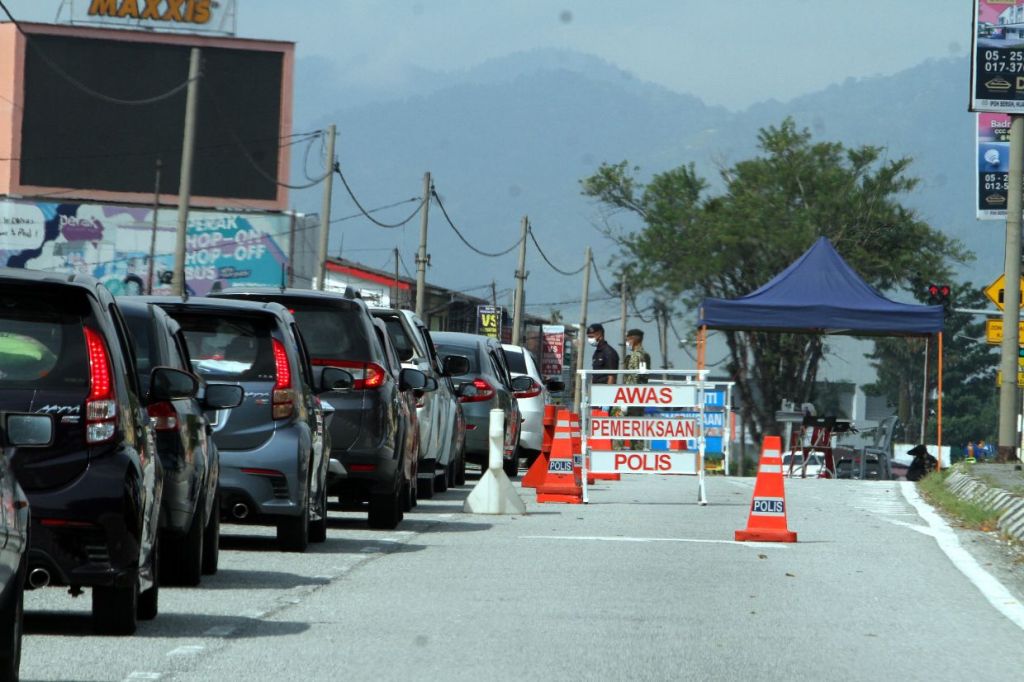
A stretch of vehichles queue for inspection at a police roadblock ereted to combat the Covid-19 pandemic outbreak at Jalan Kuala Kangsar, Ipoh – RONNIE CHIN/The Star

Locking down a country is an expensive exercise, no doubt.  After 45 days and almost RM63 billion loss made, the government has decided to loosen the Movement Control Order (MCO) a bit to kickstart the economy.

The announcement of a Conditional MCO (C-MCO) by the Prime Minister was made as part of his Labour Day speech.  Most sectors of the economy will be allowed to operate again on Monday 4 May 2020, except those that involve services where physical contact cannot be avoided, or where crowd control is virtually impossible.  Restaurants are allowed to operate as long as they meet requirements such as checking the body temperature of customers, prepare a registry for customers to leave their contact details in case contact tracing is required, maintaining a 2-meter distance between tables, and place lines on the floor for customers to queue before paying their bill.

Offices, too, should produce their own Standard Operating Procedures (SOP) and prepare physical health risk mitigation measures such as providing body temperature checks, separating cubicles, common area and items cleaning procedures, flexible working times so that workers do not all come to the office at the same time, and so on.

For those who are health-conscious, they can now resume jogging, or riding their bicycle, play tennis, badminton or even golf – as long as social distancing is maintained and not done in a large group.

Some say it is high time that the government returns the responsibility of not spreading the virus back to the public.  After all, it is not like the virus is going to go away in such a short time.  It will take another two years before the war against COVID-19 can be won.  Therefore, we should learn to live with it.  Just follow the recommendations: maintain your social distance and wash your hands thoroughly more frequently.

The only problem is rules and regulations to Malaysians are like bicycles are to fish.  They just don’t care.  Almost immediately after the announcement was made, traffic on the road increased, parents took their children out to do groceries, some are already without face masks.  Wet markets no longer see social distancing.  Videos and photos of the Batu Berendam Wholesale Market, the Sumayyah Market in Tumpat, and the Taman Maluri Wet Market showed that it was free for all again.  That night and even last night, cars were back on the roads while motorcycles raced through the wee hours of the morning. And to top that all off, a policeman was killed by a speeding Toyota Hilux driven by a drunk driver!

I understand that it is costing the government in the region of RM2.4 billion for every day that the economy is under a lockdown.  I understand the need to kickstart the economy so that money could be made and jobs could be saved.  But pray tell, how does playing tennis or going jogging help kickstart the economy?

The announcement of the implementation of the Conditional MCO was made on a Friday, such wrong timing, because the implementation starts the following Monday.  There is not enough time for companies to have SOPs and physical health risk mitigation steps in place.  I do not know why is there a rush to get things done but this is just like that stupid decision to allow barbers and hairdressers to operate – a decision that was rescinded the following day.

The government should have given time between Monday 4 May to Friday 8 May for these measures to be in place first and announce the first day of work as Monday 11 May instead.

It is also good that restaurants are allowed to open, but dining-in is really not necessary.  Most restaurants have remained open since the start of the MCO to allow operators to deliver food to customers or for them to do self-pickup.  Yes, sales must have been a lot less than normal then, but how many tables and chairs can a restaurant have with social distancing being a prerequisite?  The whole idea of an MCO is to reduce exposure to the Coronavirus.  People will be going back to work and will definitely need to eat.  Therefore, I think it would be wiser to maintain restaurant operations for takeaways and deliveries as the volume of sales will go up anyway.  That would help reduce the exposure to the Coronavirus.

According to Dr Phillippa Lally, a Senior Research Fellow at the University College’s Behavioural Science and Health department, it takes more than two months before a new behaviour becomes automatic – 66 days to be exact.  What it means is that it takes 66 days for this new habit of wearing face mask, washing of hands for more than 20 seconds, social distancing and so on would take 66 days before it becomes a habit.

For that reason, during the first three months of military training no recruit or officer cadet are allowed to have visitors or go on outings because new values are being grinded into them.  Once these values have become a new habit, they are allowed some freedom.  These new habits will only become a lifestyle in six months, the time that they are allowed to graduate.  For officer cadets, they spend another six months being turned into officers from mere soldiers.

Even Emeritus Professor Datuk Dr Lam Sai Kit agrees that the Conditional MCO has been introduced too early.  Citing the 95 local transmissions out of 105 new cases on Saturday, the Nipah virus expert said that there are still too many local transmissions for the government to relax the MCO.

The academician who was involved in the discovery of the Nipah virus in 1998 said in a press statement that he does not object to the loosening of MCO, but the relaxation is far too much and too soon.

“With the relaxation of MCO, there is every likelihood of a surge of new clusters and cases. Can we really cope with increased testing and contact tracing?

“Can we empower and engage the community to do their part in preventing the spread of the coronavirus?” he asked.

He expressed concerns that if the country faces a resurgence of cases, the MCO would have to be reinstated and what had been undertaken would be wasted.  Already on Sunday 3 May, we are seeing 122 new cases, with only 52 imported cases while 70 others are local transmissions.  There were two deaths as well.

The government should seriously re-think this Conditional MCO and not bow down to any pressure given by any quarter.  It was doing very well with its way of handling the COVID-19 crisis and citizens sang praises for it, until the PM decided to announce the Conditional MCO.

(This article was first published by The Mole )

RMO Day 26

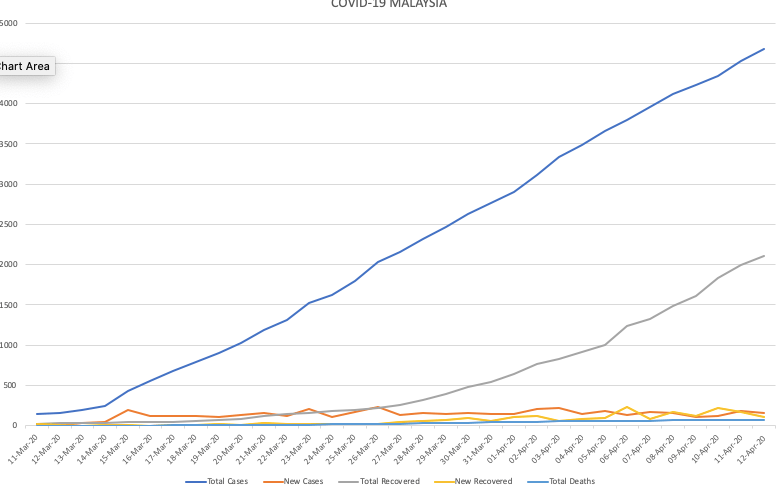
Graph showing COVID-19 total cases, daily cases, total recovered, daily recovered, and total deaths in Malaysia from 11 March 2020 till 12 April 2020

Every day at 5pm I would listen in to the daily briefing by the DG Health Ministry. Although I applaud the efforts being done by the Ministry, I should caution against any form of optimism. Today, 12 April 2020, is no different. It is the 26th day of the Restricted Movement Order.

In the first graph, the blue line at the top represents total number of cases while the grey line beneath it represents total number of those who have recovered. Optimally, we should see the blue line tapering and flattening, the grey line showing exponential increase whilst decreasing the gap between the two. It is only when the blue line flattens and the grey line crosses it could be breathe a sigh of relief. Unfortunately, that hasn’t happened.

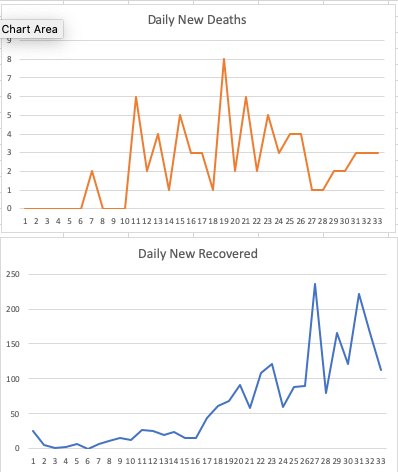
Graphs showing daily COVID-19 deaths and recovered cases in Malaysia from 11 March 2020 till 12 April 2020

In the second graphs, you can see that the number of daily deaths is showing a steady increase while those who have recovered daily is going on a downward trend. Our percentage of deaths have increased from 1.58 percent to 1.62 percent of total cases. 

Sure, today we also saw a drop in the number of daily new cases, but we are still getting at least 150 new cases daily. And there still are thousands of results pending, and I am sure a huge number of those with the virus still undetected.

If anyone is optimistic that we are winning the war, that certain sectors of industries ought to be allowed to operate, or that internal borders should be re-opened to allow movements, think again.

This war is far from over.

Brown Will Never Be White

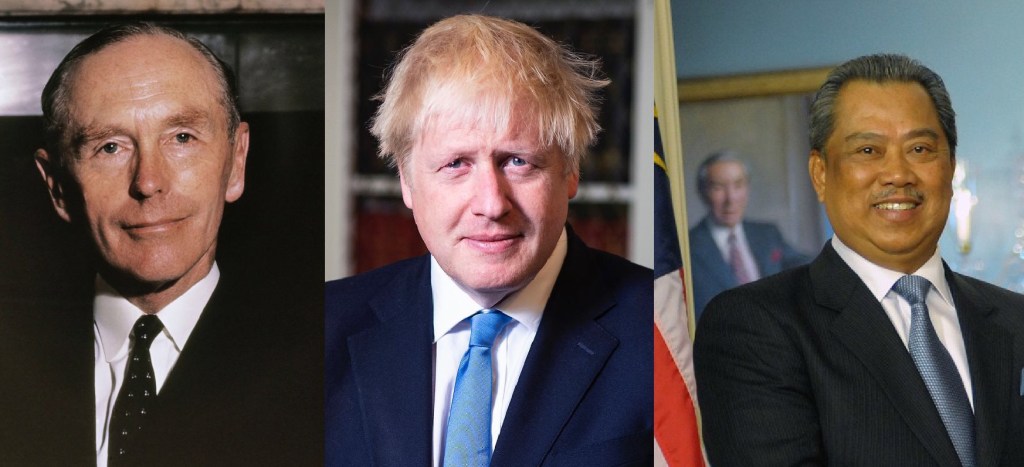
Alec Douglas-Home, Boris Johnson and Muhyiddin Yassin

The UK’s centre-left newspaper The Guardian has made a scathing attack on the Yang di-Pertuan Agong’s decision to appoint Muhyiddin Yassin as Malaysia’s 8th Prime Minister.

The attack was made in an editorial and reeks of rancid prejudice by accusing His Majesty of executing a ‘royal coup’ that had helped topple the PH government.

The editorial however failed to explain that it is the constitutional prerogative of the Yang di-Pertuan Agong to choose a member of the Dewan Rakyat who in his judgment, commands the confidence of the House, as Prime Minister. And in his judgment at that point of time, it was Muhyiddin who had the most support – the most goal scored before the final whistle was blown.

It was impossible to keep the circus going without dragging the whole nation down both economically as well as security. Tensions were high at that point and public order had to be protected. As sovereign, it is the duty of the Yang di-Pertuan Agong to also end the circus to maintain peace and order for the public good. This was the judgment in para 226 Dato’ Dr Zambry v Dato’ Seri Nizar [2009] 5 CLJ 265.

The editorial should also know that Queen Elizabeth II had had two Prime Ministers whose appointments were controversial and did not have the support of the majority of the House of Commons.

The Queen appointed Sir Alec Douglas-Home to succeed Harold Macmillan ,who was ill and resigned in 1963, denying the popular Rab Butler’s chance of becoming the PM. The Queen was accused of colluding with Macmillan to have Douglas-Home appointed without the process of a leadership election.

Buckingham Palace made it clear then that the choice for a new PM should come from the Tories alone, a very highly unusual advice, maintaining a process called ‘You Choose, We Send For’. There was no consultation whatsoever with Labour or other political parties.

As a matter of fact Boris Johnson’s government is still without majority support in Parliament!

Therefore, why is it so wrong for the Yang di-Pertuan Agong to go by the Federal Constitution, interviewed every single MP, consulted the other Rulers, before making the decision to appoint Muhyiddin? He went by the book to make sure he correctly appoints his Prime Minister who will be heading His Majesty’s government!

Is it because we can never be right if we go by the book because we are not white?

When Wisdom And Maturity Win

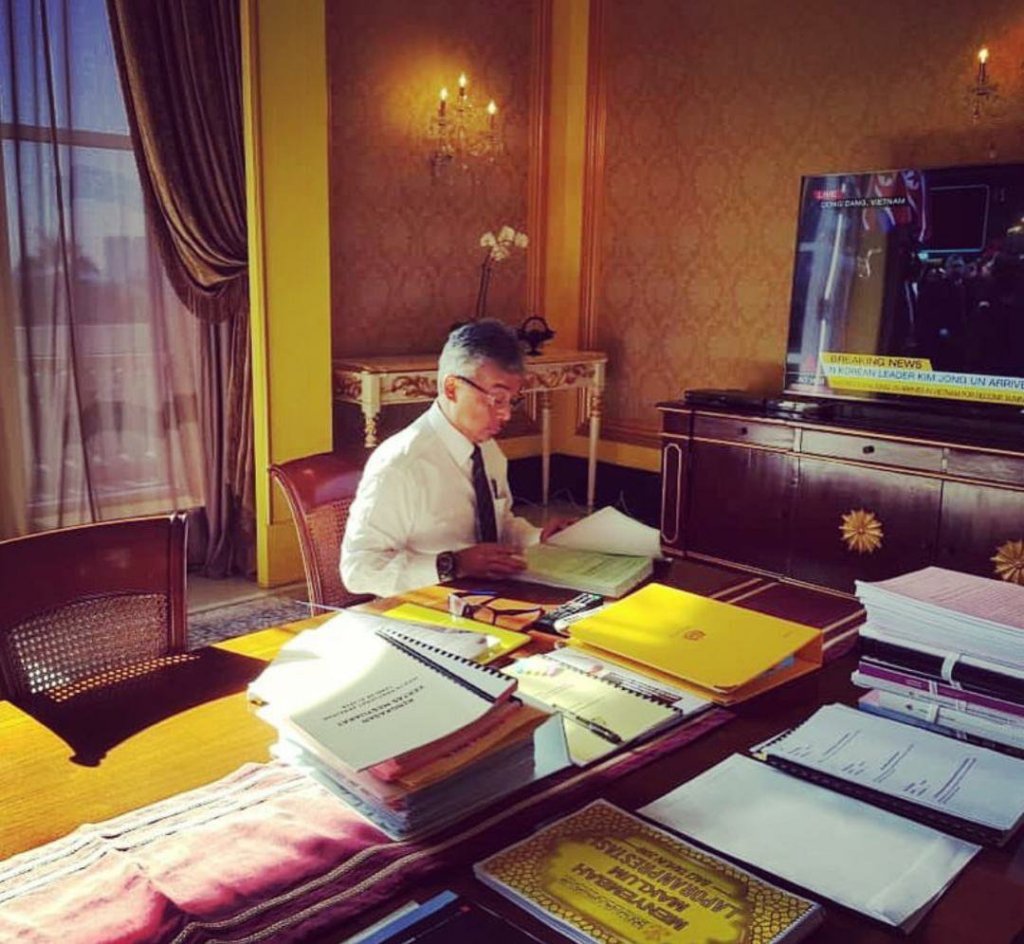
His Majesty the Yang di-Pertuan Agong

The political crisis started a long way back with one man thinking that the seat of the Prime Minister should be handed to him, while the incumbent felt that he should hold on to it for as long as possible. There was no Malay, Chinese, Indian, Jawi, UEC or Adib involved in the whole fiasco.

When His Majesty the Yang di-Pertuan Agong stepped in to solve the crisis, there were as many calls for the Parliament to be dissolved as there were for the incumbent to handover the premiership to his so-called designated successor. I wrote to friends the following:

“The Raja is the landowner. It is the constitutional prerogative of the Raja to choose whom in his judgment should lead the administration of HIS government. Our duty every five years or so is to vote for those whom we think should represent us. That is where our responsibility ends.”

His Majesty the Yang di-Pertuan Agong did exactly that – solving the crisis according to what is accorded to him in the Federal Constitution. With the two warring parties claiming the right to the premiership, political parties went back and forth changing their allegiance to each of the party who in turn claimed that he has the most support.

His Majesty went on to call each MP for a private interview trying to see who supports whom. And many got trapped in that simple but virtually meaningless definition of ‘majority support’ thinking that the candidate with the most support should become the Prime Minister. However, there is nothing in the Federal Constitution that gives such provision.

Article 43 (2) (a) of the Federal Constitution states that the Yang di-Pertuan Agong shall first appoint as Perdana Menteri to preside over the Cabinet a member of the House of Representatives who in his judgment is likely to command the confidence of the majority of the members of the House. In other words, exact number of support for any of the candidate is not a requirement for a decision to be made by His Majesty. The interview is only for him to gauge the level of support each candidate has.

The method used is similar to the ones used in Perak by the late Sultan Azlan Shah, and in Kedah several years later, to determine who can command the confidence of the most of the Dewan to become the respective States’ Menteri Besar. In all three crises, the maturity and wisdom of the Ruler is incumbent (Dr Zambry v Dato’ Seri Nizar [2009]5 CLJ 265) para 232. The method to determine the issue of “majority support” is the prerogative of the Ruler and is non-justiciable (op cit).

It is in my opinion that “majority support” was determined by the total number of MPs from any one bloc. There was the Anwar bloc – MPs who wanted Anwar to become the next PM. Then there was the Mahathir bloc – people who wanted the elder statesman to continue. And we had the Muhyiddin bloc – those who solidly supported Muhyiddin’s candidacy. Both the Anwar and Mahathir bloc had to combine to challenge Muhyiddin’s number of support. But whether they like the other bloc’s candidate that they were forced to accept is questionable. Hence, the one with the most unambiguous support would be Muhyiddin.

No one else has the right to choose a Prime Minister. The right claimed by Anwar Ibrahim to become a Prime Minister, and the so-called promise by Mahathir to hand over the premiership to the former, are against the Federal Constitution. Only the Yang di-Pertuan Agong has that right, as prescribed in Article 40 (2) of the Federal Constitution. Conventions are not laws, and are therefore not legal. It is because of this illegal promise that got us into this trouble last week.

Even after the announcement by Istana Negara on the swearing-in ceremony of Malaysia’s 8th Prime Minister was made, there is still talks of numbers and majority made by the other party. But what is the point of scoring 50 goals after the final whistle was blown? And going back to Article 43 (2)(a) where it is the Constitutional prerogative of the King to choose an MP as the PM whom in his judgment commands the confidence of the member of the House, such SDs carry no weight whatsoever. It was just an attempt to create negative perception about the wisdom of the King.

We are certainly blessed to have a wise King who made full use of his rights in the Constitution and his freedom to consult to settle this chaos. Despite taking precedence above all other persons in the Federation, His Majesty did not forget to consult all the other Rulers. After all, he represents all the Rulers. And he stood his Constitutional ground, gentlemanly, when others did not.

Was The Speaker Playing Politics?

Pic courtesy of Malaysiakini

The Speaker of the Dewan Rakyat yesterday issued a statement saying that he will not issue a notice for the August House to convene for a special sitting at the request of Mahathir.

Many said that the Speaker was playing politics, and possibly because his son works for the DAP. However, I am in the opinion that the Speaker was right.

Any person who is to become a Minister must first take an oath of office and allegiance and an oath of secrecy in the presence of the Yang di-Pertuan Agong before taking office, as prescribed by Article 43(6) the Federal Constitution.

When Parliament is dissolved, the PM and cabinet remain in office as a caretaker government until a new government is formed and sworn in.

In this case, Mahathir resigned, and the Cabinet automatically resigns with him. His oaths of office, allegiance and secrecy are null and void. He is no longer a Prime Minister. He was appointed as an Interim PM, but there was no swearing-in ceremony. Constitutionally-speaking, he is NOT a Prime Minister.

Therefore, if he is not a PM, he cannot instruct the Speaker of the House to issue a notice to convene for a special sitting when Parliament is in recess according to Rule 11(3) of the Parliamentary Meeting Rules.

Who Is Anwar To Demand?

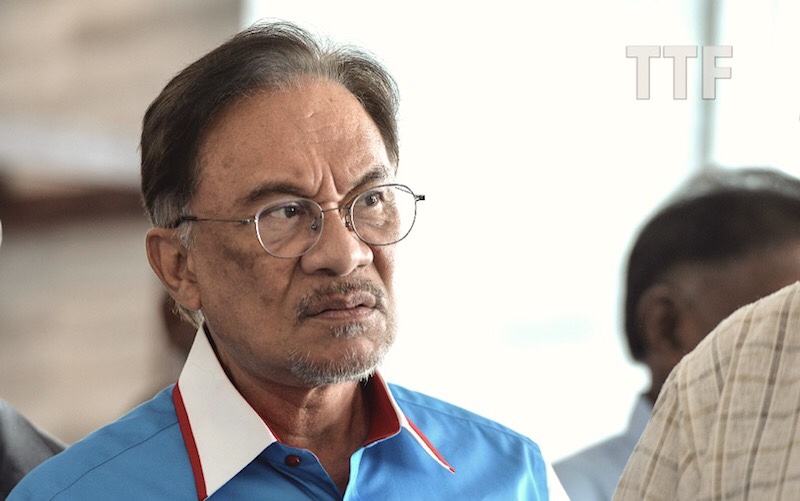
Anwar demands for the seat of the Prime Minister (pic courtesy of The Third Force)

Anwar Ibrahim has been waiting for the past 22 years to become the PM. The closest he ever got there was 23 years ago when he became the acting Prime Minister for a short while. And then he got expelled from UMNO that was being led by Mahathir.

There may have been an understanding or even an agreement between Mahathir’s PPBM and PKR, DAP, and PAN that Anwar should become the PM after an X number of years of Mahathir being at the helm.

While Mahathir has never mentioned a specific date for a handover, Anwar has been selling the idea of him being the next PM to the public, forcing a perception that it is his right to take over the helm from Mahathir.

He even said to members of the press that he is open to the idea of Mahathir joining his cabinet. That is how cocksure he is of becoming the PM.

But, since when is the Prime Minister’s post the right of an individual? Even if a Prime Minister can determine his successor, only the Yang di-Pertuan Agong has the constitutional right to choose a Prime Minister.

Article 43(2)(a) of the Federal Constitution gives that right to the Yang di-Pertuan Agong to choose a Prime Minister from amongst the members of the Lower House whom he thinks has the confidence and support of the majority of the members.

Back during BN days it became a convention that the Yang di-Pertuan Agong chose the one named by the incumbent, but that was then. That was a time when BN commanded the majority in Parliament.

Unlike the BN, this is a government of motley crew. Helmed by a Prime Minister from a party with the least number of seats, support from within can go either way.

And to get a sure majority support, the Opposition has to be roped in; something unthinkable during the BN days. However, given a choice between the devil and the deep blue sea, I doubt that it is in the best interest of the Opposition to back someone seen to have the support of the DAP.

To put Anwar Ibrahim in that post in ways other than those prescribed in the Federal Constitution would be a revolution, and there is nothing democratic about revolutions.

It is the sole right of the Yang di-Pertuan Agong to choose a Prime Minister to lead his government. There is no other form of right agreed by all parties when this nation came into being. Dreamers can therefore continue to dream.

Negara Ku

When the bill was passed on 18 August 1954 to pave way for the first Federal Elections, the Alliance set up a 30-man council to organise their election campaign.

A key feature in the campaign manifesto was to safeguard especially the promises to safeguard the rights and interests of the Malay and Chinese communities.

One of the key points agreed was the need for a common language as a national language. There was little doubt that the Malay language was to be upgraded as the national language. At the same time the manifesto guaranteed protection, growth and development for the language of other communities.

Lord Reid, who was tasked with drafting the Federal Constitution, presented that ‘Malay should be the national language and English should be retained as an official language for 10 years’ (Report of the Federation of Malaya Constitutional Commission 1957, para 170, London: HMSO CO No.330).

The final version of this part of the Federal Constitution can be found in Article 152, in Part XII.

When the Director-General of the Ministry of Education recently made an excuse on behalf of a school found to have its students singing the National Anthem ‘Negaraku’ in Mandarin, I attribute that to either his ignorance of the Federal Constitution and the special position of the Malay language, and also of the National Anthem Act, 1968.

To give a lame excuse that the anthem was sung NOT in a formal event was a bad move on his side. To give an even lamer excuse that the anthem was sung in Mandarin in order to help non-Malay students to understand the National Anthem made it even worse. Whoever advised the DG to say such things should offer his or her resignation right away. If there was no one advising, perhaps the DG himself should offer to resign.

There are only two versions of the Negaraku according to the National Anthem Act, 1968. In the attendance of the Yang di-Pertuan Agong, the full version is played. The shorter version is played in attendance of the Raja Permaisuri Agong or other Rulers AFTER the respective state’s song has been played.

You can find the score of the anthem in a schedule made under Section 2 of the said Act, and also the lyrics. The lyrics is in neither Mandarin nor Arabic. It is in Malay, the national language. There are no other versions of the Negaraku.

Therefore, be it an official or unofficial event, the Negaraku has to be sung in Malay, and not in any other language. There is no unofficial version of the Negaraku in the Act.

To help non-Malay students understand and embrace the meaning of the lyrics of the anthem, you can print its meaning in whatever language that you want, but the anthem shall be sung in Malay.

Some detractors used the excuse that the Negaraku was adapted from a French tune called ‘La Rosalie’ which was said to have been composed by Pierre-Jean de Béranger. But there is no evidence to support this as de Béranger was a lyricist whonwas known to have used the tunes of others for his songs. Perak was the first to use the tune for its state anthem ‘Allah Lanjutkan Usia Sultan’ in the 19th century.

But whatever song a national anthem was adapted from, you sing it as it should be sung, according to its lyrics. ‘God Save the Queen’ came from a popular Scottish tune, ‘Remember O Thou Man’ and was used in the national anthem of Iceland, Liechtenstein and Switzerland. The ‘Star Spangled Banner’ was adopted from a popular English song, ‘To Anacreon in Heaven’.

But we never hear the Hindi version of ‘God Save the Queen’ in schools in England, nor have we ever heard of a Mexican version in schools in the US. A national anthem is a national symbol, like the national flag. It is to be sung with respect and honoured as a rallying point – a symbol of unity.

To suggest otherwise or to make excuses to defend stupidity is just blasphemous.

Satan Is Never Good

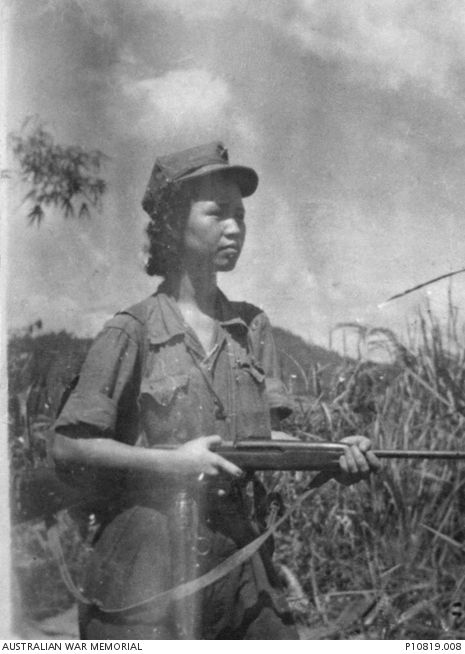
Lee Min, leader of the Communist Party of Malaya in Kepayang, Ipoh, Perak in 1950 (pic courtesy of the Australian War Memorial)

At the recent gathering of former members and supporters of the Communist Party of Malaya (CPM), the ADUN of Sungai Pelek Ronnie Liu Tian Khiew admitted that his father was a communist and that the latter strived to free Malaya from its British colonialists.

At the same gathering, a former terrorist, Tan Yi Yu, said that the purpose of the gathering among others is to correct the perception of the public towards the CPM. He said that the CPM’s struggle was a war against the colonialists and imperialism; a struggle for the independence of Malaya, democracy, freedom and peace.

First of all, CPM was never interested in the independence of Malaya, and definitely not interested in democracy. Save for Melaka and Pulau Pinang, Malaya was not under colonial rule and nor was it a British dominion. Malaya was made of nine independent sovereign states – all nations ruled by its own Ruler. The British administrators in these states were all under the payroll of the respective state’s Ruler and owed their allegiance to the Ruler. They came through agreements made between Britain and the Malay Rulers to help introduce a more efficient method of governance for the Rulers, and provide protection to the Malay states against aggressions.

And saying that the communist terrorists fought for democracy is like saying Satan did everything in his power to save Jesus from crucifixion. That is how absurd it sounds.

Chin Peng never harboured any loyalty to Malaya. Instead, he said that, influenced by communist doctrine, he wanted to join Mao’s forces to fight a guerrilla war in China. “The same sentiments still applied…I was intending to die for my motherland, a land I had never even visited” wrote Chin Peng in 2003. It means that 14 years after the signing of the Hatyai peace agreement, Chin Peng still regarded China as his motherland (Alias Chin Peng – My Side of History, p.133, 2003). Therefore, how could Chin Peng and his merry men and women have been interested in democracy, freedom and peace of Malaya/Malaysia?

On 31 August 1957, Malaya became a sovereign nation, recognised by the United Nations. She was in her ninth year of struggle against communist insurgency. She was administered by a government of His Majesty the Yang di-Pertuan Agong that was chosen by her people. That in itself shows the illegitimacy of the communist insurgency.

By 1960, 1,200 battle-weary communist terrorists made their way into Southern Thailand. The 8th Regiment in Kedah, the 5th and 12th Regiments from Perak, and the 10th Regiment in Pahang withdrew to areas in Betong and Golok, in the provinces of Yala and Narathiwat respectively.

In 1961, the CPM Central Committee carried out a review of its past policies and chartered a course for the resumption of armed struggle, and spread its doctrine amongst the Thai Chinese which later dominated the 8th and 12th Regiments. They set up Marxist-Leninist Training Schools to indoctrinate the youth, and by 1963, more than 2,000 indoctrinated youths had returned to Malaya and Singapore.

In Singapore, they infiltrated the Nanyang University Students Union (NUSU). 10 days after the formation of the Federation of Malaysia, the police entered the university to arrest communist leaders. It was also during this time that communist cadres from Johor, Selangor and Perak crossed to Indonesia to be trained and armed by the Partai Komunis Indonesia (PKI).

Armed struggle was not the only way that the CPM had tried in order to achieve victory. Participation in the democratic process, using political parties as a front to infiltrate into parliament was another method. In a communist document dated 20 March 1965 retrieved from an Executive Committee Member of the Partai Rakyat branch in Perak, states that: “The main thing is the peoples’ actual struggle, but parliamentary struggle is not to be abandoned because it may be used to our advantage.”

The almost exact words appeared in another document published by the Malayan Peoples Socialist Front (MPSF), the forerunner of the Parti Rakyat Malaysia (PRM), in Perak entitled “The Party’s Future Line of Struggle and Its Strategies” dated 4 April 1965 it states: “Strategically, we should adopt more violent forms of struggle and at the same time make full use of the parliamentary form of struggle.”

In June 1968, the CPM issued a policy statement that states: “In the final analysis, the practice of armed struggle during the past twenty years has confirmed that Mao Tse-tung’s Thought, Marxism-Leninism of the present era, is the guide to the Malayan revolution, and that the integration of the universal truth of Mao Tse-tung’s Thought with the concrete practice of the Malayan revolution is the only guarantee for achieving victory in the armed struggle of the Malayan people.”

The above statement was released to coincide with the twentieth anniversary of the CPM’s armed rebellion launched in June 1948 (the First Emergency). on 17 June 1968, communist terrorists ambushed a police convoy near Kroh, Perak, killing 17 policemen. The bodies were mutilated and private parts severed and stuffed into their mouth. That signalled the commencement of the Second Emergency in a 11-year old self-governing nation that the CPM claimed to be British lackeys! Is that a display of its struggle for democracy, freedom and peace, Ronnie Liu?

Communist agents also infiltrated the Labour Party of Malaya (LPM) and the Parti Rakyat Malaya (PRM) making them components of a Communist United Front in the peninsular. They also infiltrated trade unions such as the Selangor Building Workers Trade Union, the United Malayan Estate Workers Union, the Electrical Industry Workers Union of Malaya and the Pineapple Industry Workers Union – all of which had to be de-registered to curb the red menace. They also infiltrated Chinese secondary schools to form the underground student movement as replacements for lost cadres.

They also exploited Islam and used misinterpretations of Islamic tenets as propaganda tools to exploit the Malays. We sometimes see this today in social media platforms posted by influencers and politicians saying that Islam has never been given a chance to develop under the government, and that communism safeguards Islam. Replace government and communism with acronyms of political parties and you will see what I mean.

Nanyang University in Singapore was not the only university that was infiltrated by communist agents. They also infiltrated the University of Malaya Chinese Language Society (UMCLS). It started in mid-1970 with a group of students calling themselves the Young Socialists planning to position themselves for the upcoming election, and in June 1971 succeeded in gaining control of the UMCLS Executive Committee as planned. The UMCLS quickly formed ancilliary bodies to spread the communist doctrine. Bodies such as the Dramatic Study Sub-Committee and the Cultural Exchange Preparatory Committee were designed to launch propaganda offensive.

The CPM link to the UMCLS was confirmed on 14 October 1973 when security forces shot dead a communist terrorist near Tanah Hitam, Chemor in Perak and found a work report by a lsenior student underground movement leader to his superiors on the activities conducted by the UMCLS.

UMCLS manipulation of the University of Malaya Students Union (UMSU) led to the illegal students riot on 21 September 1974. The UMCLS also issued pamphlets claiming that the fall in rubber prices and rising cost of living had resulted in deaths due to starvation of villagers in the Baling area of Kedah. This was supported by a transmission by the Suara Revolusi Malaya radio station in Beijing condemning the Malaysian government for causing the deaths of the people of Baling.

On 9 December 1974, police raided a house in SEA Park, Petaling Jaya that was occupied by members of the UMCLS and seized printing blocks, imitation rifles, boots, propaganda music cassettes and banners.

And in the name of freedom and peace, the first civilian murdered in the Second Emergency occured when communist terrorists dragged a woman from her house in Sintok, Kedah and shot her in front of the villagers. She was a former communist who had surrendered to the authorities. She was a Chinese.

I can go on and on about the murders of two most senior ranking police officers, the bombs that kept going off in Kuala Lumpur, the murders of policemen on duty in the streets of Kuala Lumpur, the bombing of the National Monument and many others that occured until 2 December 1989. But all I want to prove here is that the CPM was never interested in democracy, freedom and peace, and those murdered in Malaysia were Malaysians and none of them were British colonialists or Imperialists.

All the justification that Ronnie Liu and Tan Yi Yu had put forth in trying to portray the CPM as heroes of the nation are just hogwash, pure rubbish and deserve the display of both my middle fingers. If it weren’t for the selfless sacrifices of the men and women of the security forces – Indian, Chinese, Malay, Iban, Orang Asli and others, these ruthless murderers would have made it into Putrajaya, or Jalan Dato Onn in those days.

Stop trying to hoodwink the public. There is no way that Satan can ever be good.