Air Power Is National Power – An Essay

This article was submitted to the RMAF PR Department after Defence writer, Danny Liew asked me if I was participating in the essay-writing contest (that I had no idea about). I quickly wrote one in office and mailed it within 2 hours of writing. I could not write much as we were limited to 2,000 words only (if I remember correctly).

It only won a consolation prize (not surprised though due to the lack of effort I made)

…………………………………………………………………………………………………………………….

AIR POWER IS NATIONAL POWER

Background
For most of its beginnings, the RMAF operated in support of the Malaysian Army’s and Royal Malaysian Navy’s operations, before finally gaining air defence capabilities in 1963 after receiving ten ex-RAAF CAC Sabre fighters. 56 years after its establishment and in spite of recent unfair criticisms for its mainly misguided and perceived roles, the RMAF is, still without doubt, a force to be reckoned with.

Operating uniquely a combination of modern European, American and Russian aircraft, the RMAF has a power projection that had gotten a regional neighbour publish a defence white paper to discuss what is believed to be “the first nation to have the capability to strike the mainland in sixty years.” Supported by very capable air defence coverage as well as skilled personnel, the RMAF continues to provide assurance that the sovereignty of the nation will be protected at all costs.

However, does the RMAF have enough appropriate assets to truly assert power projection?

Force Projection– Lessons from the Ambalat and Lahad Datu Incidents

“Force Projection” is a term used to describe a nation’s ability to project power and exert influence on its neighbours at the least, and viably regionally or globally.

During the Ambalat incidents from February through May 2005 saw the RMAF deploying some of its assets from the Peninsula to the East. Given the number of offensive air assets the RMAF possesses, had the conflict gone uncontrolled, it would have been a daunting task to defend both sides of the nation.

We again see a deployment of assets from the Peninsula during Ops Daulat to provide close air support for the ground combatants. The RMAF has been continuously been rotating aircraft on detachments from the Peninsula and this is far from being a feasible way of sustaining force projection.

Air Power

The British definition of air power today is:

The ability to project military force in air or space by or from a platform or missile operating above the surface of the earth. Air platforms are defined as any aircraft, helicopter or unmanned air vehicles.”

The above defines the characteristics of modern air power which provides for national deterrence against possible belligerents. The manner in which the RMAF operations are limited to does not allow for sustainable air power projection.

The factors that define effective implementation of air power include:

Airbases. There should be a network of permanent as well as alternative operating bases. Although much of the grass airstrips in Malaysia have been converted into dwelling as well as golf courses, we are still blessed with myriad small airstrips that can effectively operate smaller aircraft suitable for light-attack and helo operations. Civilian airports in Sabah and Sarawak in particular should provide the opportunity for the RMAF to form and house additional squadrons instead of detachments from the Peninsula to effectively oversee its responsibility to provide adequate air defence for those states. While air-to-air refuelling (AAR) can extend the reach of our fighters as well as their loiter time, planning factors such as distance, demand, duration as well as cost generated by the need for enhanced AAR capability need to be taken into account.

Versatility. Our air assets should also be versatile in its multi-role capabilities with quick turnarounds for other roles reconfiguration.

Air Presence. While “Sentiasa Di Angkasaraya (Always in the Air)” may be the motto of the RMAF, it is prohibitively expensive to continuously provide air presence. Already blessed with a relatively good air defence system, and in light of the MH370 incident, the RMAF may need to tweak its air intercept procedures, provided with better engine hours for its interceptors, and impose upon the Department of Civil Aviation for better airspace management control where the former has a better control of not just suspected hostiles, but also of stray friendlies.

Fragility. As air assets grow in terms of sophistication and performance characteristics, so does those of the anti-air defences. As such, suppression of air defences becomes an important and crucial role for air power. During WW2, DeHavilland produced an aircraft that embraced simplicity in battle-damage repair but effective in performance: the almost-all-wood Mosquito. While wood is more fragile than conventional aircraft material, the fragility of the Mosquito was ameliorated by its speed and superb performance. Likewise, the RMAF would need aircraft that has better speed, low radar signature and good self-protection measures to make up for the fragility due to the enemy’s enhanced air defence capabilities. This will ensure the ability of the RMAF to penetrate deep behind enemy air defence lines.

Good intelligence and Quick Response. Air Intelligence Officers must possess the correct knowledge, attitude and the ability to grasp situations in order to have an effective support for air combat operations. As intelligence is perishable, good intelligence is only good if it can be made to good use by the tacticians and strategists before its value becomes outdated. The Decision-Action cycle has to be in a tempo that supersede that of the enemy.

Stand-Off/Reach. The range of modern air-to-air, air-to-surface weapons, as well as the air platforms that carry them will demonstrate the RMAF’s commitment and resolve. This is an area where the RMAF, in moving forward, need to seek balance in when making future procurements of air assets and materiel.

Sustainability. The RMAF must ensure that its manpower, equipment and logistics are able to command its operational and objective requirements. Sustainability is the ability to maintain its aim as prescribed in the Principles of War.

Principles of War

The Principles of War were developed by Major General JFC “Boney” Fuller based on his experiences during the First World War. Applicable also to Air Power, failure to take into account these hard-won lessons can lead to mission failure. They are:

Selection and Maintenance of the Aim. It is imperative that the aim in which the RMAF plans to achieve its objectives must be carefully selected and defined with clarity. The objectives must be attainable and directed to achieving the intended strategic goals. The commanders at all levels must know how to interpret the aim and what is required of them and the resources made available to them to attain the aim. Therefore, the tasks, roles and missions selected for the air assets must be consistent and coherent with the strategic initiatives to achieve this aim.

Maintenance of Morale. Air and ground assets employed by an air force are useless without personnel that are motivated to achieving the aim. Continual training and maintenance of discipline are equally as important for the men and women of the RMAF as well as having commanders who they can look up to and trust in their leadership in times of war and peace.

Security. It is also imperative that physical protection of assets be of utmost importance against enemy interference. All personnel need to embrace the “need-to-know” and information denial culture. For the latter to occur, good and outstanding commanders who command the respect of his/her men and women play exceptional role in maintaining their morale and in making them understand the culture of information denial.

Surprise. Surprise is essential to achieve mission success and must be applied to at all levels of RMAF activities. Surprise can be achieved through secrecy, concealment, deception, originality, audacity and speed.

Offensive Action. The commander must always employ offensive action to influence the outcome of the campaign or operation. With selection and maintenance of the aim, determination must be set to maintain the initiative and deny the enemy from overcoming the goals. In peacetime, force projection via adequate appropriate assets as well as the availability of correct basing of assets provides psychological offensive action. Hence, the Government needs to see that resources are made available to the RMAF to achieve this aim.

Concentration of Force. It is essential to concentrate superior force against the enemy at the decisive time and place which calls for superior and adequate assets, as well as quick reaction to good intelligence to achieve success in war and peacetime.

Economy of Effort. Decisive strength must be achieved and maintained in order to have concentration of force. Therefore, Economy of Effort demands correct air power weapons and delivery systems to match the tasks.

Flexibility. Flexibility allows the commander to exercise judgment by modifying plans without changing the aim. It demands trust, discipline, good training and quick decision-making.

Cooperation. Better cooperation and coordination with other services can be achieved through joint exercises. This allows for concentration of force and economy of effort against the enemy.

Sustainability. As mentioned, sustainability is about maintaining the physical, spiritual and moral aspects, and the necessary fighting power of the RMAF. Without sustainability, the aim will be greatly jeopardised.

Conclusion

Air Power is important in maintaining the nation’s deterrence from belligerence. The RMAF needs the government’s support in acquiring adequate appropriate assets to maintain that deterrence as it projects the nation’s power.

MH370: I Speak Out

20140319-225404.jpg

This posting is made with the above in mind. A lot has been said about the disappearance of the MH370. Most of what has been said are purely speculations, with some that might have qualified to be nominated for best screenplay at the Academy Awards. I, too, have some idea of what might have happened but I put them aside so I could listen to the daily press conference with an open mind. I will also attempt to maintain some form of ethics because I also have the feelings of the family of the passengers and crew in mind when I write this.

The Royal Malaysian Air Force (RMAF) has come under intense attack by both foreign and local media alike. The Air Defence system has also come under intensive fire by members of the opposition party for its failure to detect the MH370 upon deviating from its intended path and the subsequent failure to scramble our fighters. Some even say our air defence personnel were asleep on the job, and that at least one air defence radar was not working.

It is easy for keyboard warriors to criticise the RMAF without knowing what or how our air defence systems work. Perhaps when they think of an air defence system, they had the following in mind:

20140319-230523.jpg

Why I write this is to give a general understanding of how our air defence system works, and what really happened that night. I have been generally quiet on this matter as at the time of writing, I am grieving the passing of my younger brother exactly 100 days today. But duty calls, I guess.

I left the RMAF almost 20 years ago. A handful of my squad-mates are still serving senior officers. Back in September 2012, a number of bloggers (including I) and some senior editors of the Malaysian media (including those that are opposition-leaning) were invited to a media open day organised by the then Minister of Defence. Everything was displayed to us, including some of the very sensitive information, so that we could acquire enough background and understand how the RMAF works. Out of the 80 or so people who were there that day, I guess I am the only one to come to the defence of the RMAF.

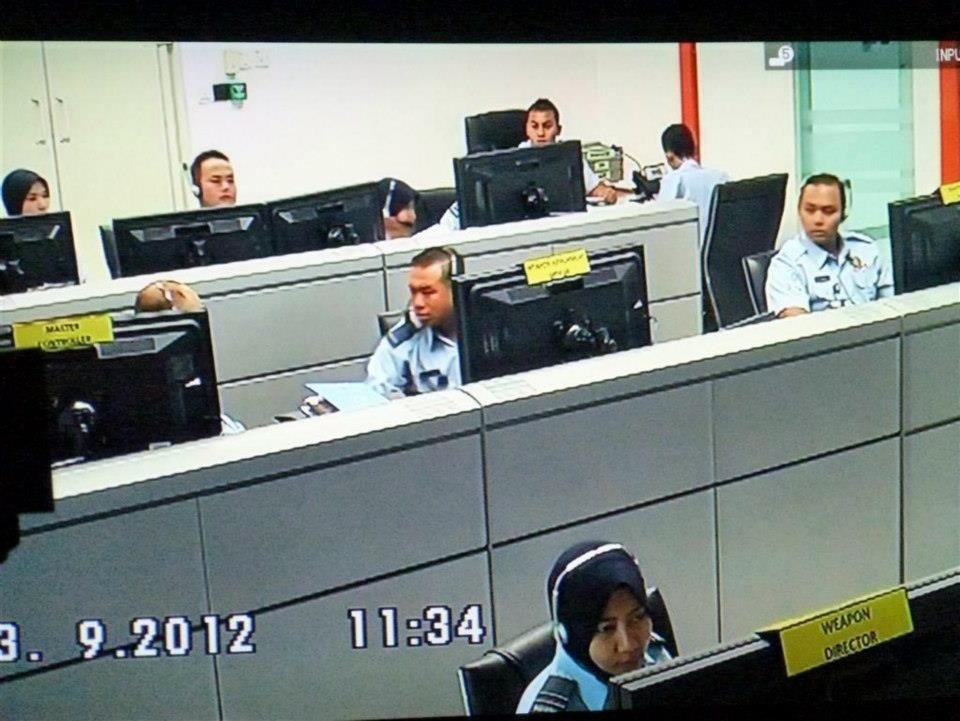
First of all, this is how a typical air defence centre looks like from the inside:

20140319-231314.jpg

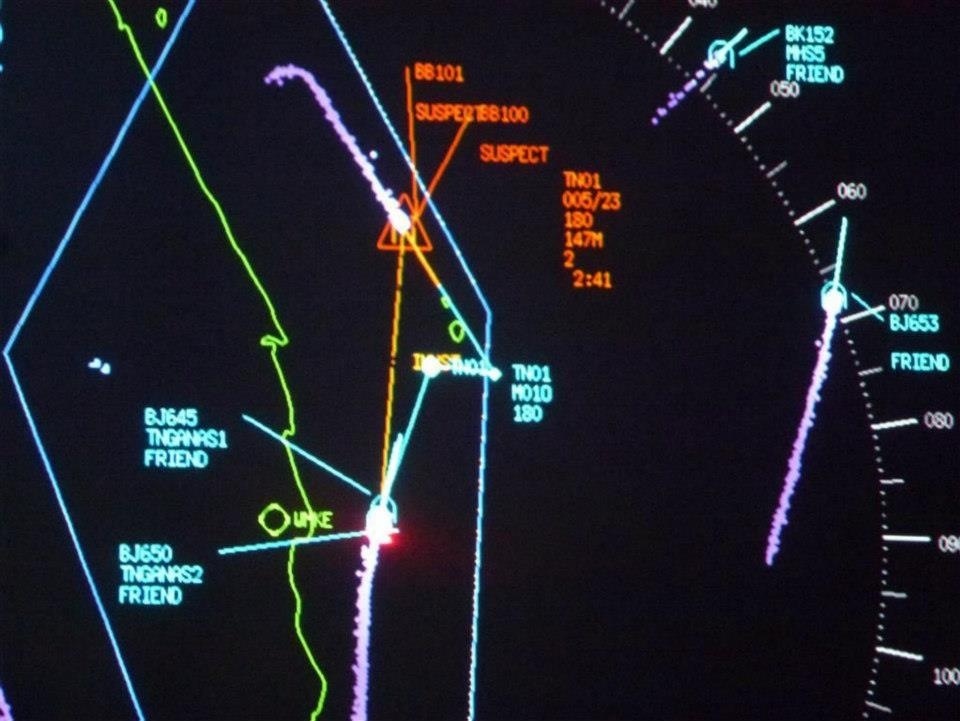
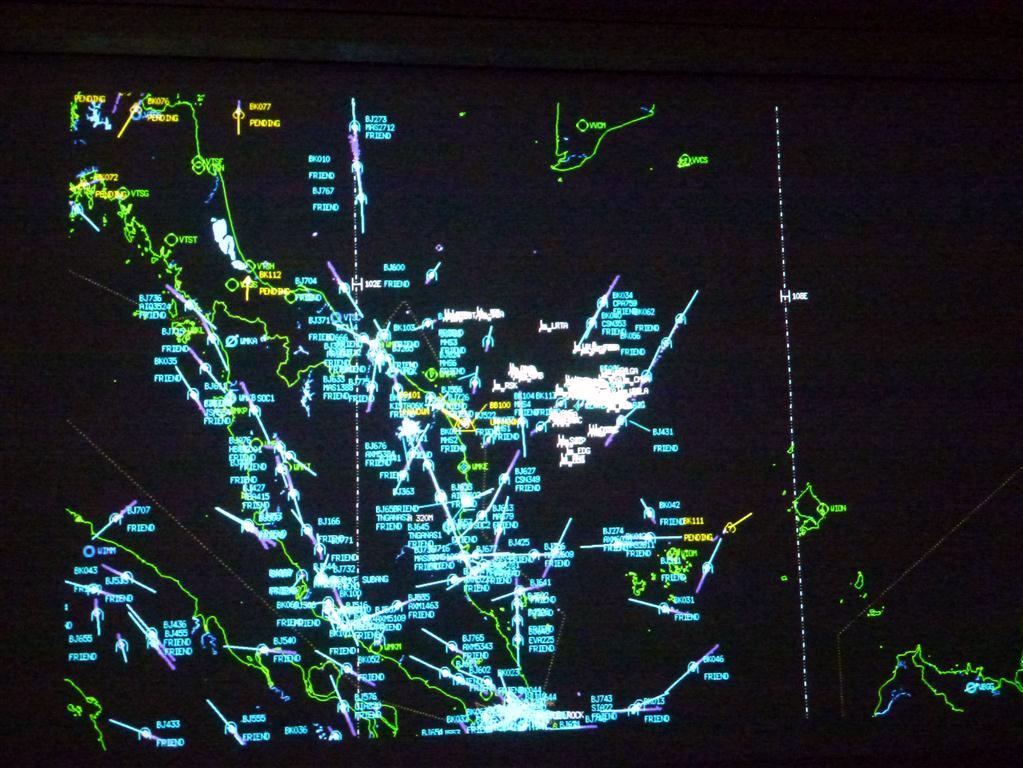
It is no longer the one-man show you see in the movie “Tora! Tora! Tora!” There are several air defence centres around Malaysia covering both the Peninsula, Sabah, Sarawak and FAR beyond. I have a photo of how far our air defence radars reach, but although I was allowed to take photos of the main display, I opt not to put it up here. Suffice to say, what we have is enough to tell us way ahead if a hostile aircraft is approaching our airspace. When we were at the air defence centre, we were shown a live interception of two bogeys by two of our MiG-29N interceptors.

20140319-231902.jpg

If I may say, what we all saw on the screen was what would have been seen by all the operators of the other RMAF Air Defence Centres around the nation that if one failed, it would not jeopardise what the others could see.

During this display, not one journo nor blogger could come up with a sane question related to what was shown to them. In the end, I and a few of my blogger friends had to ask the questions to get the RMAF clarify on issues that the media and bloggers have been attacking them on. Even the Deputy Chief of Air Force, Lieutenant General Dato Seri Haji Roslan bin Saad thanked me for my participation and for helping the RMAF clarify some issues.

Let us go back to that wee hours on Saturday, 8th March 2014. MH370 took off from Kuala Lumpur International Airport at 0041 hours (Local Time). At 0107 hours, the Aircraft Communications Addressing and Reporting System (ACARS) transmitted that all was well with the aircraft.

The aircraft soon after arrived at waypoint IGARI, about 78 nautical miles from Redang island, bearing 056 degrees) which is a point in the South China Sea between the Malaysian border with Vietnam. At this point, Lumpur Flight Information Region (FIR) would hand over the control aircraft to Vietnam. At 0119 hours, a person believed to be the co-pilot transmitted the final vox transmission, “Alright, good night.” At 0122 hours, the aircraft disappeared from secondary radar coverage without any distress call suggesting its transponder had been switched off by someone on the flight deck. However, it was only at 0240 hours that Malaysia Airlines was notified.

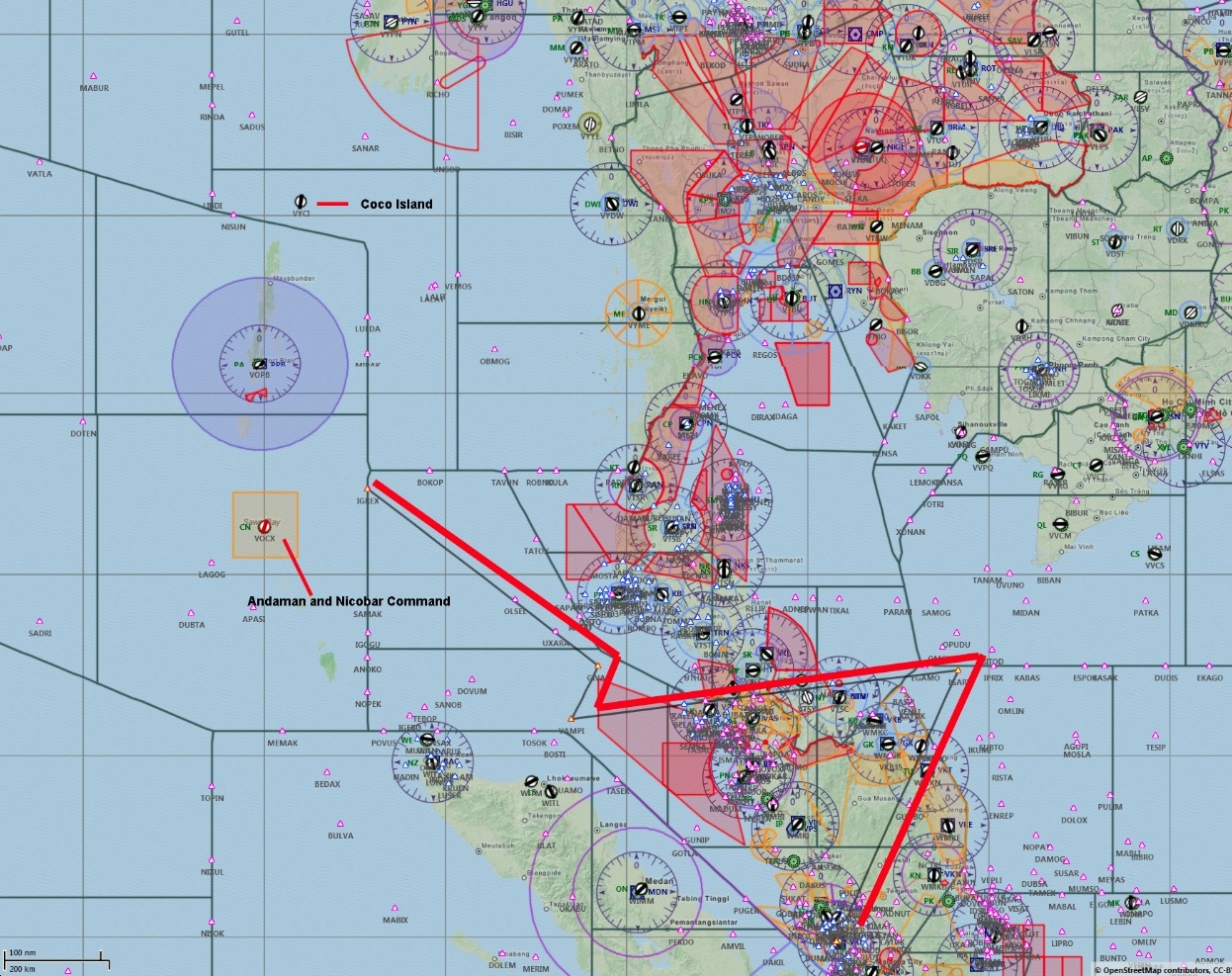
The RMAF Air Defence radars saw the MH370 tracked West Southwest to waypoint VAMPI (68 nautical miles East Northeast of Lhokseumawe, Indonesia), then Northeast to waypoint GIVAL (69 nautical miles South Southwest of Phuket International Airport) before tracking Northwest towards waypoint IGREX (100 nautical miles East Southeast of Car Nicobar airport on India’s Nicobar Islands), the last known position according to the primary radar. Where MH370 went to after this point is unknown at this point, but I believe the Indian Air Force’s Andaman and Nicobar Command’s primary radar there would have caught the MH370 in its scope.

So, if the MH370 was seen to deviate from its intended course, why didn’t the RMAF scramble its fighters to intercept the airliner?

Every bogey (unknown aircraft) would be tagged by an Air Defence Officer and this data will be processed to ascertain whether it was a threat to air defence or otherwise. In the case of the MH370, it was not regarded as hostile. Is this a weakness on the part of the RMAF? Mind you three jetliners took down the World Trade Centre towers as well as the Pentagon in the sophisticatedly-defended United States of America.

Should our fighters have been scrambled? If you remember, the MH370 was no longer in our airspace. When the MH370 tracked West Southwest from IGARI to VAMPI, she did not cross Malaysian airspace. She flew over Thai airspace and into Indonesian airspace, then tracked up to GIVAL near Phuket and subsequently to IGREX near India’s Nicobar Islands (see below).

20140320-001239.jpg

When she tracked from IGARI to IGREX she entered an area with two Royal Thai Air Force fighter bases namely the RTAF 7th Wing in Surat Thani and the 56th Wing in Hat Yai. They, too, were not scrambled. Nor were the fighters of the Indonesian Air Force (TNI-AU) scrambled from Lhokseumawe or Banda Aceh in Aceh, or Suwondo in Medan. If you think the Indonesians are as incapable as the RMAF, they forced a US military transport down without scrambling their fighters at their base in Banda Aceh on 20th May 2013 for entering Indonesian airspace without proper clearance.

The Chief of Air Force, General Tan Sri Dato Seri Rodzali bin Daud have explained that the RMAF did not see the need to scramble its fighters as the blip on the primary radar was deemed not hostile, and that there was nothing wrong with the air defence system. I just find this attack on the RMAF as another cheap publicity shot by a bunch of losers who do not know how things work and why, and would just take pot shots and see what gets hit.

I know the RMAF I see now is a far advanced RMAF than the one I left almost 20 years ago, and I have faith in the officers, men and women in their capability to defend this nation. I cannot say the same for the group of losers bent on hitting out at any institution of His Majesty Yang DiPertuan Agong.

To these losers, please just STFU!

20140320-003529.jpg

MilOps Lahad Datu: Now Every Critique Can Fly…Kites

Those with keyboard military experience playing Command & Conquer et al are now asking why are our troops being flown using Air Asia aircraft. Lots of criticisms fly here and there accusing the armed forces of not having the capability to support such an operation…and this coming from the same group of people who questioned military and police purchases of new equipment.

First of all, it is normal for the military to utilise civilian aircraft to support operations, even if there is no critical operations taking place. The military has been using Malaysia Airlines for as long as I can remember, even when I was still a serving officer. Now, Air Asia is being contracted to ferry military personnel.

In this operation for Sabah, you need to move two infantry battalions from the Peninsula to Sabah, and move them in the quickest and fastest manner. All war materiel will be transported using the RMAF’s C-130 transport aircraft. You cannot transport armoured personnel carriers, artillery pieces in large numbers if the C-130 is filled with infantrymen. Logistically, an army has to arrive with its firepower at around the same time. You cannot deploy an army that is still waiting for its equipment.

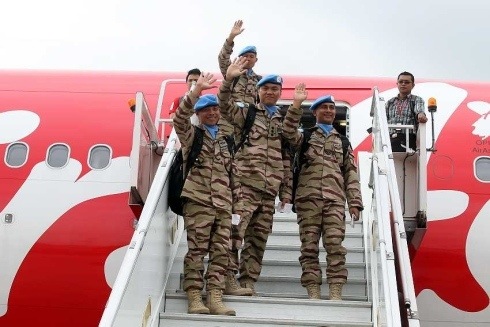
Look at the picture below of our men leaving for Lebanon. What aircraft do you think carried their equipment?

20130304-193511.jpg

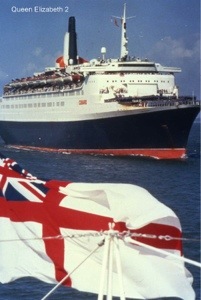
And what did the British use to transport their men and materiel to the Falklands?

20130304-193642.jpg

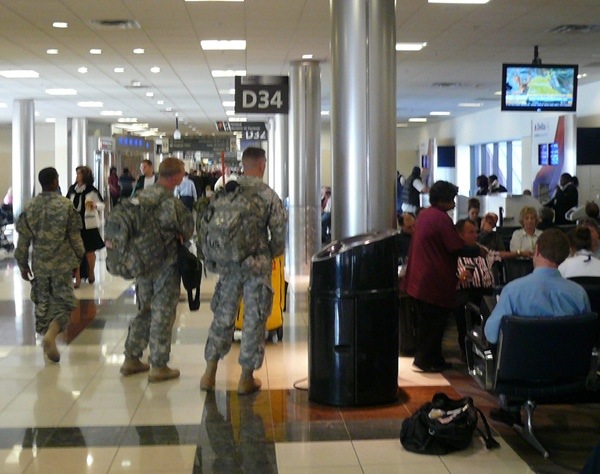
And what do the Americans use for deployments to Iraq and Afghanistan? The soldiers below are not at an Air Force base:

20130304-193746.jpg

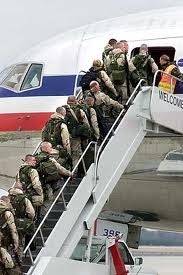
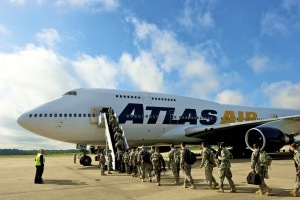
And how did they fly?

20130304-193846.jpg

20130304-193916.jpg

Come on, people! Most of you are learned lawyers and what-nots, but the way you think is just like a fourth grader. Use your brain if you actually have one. Stop whining, push politics aside and start supporting our men and women in blue and green because the closest you have been to going to war is only when you shout buckets-of-political-shit rhetoric and you are nowhere near the tenth percentile of being as brave as these men and women are.

So, just shut your trap if you have nothing good to say about them! Because you all sound like yeast-infected whiny old hags.

Defence Should Not Be Politicized

Hardly a week prior to this posting, there was a medical evacuation flight for two civilian patients made by the Royal Malaysian Air Force from Tawau to Kota Kinabalu.  Fuel cost for the flight alone, made using one of the RMAF’s workhorses, the Sikorsky S-61A4 “Nuri” helicopter, would have cost around RM6,500.  That is for just that one flight, let alone keeping all our aircraft airborne-ready to protect our airspace from intruders.

You may call me bias, as I was once part of the Air Force, but the organization is extremely proud of its capabilities.  And recently, the decision by the Air Force to allow alternative media practitioners a “no-holds barred” open day session at the RMAF Base Kuantan proved successful in answering many of the peculiar questions about the nation’s defence spending.  I was honoured not only to have been invited along by the Minister of Defence, but also for being able to help clarify certain things based on my experience to other bloggers.

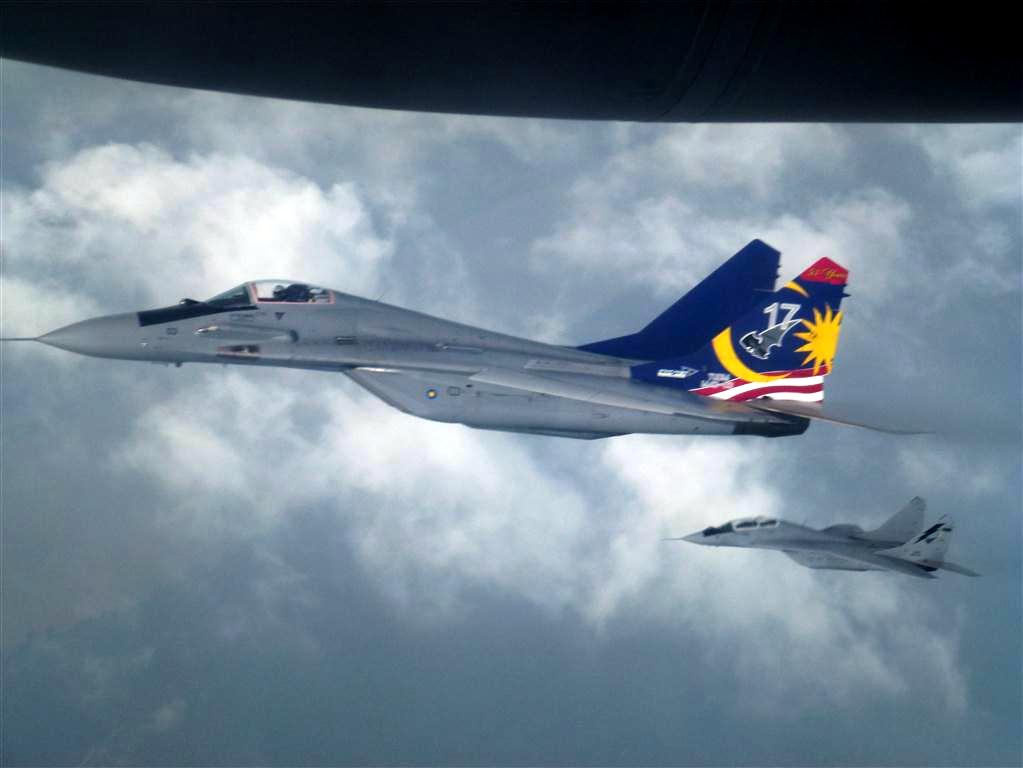
Two Mig-29N interceptors from No.17 Squadron initiating the “Forced Down” maneuvers

For the first time (probably) in the history of the Armed Forces, the Air Force allowed civilians a peep into its daily life, and were allowed to question anything from operational capabilities right to the case of the missing F-5E engine.  And it was a good thing that the Minister and the Air Force were very open in answering each question.

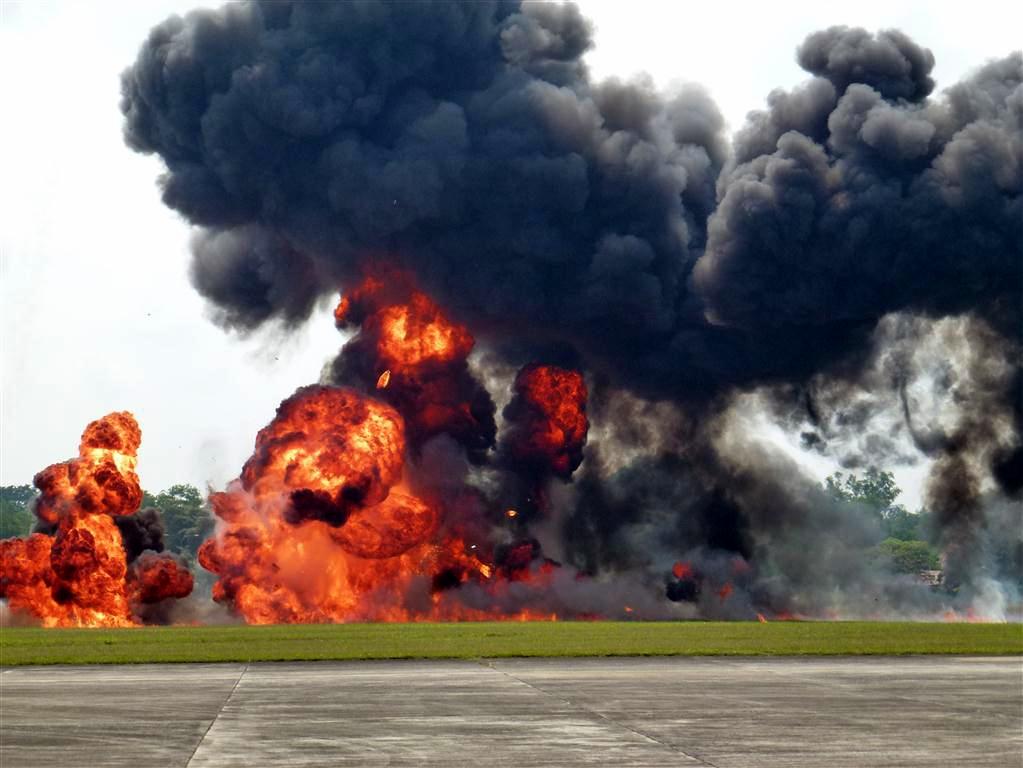
A “target” being hit by BAe Hawk 206 close air support aircraft after being “painted” with laser-targetting device employed by the RMAF Commandos, the PASKAU

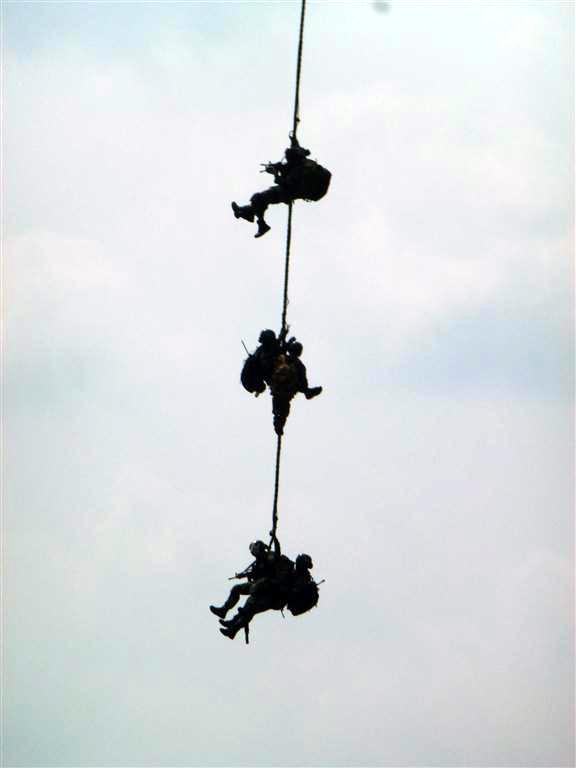
The bloggers were first taken to the Air Movement building where they were given a briefing of the activities ahead while having breakfast.  They were then taken to a static display of aircraft operated at the RMAF Base Kuantan.  They were shown the types of air interdiction missiles as well as air-to-ground munitions used by those aircraft.  Next, a section of the RMAF Commandos, the PASKAU, jumped off from 10,000 feet in a HALO (High Altitude Low Opening) formation to land in the center of the airfield where they employed a laser-targetting device to guide laser-guided munitions from the BAe Hawk 206 aircraft towards a target.  Having achieved their objective, two S-61A4 Nuri helicopters flew in tactical formation at tree-top level to extract the commandos via the SPIE-Rig (Special Purpose Insertion/Extraction) method.

Members of the elite PASKAU unit being extracted using the SPIE-Rig method

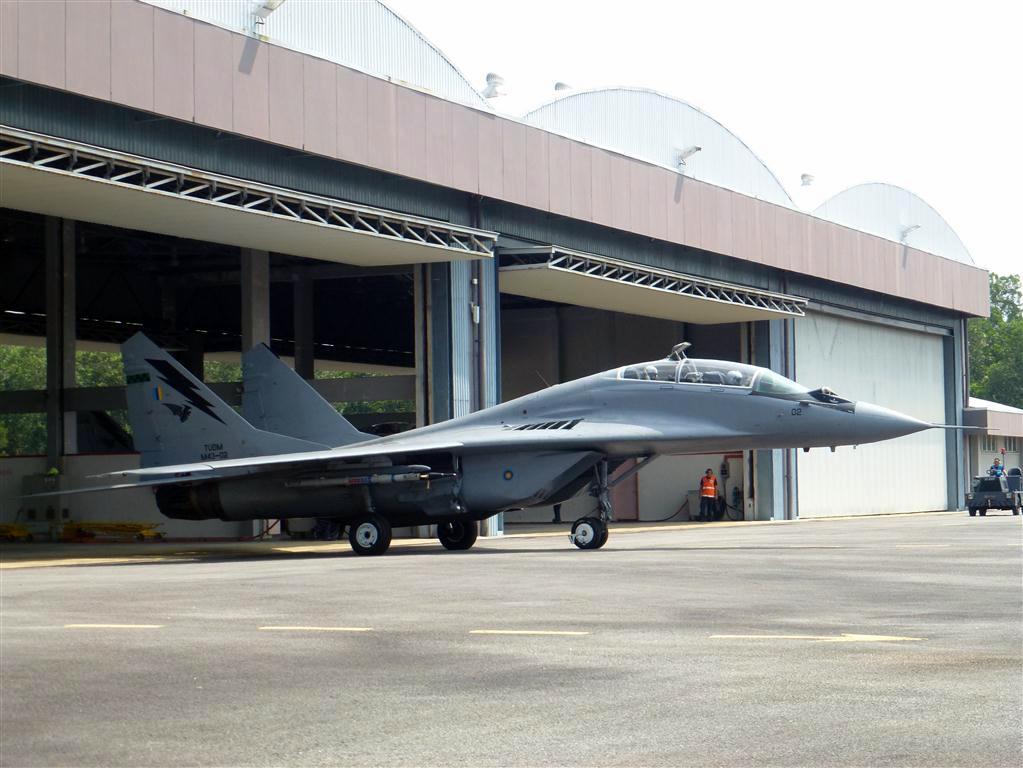
Next, the bloggers were divided into two groups.  I was in Group ‘A’ together with the Minister, Deputy Chief of Air Force, and blogger Big Dog where we were taken to the No.17 Squadron, home of the Smokey Bandits (Mig-29N).  There, we witnessed scrambling of Alert 5 aircraft that were sent to intercept two inbound bogeys (unknown aircraft) entering Malaysian airspace.  The term Alert 5, for the uninitiated, means from the point the scramble siren is sounded until the aircraft is airborne, takes five minutes.  There are, of course, different levels of interceptor aircraft readiness.

“Taufan Ganas 2” of the No.17 Squadron scrambles to intercept bogeys entering our airspace

Next we were brought to the No. 320 Sector Operations Squadron Center.  This center is one of the centers that have the whole view of what is happening in and around our airspace.  It is a superior version of what I used to see almost two decades ago and I must say I am proud of how the Air Force has spent its money.  It is both my hope and that of the Air Force’s that the Government would allocate funds for Airborne Early Warning and Command (AWACS) aircraft to further enhance this capability.  On the question of frequent intrusions to the south of the Peninsula, it is obvious that the RMAF is very well aware of what is going on there, and suffice to say, having seen the capabilities of our radar defence system, that it is not true at all what some Members of Parliament, in particular from the Opposition, have been saying.

Real-time feed of all the aircraft inside our airspace, monitored by the No.320 Squadron. This image can be zoomed in to see each individual area

With the addition of the Air Combat Maneuvering Instrumentation system our pilots have tripled their kill ratio compared to what it was back in the late 1980s and early 1990s.  Back then, our Air Force was already a force to be reckoned with.  Now, as in the words of a squadmate of mine who is associated with the ACMI system:

“You can run, but you cannot hide!”

The visit at the RMAF Base Kuantan ended with a visit to the training facilities developed locally by or in co-operation with local defence players.  These facilities have produced world-class skilled officers, men and women in order to protect us better.  Lunch was served at the Air Movement building where the Minister answered several questions pertaining to the Air Force, including debunking of claims that very senior officers of the Air Force are involved in the case of the missing F-5E engine.  It is clear now that the Opposition does not want the case to be tried by the Courts Martial because they have a lot to hide, and are trying to divert attention by framing others.

The Minister also asked for both mainstream and alternative media practitioners to be fair to the Armed Forces, and not politicize defence spending.  This is in light of the Opposition ridiculing the Armed Forces, especially in the Scorpene submarines case, that has somewhat affected the morale of the men and women of our Armed Forces.  When their claims of the Scorpenes not being able to dive was debunked live during LIMA 2011, they went to town with the costs of procurements and expenses.

I am sure they will never question the RM6,500 fuel cost for the S-61A4 Nuri medical evacuation flight last week had it been one of their family members being flown for medical treatment.  Therefore, stop politicizing our national defence.

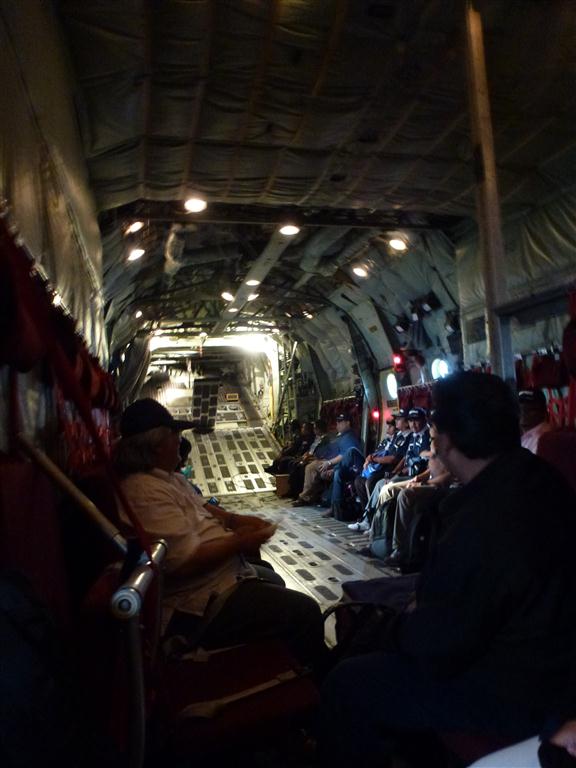
Inside the C-130H transport aircraft