Kedah Tua: Nation-building should be based on facts, not racial polemics

2,400 years ago, people believed that the universe revolved around the Earth in a geocentric orbit. This belief — that Earth was the centre of the universe — was widely accepted until around 600 years ago, when it came to be understood that the Sun is at the centre of our solar system.
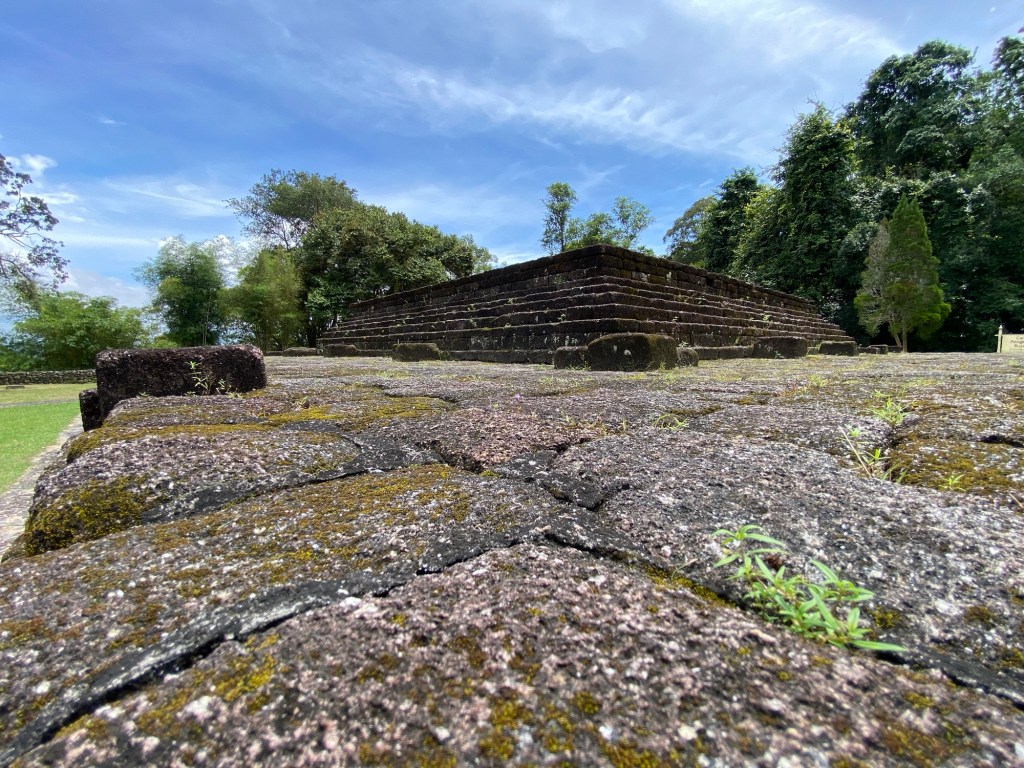
The current evidence on temples built in ancient Kedah indicate that only a small segment of Malays there at the time adopted Hindu-Buddhism

With the discovery of other galaxies, we now know that none of them move around a single centre. That is the current narrative — until a new discovery may come along to challenge it.

Recently, a protest was held outside the gates of a prominent public university against the organisation of a conference said to be discussing and defining the narrative surrounding ancient Kedah. The concern was that this narrative might be shaped by those who do not prioritise the interests of a particular race or religion.

Such fears are rooted in the opinions of individuals who have never been formally trained in the disciplines of History or Archaeology. As someone who has been specifically trained in History at a well-known local public university, I would like to explain why the protest was a fruitless exercise.

Evidence matters

Can anyone write about history? Certainly. You could even write a paper on the effectiveness of nuclear fission energy if you wanted to. However, there are several factors and conditions that must be fulfilled before your work can be accepted — especially by experts in the field. This includes the standards of evidence and sources you use, and how you interpret those findings.

Your sources must be empirical or academically peer-reviewed. If your references are merely social media posts, you may as well write a romance novel. You must adhere to ethical research practices and subject your findings to rigorous scrutiny by other experts to ensure they meet strict and credible academic standards.

If your writing is based on personal opinion, then it no longer qualifies as academic work. That is propaganda — or at best, baseless rhetoric.

Free from bias

Your research must also be free from bias. This means you cannot write to support one side or dismiss another. You must remain objective. We cannot fabricate a narrative and then create fictional evidence to support it. Historiography must be free from centrism of all forms — be it ethnocentrism, anachronism, political centrism, religious centrism, or other imbalances.

In the case of the aforementioned protest, it was driven by emotions rooted in ethnocentrism and religious centrism. Among the claims made was that the Malays of ancient Kedah practised Islam and not Hindu-Buddhism, as has been widely accepted.

However, there is currently no verified discovery that supports the claim that Malays in ancient Kedah practised a form of Islam or even an early version of it. We have discovered prehistoric human remains dating back to the Palaeolithic and Neolithic eras, such as the Pulau Pinang Woman (6,000 years ago), the Perak Man (11,000 years), and the Nenggiri Woman (14,000 years). Yet, none of these findings provide any evidence of Islamic practices — if anything, they suggest a belief system rooted in animism.

This also does not mean that all Malays in ancient Kedah were influenced by Hindu-Buddhism. Nearly all temples (candi) found in the Bujang Valley were built between the 4th and 13th centuries AD. They were discovered at ancient trading sites such as Sungai Batu, Kampung Pendiat, Pengkalan Bujang, and Kampung Sungai Mas. Only the temples at Bukit Choras and Bukit Batu Pahat were located slightly further inland.

All of them are small in size compared to Angkor Wat, Borobudur, Gedingsuro, or Welan temples. This suggests that the Bujang Valley temples served as places of worship for Indian and Chinese traders, and perhaps a small number of local Malays involved in international trade. They were not built for a large population of Hindu-Buddhist worshippers. In short, only a small segment of Malays in ancient Kedah adopted Hindu-Buddhism.

This is further supported by the absence of temples inland, including in the upper reaches of the Sungai Muda — a key trading hub — or after ancient Kedah declined as a major destination post-14th century. If the local population truly practised Hindu-Buddhism, more temples would surely have been found by researchers who have studied the area since the late 19th century.

Professors are not all-knowing

One of the individuals who frequently comments on ancient Kedah — especially Sungai Batu — is Professor Dr Nik Najah Fadilah binti Haji Yaacob, better known online as Professor Dr Solehah Yaacob. She is a professor of Arabic grammar at a public university in Gombak. She has not been formally trained in History or Archaeology.

I admire her dedication to studying history. And because she carries the title of “Professor”, many people understandably take her statements at face value.

In reality, a history graduate with a bachelor’s degree has greater subject knowledge than a professor whose field lies elsewhere. History students must study world history across various periods — from prehistory to proto-history, traditional history, and modern history. Professors, on the other hand, conduct focused research in their own specific fields, not across all disciplines.

This is why professors should understand the boundaries of their expertise. For example, I once had a discussion with Professor Emeritus Dr Anthony Milner, an Australian historian renowned for his work on Southeast Asia and Malaysia. His expertise is in traditional political history. He never claimed to be an expert in Malaysia’s proto-history, especially that of ancient Kedah, because that is not his area of study.

Therefore, I would prefer if Professor Dr Solehah would present her research to qualified experts for academic review, rather than promoting it on social media. Social media is not the place for academic validation. It would also be better if her research did not involve prophets unless she can provide credible sources. Otherwise, that is no longer history — that is propaganda.

As the Prophet Muhammad (peace be upon him) said: “Whosoever tells a lie against me intentionally then surely let him occupy his seat in Hell-Fire” [Sahih al-Bukhari (110)]

Unity over division

Disputes involving race and religion serve no benefit. Why must we boast about our supposed superiority over other ethnicities when Allah SWT considers all of us equal? Must we Malays be arrogant and see ourselves as holier than others? Are we somehow greater than Allah SWT?

If someone we mock ends up embracing Islam, does that not make them purer and more free of sin than we are? But how will they ever do so if we continue behaving like this?

We must accept narratives grounded in recent discoveries. As academics, we should keep an open mind. All historical research and findings should contribute towards the strengthening of our nation and its people — not towards sowing division or conflict between communities.

If there is new evidence or findings, they should be presented for academic review by others in the field. If accepted, that narrative should be acknowledged. What are we trying to take pride in — a fabricated past, or a history built upon proven facts? May we all be spared from pointless actions. – April 14, 2025

Captain Abdul Rahmat Omar (Rtd) is the Malay Consultative Council Bureau of Security, Defence, Public Order and Martial Arts chairman.

(This post was first published by Scoop )
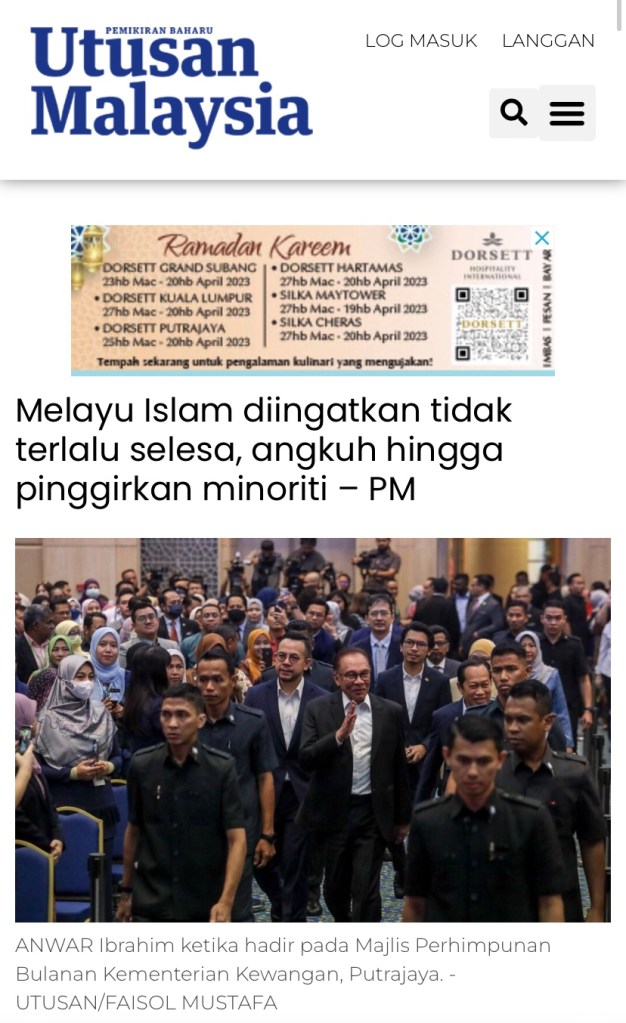
Melayu Tak Bertimbang Rasa?

Benarkah Melayu angkuh dan pinggirkan minoriti?

Melayu Islam diingatkan tidak terlalu selesa, angkuh hingga pinggirkan minoriti.”

Begitulah bunyinya tajuk utama akhbar Utusan Malaysia yang melaporkan perhimpunan bulanan Kementerian Kewangan yang dihadiri Perdana Menteri Datuk Seri Anwar Ibrahim.

Dalam ucapan beliau, Anwar mengingatkan orang Melayu Islam supaya tidak meminggirkan kaum minoriti. Kata beliau, “Ketika lawatan saya ke Kemboja baru-baru ini, saya berbuka puasa bersama Perdana Menteri Kemboja yang menganjurkan majlis iftar dengan 6,000 umat Islam. Umat Islam di Kemboja hanya 10 peratus, tetapi diberi penghormatan dan saya juga diberi peluang memberi ucapan dan ke masjid di sana.” (Utusan Malaysia – 4 April 2023).

Tidak pelik sebuah negara bukan Islam meraikan masyarakat beragama Islam. Meraikan kaum minoriti merupakan salah satu tanda aras demokrasi bagi setiap buah negara. Sebagai contoh, kerajaan Israel yang dikenali sebagai anti-Islam juga pernah mengadakan majlis berbuka puasa.

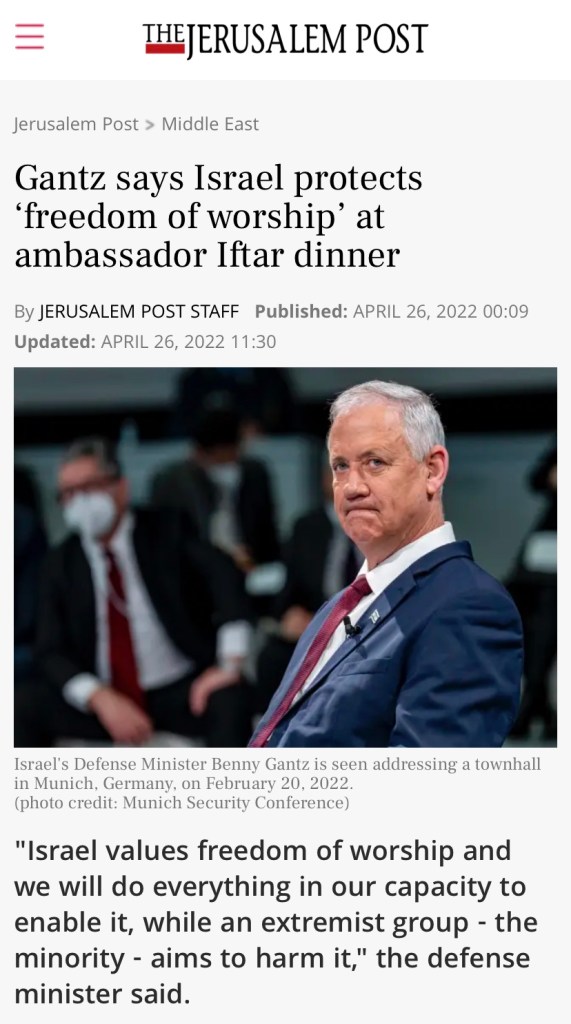
Israel menghargai kebebasan beragama dan akan lakukan apa sahaja untuk membenarkannya – Benny Gantz

Israel menghargai kebebasan beragama dan akan lakukan apa sahaja untuk membenarkannya,” kata Menteri Pertahanan Israel Benny Gantz tahun lepas (The Jerusalem Post – 26 April 2022).

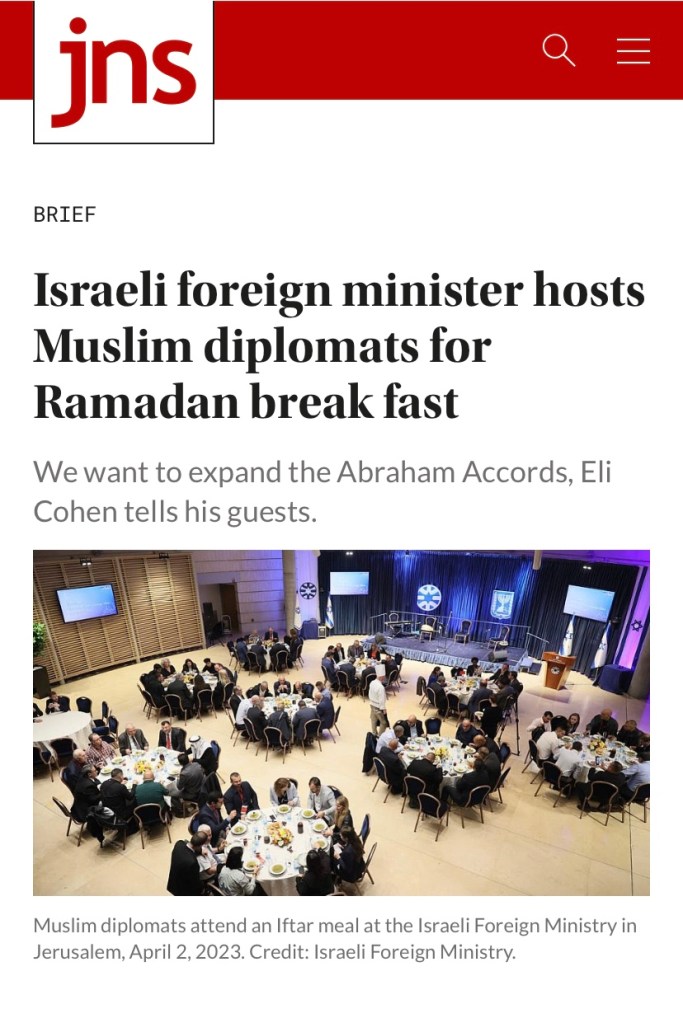
Saya lihat betapa pentingnya untuk kukuhkan hubungan di antara Israel dan negara-negara serantau dan kekalkan kebebasan beragama di Israel untuk penganut semua agama,” kata Menteri Luar Israel Eli Cohen semasa menganjurkan majlis berbuka puasa Ahad lepas (Jewish News Syndicate – 3 April 2023).

Saya lihat betapa pentingnya untuk kukuhkan hubungan di antara Israel dan negara-negara serantau dan kekalkan kebebasan beragama di Israel untuk penganut semua agama – Eli Cohen

Namun, apa realitinya? Pada hari Sabtu 1 April 2023, askar Israel menembak mati seorang pemuda Palestin di perkarangan Masjidil Aqsa.

Dari 18 hari hari cuti umum yang diumumkan kerajaan Kemboja, berapa harikah yang melibatkan lain-lain agama atau kaum? Jawapannya: 0.

Dari 15 hari hari cuti umum yang diumumkan kerajaan Israel, berapa harikah yang melibatkan lain-lain agama atau kaum? Jawapannya: 0.

Dari 12 hari hari cuti umum yang diumumkan kerajaan Kemboja, berapa harikah yang melibatkan lain-lain agama atau kaum? Jawapannya: 4 (tidak termasuk Thaipusam dan Good Friday).

Adakah Melayu tidak bertimbang rasa hingga wujudnya klausa-klausa dalam Perlembagaan Persekutuan yang menetapkan hak lain-lain kaum, contohnya Perkara 3(1) berhubung kebebasan beragama, Perkara 11, Perkara 152(1) dan 152(1)(a), dan juga Perkara 153?

Lihat sahaja Amerika Syarikat yang menganggap dirinya sebagai tiang seri demokrasi. Banduan Islam diberinya daging babi untuk berbuka puasa

Adakah ini bermakna Amerika Syarikat lebih bertimbang rasa berbanding Melayu Islam di Malaysia?

Saya rasa tak perlulah memperkecilkan orang Melayu dan agama Islam hanya untuk populariti. Itu namanya menghina.

PATI: Kebajikan Bermula Di Rumah Sendiri

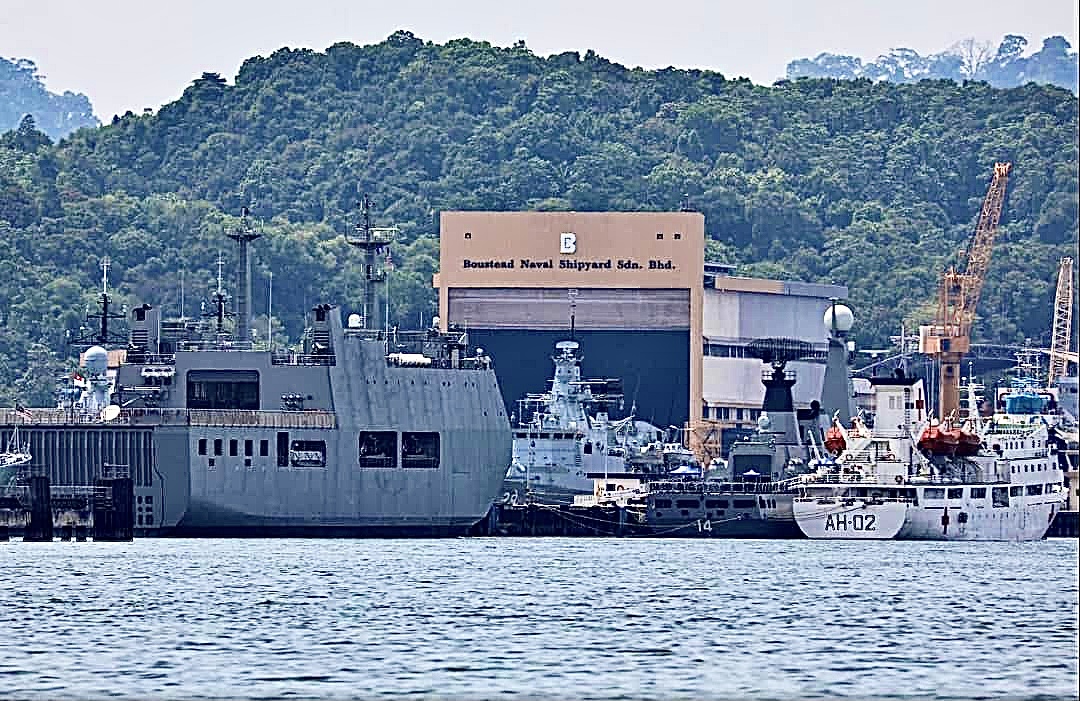
Kapal-kapal Tentera Laut Myanmar yang digunakan dalam misi membawa pulang PATI Myanmar semalam. Dari kiri: kapal sokongan pelbagai guna UMS Moattama, kapal friget UMS Sin Phyu Shin, dan kapal hospital UMS Thanlwin

Kebajikan bermula di rumah sendiri. Ungkapan tersebut mula digunakan oleh seorang ahli fasafah Inggeris bernama John Wycliffe pada tahun 1382. Namun, konsep tersebut wujud dalam agama-agama utama dunia. Dalam Islam, sebuah hadis daripada Abu Hurairah R.A, Nabi S.A.W telah bersabda yang bermaksud: “Dan dinar (harta) yang kamu belanjakan di jalan Allah dan dinar yang kamu berikan kepada hamba (untuk membebaskan) dan dinar yang kamu sedekahkan kepada orang miskin serta dinar yang kamu sedekahkan kepada keluargamu. Maka, yang paling besar ganjaran pahalanya adalah yang kamu sedekahkan kepada keluargamu.” (Hadis riwayat Muslim No. 9855).

Dalam kitab Injil King James, 1611 pula disebut: “Sekiranya ada yang berbelanja bukan untuk keluarganya sendiri, terutamanya yang tinggal di rumahnya sendiri, dia telah membelakangkan agamanya, dan adalah lebih teruk dari yang kafir.” (1 Timothy 5:8).

PENGHANTARAN PULANG PATI MYANMAR

Semalam, tiga buah kapal tentera laut Myanmar telah belayar dari Pangkalan TLDM Lumut membawa 1,086 orang pendatang asing tanpa izin Myanmar. Jabatan Imigresen Malaysia (JIM) dalah suatu kenyataan berkata kesemua 1,086 warga Myanmar yang dihantar pulang tersebut adalah merupakan PATI dan tidak ada di kalangan mereka yang merupakan pelarian Rohingya atau pencari suaka. Kesemua mereka telah bersetuju untuk pulang secara sukarela dan tidak dipaksa oleh mana-mana pihak.

Penghantaran PATI Myanmar ini adalah merupakan sebahagian dari proses penghantaran PATI berterusan yang diusahakan oleh JIM.

Berikutan penghantaran pulang PATI Myanmar, NGO-NGO yang memperjuangkan hak asasi manusia mula berbunyi kerana mendakwa ada terdapat pelarian Rohingya dan pemegang kad UNHCR di kalangan PATI Myanmar tersebut. Satu perintah mahkamah juga telah diperolehi pada hari pelayaran untuk memaksa kerajaan menghentikan sementara penghantaran pulang PATI Myanmar tersebut sehingga menerima arahan mahkamah selanjutnya.

Masalahnya ialah, jam berapa perintah mahkamah tersebut diperolehi dan pada pukul berapa pula perintah tersebut diterima oleh pihak JIM? Apa yang NGO-NGO ini mahu JIM lakukan sekiranya PATI tersebut telah diserahkan kepada pihak berkuasa Myanmar dan telahpun menaiki kapal-kapal perang tersebut? Sebaik mereka jejakkan kaki ke atas kapal-kapal tersebut, mereka telah pun berada di bawah bidang kuasa Myanmar dan bukan lagi Malaysia. Pada ketika tersebut, hanya peperangan boleh menghalang pelayaran kapal-kapal tentera laut Myanmar.

REKALIBRASI PATI

Pada tahun 2019, seramai 192,260 orang PATI yang telah tampil untuk menyertai program ‘Back For Good.’ Jumlah kompaun yang telah diperolehi kerajaan ialah sebanyak RM134.6 juta. Dalam tahun 2020 pula, setakat 2 November 2020 JIM telah membuat pengusiran terkumpul Pendatang Asing Tanpa Izin (PATI) seramai 30,452 orang. Jumlah ini adalah jauh kurangnya berbanding pada tahun 2019 kerana penutupan sempadan antarabangsa akibat pandemik COVID-19.

Justeru, kerajaan memperkenalkan program rekalibrasi PATI yang memberi PATI peluang untuk bekerja di Malaysia dengan sah. Program ini berbeza dengan program-program pemutihan PATI yang dijalankan sebelum ini kerana majikan hanya perlu berinteraksi dengan JIM dan bukan lagi melalui pihak ketiga untuk mengurangkan kebarangkalian berlakunya jenayah rasuah.

PATI yang ada dalam depoh-depoh tahanan Imigresen boleh memilih untuk menyertai program rekalibrasi ini ataupun pulang ke negara asal masing-masing. Setakat 13 November 2020, terdapat 20,000 orang PATI yang ditahan di depoh-depoh tahanan Imigresen.

KOS MENAHAN PATI

Menahan 20,000 orang PATI bukanlah sesuatu yang murah. Mengikut kiraan, kerajaan membelanjakan sebanyak RM800,000 sehari untuk memberi mereka makan. Ini bermakna sekiranya tempoh tiga hingga empat bulan diperlukan sehingga mereka dihantar pulang, rakyat menanggung sebanyak RM96 juta. Ini tidak termasuk kos-kos lain seperti utiliti (elektrik dan air), penyelenggaraan bangunan kompleks tahanan. Di era pandemik ini pula, kos calitan saringan COVID-19 dianggarkan sekitar RM300 seorang sekali calitan. Ini menjadikan kos calitan seorang sebanyak RM900 atau RM18 juta untuk kesemua 20,000 PATI dalam tahanan. Sekali lagi, ini tidak termasuk kos rawatan bagi mereka yang bukan sahaja menghidap penyakit COVID-19, tetapi lain-lain sakit yang memerlukan rawatan. Maka, jumlah kos yang ditanggung oleh kita semua, rakyat Malaysia, untuk menahan 20,000 orang PATI dan memberi makan serta ujian saringan COVID-19 sebanyak RM114 juta, tidak termasuk kos rawatan, utiliti, senggaraan dan lain-lain.

Kalau kita pergi balik kepada konsep Islam dan Kristian mengenai kebajikan yang sepatutnya bermula di rumah, RM114 juta boleh digunakan untuk menyaring seramai 380,000 orang rakyat Malaysia untuk penyakit COVID-19. Dalam konteks vaksin HPV yang berharga RM600 di hospital-hospital swasta yang disuntik secara percuma oleh Kementerian Kesihatan Malaysia untuk mengekang barah serviks, seramai 190,000 orang wanita rakyat Malaysia dapat diselamatkan dari menghidap barah serviks. RM114 juta juga bersamaan dengan 950 unit rumah kos rendah di Kuala Lumpur.

Berbalik kepada 1,086 orang yang dihantar pulang ke Myanmar semalam, kita rakyat Malaysia tidak perlu lagi menanggung sebanyak RM5,212,800 kos makanan untuk empat bulan, RM36,000 kos calitan ujian saringan COVID-19. Sebaliknya kos tersebut boleh digunakan untuk memberi tiga kali saringan untuk 5,832 orang rakyat Malaysia atau menyuntik vaksin HPV kepada 8,748 wanita rakyat Malaysia dan menyelamatkan nyawa mereka.

KESIMPULAN

Kita sememangnya bersimpati dengan pelarian yang terpaksa tinggalkan negara mereka demi keselamatan dan kelangsungan hidup. Tetapi, kita perlu berpada-pada dalam simpati yang ditunjukkan. Bukanlah sesuatu yang menghairankan sekiranya ada di kalangan PATI Myanmar yang dihantar balik ini sendiri dengan secara sukarela memohon untuk pulang ke negara asal mereka.

Pengalaman Malaysia menerima seramai 250,000 orang pelarian Vietnam bermula bulan Mei 1975, sebulan setelah jatuhnya Saigon ke tangan Vietnam Utara adalah pengalaman yang amat pahit sekali. Malaysia terpaksa menanggung bukan sahaja pelarian-pelarian tersebut serta jenayah berat dan masalah sosial yang dilakukan oleh pelarian-pelarian tersebut, tetapi juga kecaman hebat oleh negara-negara barat yang cakap tidak serupa bikin. Beban ini telah Malaysia tanggung selama 30 tahun sebelum saki-baki pelarian akhirnya diterima oleh negara-negara tersebut dengan tidak rela. Dari jumlah tersebut, seramai 9,000 orang telah secara sukarela minta untuk pulang ke Vietnam yang mempunyai sistem politik yang tidak mereka kenali.

Kita kena ambil kira juga takrif pelarian dan pencari suaka. Apabila seorang itu lari dari negara sendiri akibat ditindas ke kem-kem pelarian di Bangladesh, maka dia adalah seorang pelarian. Apabila dia melarikan diri dari Bangladesh untuk datang ke Malaysia, dia bukan lagi pelarian yang melarikan diri dari ditindas. Sebaliknya dia menjadi seorang PATI yang cuba untuk masuk ke negara ini dengan cara haram.

Kos yang tinggi yang perlu ditanggung untuk menampung kehidupan PATI dalam tahanan juga adalah tidak adil kepada rakyat Malaysia. Bagaimana NGO-NGO yang sering menyalahkan kerajaan dalam hal-hal berkaitan dengan PATI dan pelarian boleh mengutamakan kebajikan orang luar berbanding dengan hak rakyat negara ini sekali? Maka saya ajukan soalan ini kepada anda para pembaca: apakah hak 20,000 pendatang asing tanpa izin ini mengatasi hak dan keperluan 190,000 orang wanita rakyat Malaysia yang berkemungkinan menghadapi barah serviks, atau 380,000 orang rakyat Malaysia yang memerlukan saringan COVID-19, atau 950 buah keluarga miskin rakyat Malaysia yang memerlukan rumah?

Siapa yang anda sokong? NGO-NGO yang memperjuangkan hak PATI untuk ditanggung oleh kita, atau rancangan kerajaan untuk terus menghantar PATI pulang ke negara asal?

Tepuk dada, tanya selera.

Article 11 (3) (a) & (b)

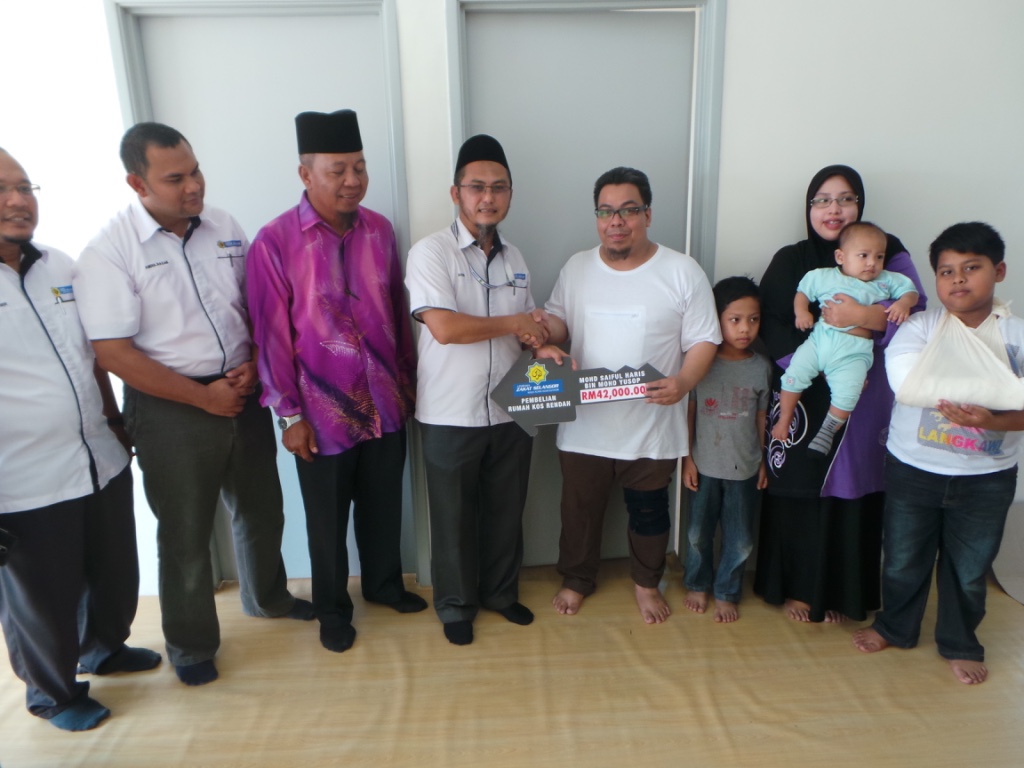
An asnaf family receives a symbolic key to their house from a Lembaga Zakat Selangor representative

The issue of the distribution of Zakat to non-Muslims is still not over.  Today, I saw three news articles of statements on the issue made by the CEO of Zakat Pulau Pinang, the Mufti of Negeri Sembilan, and the Mufti of Pahang.  All of them stressed that Zakat is not to be distributed to non-Muslims.

“It cannot be given to non-Muslim individuals. If it is to be given to non-Muslims, it will be done through NGOs or associations that conduct dakwah (Islamic outreach),” said Datuk Seri Dr Abdul Rahman Osman, the Mufti of Pahang.

Many, some Muslims included, do not understand the meaning of Zakat.  It is a mandatory religious obligation decreed by Allah SWT for all Muslims who meet the necessary criteria of wealth.  Its role in society is to preserve social harmony between the wealthy and the poor through a more equitable way for the redistribution of wealth.

I wrote two days ago (Zakat is for the Rulers to decide) that as the Head of the religion of Islam in their respective states, the affairs of Islam come under the purview of the Rulers – their Constitutional prerogative.  And it is because of this prerogative prescribed by the Constitution that had the Sultan of Selangor issue a media statement on the issue.

His Royal Highness is very concerned about the number of Muslims who fall into the categories of poor, hardcore poor and the needy.  A check in all the nine districts of Selangor through a page maintained by the Malaysian Administrative Modernisation and Management Planning Unit (MAMPU), the number stood at 21,621 people in 2009, 50,947 in 2018, and up until the end of September 2019, it was 54,568 people. On average, 3,300 Muslims enter the list of Zakat recipients every year!

Selangor has the highest GDP in Malaysia.  In 2010 it was RM177.7 billion.  In 2018 it was RM322.6 billion.  Although its labour force has increased from 3.2 million in 2015 to 3.5 million in 2018, its percentage of the unemployed has also increased from 2.4 percent (77,900 people) to 2.8 percent (99,600 people).  Rapid urbanisation in a short span of time and migration of workforce from other states into Selangor have contributed to escalating economic and social costs – rentals, housing, transport, land.  This has in turn imposed the burden of employment generation causing an increase in unemployment, the inability to offer higher wages, and incidence of poverty.

When we talk about the poor, hardcore poor and the needy, we no longer talk about people begging on walkways or even the homeless.  We now look at those earning less than RM2,000 a month, with very little or no savings, and cannot survive two to three months without work.  This is the reality that we now face – rapid urbanisation presents an increase in the number of the urban poor.  Those who are particularly vulnerable are those with low education level, low-skilled, handicapped, single parent, the youth, the elderly, orphans who have to leave their orphanage when they turn 18.  These are the people His Royal Highness is very concerned about.

Take the Petaling district for instance.  In 2009, 2,478 Muslims qualified for Zakat aid.  By 2015, 7,248 Muslims in the district were qualified for Zakat aid.  In 2018, it was 7,781.  By the end of September this year, that number is 7,858.

The amount of aid distributed in Selangor was RM279.2 million in 2009.  By the end of 2018 it was RM414.6 million..

The same pattern can also be seen in Pahang where in 2015 its population was at 1.61 million. That increased to 1.66 million in 2018. With about 75 percent of its population being Muslims, Zakat aid distributed in 2015 was RM113.4 million. In 2018 it was RM140.8 million. A 3-year study led by Emeritus Professor Chamhuri Siwar of the Universiti Kebangsaan Malaysia between 2008 and 2011 found that the highest incidence of hardcore poverty in rural Pahang was observed among the Malays (97.33 percent), while for the urban areas of Pahang it was again the Malays (72.22 percent).

Therefore, as the Head of State and Islam, His Royal Highness the Sultan of Selangor was right in pointing out that although Islam emphasises on humanity, Zakat aid collected from Muslims are only to be given to Muslims in need who fall into the eight categories mentioned in my earlier article.  His Royal Highness added that in Selangor there are still many Muslim people who fall into both the rural and urban poor categories and are in dire need of Zakat aid.  This is because almost 60 percent of its population are Muslims and its population increases by about 100,000 annually.

Zakat is a matter of Islam, for Muslims.  Article 11 (3)(a) and (b) of the Federal Constitution states that Every religious group has the right to manage its own religious affairs and establish and maintain institution for religious or charitable purposes.

What Anwar Ibrahim et al. should have advocated was for the establishment of similar tithe collection institutions by respective religions instead of peddling articles of Islamic affairs for his own popularity and political mileage.

Zakat Is For The Rulers To Decide

Can Zakat be distributed to non-Muslims as mooted by Anwar Ibrahim?

A week ago Port Dickson MP Anwar Ibrahim mooted Zakat reforms saying the non-Muslims should also be included as Zakat recipients. He said this at the International Seminar on Islamic Zakat, Wakaf and Philantrophy in Selangor.

His statement incurred the wrath of the Sultan of Selangor who, through a statement issued, said that Zakat (tithe) can only be distributed to eight categories of the needy that include the hardcore poor asnaf, poor asnaf, and mu’allaf who are Muslims.

Asnaf is defined as a party that does not own any property and whose work cannot meet the demands for basic needs and therefore is eligible to receive Zakat aid collected from Muslims. A mu’allaf is an individual who are non-Muslims who have the hope of converting to Islam or those new to Islam whose faith still needs to be supported or reinforced.

Based on the above-definitions, the Sultan added that Zakat can only be given to a non-Muslim mu’allaf based on the principles of asnaf Mu’allafati Qulubuhum (those whose heart has accepted Islam). This principle is based on the Quran where Allah SWT said, “Zakat expenditures are only for the poor and for the needy and for those employed to collect (Zakat) and for bringing hearts together (for Islam) and for freeing captives (or slaves) and for those in debt and for the cause of Allah and for the (stranded) traveller – an obligation (imposed) by Allah. And Allah is Knowing and Wise.” (Quran 9:60).

Both the Mufti of Perlis and Pulau Pinang have made a statement supporting this. In a television interview the Mufti of Perlis said that Perlis had issued a fatwa to enable non-Muslims to receive tithes under the concept of asnaf Mu’allafati Qulubuhum in 2017.

“This means that Perlis follows the sunnah of Prophet Muhammad p.b.u.h not only to help (the non-Muslim asnaf) but also to hopefully embrace Islam,” said the Mufti. He added that the decision of the fatwa rests on the Ulil Amri (leader – the Raja of Perlis).

The Mufti of Pulau Pinang said that non-Muslims who are poverty stricken can obtain assistance from other governmental resourcees such as the Welfare Department. Distributions should only go to non-Muslims if collections exceed what was needed for Muslim recipients.

He said that according to the Quran, Zakat could be extended to non-Muslims with the purpose of making them to favour Islam, to encourage them to help Muslims against the latter’s enemies, or for them to sympathise with Muslims. This was because the contributions come solely from Muslims who pY the tithe as a religious obligation.

Malaysia, being a country that has Islam as its religion as prescribed in the Federal Constitution holds to the doctrines of Imam Shafie who in his book Al-Umm said the following:

“The Mu’allaf (those whose heart have received Islam) are those who have accepted Islam. Zakat is not given to the musyrik to entice them to Islam. If there are those who say that during the Battle of Hunayn the Prophet had distributed collections to the Musyriks, those are the distribution from fai (spoils of war) or from his own property. Not from Zakat collection.” (Al-Umm, 2/388. Beirut: Dar Ihya al-Turath al-‘Arabi).

As mentioned in the above paragraph, the religion of Malaysia is Islam. The Ruler of the states that have a Ruler as Head of State, is the Head of the religion of Islam. In states where there is no Ruler, the Yang di-Pertuan Agong is the Head of the religion of Islam. Matters of the religion of Islam come under the purview of Their Majesties. It is a pity that a seasoned politician such as Anwar Ibrahim does not know his position when mooting such reform.

In the words of the Sultan of Selangor: do not take advantage of and use the affairs of the religion of Islam to gain popularity or win the hearts of certain parties.

Your Choice: Evolution or Revolution?

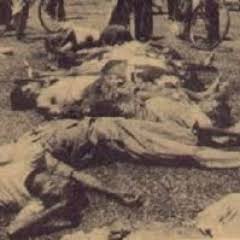
Murdered members of the East Sumatera sultanates, March 1946
Members of the Eastern Sumatera Sultanate killed in March 1946

Malays love to idolise the wrong people.  We name roads and university buildings after people like Burhanuddin Al-Helmy, Ishak Haji Muhammad, Ibrahim Yaakob, Ahmad Boestaman who once fought for the unification of Malaya and Indonesia under the Indonesia Raya political concept where the former comes under Indonesian rule from Batavia, rid of its feudal system.

On 3 March 1946, five Sultans from five Malay states in East Sumatera, along with thousands of their family members were brutally murdered by supporters of the Communist Party of Indonesia as well as Sumateran Malays who fell for their anti-royalist propaganda.  The pogrom did not only end the Malay Sultanate governments of East Sumatera, but also the customs and traditions of the Sumateran Malays.

Those whose name had the prefix Tengku, Wan or Raja were immediately executed, while the Malay population had to assume Javanese or Batak names to avoid persecution.  At least two generations of Sumateran Malays had to hide their real identity after the pogrom.  It was in essence an ethnic cleansing, and was done under the battle cry “Daulat Rakyat.”

I often wonder if the same is being done here in Malaysia, the sowing of hatred towards the royal institutions in order to remove the very protection of the Malay and Bumiputera rights as well as the sanctity and status of Islam as the religion of the Federation?

Once, there was deep respect for the Rulers. Malaysia Incorporated changed all that.  Money was power and that came from those with political power.  Political interference in the constitutional powers of the Rulers eroded further whatever was left of that respect.

There is a revival of love and respect for the royal institution, now that things are going bad and election promises reneged upon.  But people are still confused by the roles that the Rulers have in this democratic system of ours.  Many people think that the Rulers institutions should be dissolved as they do not have any tangible role to play.  The truth is far from it.  Whatever executive powers that the government has, the fount of that power is the Yang di-Pertuan Agong.

The roles of the Rulers were watered down from the beginning – in our school text books.  It does not augur well for a government to be seen as playing a second fiddle to the Rulers.  Hence, nationalism was injected into our history text books and the Rulers’ role in our “independence” was only as a signee party to the Federation of Malaya Agreement, 1957.  Nothing more.  In the end, the Rulers are now “living extravagantly on taxpayers’ money.”

Therefore, it is of no surprise that the Rulers and members of the Royal institutions have their set of haters spawned by this lack of understanding.  And when Her Majesty the Raja Permaisuri Agong recently retweeted a known UMNO cybertrooper’s post about the incident at the University of Malaya’s convocation ceremony, she was immediately condemned by the haters.

It was unfortunate for Her Majesty to have retweeted that person’s post, but I can understand why.  It was driven by her displeasure of the act by the graduate, choosing such an occasion to display an absence of decorum.  What if it was the Sultan of Perak who was there to present graduates with their scroll?  Her Majesty undid her retweet later.

The Raja Permaisuri Agong is not the first of the first line member of the royal institutions to have suffered attacks both on and off social media.  Almarhum Sultan Azlan Shah of Perak, the Sultan of Johor, and the Sultan of Terengganu were criticised for choosing a Menteri Besar for their respective state by people who do not understand the constitution.  Since when is the choosing of a Menteri Besar the prerogative of a winning party or Prime Minister?  Where in any constitution does it say that?  By convention? By convention is not a rule of law.  That is not binding at all.

The Sultan of Selangor was criticised for protecting the sanctity of Islam, with some calling the state’s Syariah criminal enactment unconstitutional.  It is the duty and absolute right of the Sultan of Selangor to protect the sanctity of Islam in his state; the same goes for the other Rulers as well.  And the state Syariah criminal enactment that was passed by members of the state assembly remains a law of the state until proven unconstitutional by a constitutional court.  Has there been any challenge?

I have mentioned in several of my previous writings that this land has always been Islamic by nature and this was reinforced by two British judges in the landmark case of Ramah binti Ta’at v Laton binti Malim Sutan 6 FMSLR (1927).

For the past few years I have seen many attacks made on the Rulers as well as on Islam and the special rights and privileges of the Malays and the Bumiputeras. Many non-Malay Bumiputeras fail to understand that they stand to lose a lot too if these attacks prevail.

Being the constitutional protectors of both Islam and the special rights and privileges of the Malays and Bumiputeras, the protection for the Rulers, for obvious reasons, must be removed first.  Hence, we have seen the attempts to introduce the National Unity Consultative Commission Bill in 2015, ICERD and the Rome Statute.  Times are dangerous in Malaysia for Islam, the Malays and Bumiputeras.

The reason for the UM graduate’s outburst on stage was his claim that the Vice-Chancellor of the university is a racist for attending the recent Malay Unity Congress and for delivering a speech then.  A quick read of his speech text revealed nothing racist.  But if the graduate still thinks it is, why stop there? Why not demonstrate in front of the Prime Minister’s office or residence for delivering a speech there as well? Why be selective?

And what has the Malay Unity Congress achieved? Absolutely nothing.  Even the Prime Minister seems powerless to tell the graduate to go fly kites with his demands and to stop being such a rude person.  The PM also seems powerless and reluctant to summon and reprimand the CEO of Media Prima for giving airtime to the said graduate.

That is why I used to tell my Muslim friends before the last general elections – politicians and governments come and go, so never rely on them to protect your rights and the special constitutional status of Islam in this country.  And do not ever think that the politicians are bigger in status than the Rulers.  The politicians only want to cling on to power. For that, they will make compromises and are willing to compromise their beliefs.

Imam al-Ghazali in his book, al-Iqtisad fil I’tiqad, challenged the idea that Muslims can perfect their individual actions and morals without a state that governs by Islam.

The Deen and the Sultan are twins,” he wrote. “the Deen is the foundation and the Sultan is the guardian. That which has no foundation is doomed, and that which has no guardian will perish.”

And that is why there seems to be an attempt to undermine and eventually remove the guardian, so that the foundation can be permanently removed.  So, what is it that we want?  A nation where we live by the Federal Constitution as our paramount law so we can continue our evolution, or, believe in ‘Rakyat Hakim Negara’ where it becomes a revolution?

The Malaysian Concord (Part 1) – The Sanctity of Islam

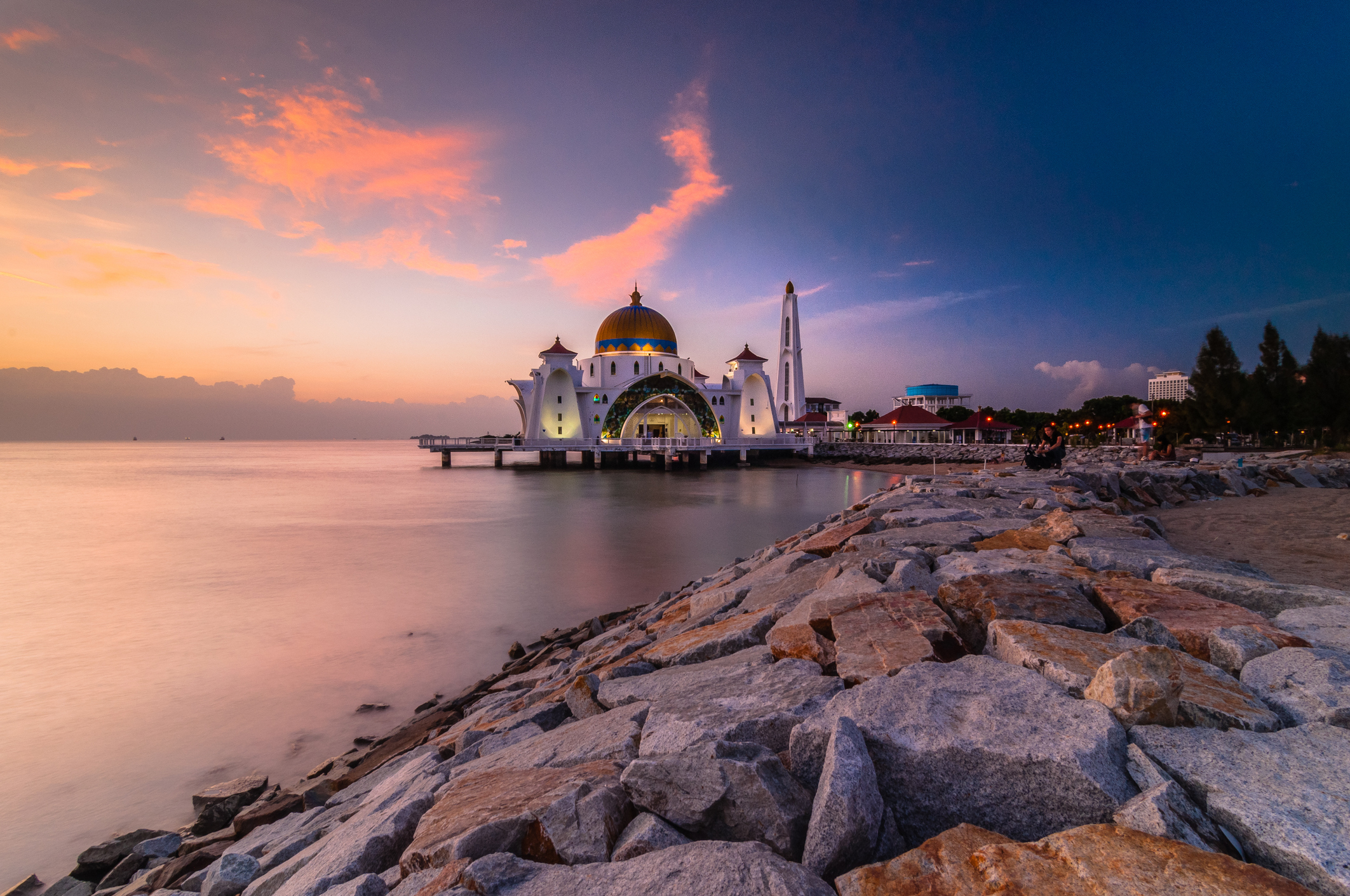
Islam is the religion of the Federation of Malaysia as enshrined in its Constitution after being agreed upon by all those party to her establishment (Photo credit: Azirull Amin Aripin/Getty Images)

HRH Sultan Sharafuddin Idris Shah is known to be a private person and rarely voices out.  The only times that he would voice out is when matters pertaining to the Constitution is touched upon, and yesterday was one of those times.

He said that the act of a certain group questioning the sanctity of Islam, the special rights of the Bumiputeras, the national language, and the function and position of the Malay Rulers enshrined in the Federal Constitution need to be immediately addressed and curbed.

I have come across such people, and unfortunately, many are young Malays.  They do not seem to understand that the social contract made between the various races of Malaya prior to 31stAugust, 1957 and Malaysia prior to 9thJuly 1963 are now part of the Federal Constitution.

Nor do they know the parties who signed both agreements for the independence of Malaya, and the formation of Malaysia, and understand why those agreements were made.  I put a partial blame on the education system where we were taught that we were all colonised by Britain when that is not true, except during the Malayan Union period.

Although Islam had been preached in the Malay Archipelago, Indo-China and China as early as the seventh century, it is largely held that Islam arrived in the Malay peninsula in the 12thcentury.  Syariah laws such as the Batu Bersurat of Terengganu, Hukum Kanun Melaka, Undang-Undang 99 Perak became the laws of the land.

In 1908, Richard James Wilkinson, a British colonial administrator who, with the backing of Sultan Idris I, was responsible for the establishment of the Malay College in Kuala Kangsar, and who was also a scholar of Malay and history, wrote on the status of Islamic law in the Malay states:

There can no doubt that Moslem law would have ended up becoming the law of Malaya had not British law stepped in to check it.” (William R. Roff, Patterns of Islamization in Malaysia, 1890s-1990s: Exemplars, Institutions and Vectors, Journal of Islamic Studies Vol. 9, Is. 2 (1998), 210-228, at 211).

This was reinforced by two British judges in the landmark case of Ramah binti Ta’at v Laton binti Malim Sutan 6 FMSLR (1927).

It is due to these facts that the sanctity of Islam was retained in the Federation of Malaya Agreement of 1948, and was introduced into the Federation of Malaya Constitution of 1957.

The English law was only introduced to Pulau Pinang as it was the original British colony.  It was on 25thMarch, 1807 that a Charter of Justice was granted by the Crown establishing a Court of Judicature in Pulau Pinang, with jurisdiction and powers of the Superior Courts in England. This was then introduced to Melaka and Singapore when they became part of the Straits Settlements under British rule.

Only with the arrival of the British residents in the Malay states in the last quarter of the 19thcentury was the English law introduced there in the form of Orders, Regulations and Ordnances, save for the laws and regulations affecting the Malay customs and the administration of Islam.  These laws provided for the administration of justice, the law of contract, sale of goods, bills of exchange, company law, criminal law and procedure, the law of evidence, land law, labour law, and the regulation of many matters of public interest.

The Civil Law Enactment, 1937 (No.3 of 1937, FMS) introduced the whole body of the common law of England and of equity of minor modifications.  It provided always that the common law and rules of equity are “subject to such qualifications as local circumstances render necessary”.  Local laws and custom were made applicable.

Islam was made the religion of the Federation of Malaya.  Although Lord Reid felt it was unnecessary to have such a provision as the Sultans would be the Head of Islam in their states, it was added to the draft of the Federal Constitution at the suggestion of Justice Hakim Halim bin Abdul Hamid of Pakistan, who was a member of the Reid Commission, because he said the suggestion by the Alliance party that represented the people of Malaya to have that proviso added was inoccuous.

Sir Donald Charles MacGillivray personally felt that such a provision would be advantageous because the Yang DiPertuan Agong could at the same time become the head of the faith in the Settlements of Penang and Malacca (CO 1030/524 (10), MacGillivray to Secretary of State, 25 February 1957; See also CO 1030/524 (18), MacGillivray to Secretary of State, 21 March 1957).

This accord was reached between those who were party to the discussion – the Malay Rulers, the British who administered the Rulers’ sovereign states on their behalf, and the multiracial government chosen by the people in 1955 to represent them.

There is even a separation of jurisdiction when it comes to the position of Islam in the Federal Constitution.

The Syariah Law comes under the purview of the respective Rulers, and the Attorney-General of Malaysia, under Article 145(3) does not have the jurisdiction over proceedings before a Syariah court, a native court of a court-martial.

This separation of jurisdiction is also present as provided by Article 121(1A) where both the High Court of Malaya and High Court of Sabah and Sarawak do not have any jurisdiction over Syariah matters.  Therefore, any claim that the Syariah law infringes on the rights of the non-Muslims is fallacious.

The Malaysia Solidarity Consultative Committee chaired by North Borneo’s (later Sabah) Donald Stephens (later Tun Fuad Stephens) stated in its memorandum dated 3rdSeptember 1962 that the acceptance of Islam as the religion of the to-be-formed Federation of Malaysia would not endanger religious freedom within Malaysia nor will it make the country less secular (Malaysia Solidarity Consultative Committee Memorandum on Malaysia, 3 Sep 1962, p.p 120).

And that is how Islam became the religion of Malaysia.

(This article was first published by The Mole)

Talibanistic Japan

Everyone seems to have a field day being anti-Islam nowadays including Malays. I did not use the term ‘Muslim’ on purpose.

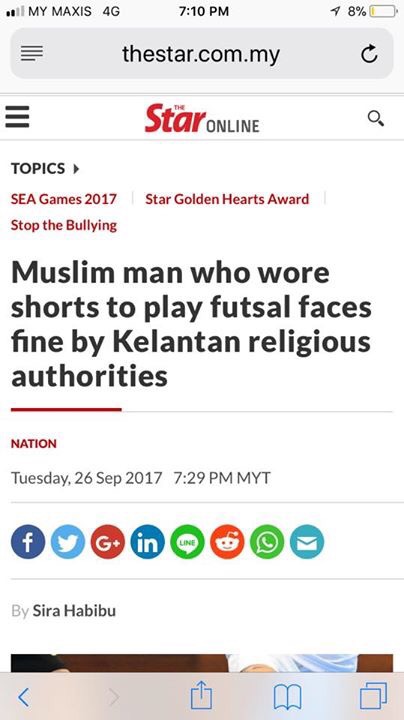
The Star is one of the culprits (again) for shining the spotlight on these issues over and over again.

Sira Habibu is one of the culprits in The Star

Without even making an attempt to understand the reason behind the issue. Yes, Muslim male have aurat to cover, and that is between the navel and the knee.

You may think it sounds silly until you find a Anwar Ibrahim-like person rubbing your thighs and crotch. Not all macho guys are attracted to girls if you noticed.

Separation of facilities also made headlines

The issue of the Muslim-only laundry in Muar was also highlighted until His Majesty The Sultan of Johor had to step in and decreed that the owner take down the seemingly-offensive sign.

The anti-Islam league cheered even more when His Majesty the Sultan said that “Johor is not a Taliban state.

While I disagree with the proprietor of the laundromat for having such rules, I respect his choice. But I fail to understand why one’s choice of limiting his market to only Muslims not being celebrated by the rest? Why get angry? You get money from those who choose to frequent a open-to-all laundromat such as I.

If such a thing is racism in practice, why has the anti-Islam league ever kicked a fuss over this issue? Because the Chinese is the minority and they can get away with reverse-racism?


The other thing that I don’t get is this:

The police said they are not giving out permits for this festival over security reasons

Every day Malaysians drink to glory so much that between 2010 to August 2015, 618 died due to drink driving.

So far, nobody really cared how much they want to drink or if they would still be alive the next day. Suddenly, when the police and DBKL deny permits for Beer Fest and Oktoberfest, everyone screamed in anger as if their 364 days of binge-drinking has been curbed by a Talibanistic government.
The police said that security could be compromised and that lives could be lost if terrorists carry out their threats against the event.

The pro-drinkers wouldn’t have that. They accuse Najib Razak of kowtowing to PAS as part of an election deal.

Look, if that is the only deal that Najib Razak is capable of doing then that is downright stupid. If I were the PM I would just give a state to PAS in exchange for parliamentary seats. What on Earth can stopping a binge-drinking festival earn you?

Just go buy your crates of beer and drink at home with friends and enjoy your own Oktoberfest. If you want more privacy and a spacious venue, I know of a bungalow on Jalan Pinhorn. At least you don’t have to worry about falling into a swimming pool and drown.

Malaysia is far from being Talibanistic. What it is is becoming more idiotic. There are more and more idiots being zombified by both mainstream and social media.

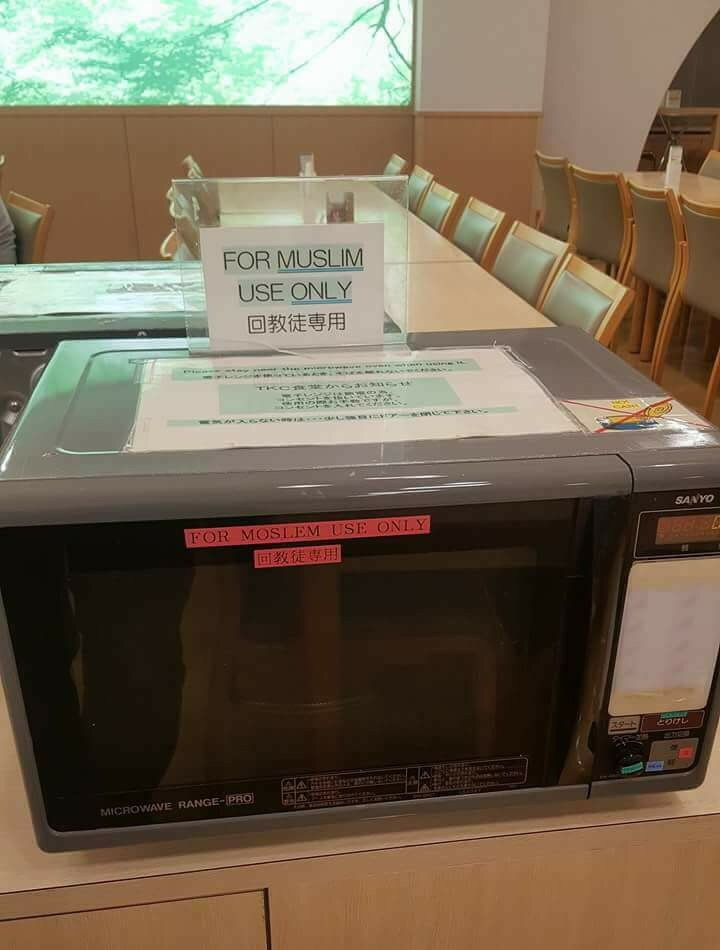
I wonder what they would say to Japan which is also now being very Talibanistic?

A Japanese restaurant with a Muslim-only section. Photo credit: Mohd Mozas

Sabah 20-Point Agreement: Religion

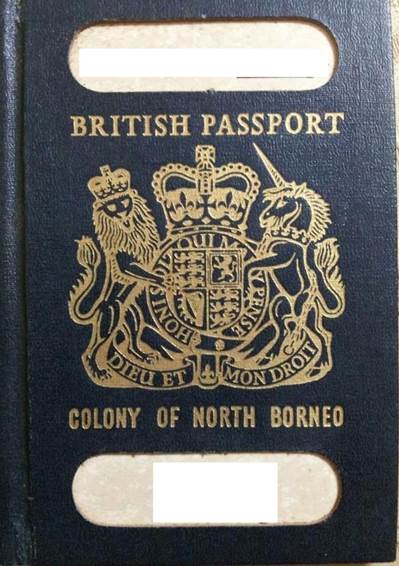
Colonial passport for the colonised people of North Borneo

For the previous installment on the background, please click here.

In his book on Page 101, Dr Jeffrey Kitingan wrote that although there is no objection to Islam being the religion of the Federation there should not be a STATE RELIGION in North Borneo.  Therefore, anything pertaining to Islam in the MALAYAN CONSTITUTION cannot be applied to NORTH BORNEO.

His grouse on this matter came about as a result of the late Tun Datu Mustapha expelling Christian priests from Sabah and accused both Tun Datu Mustapha and Datuk Harris Salleh of acting in such manner to strengthen their political position with the Federal government, therefore Islam should not be the religion of the state of Sabah.

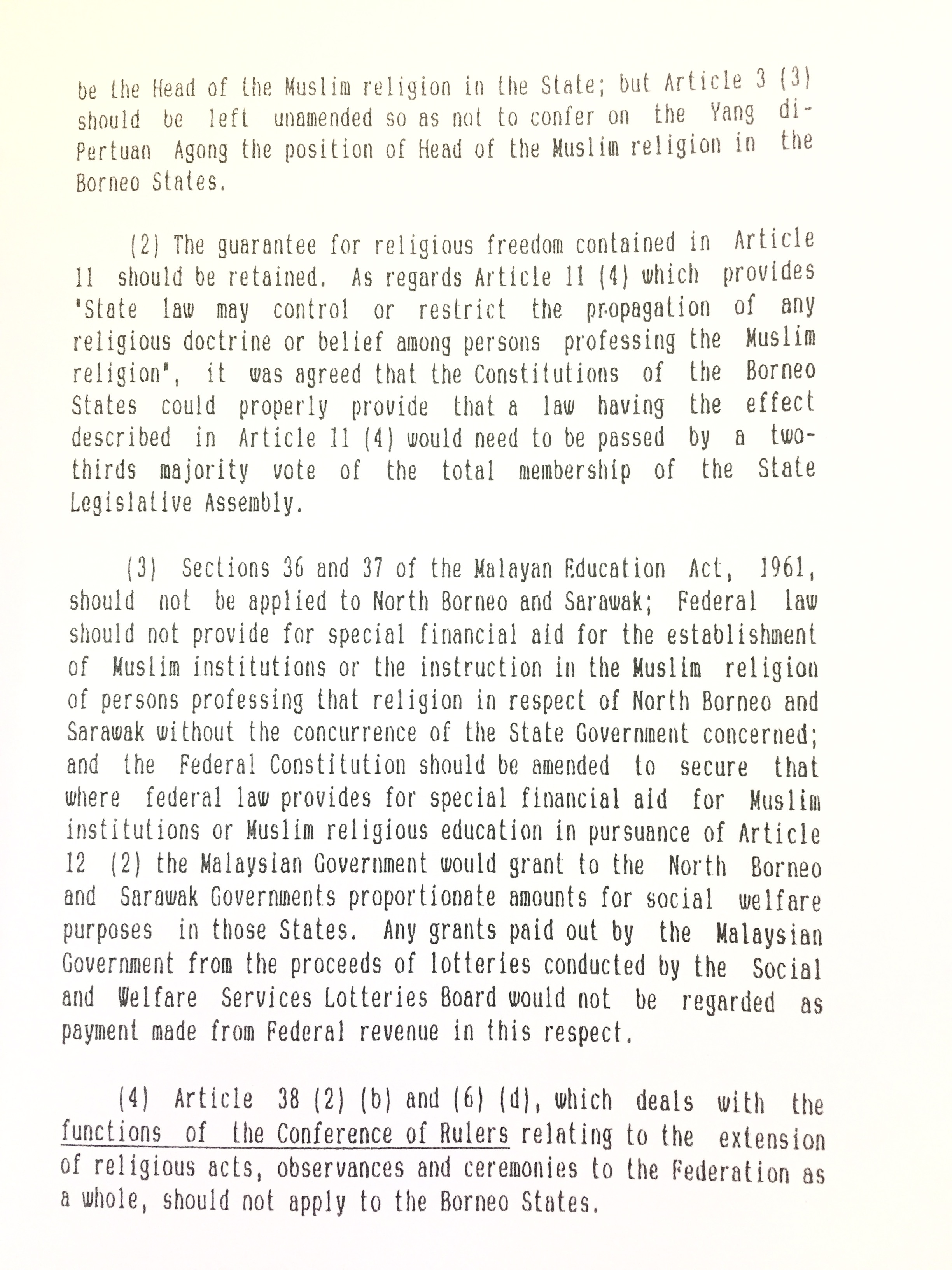
The above controversial statement goes against the agreements reached as recorded by the Cobbold Commission, the Malaysia Solidarity Consultative Committee (MSCC) , and the Inter-Governmental Committee (IGC) in 1962.

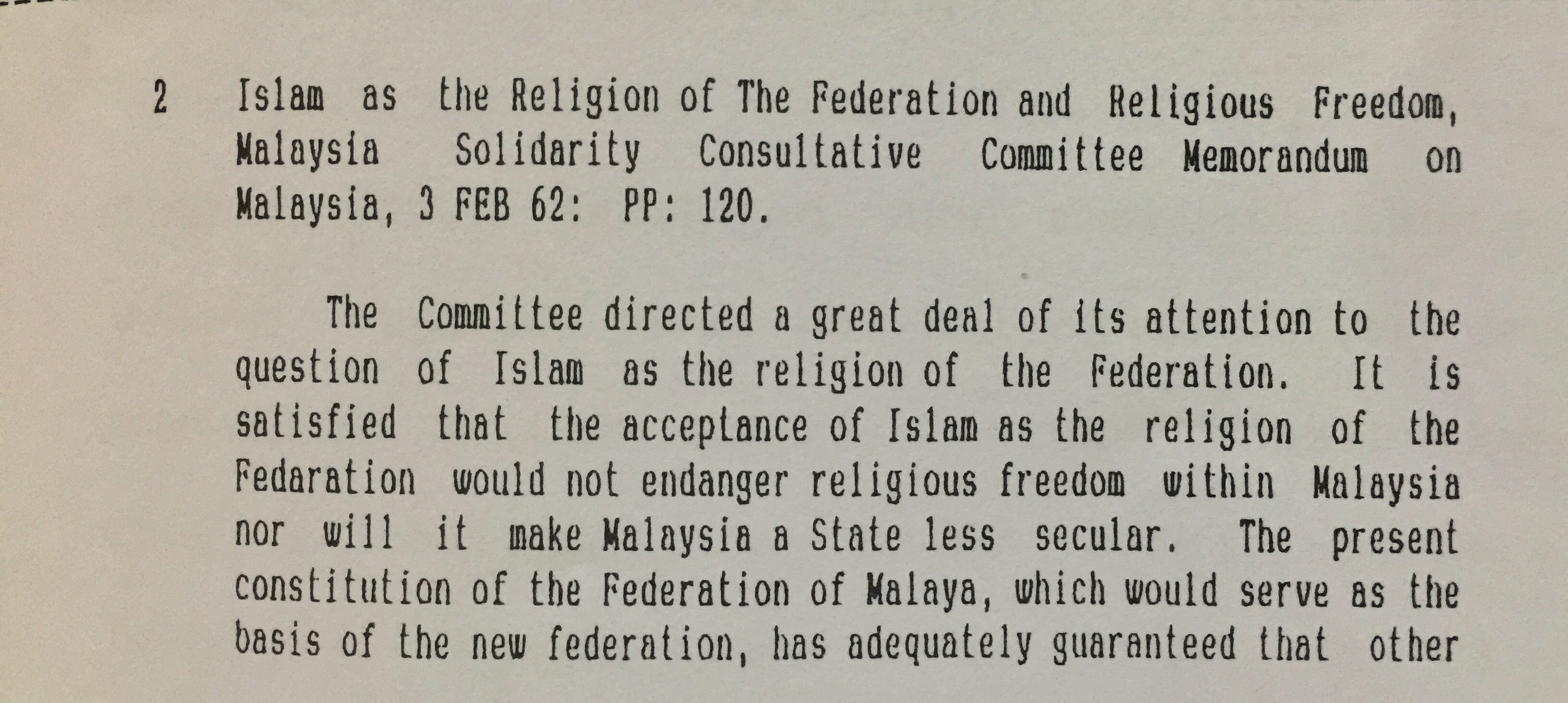
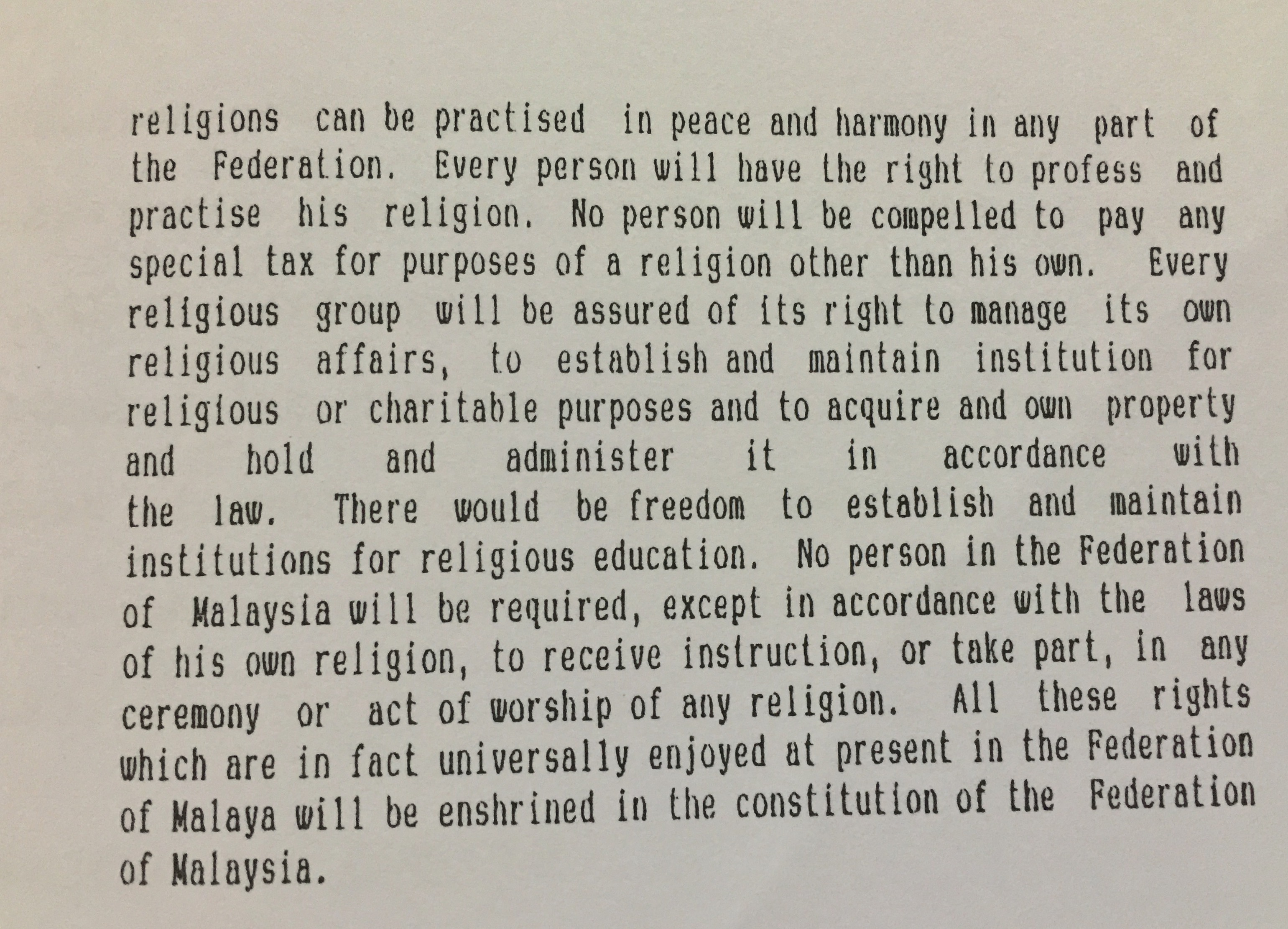
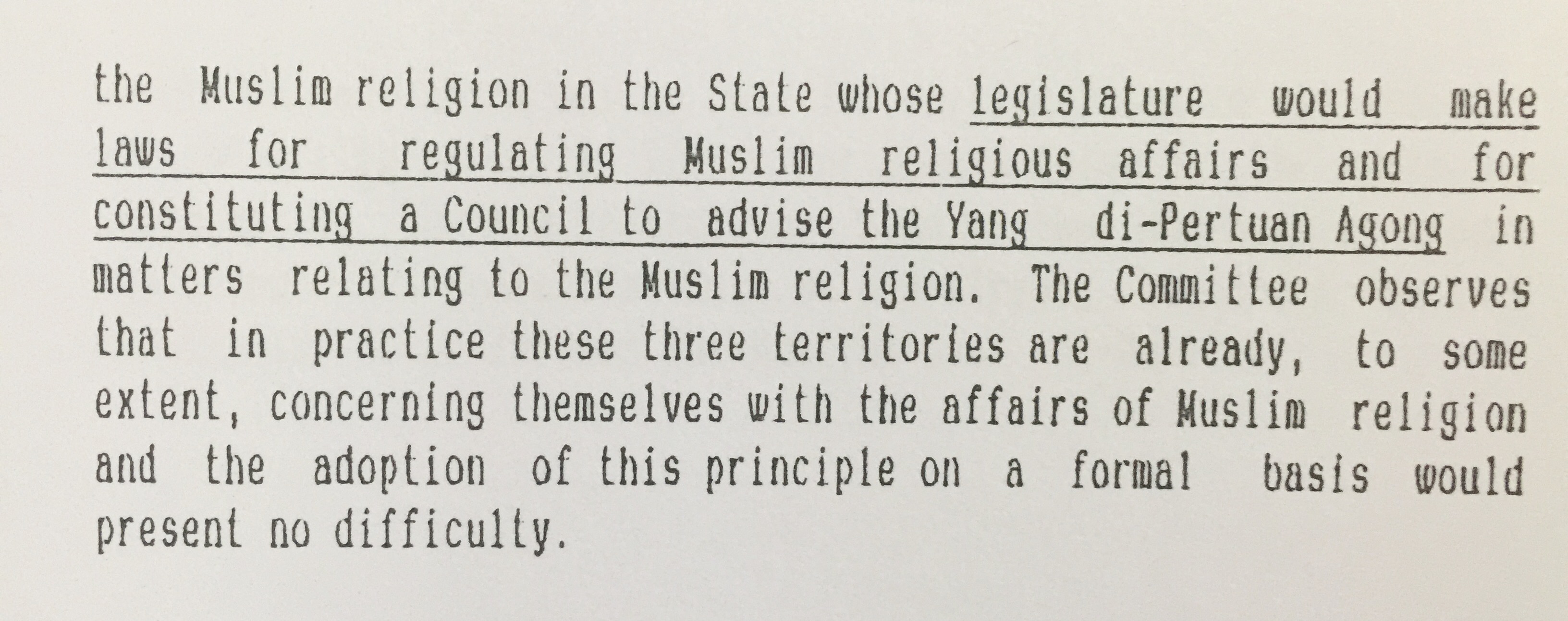
According to the memorandum of the MSCC that was chaired by Donald A Stephens (later Chief Minister of Sabah, Tun Fuad Stephens) with representatives from Singapore, Malaya, Sarawak and North Borneo, the MSCC found that the acceptance of Islam as the religion of the Federation does not endanger religious freedom as evident on Page 120 of the MSCC memorandum dated 3 February 1962:

MSCC Memorandum dated 3 February 1962 PP 120

MSCC Memorandum dated 3 February 1962 PP 120

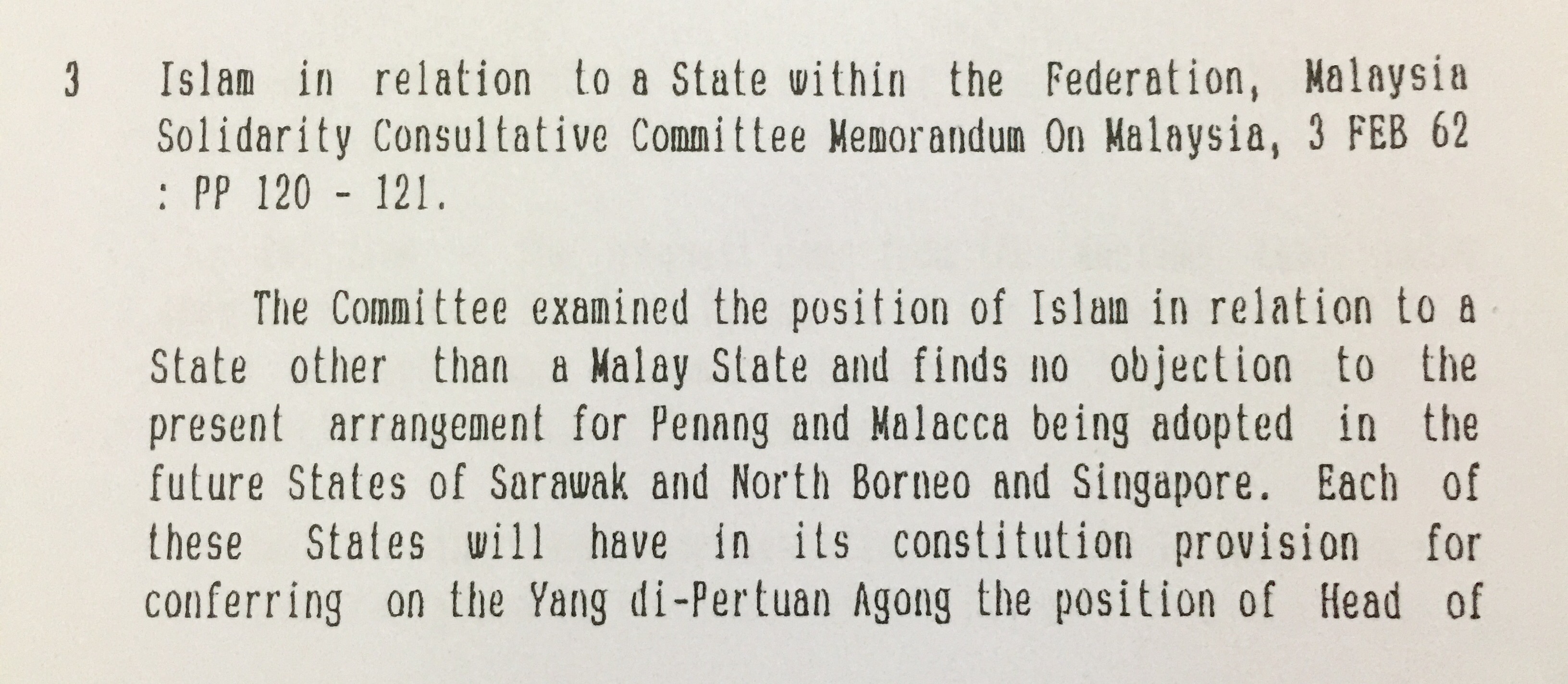
The MSCC had scrutinised the position of Islam in respect of states other than the Malay States and found no objection was made against the then-present arrangement for Pulau Pinang and Melaka to also be adopted by North Borneo, Sarawak and Singapore.

Each of the states above would have its own constitution to address the requirement with Yang DiPertuan Agong as the Head of Islam in those states.  The respective State’s Assembly will enact laws to govern Islamic affairs and form a Board to advise the Yang DiPertuan Agong on matters pertaining to Islam.

On pages 120 and 121 of the memorandum mentioned it is stated so:


MSCC Memorandum dated 3 February 1962 PP 120-121

MSCC Memorandum dated 3 February 1962 PP 120-121

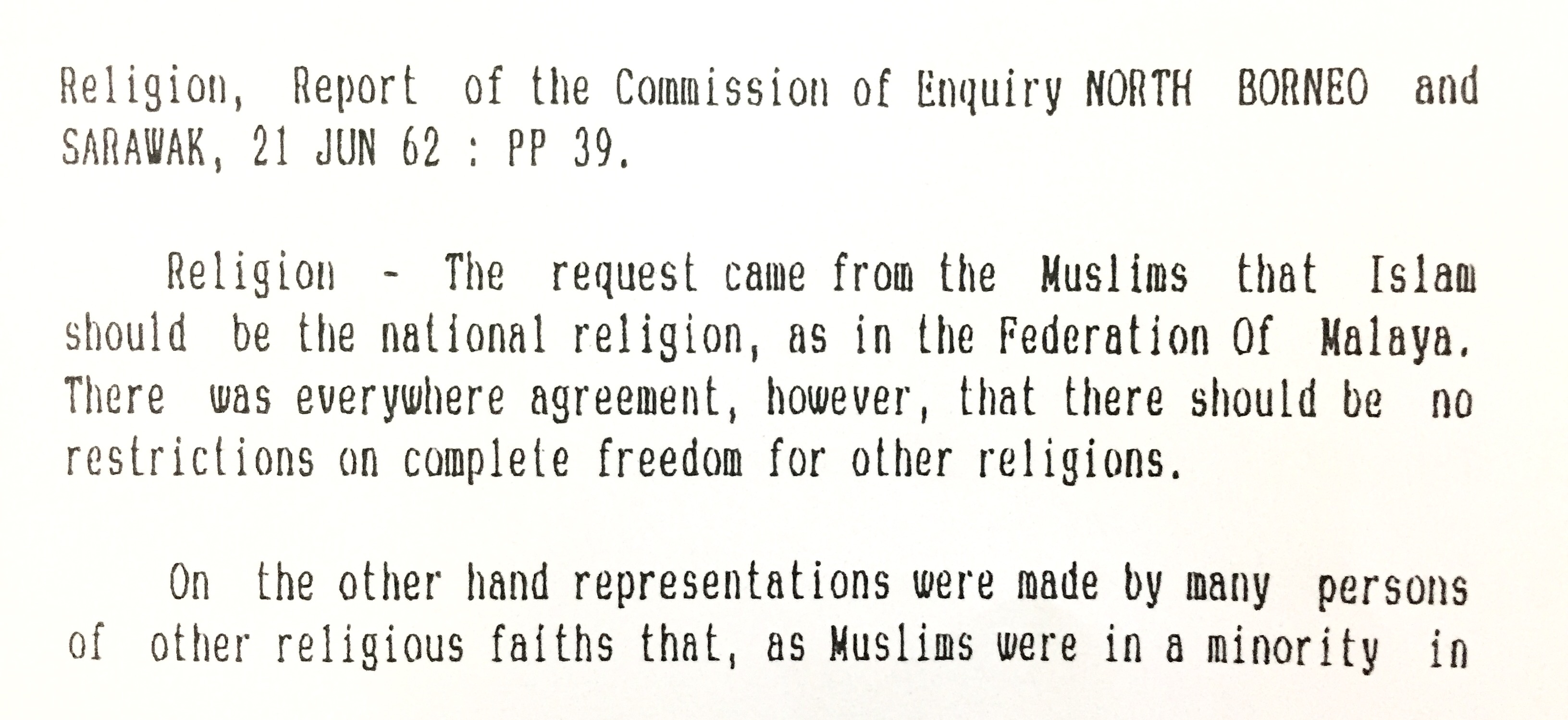
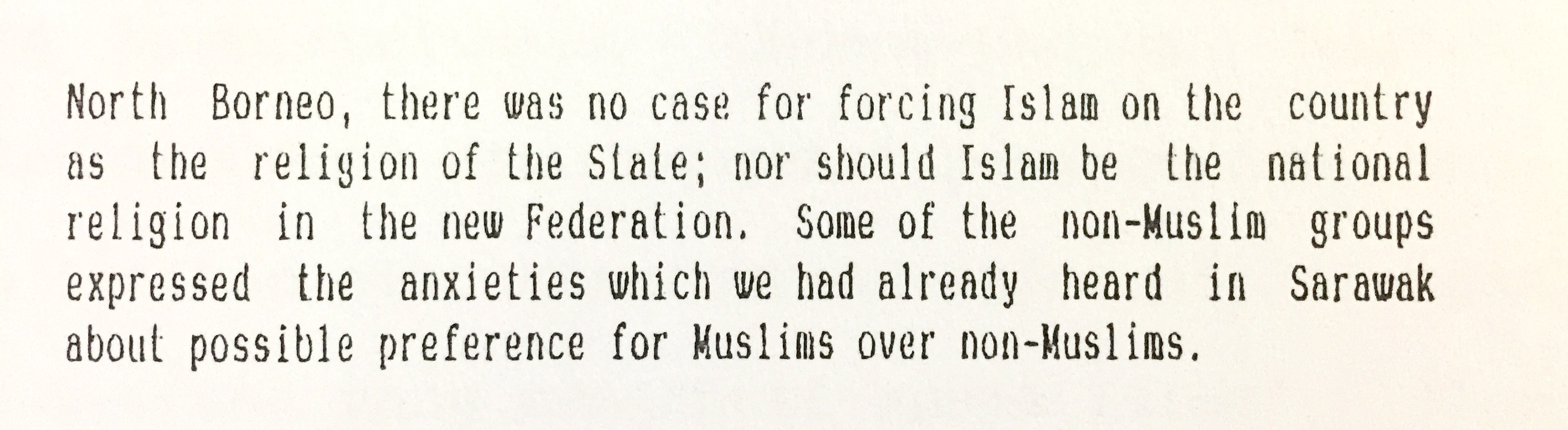
In the Report of the Commission of Enquiry (Cobbold Commission), North Borneo and Sarawak, dated 21st June 1962 found that there was everywhere agreement that as the Muslims are minorities in North Borneo and Sarawak, there should be no restrictions on complete freedom of other religions in those states.

Cobbold Commission Report dated 21 June 1962 PP 39

Cobbold Commission Report dated 21 June 1962 PP 39

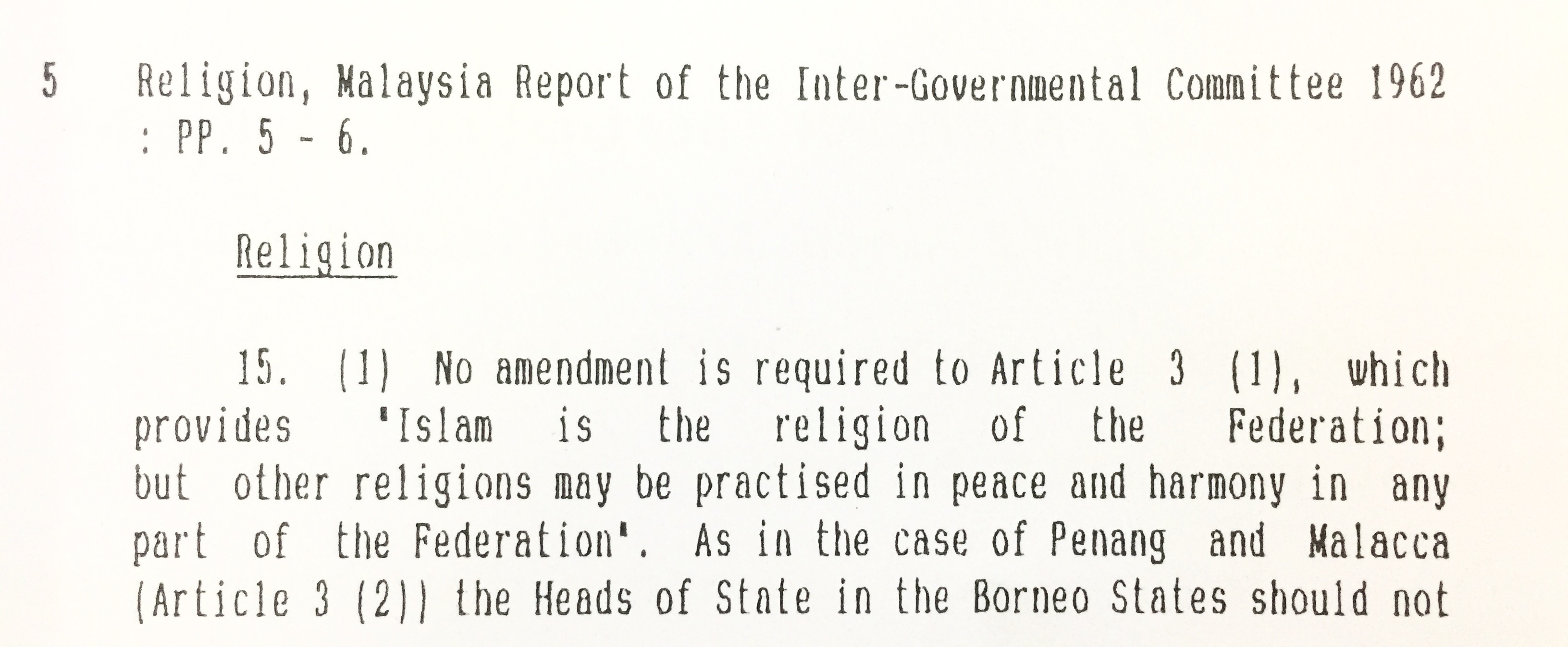
In relation to that, the Inter-Governmental Committee, headed by Lord Landsdowne produced a report in 1962 and made the following recommendations on religion on Pages 5 and 6 which have been passed by the Sabah (and Sarawak) state assembly as follows:

IGC Report 1962 on Religion PP 5-6

IGC Report 1962 on Religion PP 5-6

The IGC, which has representation from the Federation of Malaya representing the states in the Federation, Singapore, North Borneo and Sarawak, recommended that Article 3 needed no amendment.  However, the provision of financial aid to Muslim establishments should only come with the concurrence of the states of North Borneo and Sarawak.  This has since been provided for via Section 3 of the Sabah Islamic Laws Administration Enactment, 1992 where the Yang DiPertuan Agong is the Head of Islam in Sabah, and a Council (Majlis Agama Islam Sabah) was formed to manage and administer the Islamic affairs in Sabah. This has also been provided in the Sabah State Constitution (Articles 5B(1) and 5B(2)).

As mentioned at the beginning of this article, Dr Jeffrey Kitingan was angered by Tun Datu Mustapha’s action to chase out Christian missionaries from Sabah in 11972.  Dr Jeffrey used this as the basis of raising the religion issue that was presented as part of the 20-point memorandum for the inclusion of Sabah into the Federation of Malaysia.

Having understood the reason for his raising the issue again, we must also understand the events that had taken place after Tun Datu Mustapha’s ousting of the Christian missionaries.

Parti Bersatu Sabah (PBS) won the state elections and formed the Sabah state government in 1985.  From that point up until 1991, the Sabah state government built 825 churches compared to only 216 suraus and mosques.

The state government’s refusal to entertain a request by the Sabah Islamic Council made on the 2nd August 1986 and again on the 12th August 1986 to amend the state’s Shariah Law (Administration) Enactment No.15/77 to accord to the Yang DiPertuan Agong the power to administer Islam in the state of Sabah as required by Article 3(3) of the Federal Constitution (as amended on the 12th August 1976) and Article 5B of the Sabah State Constitution (as amended on the 28th December 1985) clearly denied the Yang DiPertuan Agong His Majesty’s prerogative that was agreed by the Malaysia Solidarity Consultative Council, the findings of the Cobbold Commission as well as the Inter-Governmental Committee, and the wishes made by the Muslims of North Borneo in 1962.

The ousting of the Christian missionaries in 1972 was made because the nine missionaries who were foreigners abused the work permit given to them to work in Sabah, not to conduct evagelical missions.  They were Roman Catholics, Anglicans, the Basil Mission and from the Borneo Evangelical Mission.

As Immigration affairs is a Sabah prerogative as accorded in the Federal Constitution of Malaysia, the first act by the Sabah state government under Tun Datu Mustapha was to deny them an extension of their work permit.  They were then given a 14-day special pass to enable them to make arrangements to leave Sabah.  However, the missionaries refused to obey the 13-day order.

Consequently, they were removed from Sabah through a Removal Order issued by the Sabah Immigration Department made under Section 32 of the Immigration Ordinance 12/59.

The Federal government had no role whatsoever in the removal of these missionaries.  It was purely a state decision that was made based on a sound reason – the people of Sabah, regardless of race or religion had been living harmoniously.  However, these missionaries have been sowing the seeds of hatred among the Christians of Sabah towards the Muslims by telling them to fear the “Islamisation” of Christians through forced conversions, a claim the missionaries themselves could not substatiate.

There was a plea made by the Christians in Sabah to the then-Prime Minister for the missionaries to be allowed to remain in Sabah.  Tun Abdul Razak however recommended to the Christians of Sabah to instead allow priests from the Peninsular and Sarawak to replace the nine missionaries.

In his book, Jeffrey Kitingan had profusely spoken about alleged digressions from and breach of the Federation of Malaysia Agreement but avoided on the issue of the Sabah state government of 1985 breaching agreements made by the MSCC, findings of the Cobbold Commission, the IGC as well as the Federal Constitution of Malaysia.

On the contrary, the Federal government has been fulfilling its end of the agreement by allowing the freedom for other religions to be practiced by its followers as per the agreement.

At no point was there any intrusion made by the Federal government in the affairs of Sabah, and that the removal of the missionaries from Sabah for violating the conditions of the work permit was totally a state issue, made using the powers accorded to the state of Sabah, as agreed by all parties that had agreed on the formation of the Federation of Malaysia.

In the next installement, we shall talk about the second point – LANGUAGE.

The Star Needs Some Moderation

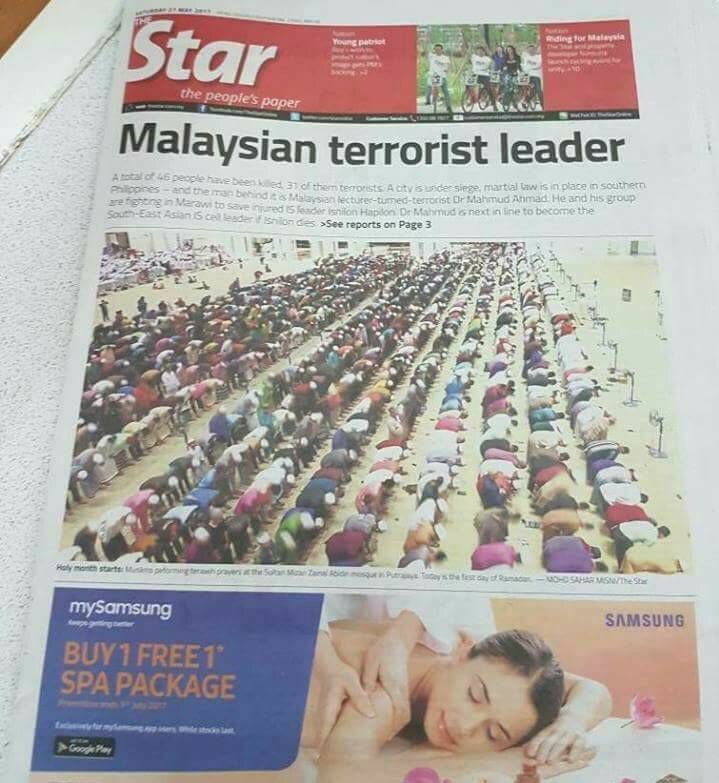
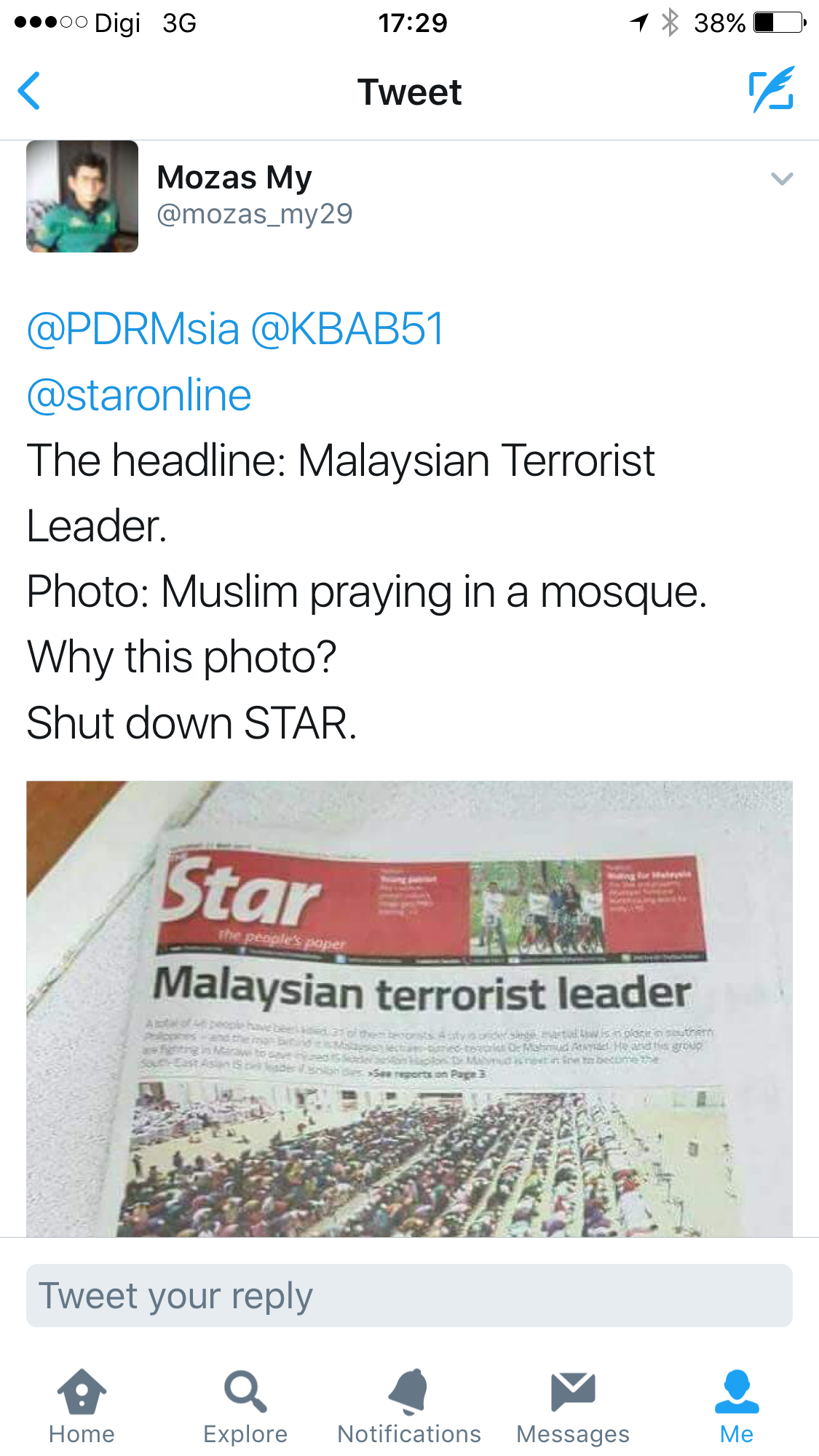
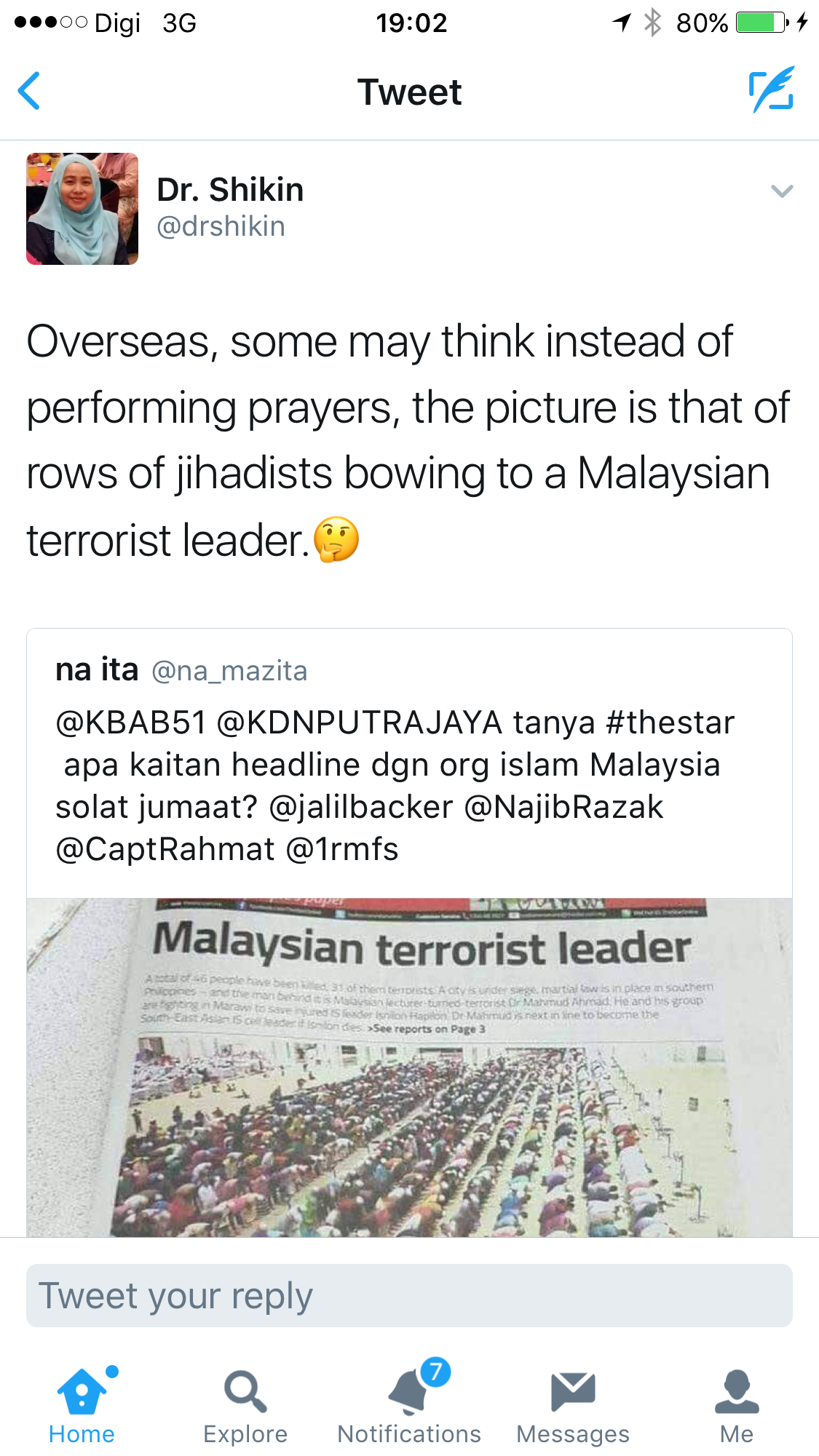
This was the headline on the first day of Ramadhan, 27 May 2017.

It would have read differently had it read Muslims Observe Ramadhan Today and left the ‘terrorist’ headline on Page 3. It cannot be THAT important if its report was on Page 3.

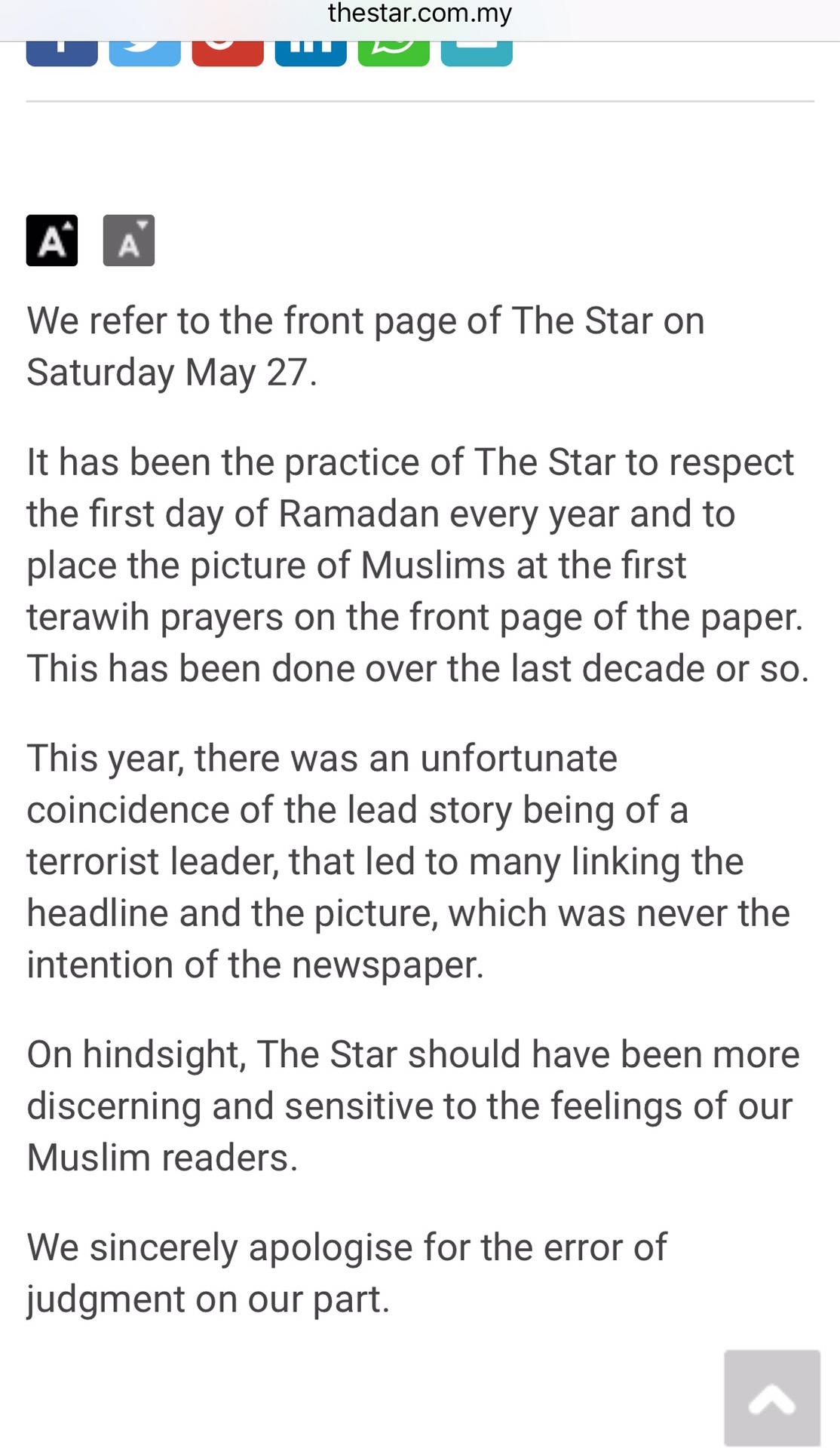
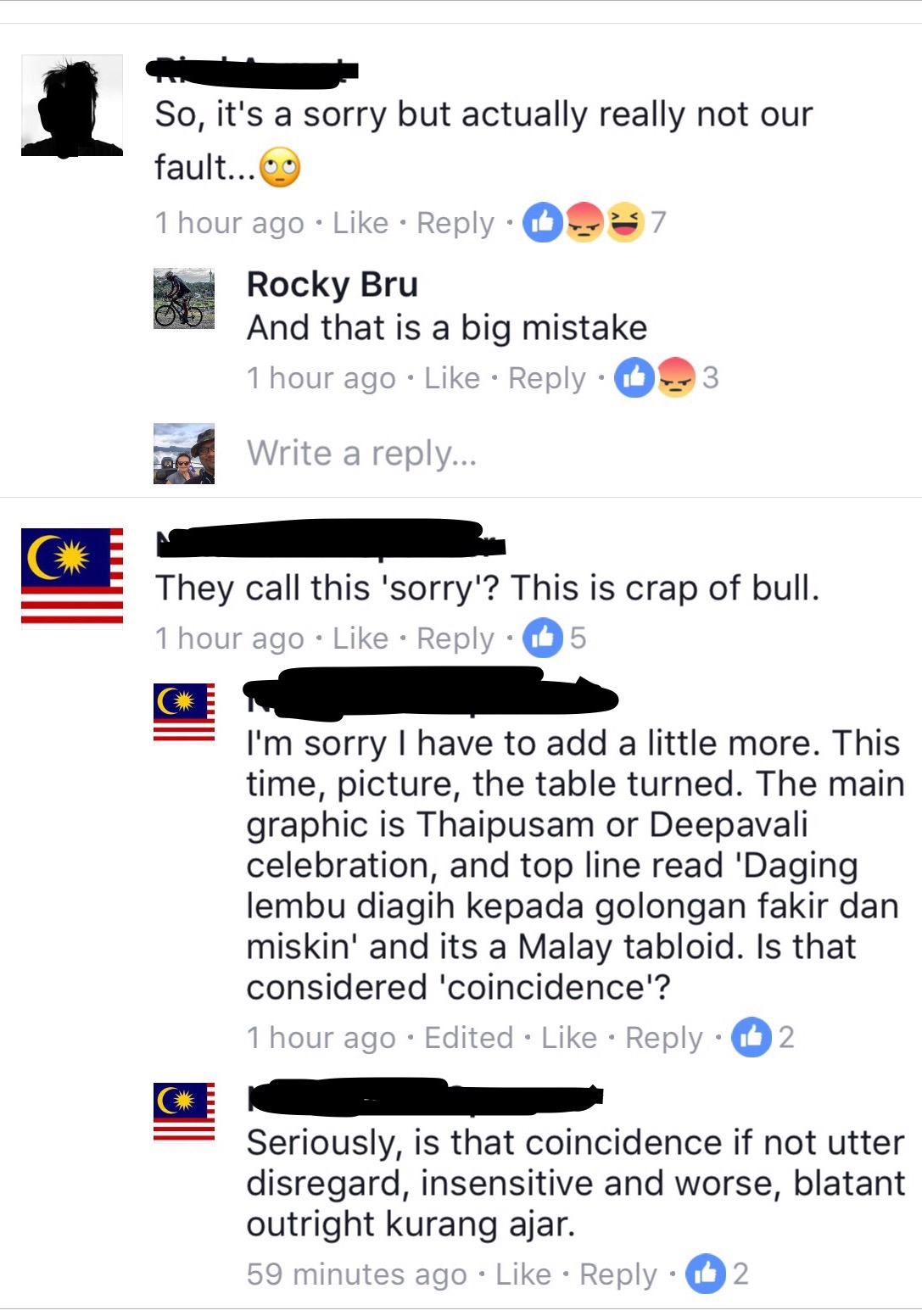
The headline above sparked anger among Muslims in Malaysia from the first day of Ramadhan until almost the end of the second day. A full 36 hours after it was published which prompted The Star to issue a half-hearted apology.


This only further incensed the Muslims.


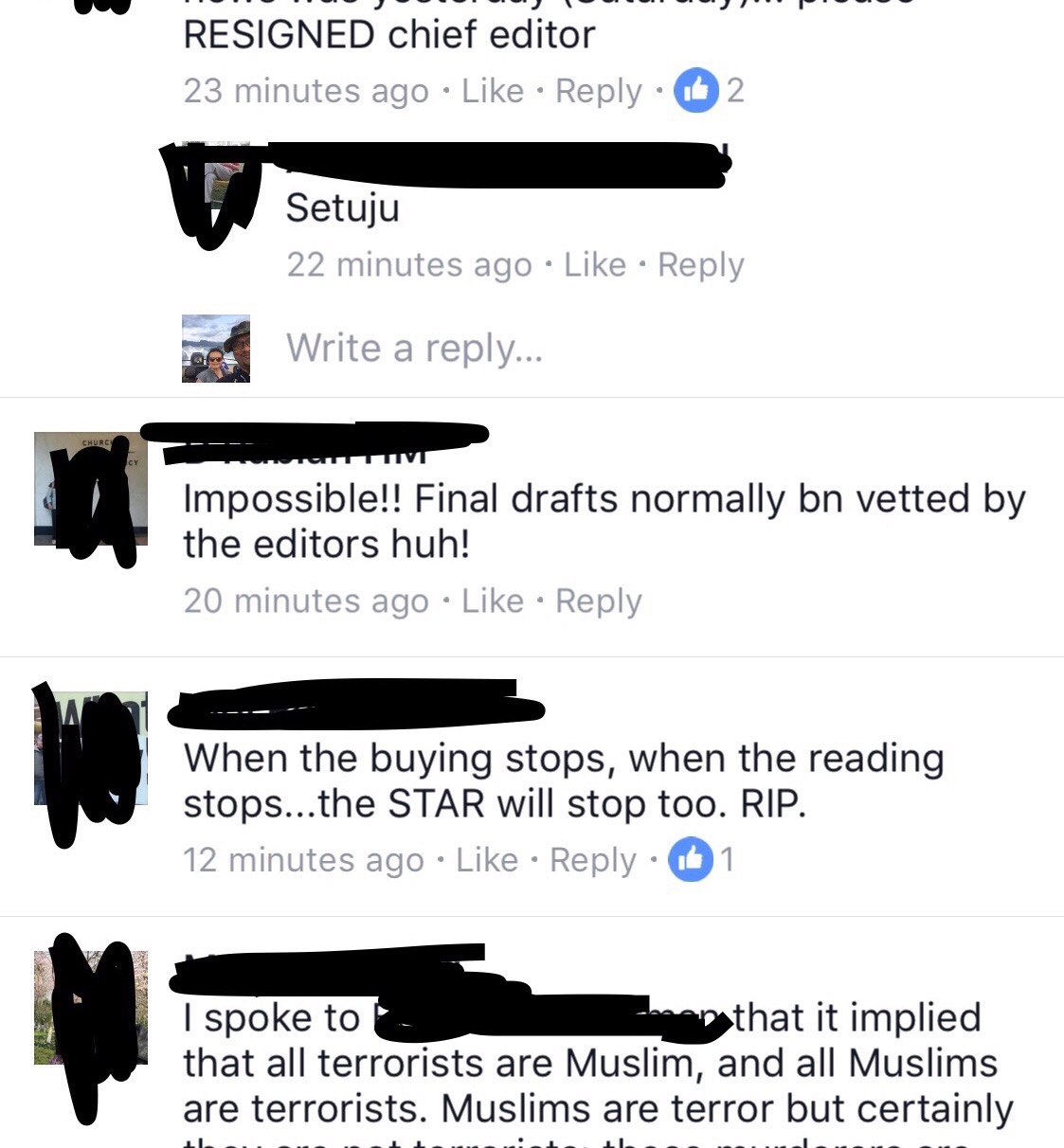
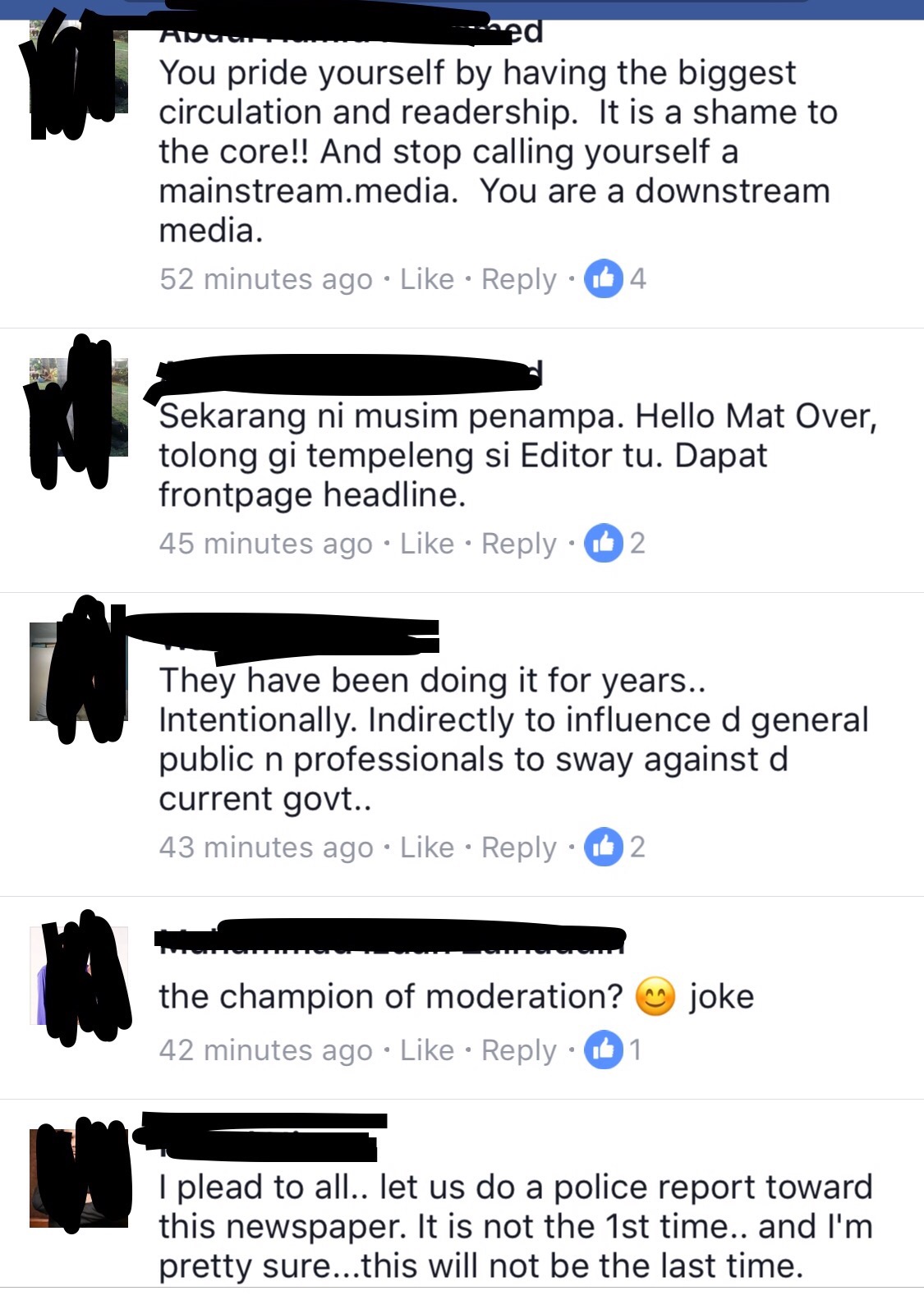
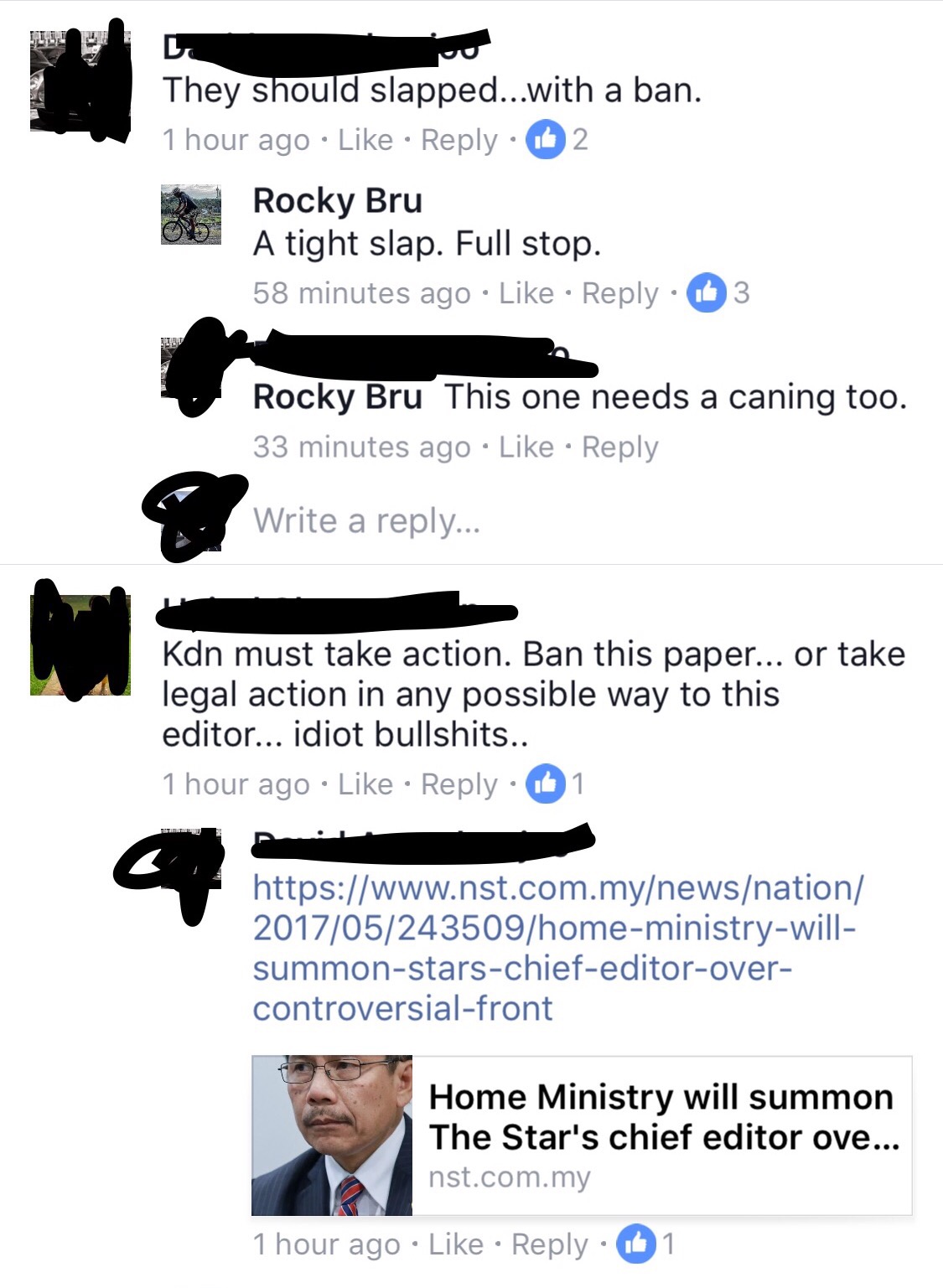
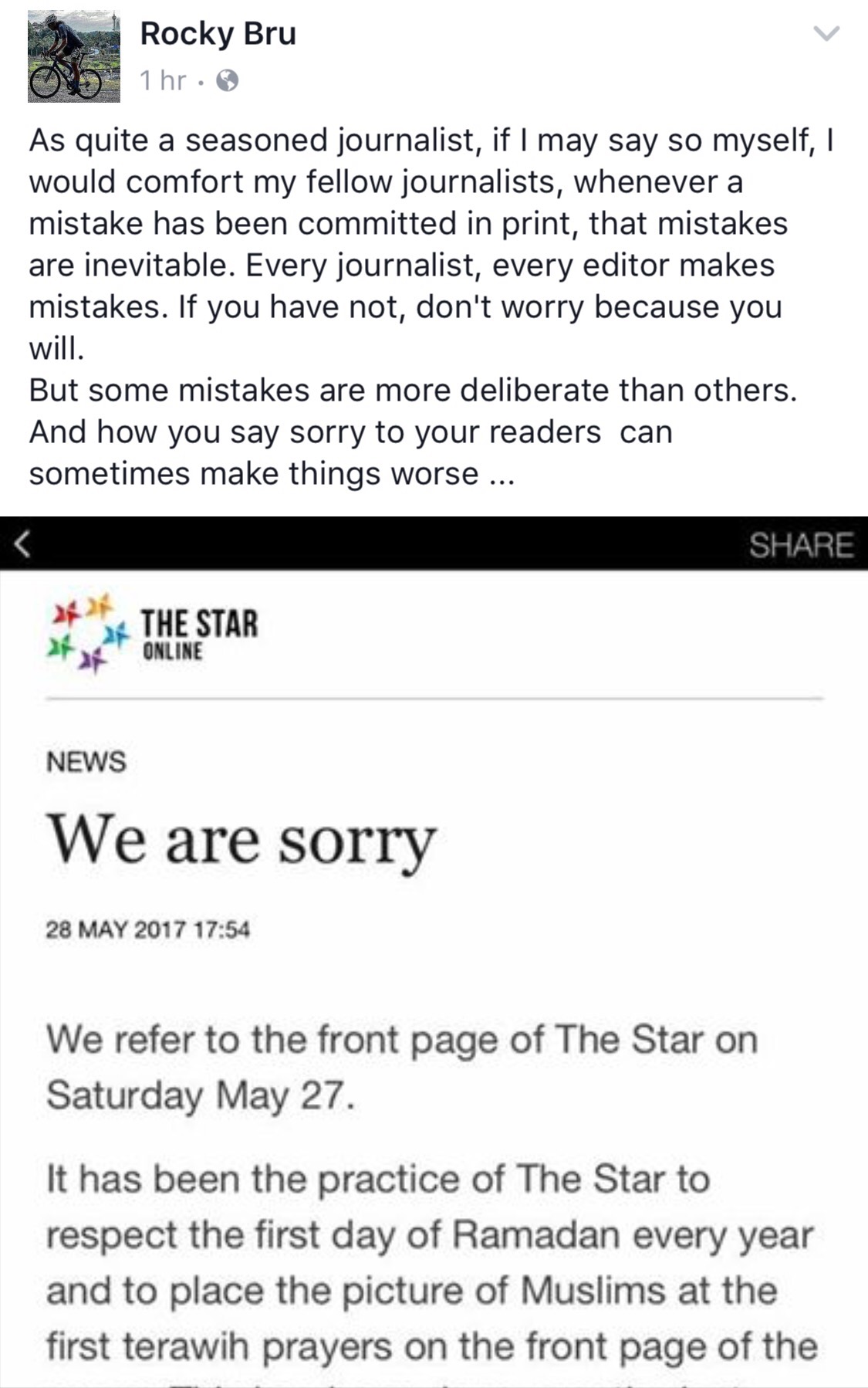
Veteran journalist Datuk Ahiruddin Atan aka Rocky Bru wrote on his Facebook account:


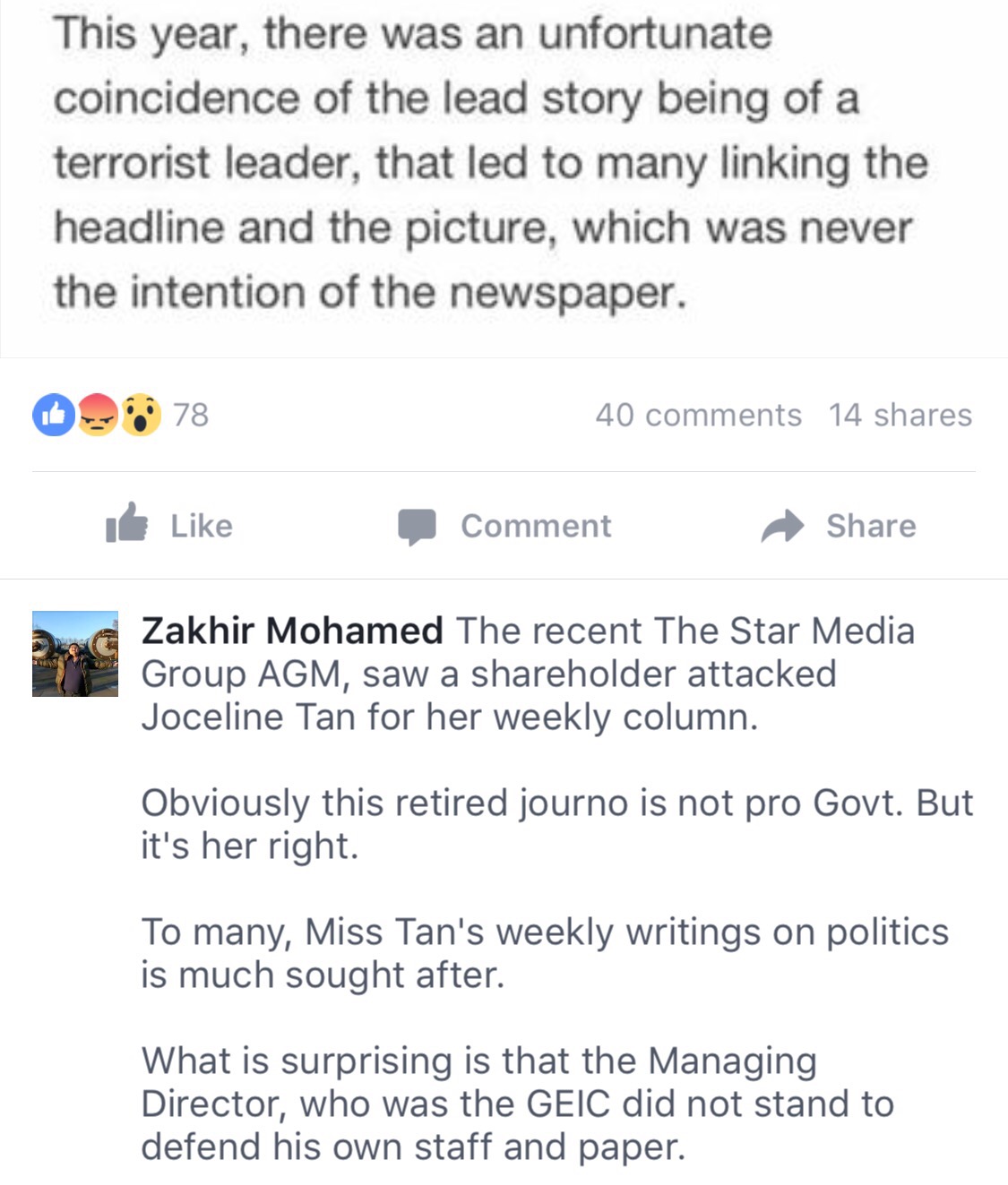
What is more interesting is the comment left by renowned blogger BigDog:


Joceline Tan, a The Star columnist who writes mostly leaning towards the current government was not defended by her GEIC (Group Editor-in-Chief) when attacked at the Group’s AGM.

It has also come to light that the GEIC, Datuk Leanne Goh, transferred a senior journalist who writes a lot about the DAP out of Pulau Pinang.

Yet when pastors went missing it was The Star that played up the issue religiously, and little was said by the tabloid when one came back from Thailand conveniently after Songkran ended.


We are now made to wonder why is this MCA-owned tabloid pandering to the evangelists in the DAP.

Just two days before the headline was printed media editors were summoned by the KDN and were told to refrain from publishing offensive materials.

This story was carried by The Star.

Two days later The Star decided to offend the Muslims and called it a mistake. How can it be a mistake if it has eleven prepress workflow before it gets published?

Coincidentally the GEIC fled the country on the day the offensive headline went to press. She is said to be in San Francisco now, avoiding the summon by KDN today.

Instead, a low level Malay has been chosen to face KDN.

Six years ago, The Star published a recipe for Ramadhan feast.  It was a pork dish. The Star was summoned by KDN and it issued an apology much like the most recent one promising it would not happen again.

Back in 1987, The Star had its printing license revoked for fanning racial sentiments. It is now seen to do the same and getting the backing of Malay liberals to justify its tasteless articles.

It is about time the KDN slap it with a three-year ban.