Kedah Tua: Nation-building should be based on facts, not racial polemics

2,400 years ago, people believed that the universe revolved around the Earth in a geocentric orbit. This belief — that Earth was the centre of the universe — was widely accepted until around 600 years ago, when it came to be understood that the Sun is at the centre of our solar system.
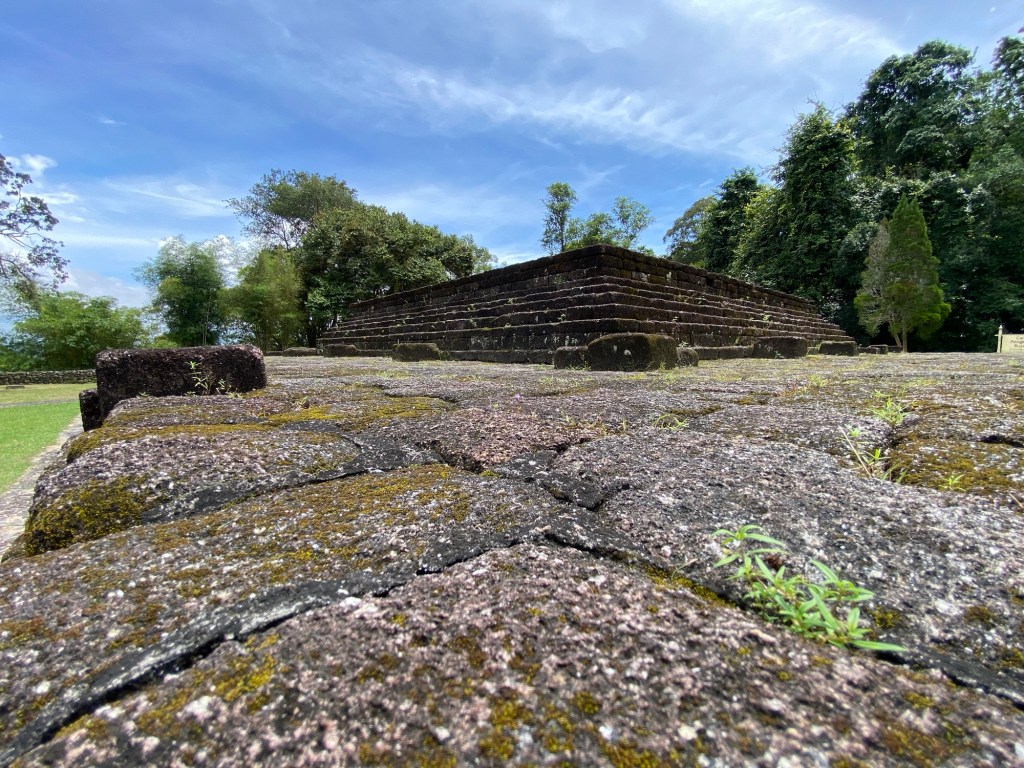
The current evidence on temples built in ancient Kedah indicate that only a small segment of Malays there at the time adopted Hindu-Buddhism

With the discovery of other galaxies, we now know that none of them move around a single centre. That is the current narrative — until a new discovery may come along to challenge it.

Recently, a protest was held outside the gates of a prominent public university against the organisation of a conference said to be discussing and defining the narrative surrounding ancient Kedah. The concern was that this narrative might be shaped by those who do not prioritise the interests of a particular race or religion.

Such fears are rooted in the opinions of individuals who have never been formally trained in the disciplines of History or Archaeology. As someone who has been specifically trained in History at a well-known local public university, I would like to explain why the protest was a fruitless exercise.

Evidence matters

Can anyone write about history? Certainly. You could even write a paper on the effectiveness of nuclear fission energy if you wanted to. However, there are several factors and conditions that must be fulfilled before your work can be accepted — especially by experts in the field. This includes the standards of evidence and sources you use, and how you interpret those findings.

Your sources must be empirical or academically peer-reviewed. If your references are merely social media posts, you may as well write a romance novel. You must adhere to ethical research practices and subject your findings to rigorous scrutiny by other experts to ensure they meet strict and credible academic standards.

If your writing is based on personal opinion, then it no longer qualifies as academic work. That is propaganda — or at best, baseless rhetoric.

Free from bias

Your research must also be free from bias. This means you cannot write to support one side or dismiss another. You must remain objective. We cannot fabricate a narrative and then create fictional evidence to support it. Historiography must be free from centrism of all forms — be it ethnocentrism, anachronism, political centrism, religious centrism, or other imbalances.

In the case of the aforementioned protest, it was driven by emotions rooted in ethnocentrism and religious centrism. Among the claims made was that the Malays of ancient Kedah practised Islam and not Hindu-Buddhism, as has been widely accepted.

However, there is currently no verified discovery that supports the claim that Malays in ancient Kedah practised a form of Islam or even an early version of it. We have discovered prehistoric human remains dating back to the Palaeolithic and Neolithic eras, such as the Pulau Pinang Woman (6,000 years ago), the Perak Man (11,000 years), and the Nenggiri Woman (14,000 years). Yet, none of these findings provide any evidence of Islamic practices — if anything, they suggest a belief system rooted in animism.

This also does not mean that all Malays in ancient Kedah were influenced by Hindu-Buddhism. Nearly all temples (candi) found in the Bujang Valley were built between the 4th and 13th centuries AD. They were discovered at ancient trading sites such as Sungai Batu, Kampung Pendiat, Pengkalan Bujang, and Kampung Sungai Mas. Only the temples at Bukit Choras and Bukit Batu Pahat were located slightly further inland.

All of them are small in size compared to Angkor Wat, Borobudur, Gedingsuro, or Welan temples. This suggests that the Bujang Valley temples served as places of worship for Indian and Chinese traders, and perhaps a small number of local Malays involved in international trade. They were not built for a large population of Hindu-Buddhist worshippers. In short, only a small segment of Malays in ancient Kedah adopted Hindu-Buddhism.

This is further supported by the absence of temples inland, including in the upper reaches of the Sungai Muda — a key trading hub — or after ancient Kedah declined as a major destination post-14th century. If the local population truly practised Hindu-Buddhism, more temples would surely have been found by researchers who have studied the area since the late 19th century.

Professors are not all-knowing

One of the individuals who frequently comments on ancient Kedah — especially Sungai Batu — is Professor Dr Nik Najah Fadilah binti Haji Yaacob, better known online as Professor Dr Solehah Yaacob. She is a professor of Arabic grammar at a public university in Gombak. She has not been formally trained in History or Archaeology.

I admire her dedication to studying history. And because she carries the title of “Professor”, many people understandably take her statements at face value.

In reality, a history graduate with a bachelor’s degree has greater subject knowledge than a professor whose field lies elsewhere. History students must study world history across various periods — from prehistory to proto-history, traditional history, and modern history. Professors, on the other hand, conduct focused research in their own specific fields, not across all disciplines.

This is why professors should understand the boundaries of their expertise. For example, I once had a discussion with Professor Emeritus Dr Anthony Milner, an Australian historian renowned for his work on Southeast Asia and Malaysia. His expertise is in traditional political history. He never claimed to be an expert in Malaysia’s proto-history, especially that of ancient Kedah, because that is not his area of study.

Therefore, I would prefer if Professor Dr Solehah would present her research to qualified experts for academic review, rather than promoting it on social media. Social media is not the place for academic validation. It would also be better if her research did not involve prophets unless she can provide credible sources. Otherwise, that is no longer history — that is propaganda.

As the Prophet Muhammad (peace be upon him) said: “Whosoever tells a lie against me intentionally then surely let him occupy his seat in Hell-Fire” [Sahih al-Bukhari (110)]

Unity over division

Disputes involving race and religion serve no benefit. Why must we boast about our supposed superiority over other ethnicities when Allah SWT considers all of us equal? Must we Malays be arrogant and see ourselves as holier than others? Are we somehow greater than Allah SWT?

If someone we mock ends up embracing Islam, does that not make them purer and more free of sin than we are? But how will they ever do so if we continue behaving like this?

We must accept narratives grounded in recent discoveries. As academics, we should keep an open mind. All historical research and findings should contribute towards the strengthening of our nation and its people — not towards sowing division or conflict between communities.

If there is new evidence or findings, they should be presented for academic review by others in the field. If accepted, that narrative should be acknowledged. What are we trying to take pride in — a fabricated past, or a history built upon proven facts? May we all be spared from pointless actions. – April 14, 2025

Captain Abdul Rahmat Omar (Rtd) is the Malay Consultative Council Bureau of Security, Defence, Public Order and Martial Arts chairman.

(This post was first published by Scoop )

Which Past Should We Preserve?

The Bukit Choras ancient Buddhist temple complex existed before Rajendra Chola ransacked the Srivijayan empire

The attempt by Nga Kor Ming to have Chinese new villages listed as UNESCO heritage sites has caused a tiff between the DAP and its partner UMNO.

The Chinese new villages were, in essence, concentration camps aimed at reducing and curbing contacts between the Malayan Communist Party terrorists and their sympathizers during the First Malayan Emergency (1948-60).

I agree with former Pulau Pinang Deputy Chief Minister and historian P Ramasamy who asked why are politicians and others merely concerned with rendering post-colonial historical sites under the umbrella of Unesco, or some other heritage bodies. There are sites in Kedah that have been discovered since the 19th century but have yet to be protected and recognized as UNESCO heritage sites.

The Bujang Valley in Kedah contains remnants of what is known as ‘Ancient Kedah’ that spanned from the Kra Isthmus all the way down to Beruas, Perak. It was a vassal state of the Srivijayan empire that was a confederation.

But, Ancient Kedah or Kedah Tua itself is subjected to claims and counterclaims based on racial and national supremacy. Recently, a friend asked me based on my elementary knowledge of the Pallava script as well as what I have learned from Ancient Kedah, what would be my most unpopular opinion of its history. My short answer would be “All of it,” and this will be my attempt at explaining the history.

WAS PENINSULAR MALAYSIA INDIAN?

No.

The Hindu temples in the Bujang Valley were constructed between the 11th and 13th century C.E (or A.D, whichever is the most familiar term to you). Even the Candi Bukit Batu Pahat, the largest ancient Hindu temple in Merbok which was thought by Quaritch Wales to have been constructed between the 7th and 8th centuries C.E, were constructed between the 12th and 13th centuries C.E, towards the end of the importance of Bujang Valley as an entrepôt.

The Cholas weren’t here in an expansion mode. Srivijaya was a Buddhist empire that was a vassal of the Sung Dynasty. It gave traders from China special preferences while taxing the ones from the Chola empire exorbitantly. Sick of this mistreatment, King Rajendra Chola invaded the Srivijayan entrepôts along what is now the western coast of Southern Thailand, Kedah, as well as the Srivijayan capital of Palembang in Sumatera in 1023 C.E and stayed for 66 years before, at least, the ruler of Ancient Kedah was restored.

The Cholas packed up and went back to India. By the end of the 13th century C.E, the Chola empire was defeated by the Pandyan.

There is no evidence of any existence of a major administrative or religious complex anywhere to support the theory of a Chola conquest in Kedah. Even P Ramasamy said that it was wrong to say that Cholas was an expansionist or imperial power in regard to the Malay Archipelago.

In terms of inscriptions, Pallava Grantha has always been the script for both Sanskrit and ancient Malay in this part of the world. The Devanagari script which was widely used in the Chola empire only existed around the 7th century C.E.

WAS PENINSULAR MALAYSIA HINDU OR BUDDHIST?

Neither.

The earliest evidence of Buddhism in Peninsular Malaysia are in Buddhist texts that made reference to two Buddhist monks coming to Ancient Kedah shortly after the third Buddhist council, which took place in the 3rd century B.C.E.

At the same time, however, the earliest archaeological evidence, found in the Bujang Valley, suggests the presence of a Hindu—Buddhist kingdom as early as the 2nd century C.E. From the 8th to the 13th century, the Malay Peninsular was under the influence of the Srivijaya empire, which was based on the island of Sumatera and which the Chinese monk I-Tsing described, in 671, as an important center for Buddhist learning with more than one thousand Buddhist monks.

But if we look at the locations of both ancient Hindu and ancient Buddhist temples, they were all located along or near the ancient coastline. Sungai Batu was an industrial port, Pengkalan Bujang, Bukit Batu Pahat, Kampung Pendiat, Sungai Mas were all entrepôts where traders gathered to make a living. Even Bukit Choras was located on the bank of an ancient river estuary.

Neither James Low, Quaritch Wales nor the modern researchers have found any evidence of the existence of ancient Hindu or Buddhist temples further inland. Furthermore, no temples were found to have been built in Ancient Kedah after the 13th century C.E, that is after the decline of the importance of Ancient Kedah as a maritime trading nation. This goes to prove that the majority of the population of Ancient Kedah practiced animism until the arrival and acceptance of Islam by the local ruler.

THERE EXISTED A GREAT MALAY KINGDOM THAT HAD TIES WITH PROPHETS AND SUPPLIED QUALITY IRON TO THESE PROPHETS

Very highly unlikely.

This would be in reference to the ancient iron smelting site in Sungai Batu , Merbok. This site was dated to around 4th century C.E. At least, that is what has been confirmed by samples collected during excavations performed there.

However, an outlier sample dates to between 535 B.C.E and 788 B.C.E was found, and has been the basis of claims that Sungai Batu is the oldest civilization in Southeast Asia, and that the site is proof that the Malays were a great race. This was used to counter claims that Kedah (and Peninsular Malaysia) was once Hindu under Chola rule.

Outliers are very common phenomena in archaeology. They can be caused by numerous effects such as contamination with older samples, inherent variation between different sources of carbon, differences in Carbon-14 intake by plants, and other factors. This is why archaeologists normally do not base any conclusions on a single date; there are instead various mathematical formulae for deriving a range of possible dates (rather than a single date) from a group of samples.

According to archaeologist Professor Dr John N. Miksic, who is Professor in the Southeast Asian Studies Department, National University of Singapore, the first known trading port in the Malay Peninsula formed in 4th century BCE. The site is now in a village in South Thailand called Khao Sam Kaeo.  This area at that time was probably inhabited by Malay speakers. It was on the east coast of the Peninsula. Artifacts there in addition to localy-made items came from India and south China (which at this time was still inhabited by people whom the Chinese called the Yueh, which can be transliterated as Viet).

He said that the oldest evidence of ports in Kedah appeared in the 5th century CE in the form of inscriptions. Radiocarbon dates from Sungai Batu span a wide range of dates, only one of which originates from the 8th century BCE. This could be an erroneous result due to random variation in dosage of radiation from the soil, the presence of old wood in a younger soil stratum, or just possibly the remains of very early metal working or other human activity. It does not however date any trading activity. The oldest pottery in Sungai Batu is over 1,000 years later.

I don’t feel supreme by knowing that the people of Sungai Batu left 50 or 500 or 500,000 or 2,000,000 Tuyeres behind. Unless there is a monument like the one in Bumiayu or Batujaya or Angkor or Ayutthaya, then treading on the grounds of Sungai Batu is similar to walking on the grounds where a demolished illegal pottery factory once stood.

I won’t even attempt to comment on the story of Abraham marrying a Cham princess, a story that was conjured up without any documentary or archaeological evidence.

SO, WHICH PAST SHOULD WE PRESERVE IF THERE IS NO ONE RACE THAT WAS GREAT?

Pallava the script came from the Indian subcontinent and was widely used here. Inscriptions using the Pallava script have been found in both Sanskrit and Ancient Malay. But to say that people in the Peninsular were Hindus, Buddhists or Indians because of the use of the script is as naive as saying Malaysians are Romans because we use the Latin alphabets.

If we look closely at the existence of the Hindu and Buddhist temples, as well as the Tuyeres left behind at Sungai Batu, the greatness of the people back then lie in their tolerance for each other. The temples were not large in size, but must have been enough for traders from India and China to pray in, while waiting for favourable winds to take them back to whence they were from. They must have been built to attract traders, just as how the government-of-the-day would create a favourable environment for investors to conduct businesses here. The Sungai Batu industry could not have thrived without local manpower.

The above points to only one thing – the great tolerant people of Ancient Kedah were ruled by wise leaders. That is the greatness of the people. That is what we should preserve and learn from. That is the narrative that we Malaysians should be proud of.

The Outlier Sungai Batu Is

Dr Shaiful Idzwan Shahidan pointed out that the sample that linked the Sungai Batu archaeological site to 788 BCE is an outlier

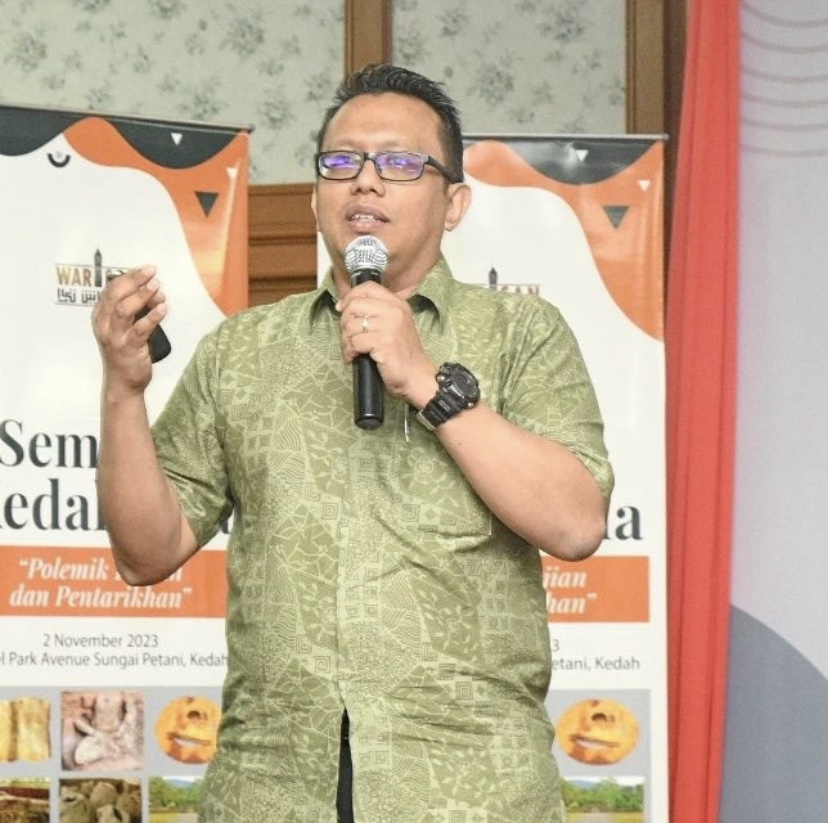
The Malaysian National Heritage Department (JWN) organised a full-day seminar on Ancient Kedah: Research and Dating Polemics in Sungai Petani on 4 November 2023. Among the speakers was Dr Shaiful Idzwan Shahidan, a consultant at USAINS Unitech.

Dr Shaiful Idzwan is an advocate of the Bayesian method in archaeology – an explicit, probabilistic method for combining different sorts of evidence to estimate the dates of events that happened in the past and for quantifying the uncertainties of these estimates.

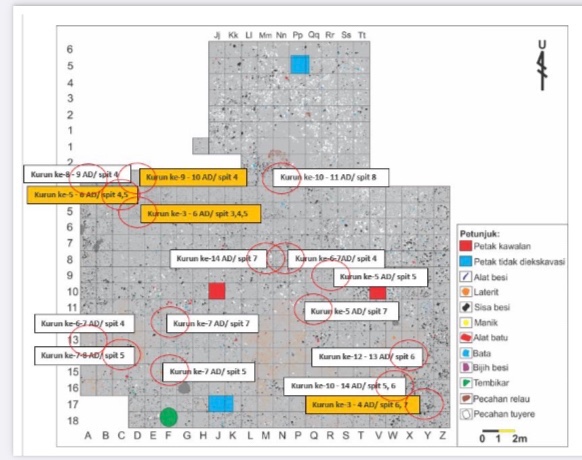
In answering the polemics of research and archaeological dating especially related to the Sungai Batu Archaeological Complex (SBAC), he said that the radiocarbon dating of the SB2H site where the 788 BCE sample was found (sample 516413), should not be compared directly based on the depth of the spit because the level of the spit is different according to the actual contour of the site before being excavated.

Dr Shaiful Idzwan said that the dating obtained from the yellow plots is reliable because it is representative of the whole site from the beginning until the final layer of culture.

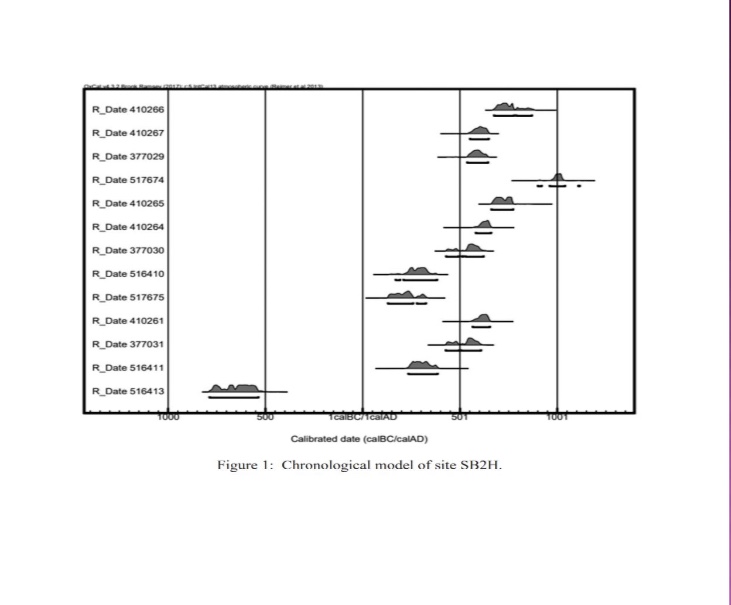
A chronological model of the SB2H site showing the calibrated dating of samples from the site is further evidence that the 788 BCE sample is an outlier.

An outlier is an observation that lies an abnormal distance from other values in a random sample from a population.

In fact, sample 516413 does not specifically point to 788 BCE as claimed, but has a range between 788 BCE to 537 BCE). However, he said that any finding needs to be adapted to the historical and cultural context.

In this case, the rest of the SBAC samples have overwhelmingly been dated to the 2nd to the 8th century CE. This range fits into not just the Bujang Valley narrative, but coincides also with the existence of other maritime polities such as Srivijaya, China and India, as well as nations that had once traded with Ancient Kedah.

A chronological model of the SB2H site at SBAC showing sample 516413 as an outlier

This narrative has been peer-reviewed and accepted by experts on Southeast Asian archaeology.

We are aware that historical narratives can change with new findings. HG Quaritch Wales, the man who discovered the Bukit Batu Pahat temple in 1936 dated the temple to the 7th to 8th century CE based on the data that was available to him during that era.

However, more recent scholars have revised that to the 12th to 13th century CE.

The onus is on the JWN to come up with a narrative that has been proven, peer-reviewed and agreed upon by experts in Southeast Asian archaeology. Else, the nation’s historical narrative will be laughed upon by other nations.