Ever since the disappearance of flight MH370, Malaysia has come under intense flak and have been accused of not being forthcoming nor transparent with information related to the search for and investigation into the flight.
As we all know, the disappearance of the 370 is unprecedented. In past incidents, demands flow when planes are hijacked; debris is found at crash sites. In this incident, we still don’t know how flight MH370 ended, and we can only guess where the plane might be. A coalition of nations is now searching for the airplane, and numerous false alarms have emitted from the search teams, but somehow Malaysia foots the blame for all that.
We cannot be filling in the information gap with fantasies that would lead to even worse form of speculation, but somehow the media, a foreign one in particular, is not contented with what has been presented to them thus far. This particular media even compared the lack of flow of information in the 370’s case with that of the Asiana crash at the San Francisco airport (SFO). Whether or not ethical reporting or common sense are present in that organisation, you cannot compare the 370 to the Asiana crash. Of course information was in abundance in the latter but it is only because it crashed at the airport. In the 370’s, we do not even know where it went down, let alone how! However, it would be futile to argue about ethics with a media organisation that could even fill in the information gap with absurd theories such as the Black Hole and the existence of another Bermuda Triangle.
The hunger for ratings and sensational news gets the best of this organisation. A month after the disappearance, it ran a story to suggest that the Royal Malaysian Air Force (RMAF) had scrambled fighters at 8am on 8th March 2014 to search for the missing airplane. I did a quick check with friends in the RMAF and they denied that fighters were scrambled. This is reinforced by categorical official denials by the Minister of Defence as well as by the RMAF itself.
This media then even suggested that the 370 flew at 4,000 feet to evade military radar near Pulau Perak only to re-appear 120 nautical miles away heading north-northwest. I hope that this media organisation realise that the USAF has spent trillions of US Dollars to acquire stealth aircraft such as the B-2, F-117 and the F-22. If a Boeing 777 could evade from military radar then the USAF was suckered into spending so much when they could have had a much cheaper solution in the 777.
Every time there is a press conference, although the information given, if at all available, is always about the search and rescue effort. However, all the questions posed by journos are about finding out who is to be blamed for the 370’s disappearance. More than twice that I have heard a journalist asking the CEO of Malaysia Airlines, Ahmad Jauhari Yahya, if he would resign. Had the journalists done their homework, Pierre-Henri Gourgeon only left Air France in 2011, two years after the Flight 447 tragedy, and only because of the merger between Air France and KLM.
In other incidents, airlines capped the duration of assistance rendered to the families affected by an aircrash to only one week. This has been more than a month yet MAS is still supporting the families. I am disgusted with people who are so thankless towards MAS despite the fact.
The media should know better that this plane is still missing and not a lot is known about it. As such, information may be scarce and not free-flowing. If there is nothing to be reported, then don’t report or speculate. You won’t do justice to the passenger, crew and their family members. There are other pressing issues that could be covered such as Crimea, the Rohingyas. Running down a country just because it hasn’t given you the information needed to increase your ratings certainly shows your immaturity and malicious intent.
On Sunday, 23rd Monday, 24th March 2014, the Malaysian Prime Minister announced that based on the findings of the UK-based Aircraft Accidents Investigations Board it was concluded that the flight of the MH370 ended in the southern Indian Ocean.
This was met by heavy criticism in particular by families and relatives of the passengers who are in Beijing. This is understandable. As humans, we always cling on whatever glimmer of hope there is that our loved ones will somehow appear unscathed. I went through this when my brother passed away three months ago. I kept thinking that this was all a bad dream and that I would wake up to my brother’s jokes, laughter and hugs again. However, such hope should be balanced with situational logic – the acceptance of reality and that should help overcome the pathological grief a person would have. The sooner one accepts reality, the sooner the trauma will heal.
This pathological grief will get prolonged not only if one refuses to accept reality, but also by irresponsible acts to promote hope. Hope is the act of prolonging the arrival of the inevitable. I will here chide the opposition parliamentarians who call upon the government to provide physical proof that the MH370 had indeed crashed. May I just forcefully drag everyone to the reality that the aircraft cannot fly for 19 days; based on the Doppler effect triangulation the last possible location of the aircraft points to the extremely unforgiving southern Indian Ocean. If anyone, just any one person could survive the extremities of the whole situation, then let us just call that a bonus from God. While hope is good to a certain extent, my only hope is for the black boxes to be located before the batteries run out.
The search for debris is not going to be an easy task even on a normal day. Australia’s Prime Minister has described it as “looking for a needle in a haystack, but having to find the haystack first.” I would take that a step farther by saying it is like looking for hundreds of pieces of one single needle in a haystack that has yet to be found. How is that as a perspective? Now add nine-metre waves with lots and lots of whitecaps into the equation.
I take offence at a statement by representatives of the families in Beijing, as well as members of the foreign media, AND the Quislings amongst us here in Malaysia that we (Malaysia and its military) have murdered the passengers and crew, and that we have either been hiding or not been forthcoming with information or both. Malaysia has been providing all information pertaining to this incident on a daily basis, and even to the extent of sharing sensitive military data that has jeopardised its defence just so to render search and rescue efforts more effective. With the information made available to me as well as by Andak Jauhar’s analysis of the MH370 incident I shall draw a timeline so readers would understand why was the SAR conducted in the South China Sea, when exactly was SAR expanded to the west of Peninsular Malaysia, and how fast did information flow in. All times quoted in this timeline is Malaysian time (UTC +8):
08 March 2014
0041 – MH370 took off from the Kuala Lumpur International Airport with 227 passengers and 12 crew members bound for Beijing with an endurance of approximately eight hours.
0107 – the Aircraft Communications Addressing and Reporting System (ACARS) made its last transmission on the aircraft’s performance. All systems were running as per normal. Next transmission was due at 0137 hours.
0119 – a person believed to be the co-pilot acknowledged the handing over of the MH370 from Malaysia’s Flight Information Region (FIR) to Vietnam’s FIR. His last words were, “Alright, goodnight.”
0121 – the secondary radar at Subang’s Air Traffic Control centre lost contact with the MH370 over waypoint IGARI at 06.5515N 103.3443E, after a deliberate act of turning off the transponder as well as other communications equipment. The aircraft was then at 35,000 feet above sea level. However, the aircraft continues to be tracked by the Royal Malaysian Air Force’s (RMAF) primary radar and had its flight path towards waypoint VAMPI monitored and recorded by RMAF’s Air Defence Centres.
0215 – RMAF’s primary radar consistently monitored the path of the MH370 from waypoints VAMPI, GIVAL before finally losing track of it after waypoint IGREX while flying at 29,500 feet above sea level.
As a Contracting State to the ICAO Convention of 1944, Malaysia assumed the role of the Rescue Coordination Centre under Annex 12 of the Convention for the MH370 Search and Rescue efforts because the MH370 had yet to enter Vietnamese FIR control (its radar had not detected the MH370 yet when she changed her flight path). Based on sightings of debris, the Search and Rescue efforts concentrated at its last known position near waypoint IGARI.
0630 – MH370 was to have arrived in Beijing.
0811 – the last handshake between the MH370’s navigation system and an INMARSAT satellite was made.
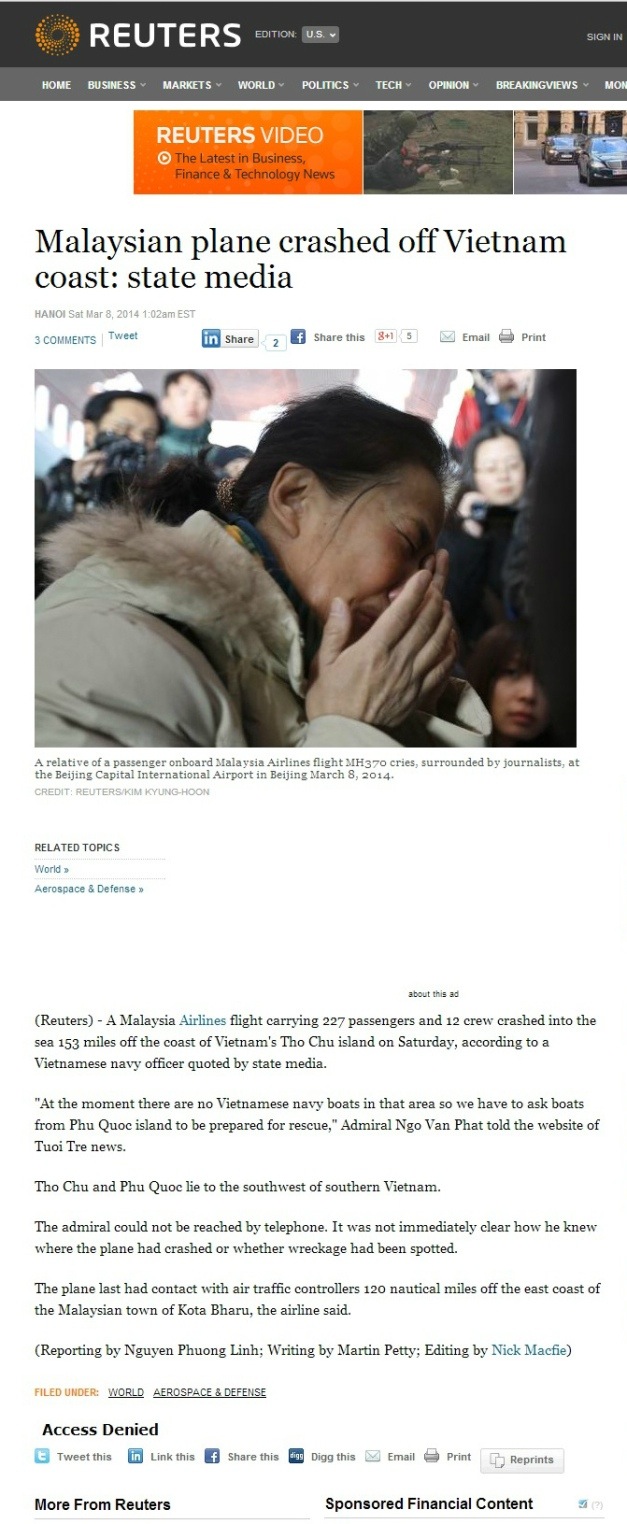
1017 – Rear Admiral Ngo Van Phat of the Vietnamese Navy announced that the MH370 may have crashed about 153 nautical miles (300km) from Tho Chu island, near Ca Mau. This statement was carried by Tuoi Tre News and was subsequently picked up and released by Reuters at 1302 hours, sending SAR assets into the area.
1730 – based on the flight path monitored by the RMAF, the SAR effort was also expanded into the Strait of Malacca.
09 March 2014
– search around Tho Chu island failed to yield anything.
– the SAR efforts were expanded into the Andaman Sea. The RMAF’s sensitive radar data recordings have been shared with the SAR authorities.
10 March 2014
1343 – Vietnamese news agency Tuoi Tre reported that a passing aircraft from Singapore spotted an orange object possibly a liferaft or a lifejacket 177km northwest of Tho Chu island. SAR assets deployed later identified this object as a cable wrap.
11 March 2014
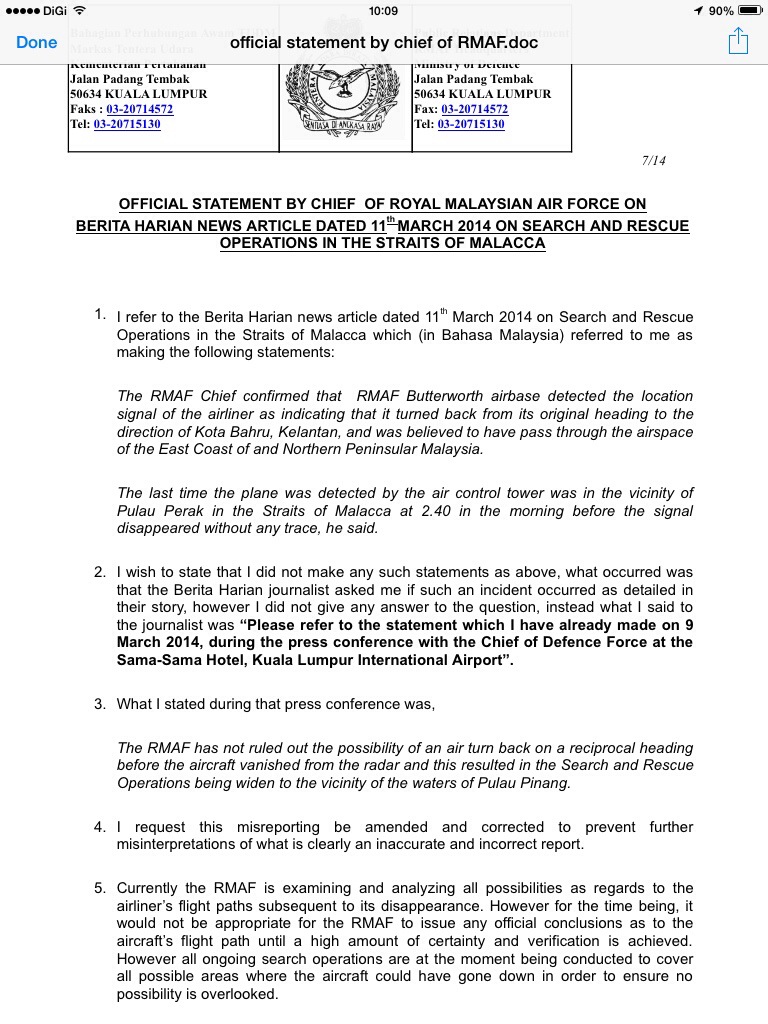
The Malaysian Chief of Air Force issued a press statement refuting a report by the Malaysian daily Berita Harian that quoted him as supposedly saying the aircraft had flown towards Pulau Perak.
12 March 2014
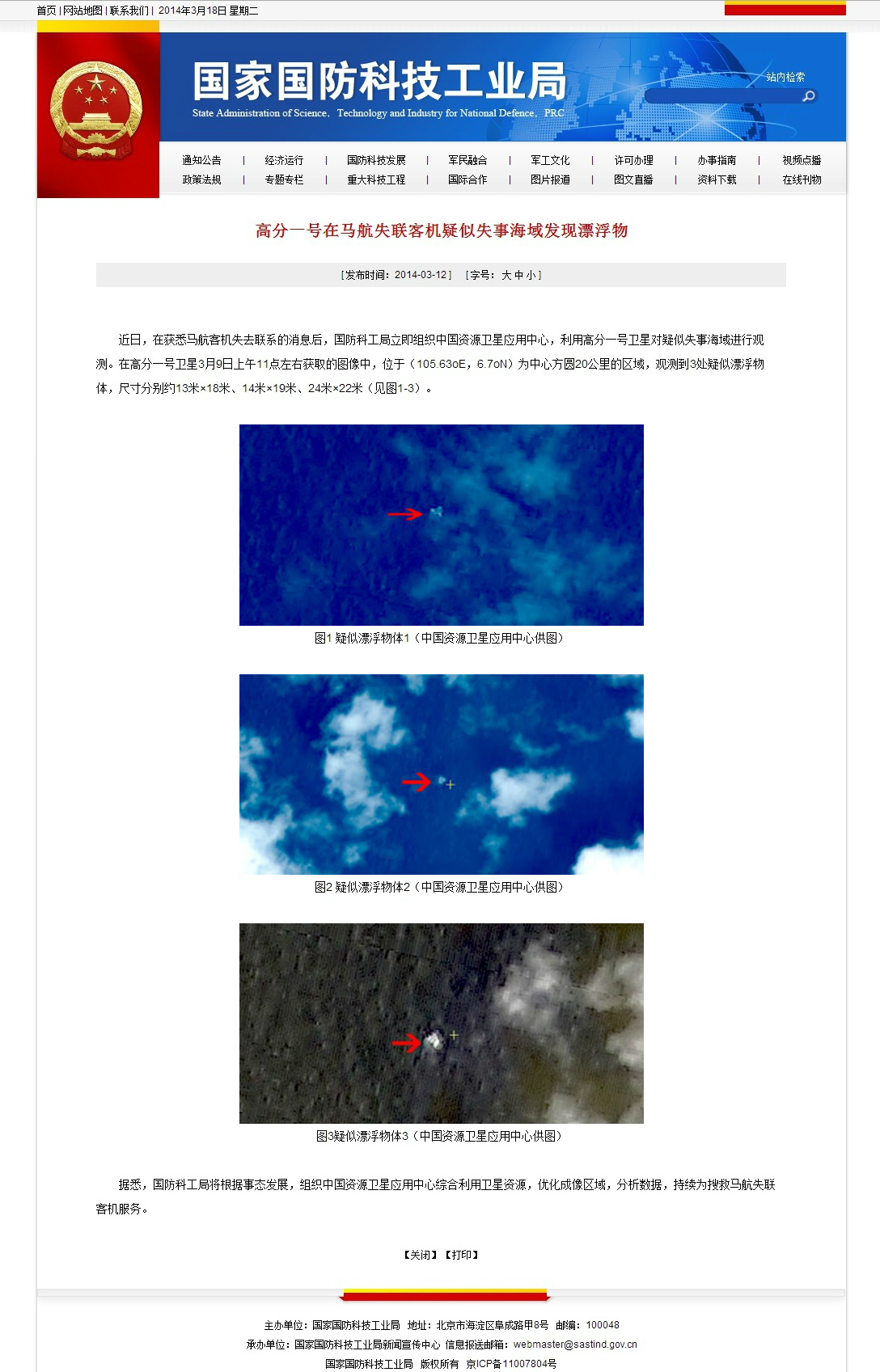
The official website of the State Administration of Science, Technology, and Industry for National Defence of China (SASTIND) showed pictures of three objects spotted in the South China Sea believed to be related to the MH370. These photos were then shown to the public by the China Central Television (CCTV), Xinhua News Agency, CNN, BBC and also by other foreign news agencies. According to SASTIND, these images were taken at latitude 6.7N 105.65E at 11.00am on 9th March 2014.
SASTIND website showing debris thought to be related to the MH370
Hence, SAR assets were again sent to verify the findings which we now know were false sightings, but not before more time and concentration of vital resources have been wasted.
14 March 2014
– search was expanded into the Indian Ocean.
15 March 2014
The Malaysian Prime Minister announced that the object tracked by the RMAF’s primary radar was indeed the MH370. This conclusion was made based on processed data acquired from INMARSAT and concurred by the FAA, NSTB, AAIB and the Malaysian authorities.
20 March 2014
The Australian Prime Minister announced satellite images showing large debris in the southern Indian Ocean. The image was taken four days earlier.
22 March 2014
The Chinese government announced that its satellite had found debris in the southern Indian Ocean. That image too was taken four days prior to the announcement.
24 March 2014
The Prime Minister of Malaysia announced that based on triangulation of handshakes between the MH370 and satellites, the flight ended in the southern Indian Ocean.
The rest is academic.
Epilogue
The timeline displayed above shows how Malaysia has, from Day One, been moving as fast as it could to get to the correct pointers only to be side-tracked by false and unverified sightings. Malaysia has also been sharing everything, and literally everything including data of its sensitive military capabilities, as well as air bases so the search and rescue effort would benefit the best out of the information made available to them by the Malaysian authorities.
The timeline above also displays the average time of four days needed for satellite images to be processed before they can be safely suggested to the search and rescue teams.
What the timeline above suggests is that while the authorities are working hard to find the missing aircraft, the families as well as the public in general ought to exercise patience and restraint in their quest to know what happened. The media should be more responsible in reporting the incident as well as the search and rescue efforts as not only will the effects be adversely negative, but irresponsible reporting provides false hopes to the family that are put on an emotional roller-coaster ride on a daily basis.
And to those who call themselves Malaysians but continue in bashing whatever effort the government offers in bringing this episode to a closure, I doubt you qualify even a place as a zoological display for despicable animals.
This posting is made with the above in mind. A lot has been said about the disappearance of the MH370. Most of what has been said are purely speculations, with some that might have qualified to be nominated for best screenplay at the Academy Awards. I, too, have some idea of what might have happened but I put them aside so I could listen to the daily press conference with an open mind. I will also attempt to maintain some form of ethics because I also have the feelings of the family of the passengers and crew in mind when I write this.
The Royal Malaysian Air Force (RMAF) has come under intense attack by both foreign and local media alike. The Air Defence system has also come under intensive fire by members of the opposition party for its failure to detect the MH370 upon deviating from its intended path and the subsequent failure to scramble our fighters. Some even say our air defence personnel were asleep on the job, and that at least one air defence radar was not working.
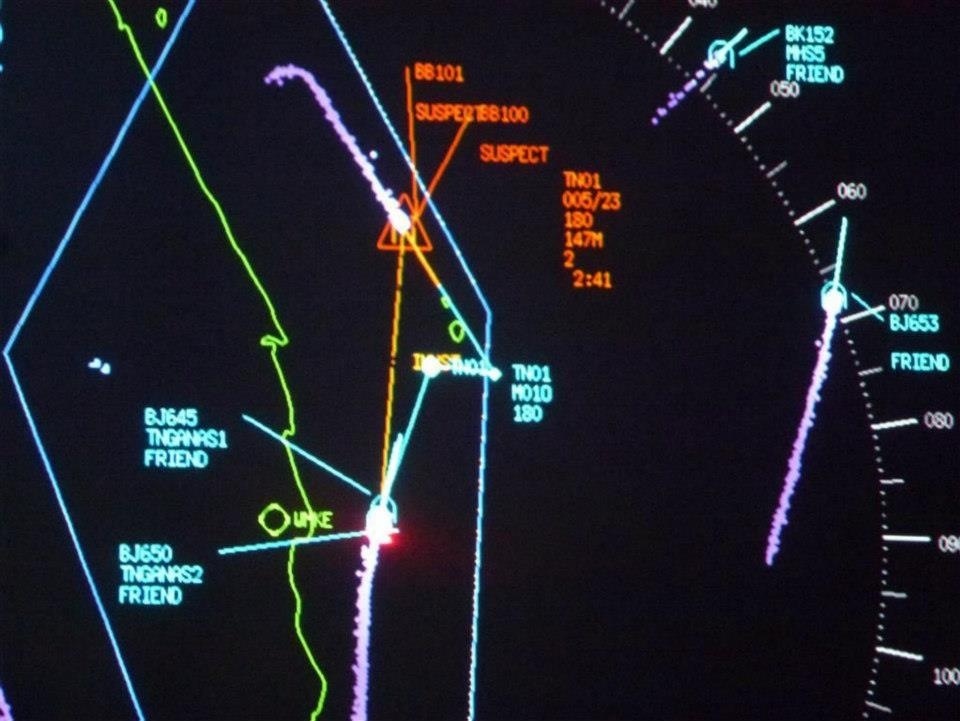
It is easy for keyboard warriors to criticise the RMAF without knowing what or how our air defence systems work. Perhaps when they think of an air defence system, they had the following in mind:
Why I write this is to give a general understanding of how our air defence system works, and what really happened that night. I have been generally quiet on this matter as at the time of writing, I am grieving the passing of my younger brother exactly 100 days today. But duty calls, I guess.
I left the RMAF almost 20 years ago. A handful of my squad-mates are still serving senior officers. Back in September 2012, a number of bloggers (including I) and some senior editors of the Malaysian media (including those that are opposition-leaning) were invited to a media open day organised by the then Minister of Defence. Everything was displayed to us, including some of the very sensitive information, so that we could acquire enough background and understand how the RMAF works. Out of the 80 or so people who were there that day, I guess I am the only one to come to the defence of the RMAF.
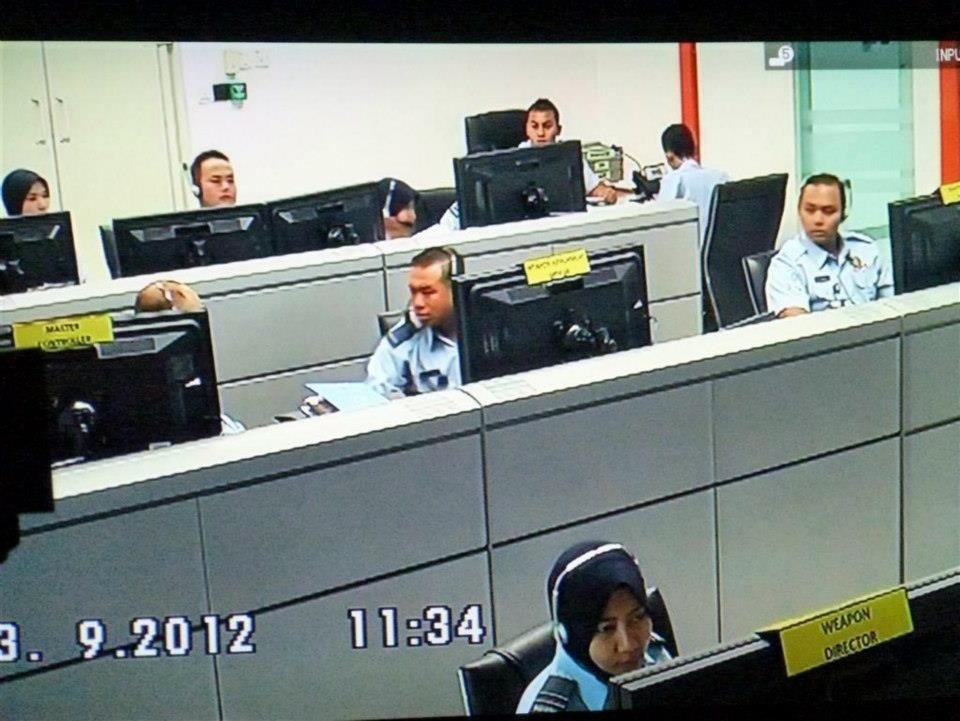
First of all, this is how a typical air defence centre looks like from the inside:
It is no longer the one-man show you see in the movie “Tora! Tora! Tora!” There are several air defence centres around Malaysia covering both the Peninsula, Sabah, Sarawak and FAR beyond. I have a photo of how far our air defence radars reach, but although I was allowed to take photos of the main display, I opt not to put it up here. Suffice to say, what we have is enough to tell us way ahead if a hostile aircraft is approaching our airspace. When we were at the air defence centre, we were shown a live interception of two bogeys by two of our MiG-29N interceptors.
If I may say, what we all saw on the screen was what would have been seen by all the operators of the other RMAF Air Defence Centres around the nation that if one failed, it would not jeopardise what the others could see.
During this display, not one journo nor blogger could come up with a sane question related to what was shown to them. In the end, I and a few of my blogger friends had to ask the questions to get the RMAF clarify on issues that the media and bloggers have been attacking them on. Even the Deputy Chief of Air Force, Lieutenant General Dato Seri Haji Roslan bin Saad thanked me for my participation and for helping the RMAF clarify some issues.
Let us go back to that wee hours on Saturday, 8th March 2014. MH370 took off from Kuala Lumpur International Airport at 0041 hours (Local Time). At 0107 hours, the Aircraft Communications Addressing and Reporting System (ACARS) transmitted that all was well with the aircraft.
The aircraft soon after arrived at waypoint IGARI, about 78 nautical miles from Redang island, bearing 056 degrees) which is a point in the South China Sea between the Malaysian border with Vietnam. At this point, Lumpur Flight Information Region (FIR) would hand over the control aircraft to Vietnam. At 0119 hours, a person believed to be the co-pilot transmitted the final vox transmission, “Alright, good night.” At 0122 hours, the aircraft disappeared from secondary radar coverage without any distress call suggesting its transponder had been switched off by someone on the flight deck. However, it was only at 0240 hours that Malaysia Airlines was notified.
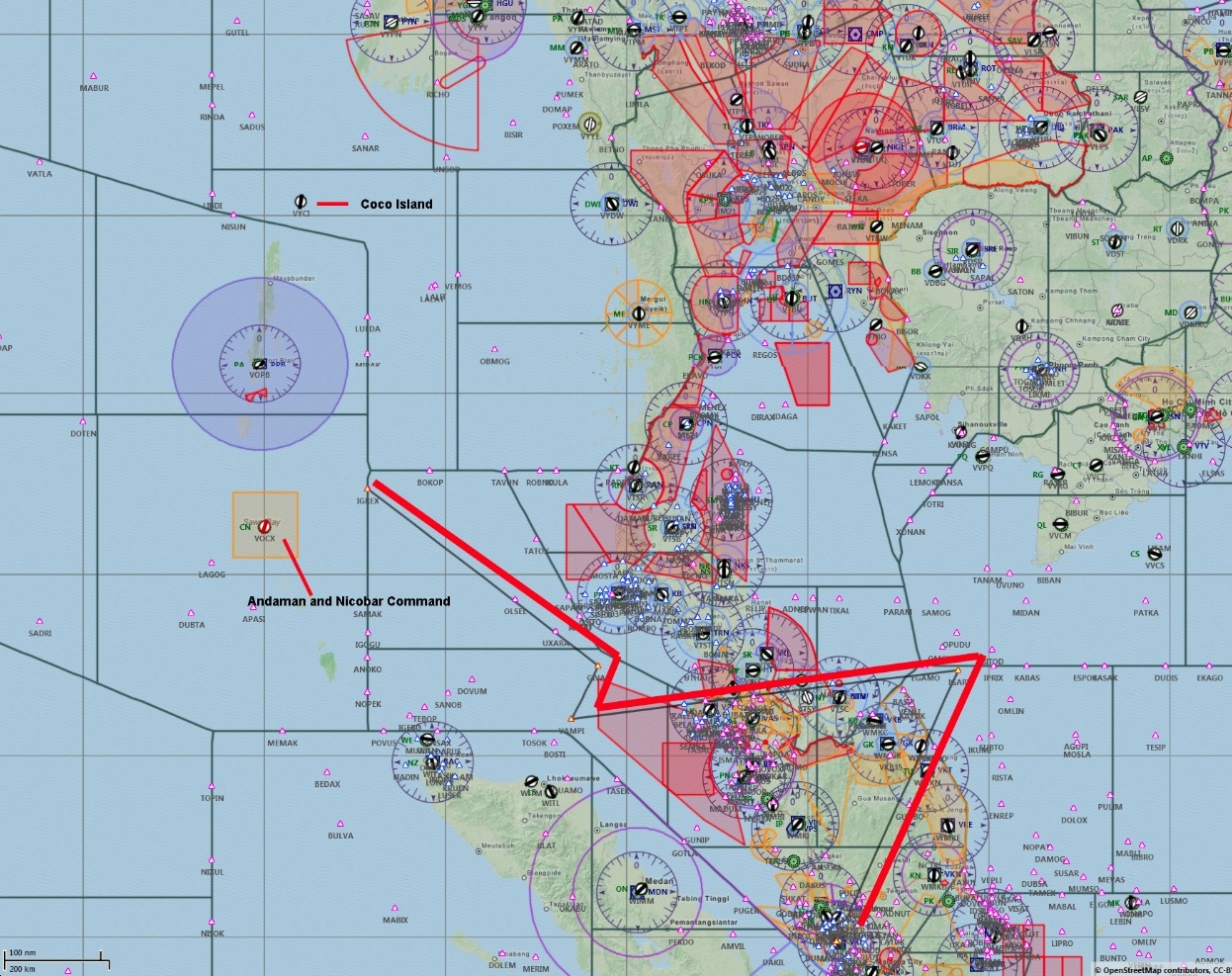
The RMAF Air Defence radars saw the MH370 tracked West Southwest to waypoint VAMPI (68 nautical miles East Northeast of Lhokseumawe, Indonesia), then Northeast to waypoint GIVAL (69 nautical miles South Southwest of Phuket International Airport) before tracking Northwest towards waypoint IGREX (100 nautical miles East Southeast of Car Nicobar airport on India’s Nicobar Islands), the last known position according to the primary radar. Where MH370 went to after this point is unknown at this point, but I believe the Indian Air Force’s Andaman and Nicobar Command’s primary radar there would have caught the MH370 in its scope.
So, if the MH370 was seen to deviate from its intended course, why didn’t the RMAF scramble its fighters to intercept the airliner?
Every bogey (unknown aircraft) would be tagged by an Air Defence Officer and this data will be processed to ascertain whether it was a threat to air defence or otherwise. In the case of the MH370, it was not regarded as hostile. Is this a weakness on the part of the RMAF? Mind you three jetliners took down the World Trade Centre towers as well as the Pentagon in the sophisticatedly-defended United States of America.
Should our fighters have been scrambled? If you remember, the MH370 was no longer in our airspace. When the MH370 tracked West Southwest from IGARI to VAMPI, she did not cross Malaysian airspace. She flew over Thai airspace and into Indonesian airspace, then tracked up to GIVAL near Phuket and subsequently to IGREX near India’s Nicobar Islands (see below).
When she tracked from IGARI to IGREX she entered an area with two Royal Thai Air Force fighter bases namely the RTAF 7th Wing in Surat Thani and the 56th Wing in Hat Yai. They, too, were not scrambled. Nor were the fighters of the Indonesian Air Force (TNI-AU) scrambled from Lhokseumawe or Banda Aceh in Aceh, or Suwondo in Medan. If you think the Indonesians are as incapable as the RMAF, they forced a US military transport down without scrambling their fighters at their base in Banda Aceh on 20th May 2013 for entering Indonesian airspace without proper clearance.
The Chief of Air Force, General Tan Sri Dato Seri Rodzali bin Daud have explained that the RMAF did not see the need to scramble its fighters as the blip on the primary radar was deemed not hostile, and that there was nothing wrong with the air defence system. I just find this attack on the RMAF as another cheap publicity shot by a bunch of losers who do not know how things work and why, and would just take pot shots and see what gets hit.
I know the RMAF I see now is a far advanced RMAF than the one I left almost 20 years ago, and I have faith in the officers, men and women in their capability to defend this nation. I cannot say the same for the group of losers bent on hitting out at any institution of His Majesty Yang DiPertuan Agong.




 SeaDemon Says
You must be logged in to post a comment.