Malaysia’s Next Fighter Is Only Part of the Answer

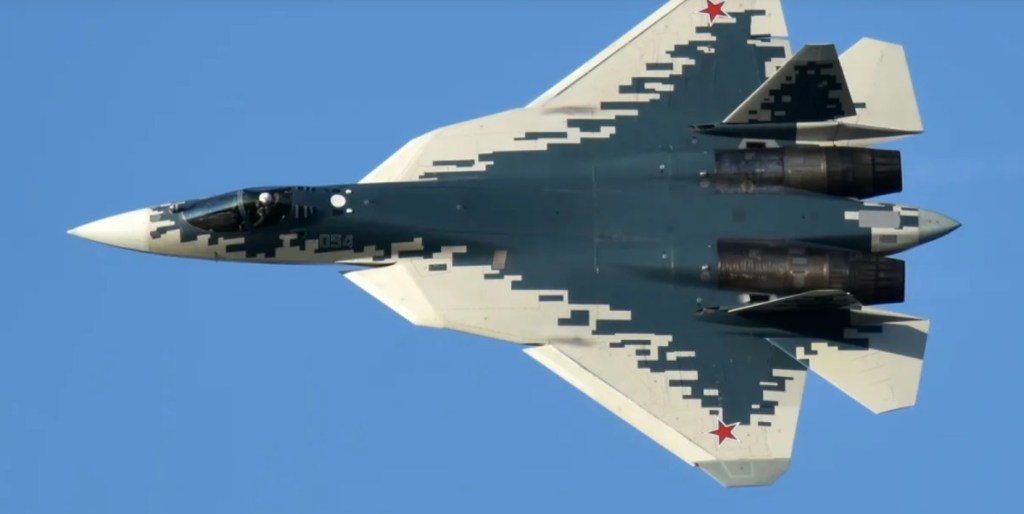
Against a future threat built around stealth fighters, long-range missiles and networked sensors, the RMAF’s decisive investment may be the system surrounding its MRCA—not merely the aircraft itself. (Image courtesy of regtechtimes.com)
Against a future threat built around stealth fighters, long-range missiles and networked sensors, the RMAF’s decisive investment may be the system surrounding its MRCA—not merely the aircraft itself.

Ask any Air Defence operator in Malaysia, their dream would be to have eight aircraft on Alert 15 status with the pilots remain suited up in nearby ready rooms while maintenance crews maintain pre-flighted jets on the tarmac. In the digital era, this would probably be the best case scenario save for, perhaps Alert 5, if they are already on Quick Readiness Alert. Gone are the days when Malaysia could scrambled fighters with analog systems in just two minutes.

But since having eight aircraft on Alert 5 can, theoretically, be achievable once the Royal Malaysian Air Force receives its eighteen advanced KAI FA-50M Block 20 light combat aircraft from South Korea beginning later this year, what would back these as the mainstay of Malaysia’s air power projection?

“The question is no longer which fighter is best. It is what air-defence architecture gives Malaysia’s fighters the best chance of surviving, seeing and fighting in a contested battlespace.”

Malaysia will eventually have to make one of the most consequential defence procurement decisions of the coming decade: what should replace the Royal Malaysian Air Force’s Su-30MKM and F/A-18D fleets? Defence Minister Mohamed Khaled Nordin said in May 2026 that evaluation of a new Multi-Role Combat Aircraft (MRCA) is expected to begin around 2030, with the existing Sukhois and Hornets expected to leave service around 2035. CAP55 envisages two MRCA squadrons, while the first FA-50 light combat aircraft are due to enter the force from the end of 2026.

It is tempting to frame the coming competition as a familiar beauty contest among aircraft: Rafale, F-15EX, Eurofighter Typhoon, F-35A, or perhaps a renewed Russian proposition. Each offers a different combination of range, payload, sensors, weapons, survivability, industrial access and political conditions. Yet by the time Malaysia makes its decision, asking which aircraft is “best” may already be the wrong question.

The reason is China’s rapidly changing combat-air ecosystem. Open-source assessments by the Royal United Services Institute estimated roughly 300 J-20 fifth-generation fighters in service by mid-2025, with production accelerating sharply. More important than the number alone is the combination of low-observable aircraft, advanced electronic warfare, datalinks, airborne and ground sensors, and increasingly capable long-range air-to-air missiles such as the PL-15, with the PL-16 and PL-17 adding further depth.

A Malaysian fighter operating over the South China Sea therefore cannot be considered in isolation. A conventional fighter may possess an excellent AESA radar and a formidable beyond-visual-range missile, but if an adversary’s wider sensor network detects, identifies and distributes its position before it can establish a sufficiently precise track on a low-observable opponent, the tactical contest has already begun on unfavourable terms.

The May 2025 India-Pakistan aerial fighting offered a useful warning. Reuters’ subsequent reconstruction of the engagement that resulted in the loss of an Indian Rafale emphasised not simply the performance of Pakistan’s Chinese-made PL-15 missile, but the kill chain around it: sensors and datalinks helped create the firing opportunity. The lesson for Malaysia should not be reduced to “one missile defeated one fighter.” The more important lesson is that a network can magnify the effectiveness of the aircraft and weapon connected to it.

What the candidates actually offer?

The Rafale remains an attractive balanced proposition. It combines a sophisticated electronic-warfare suite, Meteor beyond-visual-range missiles, multirole and maritime-strike capability, and twin-engine redundancy useful for extensive over-water operations. Its weakness in the specific J-20 problem is not that it is an inadequate fighter, but that it is not a very-low-observable aircraft. Against a stealthy opponent supported by a mature sensor network, first detection and first shot become harder to guarantee.

The Eurofighter Typhoon brings exceptional air-to-air performance, strong kinematics and Meteor. It is an outstanding interceptor and has matured into a capable swing-role aircraft. But it confronts broadly the same detection-asymmetry problem as other non-stealth fighters.

The F-15EX approaches the problem differently. Its virtues are endurance, a powerful radar, very large weapons capacity and the ability to carry a substantial number of air-to-air missiles. In a networked force it could be especially valuable as a heavily armed rearward “missile truck,” receiving targeting information from other sensors rather than having to penetrate deepest into the contested area itself. Its size and radar signature, however, make it a poor platform for trying to out-stealth a J-20.

The F-35A is qualitatively different because low observability, passive sensing, sensor fusion and networking are central to its design. It would not make the J-20 problem disappear, and public information cannot support simplistic claims about which stealth fighter would detect the other first. But the F-35 addresses the central operational problem more directly: surviving and gathering information in a battlespace where the opponent is also trying to minimise its detectability. For Malaysia, the complications would include US approval, security requirements, infrastructure, sustainment arrangements and long-term dependence on the F-35 support ecosystem.

A renewed Russian option would have one obvious Malaysian attraction: the RMAF already possesses deep experience with the Flanker family. Malaysia could conceivably seek a much more ambitious industrial arrangement involving local manufacture of selected spares, deeper engine and avionics overhaul, and perhaps a regional maintenance role. Russia has accepted significant localisation elsewhere. But a new major Russian combat-aircraft purchase would introduce sanctions exposure under the United States’ CAATSA framework, while support chains and access to Western technology would have to be weighed carefully. US guidance has historically distinguished routine maintenance and spares for existing Russian equipment from major new purchases or qualitative upgrades.

The real procurement is the network

The more important conclusion is that none of these aircraft should be bought as an isolated answer. Eighteen sophisticated fighters without the systems that allow them to see farther, communicate securely, remain airborne longer and survive enemy targeting would represent an incomplete investment.

Malaysia’s geography makes this especially important. Peninsular Malaysia and Sabah and Sarawak are separated by the South China Sea. A small fighter force must cover enormous distances and cannot be everywhere at once. Airborne early warning and control (AEW&C), modern ground-based surveillance, secure datalinks, electronic warfare, aerial refuelling, dispersed and hardened operating bases, ground-based air defence and adequate stocks of modern beyond-visual-range missiles all multiply the value of each fighter.

The RMAF is already moving in this direction. In June 2026, the service said air-defence radars were being established at Bintulu, Bukit Puteri and Bukit Lunchu, together with an air-surveillance radar on Pulau Layang-Layang, specifically to improve early warning and close surveillance gaps. The Chief of Air Force has also described incoming capabilities in the context of an integrated deterrence strategy rather than as stand-alone platforms.

That approach should become the organising principle of the MRCA programme. An AEW&C aircraft should not merely be an optional add-on after the fighter contract has consumed the budget. Nor should secure datalinks, electronic warfare, missile stocks, maintenance resilience and dispersal be treated as secondary procurement lines. They are part of the weapon system.

There is also a paradox. AEW&C aircraft and tankers dramatically increase fighter effectiveness, but China’s development of very-long-range air-to-air weapons is partly intended to threaten precisely these high-value support aircraft. Malaysia would therefore need to think about where such assets orbit, how they are protected, how information is distributed if one is forced away, and how ground and airborne sensors back one another up. Resilience matters as much as reach. When you take these into account, eighteen is no longer a feasible minimum number of combat aircraft to procure.

Industrial sovereignty matters too

The Russian question raises a broader issue that should apply to every bidder: industrial sovereignty. Malaysia should ask not only what an aircraft can do on delivery day, but what happens in year fifteen when a radar module fails, an engine requires overhaul, a supplier faces sanctions or export restrictions, or a software upgrade becomes necessary.

Local production does not have to mean building an entire fighter in Malaysia. For a fleet of only 18 aircraft, complete assembly may make little economic sense. More useful could be guaranteed access to technical data, local manufacture of high-failure-rate components, deep maintenance and overhaul capability, meaningful technology transfer, long-term stocks of critical spares and clearly negotiated rights to modify or integrate selected systems. A fighter that is spectacular on paper but chronically unavailable is not air power.

Familiarity and commonality

Perhaps, it would be more palatable if Russia proposes the Sukhoi Su-57E as part of a larger fleet-and-industrial package rather than simply offering Malaysia 18 new fighters. Russia needs to address Malaysia’s concerns about supply-chain and logistics, especially in view of the predicament the latter faces with its ongoing war in Ukraine. In that form, buying more than 18 aircraft could potentially make better economic sense on a per-aircraft and whole-fleet basis.

There is already some movement in precisely this direction. At DSA 2026, Rosoboronexport explicitly marketed the Su-57E to Malaysia, arguing that it shares the same systems and weapons with Malaysia’s Su-30MKM fleet. Russia has also publicly described Malaysia as a longstanding military-technical partner and highlighted the existing Malaysian MRO infrastructure.

The economically interesting proposition: 24-36 Su-57E, not 18

Eighteen aircraft is essentially a one operational squadron with limited depth once aircraft start undergoing maintenance, upgrades and training are taken into account. A purchase of perhaps 24 or 36 Su-57Es changes the economics because Malaysia could amortise the fixed costs of simulators, training, ground-support equipment, weapons integration, technical documentation and infrastructure over substantially more aircraft.

For illustration—not a price quotation—suppose establishing an Su-57E ecosystem costs $1 billion in fixed infrastructure, training, spares and integration costs. Spread across 18 aircraft, that is about $55.6 million per aircraft before buying the aircraft themselves. Across 36, it becomes $27.8 million.

But the really interesting possibility is combining the acquisition with Malaysia’s existing 18 Su-30MKMs.

Malaysia is already investing in keeping those aircraft flying. The domestic SLEP undertaken by ATSC is intended to keep them operational for roughly another decade, and the government has specifically said doing this work domestically saves money compared with sending the aircraft back to Russia.

In my opinion, the MKMs should not merely receive a life extension. This is where Russia would need to offer Malaysia a genuine mid-life combat-system modernisation.

The aircraft remain valuable large fighters. Malaysia has also accumulated considerable domestic expertise: ATSC’s Sukhoi Technical Centre already handles scheduled and unscheduled servicing, structural repair, modifications, radar-related work and AL-31FP engine module changes.

A Russian proposal could therefore involve upgrading the MKMs in Malaysia while expanding Malaysian industrial participation.

I would look for radar/sensor improvements, modern electronic warfare and self-protection, mission-computer and cockpit upgrades, secure datalinks, improved identification systems, newer Russian air-to-air weapons, and integration with the Su-57E’s wider combat network.

Interestingly, Russia is already marketing its new RVV-SDM medium-range air-to-air missile for the Su-57E and says it can be adapted to other Russian aircraft after modification. This creates an intriguing division of labour:

Su-57E: penetrating/forward sensor, counter-air and high-end interceptor.

Su-30MKM: large-payload “missile truck” comparable to the F-15EX, maritime strike aircraft and long-range multirole platform.

The Su-57E could detect, classify and distribute targeting information while the MKMs contribute weapons from farther behind. That would make the older aircraft much more useful than treating them simply as fighters waiting for retirement.

The question Malaysia should ask

By 2030, Malaysia should resist turning the MRCA selection into a contest of maximum speed, radar range, missile range or air-show manoeuvrability. Those figures matter, but modern air combat increasingly depends on who constructs the more complete picture of the battlespace and converts that information into a firing opportunity first.

The relevant benchmark is therefore not simply Rafale versus Typhoon versus F-15EX versus F-35A—or a Russian alternative. It is the complete Malaysian system surrounding whichever aircraft is chosen.

If funding is finite, there may even be circumstances in which 18 less extravagantly equipped fighters embedded in a robust national sensor and command network provide greater defensive value than 18 exquisite fighters operating with inadequate airborne warning, thin missile stocks and limited networking. Conversely, a high-end stealth aircraft may justify its premium if Malaysia builds the architecture required to exploit its sensing and information-sharing advantages.

The RMAF’s next MRCA should consequently be selected as one node in an integrated air-defence system stretching from ground radar and Pulau Layang-Layang to AEW&C, fighters, surface-based air defence and command networks across both halves of Malaysia.

The aircraft will remain important. But against a future threat represented not just by the J-20, PL-15 and the network behind them, the decisive advantage may belong not to the country that buys the most impressive fighter, but to the one that best connects everything it has.

Once the Air Defence operators have their eight aircraft to scramble, what would be the ones ready on Alert 15 to support them?
PMx

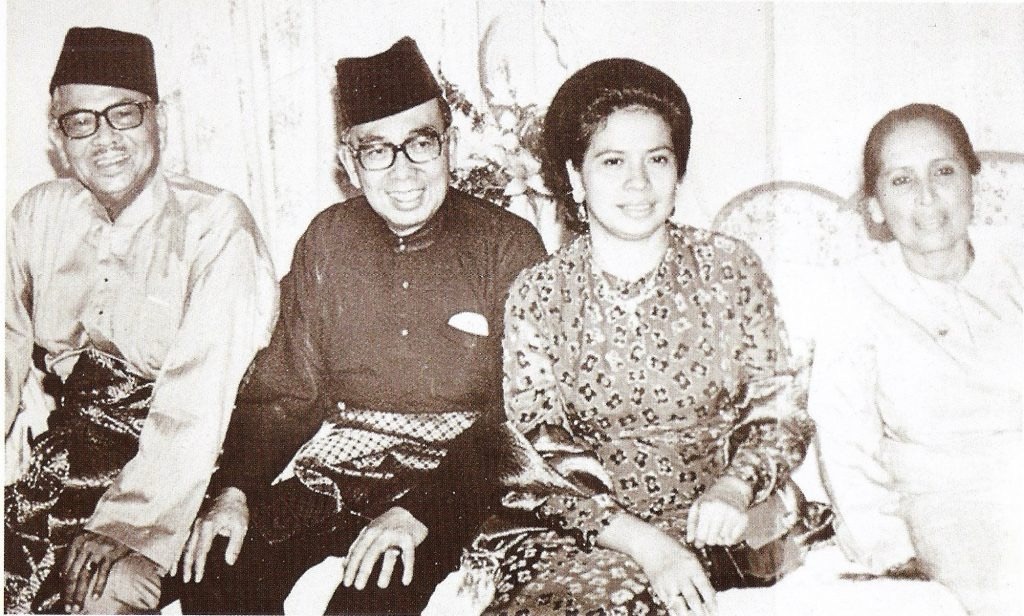
PMII – Dato Abdul Razak bin Hussein

We have just celebrated the 68th anniversary of our founding as a nation governed by ourselves. I try not to use the term “independence “ because technically speaking, only Pulau Pinang and Melaka achieved independence from direct colonial rule. The agreements the British had with the individual Malay Rulers only created Protectorates out of the Malay States. But although the agreements regarded us as independent and sovereign nations, we were subjugated and the British officials behaved like colonisers. Oh yes, setting the historical record straight is a monumental task. For instance, Sabah and Sarawak were never independent nations prior to Malaysia Day. That’s a narrative put up by politicians and played every time a state election in those states is around the corner. So it will take political will to set the record straight.

Yesterday, a vehicle belonging to JPJ that was in the parade, carried a placard bearing a love message for a budak Koleq – PMX. But is Anwar Ibrahim really PMX? To answer that question, we have to go back to a 1959 story about two budaks Koleq. They were PMI, PMII, PMIII and PMIV. That’s four PMs, but only two budaks Koleq.

Not many know that PMI – Tunku Abdul Rahman – was a budak Koleq, albeit for a short while. But, he was. He left after a quarrel with a member of another royal family after a football match. I think that that was how it went. But he was more known as a Sultan Abdul Hamid College alumnus. We all know that he headed the Alliance Party and won a landslide victory in the 1955 elections before “Merdeka.” But as with any election, voters would quickly realise that election manifestos are not Bibles, and disenchantment with the Alliance Party grew. “Merdeka” was euphoric and put everything on hold, but as the date for the Malayan Federation’s first general elections loomed, Tunku realised that he had to go to the ground to garner support.

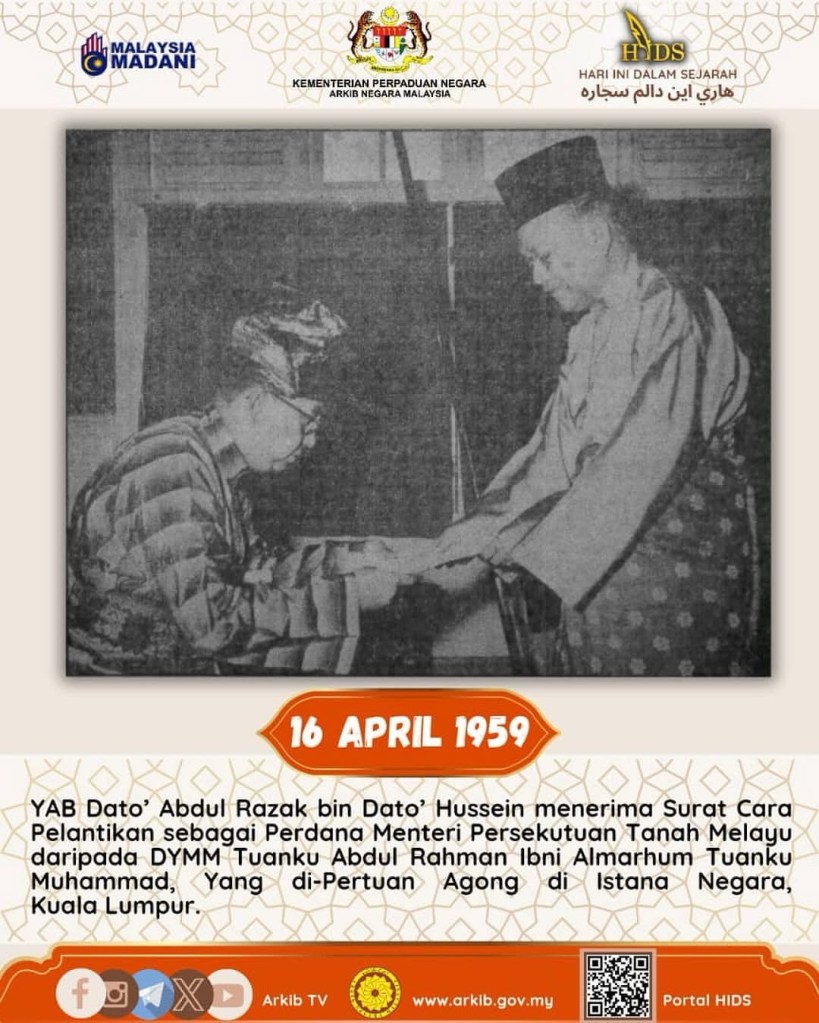
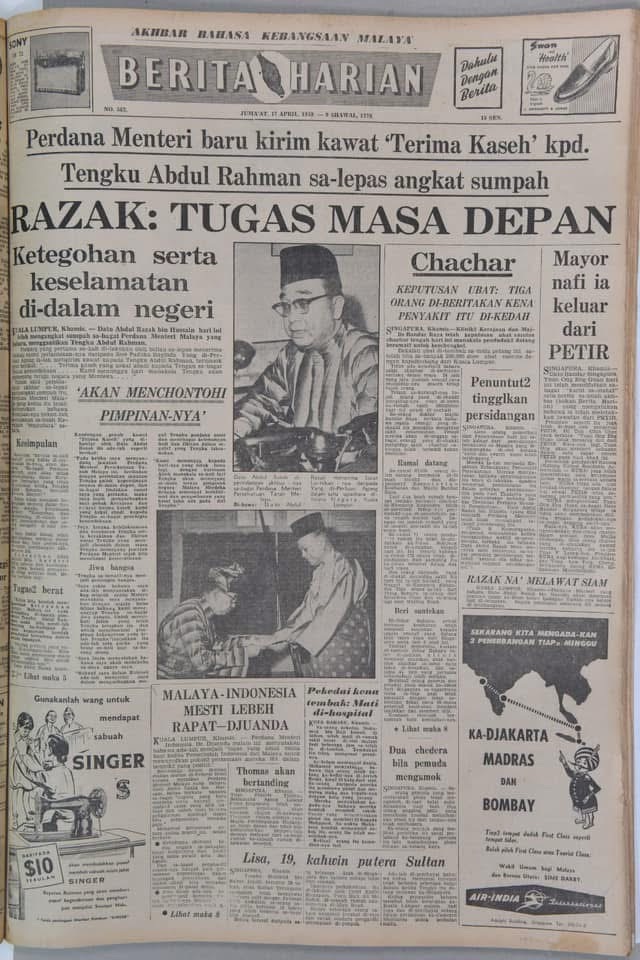
In order not to be seen as using his position as Prime Minister or abuse his office to go campaigning, Tunku Abdul Rahman resigned from office. Yes, he resigned. He did not go on leave. He stepped down on 15 April 1959 and handed over the Premiership to another budak Koleq – Dato (later Tun) Abdul Razak, who became PM on 16 April 1959. If you ask Google AI, it will say that that’s wrong and that Razak was only acting PM. But Google’s intelligence is artificial. Razak actually took oath of office in front of the Yang Dipertuan Agong as PMII – Federation of Malaya’s second Prime Minister. The latter even sent a telegram to the former, thanking him for the trust and confidence. The following is an excerpt from the New York Times, 16 April 1959, page 4:

MALAYAN RESIGNS AS PRIME MINISTER

KUALA LUMPUR, Malaya, April 15—Tengku Abdul Rahman relinquished the Prime Ministry of Malaya tonight. Tomorrow the Deputy Prime Minister, Dato Abdul Razak bin Dato Hussein, takes over. His tenure of office is expected to last only until general elections toward the end of August bring Tengku (Prince) Abdul Rahman’s Alliance party to power again and the Prince returns to Government leadership.

Tengku Abdul Rahman said that the change in the Prime Minister’s post would not mean a change in policies.

Dato Abdul Razak bin Dato Hussein, the incoming Prime Minister, is 37 years old, which makes him yet the youngest chief executive of a country in the British Commonwealth.

His predecessor resigned to devote himself full-time to campaigning in the first full Parliamentary elections.
(End)

So, Razak was PMII from 16 April 1959 until the dissolution of parliament on 22 June 1959, and remained as a caretaker PM until a new cabinet was formed on 22 August 1959, returning Tunku as PMIII. Razak, of course, became PM again (PMIV) from 22 September 1970 until his death on 14 January 1976.

Razak, accepting his Instrument of Appointment from the first Yang Dipertuan Agong, after taking the oath of office on 16 April 1959

There you have it – 59 years before Tun Dr Mahathir, another SAHC alumnus, became PM again (PMIX) – two budaks Koleq, Rahman and Razak, had become the PM twice.

The JPJ placard should have read:

“I Love You PMXII”

That’s for the other budak Koleq who became PM. The title PMX should go to that guy from Muar High School. The one after PMIX.

But whatever it is, that placard should really have read “I Love You YDPA XVII” because the parade is for His Majesty as the Head of the Nation. The Prime Minister is only the head of the Executive Branch of His Majesty’s Government. JPJ’s Director-General heads a department in His Majesty’s Government. No one else takes precedence over the Yang Dipertuan Agong.

That ends our history and protocol lessons for this session.

(Note: “budak Koleq” is a self-given term by students and old boys of the Malay College Kuala Kangsar)

Making of a Martyr

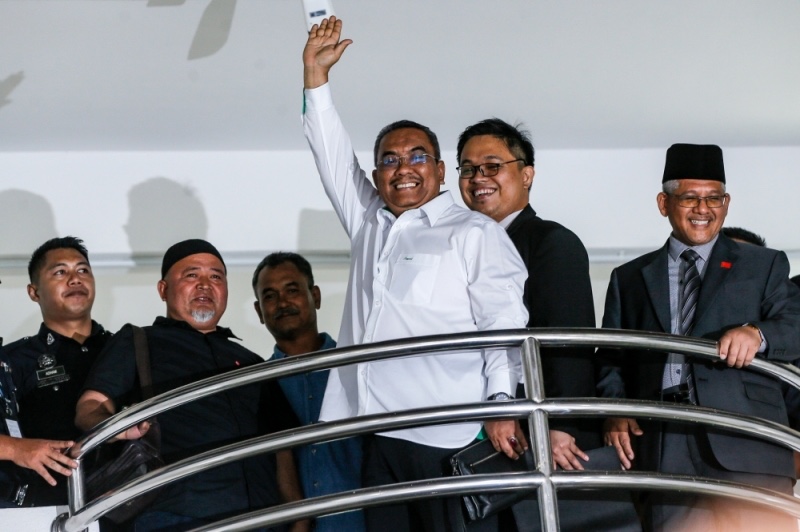
Even without Sanusi around, the momentum created by his arrest cannot be stopped (pic courtesy of NST)

Sanusi is an intelligent person. What he lacks is finesse and decorum. There is nothing classy about him. Like other politicians, he forgets that he has been chosen to represent the voters to serve in HRH’s government. Not his government, not his party’s government. It is the Sultan’s government. He can have fights with others, but he should never drag the Malay Rulers into his quarrels.

But as crude and rude as he may be, he hits the right notes with the people of Kedah, and those in the Malay heartlands. He is right about asking for a fair compensation for not being able to develop the Muda basin to make Kedah more palatable to investors in order to create more job opportunities. He is also right in saying that legally Pulau Pinang still belongs to the Sultanate of Kedah.

The Malay voters see him as a fighter, one man fighting against the whole Federal government. The police may have the right to arrest him, but sending 20 men at 3am shows lack of tact on the part of the police. The timing was totally wrong no matter the excuse. They knew where to find him. All they had to do was wait and escort him to the courthouse.

After all, he had been charged on two counts which are bailable offenses. The Anwar administration, above all, should have known this. They have mustered lots of experience in this matter, being subjected to raids and arrests prior to 9 May 2018.

Now, Sanusi has emerged from the courthouse a martyr. Even if he is absent, there is no stopping the momentum.

What Is There To Negotiate?

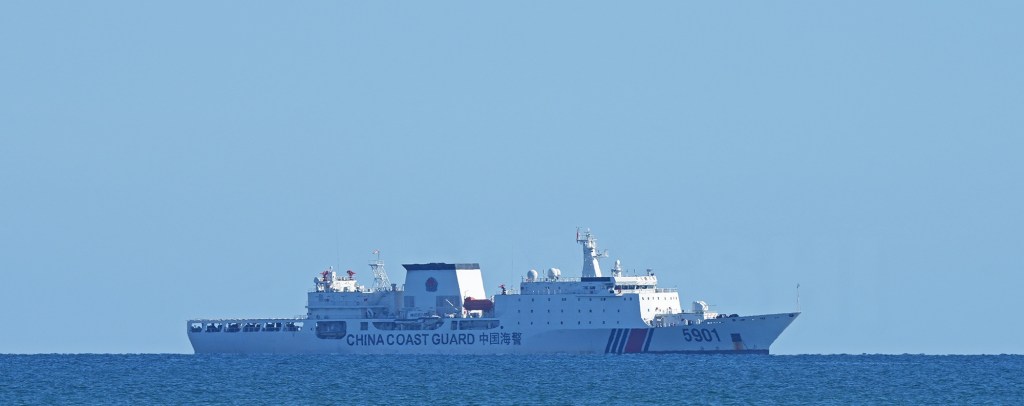
The 165-meter Chinese Coast Guard cutter Zhong Guo Hai Jing 5901 is the largest coast guard vessel in the world, and was spotted loitering some 60 nautical miles off Bintulu

Malaysia is prepared to negotiate with China over a dispute between them in the South China Sea, Bernama reported on Monday, citing Prime Minister Datuk Seri Anwar Ibrahim.

As we are all aware, China claims virtually all of the 3.5 million sq. km of the waters of the South China Sea. Other claimants include Malaysia, Vietnam, Taiwan, Brunei and the Philippines, while Indonesia is an affected party through China’s blatant and frequent incursions.

“China is also staking claim over the area. I said as a small country that needs oil and gas resources, we have to continue, but if the condition is that there must be negotiations, then we are ready to negotiate,” he said.

Negotiate what?

Malaysia’s Exclusive Economic Zone (EEZ) is determined by Article 57 of Part V of the UN Convention on the Law of the Sea (UNCLOS) that was adopted in 1982. A total of 167 countries and the European Union are parties, and that includes China.

Article 57 states that the breadth of the EEZ shall not exceed 200 nautical miles from the baselines that have been used to measure a country’s territorial waters. Our waters are very definitely more than 200 nautical miles from China’s baseline shores, in case the government, especially the Ministry of Foreign Affairs whose advice the PM depends on, doesn’t know about our EEZ.

And only Malaysia has the sovereign right to explore and exploit, conserve and manage all the natural resources within its EEZ. Not any other country. Therefore by negotiating, are we not giving clout to China’s delusional nine-dash line?

Furthermore, there is a Permanent Court of Arbitration ruling made in the Philippines v China case in 2016 that has ruled against the latter’s claim over maritime areas within the nine-dash line. The Court ruled that China not only has China exceeded what is entitled under UNCLOS, but that China, among others, has no legal basis to claim rights to resources within the nine-dash line.

It is puzzling that the government does not know this, or has forgotten about it. I am surprised that it has also forgotten that the previous Pakatan Harapan administration in 2019 filed a formal submission to the United Nations Commission on the Limits of the Continental Shelf, detailing information on the limits of its continental shelf, beyond its 200-nautical-mile Exclusive Economic Zone (EEZ). China, as always, rejected Malaysia’s claim and asserted its sovereignty and rights in the South China Sea with vague and ambiguous arguments.

If China cannot respect our rights given to us through legal means, why should we even care about what they think of our waters? Or are we so hard up for them to turn the billions in MOUs from the PM’s recent visit there into contracts?

If that is the case, are we not selling off our sovereignty like during Najjb’s administration?

Melayu Tak Bertimbang Rasa?

Benarkah Melayu angkuh dan pinggirkan minoriti?

“Melayu Islam diingatkan tidak terlalu selesa, angkuh hingga pinggirkan minoriti.”

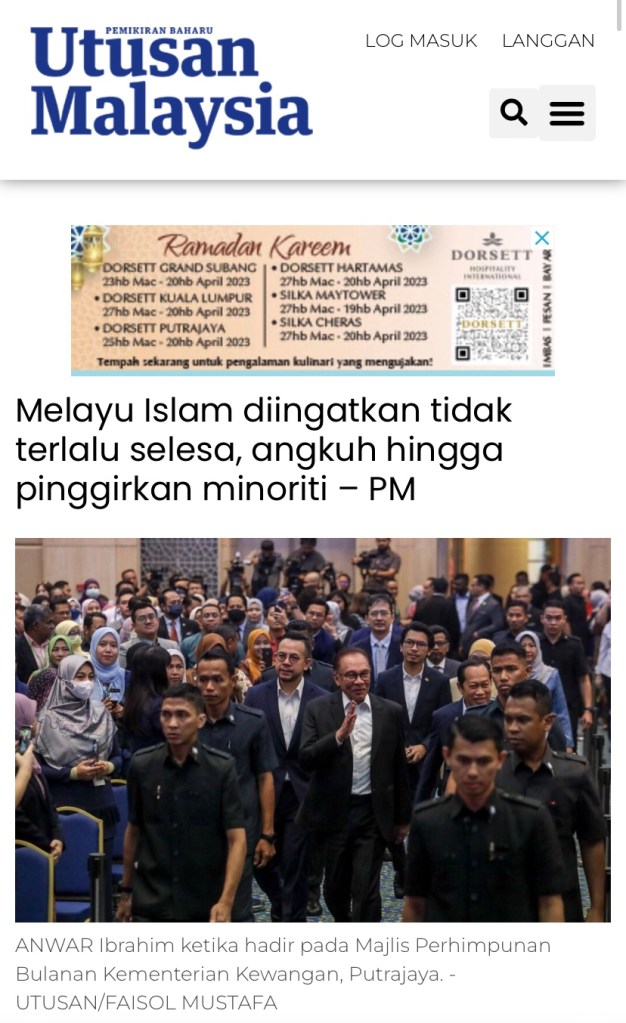
Begitulah bunyinya tajuk utama akhbar Utusan Malaysia yang melaporkan perhimpunan bulanan Kementerian Kewangan yang dihadiri Perdana Menteri Datuk Seri Anwar Ibrahim.

Dalam ucapan beliau, Anwar mengingatkan orang Melayu Islam supaya tidak meminggirkan kaum minoriti. Kata beliau, “Ketika lawatan saya ke Kemboja baru-baru ini, saya berbuka puasa bersama Perdana Menteri Kemboja yang menganjurkan majlis iftar dengan 6,000 umat Islam. Umat Islam di Kemboja hanya 10 peratus, tetapi diberi penghormatan dan saya juga diberi peluang memberi ucapan dan ke masjid di sana.” (Utusan Malaysia – 4 April 2023).

Tidak pelik sebuah negara bukan Islam meraikan masyarakat beragama Islam. Meraikan kaum minoriti merupakan salah satu tanda aras demokrasi bagi setiap buah negara. Sebagai contoh, kerajaan Israel yang dikenali sebagai anti-Islam juga pernah mengadakan majlis berbuka puasa.

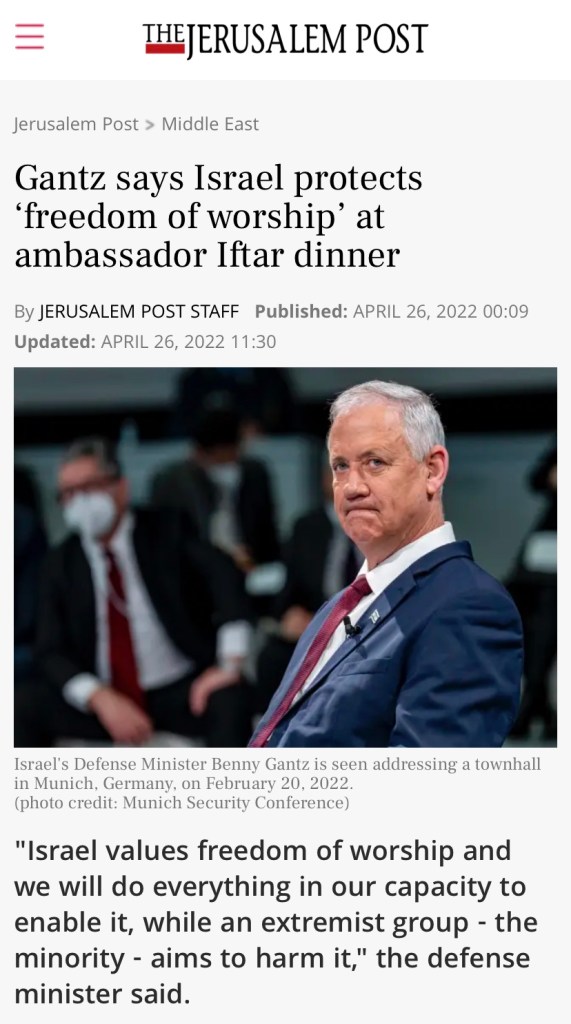
Israel menghargai kebebasan beragama dan akan lakukan apa sahaja untuk membenarkannya – Benny Gantz

“Israel menghargai kebebasan beragama dan akan lakukan apa sahaja untuk membenarkannya,” kata Menteri Pertahanan Israel Benny Gantz tahun lepas (The Jerusalem Post – 26 April 2022).

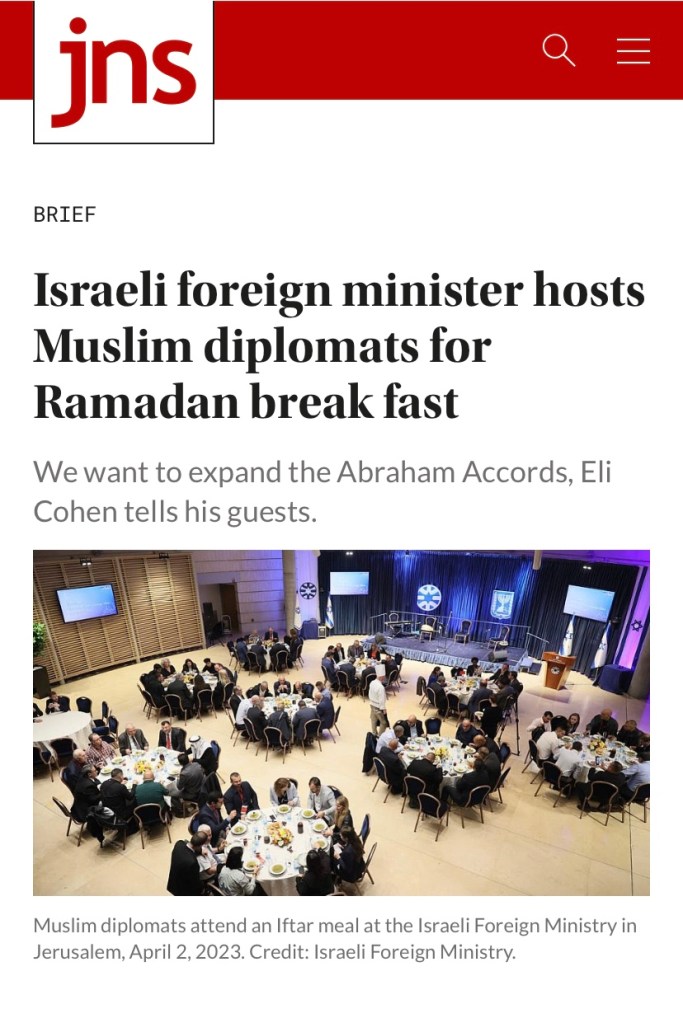
“Saya lihat betapa pentingnya untuk kukuhkan hubungan di antara Israel dan negara-negara serantau dan kekalkan kebebasan beragama di Israel untuk penganut semua agama,” kata Menteri Luar Israel Eli Cohen semasa menganjurkan majlis berbuka puasa Ahad lepas (Jewish News Syndicate – 3 April 2023).

Saya lihat betapa pentingnya untuk kukuhkan hubungan di antara Israel dan negara-negara serantau dan kekalkan kebebasan beragama di Israel untuk penganut semua agama – Eli Cohen

Namun, apa realitinya? Pada hari Sabtu 1 April 2023, askar Israel menembak mati seorang pemuda Palestin di perkarangan Masjidil Aqsa.

Dari 18 hari hari cuti umum yang diumumkan kerajaan Kemboja, berapa harikah yang melibatkan lain-lain agama atau kaum? Jawapannya: 0.

Dari 15 hari hari cuti umum yang diumumkan kerajaan Israel, berapa harikah yang melibatkan lain-lain agama atau kaum? Jawapannya: 0.

Dari 12 hari hari cuti umum yang diumumkan kerajaan Kemboja, berapa harikah yang melibatkan lain-lain agama atau kaum? Jawapannya: 4 (tidak termasuk Thaipusam dan Good Friday).

Adakah Melayu tidak bertimbang rasa hingga wujudnya klausa-klausa dalam Perlembagaan Persekutuan yang menetapkan hak lain-lain kaum, contohnya Perkara 3(1) berhubung kebebasan beragama, Perkara 11, Perkara 152(1) dan 152(1)(a), dan juga Perkara 153?

Lihat sahaja Amerika Syarikat yang menganggap dirinya sebagai tiang seri demokrasi. Banduan Islam diberinya daging babi untuk berbuka puasa

Adakah ini bermakna Amerika Syarikat lebih bertimbang rasa berbanding Melayu Islam di Malaysia?

Saya rasa tak perlulah memperkecilkan orang Melayu dan agama Islam hanya untuk populariti. Itu namanya menghina.

Know Your Place

The Johor State Constitution governs everything about the running of the state

TWO things are often mentioned by Umno hardliners when asked about the grand old party’s traits. One is that it is united; two is that it is one with the palace.

Nothing could be farther than the truth.

The Barisan Nasional’s second thumping victory was followed by several hours of bragging rights. Only DAP was able to look at its wounds and lick them. 

The rest of the Pakatan Harapan coalition members were literally pulverised. Even Perikatan Nasional, the coalition with which some quarters within Umno describe as having an uneasy coalition, was pummelled into the ground.

Among the things claimed by Umno was that it won because it could name its next and 19th Menteri Besar for Johor – Datuk Seri Utama Haji Hasni bin Mohammad.

Hasni was Johor’s 18th Menteri Besar, whose tenure was known for its stability despite having a razor-thin margin over the state’s opposition. Hasni treated all 56 assemblymen equally and even provided equal allocations, other than being a model inclusive leader. Naturally voters would want the same formula to be continued. 

The result was the 40-seat victory for Barisan Nasional last Saturday.

Then came the shocking news: the palace wanted another name as the next Menteri Besar – Datuk Onn Hafiz Ghazi. 

The 43-year old is the great-great grandson of Johor’s first Menteri Besar, Datuk Jaafar bin Haji Muhammad, and grandson of the 3rd Prime Minister of Malaysia, Tun Hussein bin Datuk Onn.

And what usually comes after shock? Denial, followed by anger. And when Umno supporters get angry, they become irrational, and the anger is then directed towards the Istana for what they deem as “meddling’. But was the palace meddling?

The way I see it is that Umno had committed a mistake by naming a Menteri Besar, turning him into a poster boy, ahead of the palace. As a grand old party, Umno should have known better than to usurp the constitutional right of the Sultan.

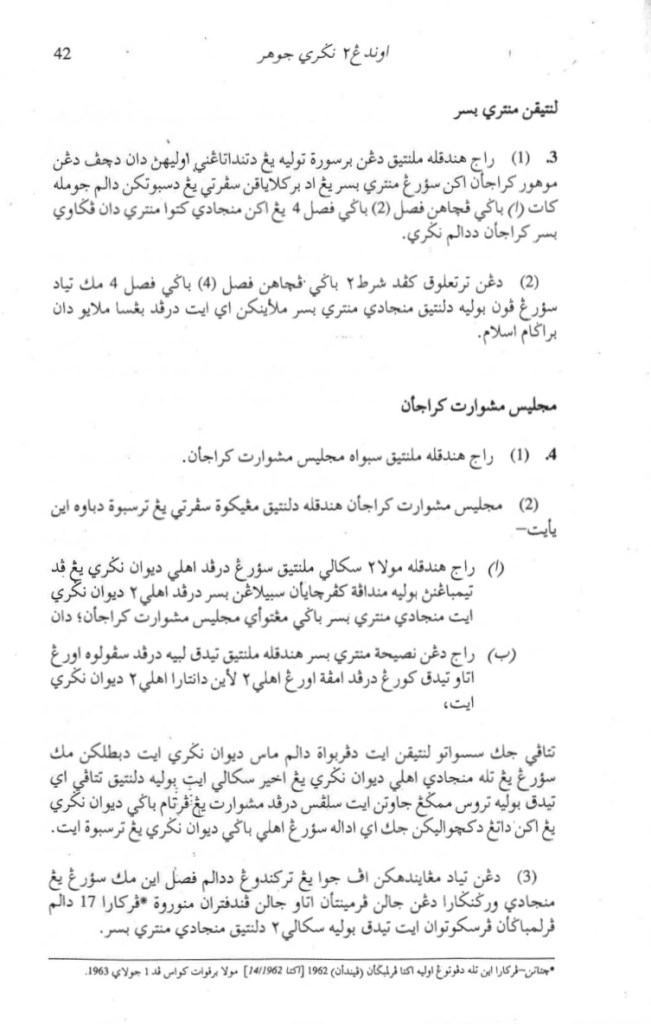
Article 3 (1) of the Johor State Constitution (Part 2) states that the Ruler shall appoint in writing, a qualified Malay and Muslim Menteri Besar who meets the prerequisites Article 4 (2) (1) of the said Constitution. This in turn states that the person to become the Menteri Besar has to be a member of the Dewan who, in the Ruler’s judgment, commands the most support of members of the Dewan.

It clearly states there that the prerogative to appoint a Menteri Besar is the prerogative of the Ruler. This is replicated on the Federal level by the Yang di-Pertuan Agong when appointing a Prime Minister (and Chief Ministers, as delegated to the governors). The Ruler is the Chief Executive Officer of the  nation/state while the PM and MB are the Chief Operating Officers. Ours is not a government by the people and for the people. We are not the United States of America.

The PM/MBs are then given the executive powers to administer the Federal/respective State governments on behalf of the Rulers, save for a few provisions, including the choosing and appointing of prime ministers and menteris besar which remain as royal prerogatives. As a word of caution, these prerogatives come with fundamental principles.

The Federal/State Constitution is supreme. Where there is conflict between the Constitution and the royal prerogative, the Constitution prevails. The royal prerogative remains subject to the duties of fairness and reason. And although the prerogatives can be abolished or abrogated, they can only be done with the expressed permission of the Rulers Council.

And Johor isn’t the only state in recent times where the palace has rejected the winning party’s choice of a state COO. Perlis rejected Datuk Seri Shahidan Kassim in 2008 and named Md Isa Sabu instead. 

This had put the former at loggerheads with the palace that led to Shahidan’s brother getting rejected in 2018.

Terengganu rejected Datuk Seri Idris Jusoh in 2008, and we saw some banners carried by palace friendly Umno supporters equating the Ruler to animals. Selangor rejected Datin Seri Dr Wan Azizah Wan Ismail in 2014 as its Menteri Besar to replace Khalid Ibrahim as a result of the “Kajang move”; A year before that, the nomination of Datu Husam Musa as a state executive councillor was rejected by the Kelantan palace.

What then is our duty during an election?

Our only duty is to choose, from amongst us, those whom we believe can represent us well in His Majesty’s government. As such, when we complain about stupid politicians having made it into the august house, we only have ourselves as voters to blame. 

We put them there, or we did not do enough to prevent them from getting there.

Therefore, coming back to Johor’s predicament, the Ruler has chosen the person who, in the Ruler’s judgment, has the most support of the members of Johor’s Dewan. 

Although there is a move by Umno that allegedly has collected 38 signatures from its elected members to support Hasni as Umno’s choice of the incoming MB, that really shows that UMNO or whoever it is behind that move, does not know its or his place. Even Hasni has come out to tell everyone to give this opportunity to his younger successor.

Looking at the bigger picture, the choice of a younger MB for Johor is apt at this juncture given that it is Johor that will ascend the throne of the Yang di-Pertuan Agong in January of 2024. 

The Tunku Mahkota of Johor will be acting as the Regent during that period. A young MB will not only be able to match the dynamics of a young Ruler, but also reduces the chances of a senior and more experienced politician who might think that he knows better than the Ruler.

If Umno really has the balls and thinks that it can do without the Ruler’s support and try the Johor’s voters’ resolve, its elected representatives can perhaps try to stage a walkout when Onn Hafiz is being sworn-in to show that he does not have their support.

(This article was first published by The Mole

The Men of Keluarga Malaysia

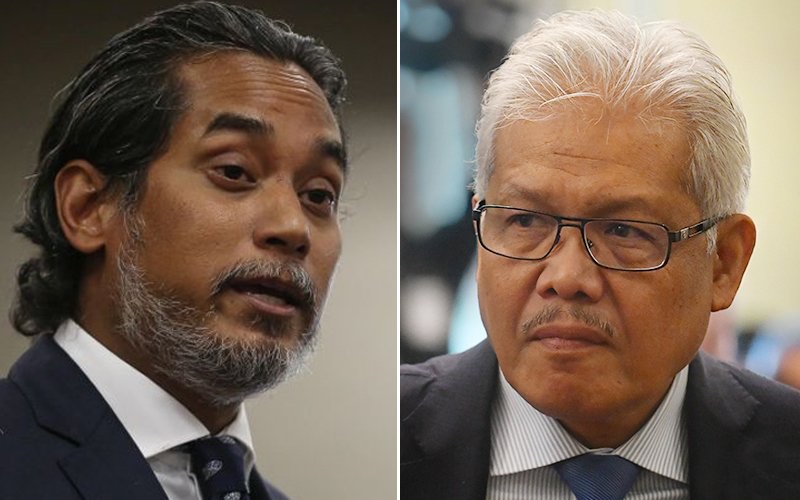
Khairy Jamaluddin and Hamzah Zainuddin

MANY still think that when we went to vote on  May 9 2018, it was to vote in a government for the people by the people based on the political party the majority of whom had won the people’s confidence. 

This is due to the Alliance, and subsequently Barisan Nasional, being in power virtually unchallenged for 61 years, with two-thirds majority for the most part of it.

Three prime ministers later we know that that is not entirely true – that we voted in individuals no matter the party, those whom we think would be best to represent us in His Majesty’s government.

This government administers the nation on behalf of His Majesty, and leading its members is the Member of Parliament who has the greatest support, a constitutional concept that had become alien because of BN’s past political dominance.

It may not be the government that some voters want. It may not be the perfect government. Neither side of the political fence wants this government to work, and Datuk Seri Ismail Sabri is not the choice of PM that his own party would like to have.

But this is the government that has the confidence of His Majesty, and this isthe face of the future for as long as no one political coalition has two-thirds majority in Parliament.

We can see who have been working in Datuk Seri Ismail Sabri’s administration, who have been shadow playing, and who are the deadbeats. 

Only two have caught my eye. They are, to me, those who work for the Keluarga Malaysia concept.

Datuk Seri Hamzah  Zainudin

This former Umno minister is seen by his former party as a traitor for jumpingship seven months after the BN administration fell. Datuk Seri Hamzah did not hold any ministerial post during the Pakatan Harapan administration.

He was made the Home Affairs Minister during the Muhyiddin Yassin administration and has continued holding this portfolio since.

Apart from the episode with former IGP Tan Sri Abdul Hamid Bador, there is very little noise regarding Hamzah. From the Muhyiddin administration Hamzah is seen doing his job as the Home Affairs Minister, even taking a different route compared to his predecessors. 

For instance, working hand-in-hand with Human Resource Minister Datuk Seri M Saravanan, Hamzah has done away with the need for third-party involvement in legalising illegal immigrants for selected industries. This greatly reduces corrupt acts involved in the process of registering these workers as we have seen in the past.

His penchant for “seeing things for himself” has allowed him to assist government agencies and departments under his Ministry in providing the best of services directly to the people. 

Immediately after the landslide tragedy in Yan, Kedah last year, as well as after the recent floods, he urged the Royal
Malaysian Police, the National Registration Department, as well as the Immigration Department to deploy their mobile police station and counters to enable victims who have lost their personal documents to make police reports and obtain new personal documents without having to travel tens of miles to get things done. And these services were provided for free for the victims. Such initiatives augured well with the people.

Interesting to note is that when he went to visit victims to present aid, he did not drown himself in self-promotion exercise like other politicians would.

Instead, he chose to portray himself as representing the Prime Minister and the Keluarga Malaysia initiative. What this demonstrates is his political maturity in putting aside political and party differences in order to fulfil his duty as a Minister in His Majesty’s Government, chosen by a Prime Minister who is from a different political coalition.

Hamzah may be the Secretary-General for Bersatu and Perikatan Nasional, but I view him as a strategist who knows when to fight it out when needed so, but also when to put self-political interest aside to make sure that the government that he is a part of, truly works for the people.

Khairy Jamaluddin Abu Bakar

Many would disagree with me over this choice, especially those in Umno who see him as one of those who was against  Datuk Seri Najib Razak before the previous general election. Ten years ago, I would not write this too, but I have to look at things objectively since I do not belong to any political party.

Khairy is seen as ambitious. Those at the top are eager to see his political career end. Even Umno’s No.2 Datuk Seri  Mohamad Hasan, otherwise known as Tok Mat, has already announced his plan to contest in Khairy’s parliamentary seat of Rembau, leaving the latter with nowhere to go in Negeri Sembilan.

If it is true that Umno is eager to bury Khairy, then the Grand Old Party is just that – grand by resting on its laurels and old; the bitter lessons of GE14 very quickly forgotten. It is a party with 3.35 million members that had failed to hold on to its power in 2018 despite its size – all because it could not read the sentiments on the ground.

When Umno and the Barisan Nasional fell out of favour with the voters, I had expected to see Khairy jump ship. I would have lost some money had I bet on that. Instead, Khairy did not budge. Even as he was ridiculed by those from within his party, Khairy held on and played his role as an Opposition MP. I looked at the Internet to see what people said of him then and immediately knew that many wished Khairy was not from Umno.

Then, Covid-19 hit our shores. A month and a half later the Pakatan Harapan fell and Khairy was made Minister for Science, Technology and Innovation in the Muhyiddin administration. He was tasked with spearheading and managing the National Covid-19 Immunisation Programme or PICK, sometime doling out more than half a million doses of vaccines a day nationwide.

He was also spotted at vaccination centres several times helping the volunteers registering vaccine recipients.

As of Jan 19 2022, PICK has fully-vaccinated almost 80 percent of the population and almost 31 percent have received their booster dose.

Now as the Health Minister in the Ismail Sabri administration, Khairy goes down to government hospitals and clinics unannounced to see for himself the problems health front-liners face on a daily basis, especially situations exacerbated by the Covid-19 pandemic. Not only that, he also faces the public every now and then, and allow them to vent out at him.

Again, praises from the normal Janes and Joes drown noises made by detractors – those from within his own party, and the anti-vaxxers. Even so, Khairy continues to soldier on undistracted. His record speaks for himself. As at Jan 20 2022, the death rate in Malaysia compared to unvaccinated people is 25 times lower for those fully vaccinated and 148 times lower for those who have received their booster dose. Now in a true Keluarga Malaysia style, Khairy is concentrating on vaccinating children between the age of five and 12.

Umno has to realise that it is not going to be party members that will win them the next general election, but the support of the ordinary voters who vote based on what they now like in a candidate rather than the party symbols that the candidate represent.

Both Hamzah and Khairy are politicians who work for the people that you would wish to see more of in the future, instead of going back to what was before. My only wish is that all the ministers that we have now are of the same calibre.

(This article first appeared on The Mole )

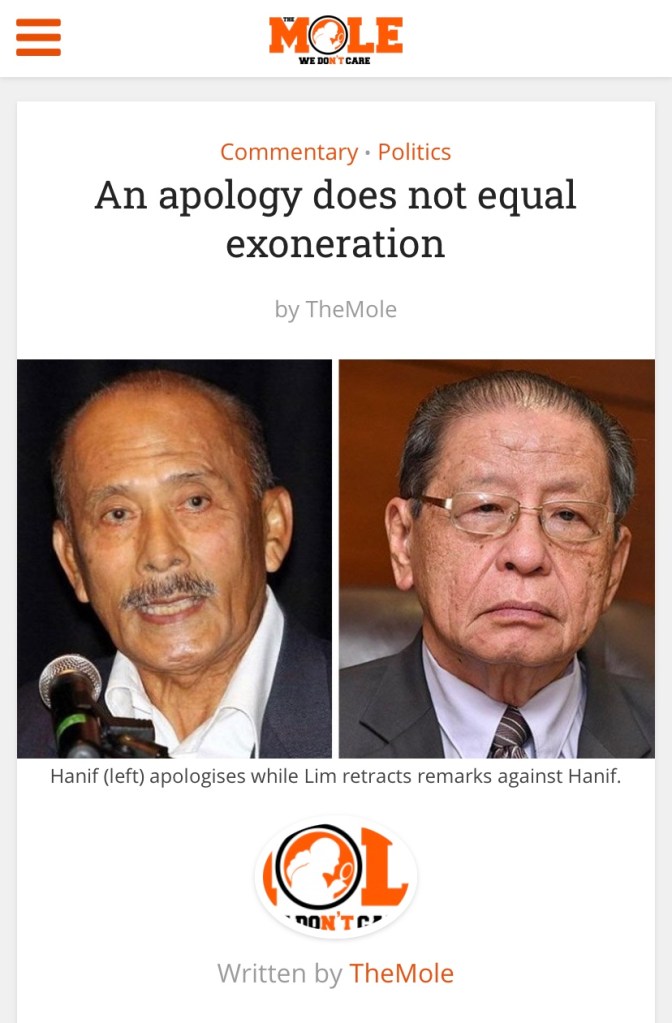
An Apology Does Not Equal Exoneration

MANY asked me about Tun Haniff Omar’s apology to Lim Kit Siang as read from an agreed text made in the court yesterday.

The apology was made for a remark made in a forum organised by Sinar Harian that the Member of Parliament was responsible for and had the intention to direct DAP to separate or divide Peninsular Malaysia into two parts based on race, and intended to sow discord between the Malay and Chinese communities.

Malay apologists were quick to jump the gun claiming that Malaysians had been duped into thinking that Kit Siang was involved in inciting the various races in the country that led to the May 13 tragedy.

The apology was not about that at all.

Let me reiterate in all fairness, that Lim Kit Siang did not utter those said words.

I was made to understand that they were the words of another politician who was also arrested for sedition after the tragedy, as was Lim Kit Siang who was arrested for other reasons.

When the movie Tanda Putera was shown, many pro-Malay bloggers said it was Lim Kit Siang who was involved in a scene depicting a group of non-Malays who urinated at the base of a flag pole.

I wrote on my blog that that scene did not involve Kit Siang, as he was arrested in Kota Kinabalu and was not in Kuala Lumpur when that and the rioting happened.

In fact, it was almost two months to the day of the tragedy that Kit Siang was arrested under Section 11(2)(b) of the Internal Security Act, 1960 for six offences under the Act ranging from 27 July 1968 in Tanjung Malim where he claimed that the education policy was designed to achieve an eventual extermination of Chinese newspapers, Chinese schools and Chinese languages, to an incident on May 13 1969 at a rally at Kampung Air in Kota Kinabalu where he said that the government was trying to have a Malay Malaysia by dividing the people into bumiputera and non-bumiputer, that “the Malays were first class Bumiputera” and that the government was carrying out a policy of “Malaysiation” of Sabah whereby all top post were held by the Malays.

He was also alleged to have stirred anti-Malay and anti-Islamic religious feelings by telling the audience at Kampung Air that the government was pursuing the policy of exploitation by Malays of other races and that the government, by holding an International Islamic Conference in Kuala Lumpur, had intended to send Malaysian citizens to die in the Middle East in order to capture Jerusalem for the Muslim World (Jerusalem was captured by Israel during the 1967 Arab-Israeli War).

Kit Siang had only offered explanations for the inciting speeches he made, but I never saw any apology made for saying those things.

So, no. Yesterday’s apology should not be misconstrued into an exoneration of Lim Kit Siang’s guilt of fanning the sentiments that led to the May13 1969 tragedy.

It was only to underscore the fact that Kit Siang did not utter those words and was arrested because of that as mentioned by Tun Haniff.

(this article first appeared on The Mole )

A Drastic Action Is Needed To Cure Malaysia

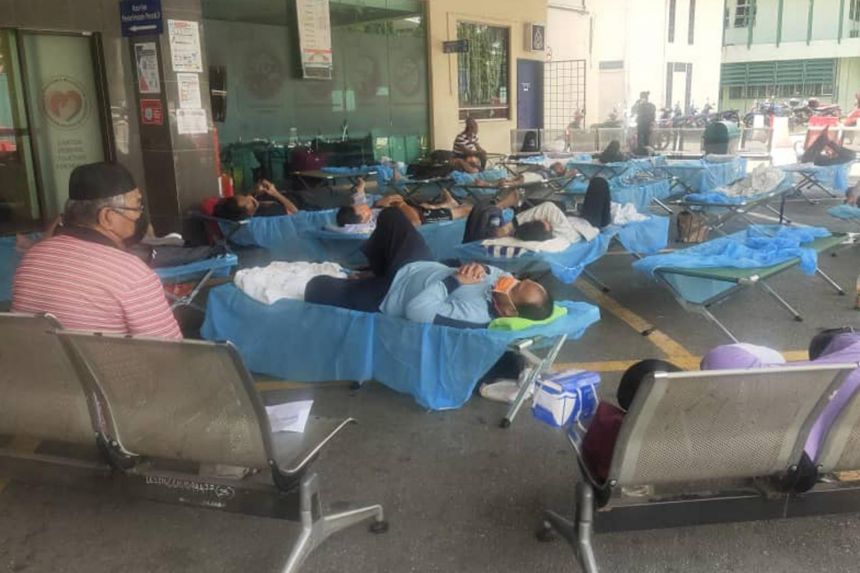
The average Malaysian with illness other than COVID-19 now find themselves with almost nowhere to go to seek treatment (Photo courtesy of The Straits Times)

Let me just start this posting off with a few numbers to remind us of where we are right now.

WHERE WE ARE

Today is 3rd August 2021, Day 504 since leaving the Old Norm. It has been 228 days since we had seen ZERO deaths due to covid-19 in a day. Never mind the one million plus accumulated number of recorded cases since the pandemic hit our shores on 25 January 2020. We look at the harder numbers: with today’s 17,105 new cases, we have 203,664 people undergoing treatment or quarantine for being COVID-19 positive. 9,598 have died. 3,854 of those (40.15 percent) died in the month of July 2021 alone. We have lost 219 in the first three days of August 2021. In the same corresponding period in July 2021, our worst month, the first three days saw 107 deaths, less than half that of August 2021’s. And today, 1,066 are being treated in ICU wards nationwide, 537 in need of breathing assistance. That is 50.4 percent of those in ICU wards. Things do not look like they are going to get any better.

FIGHTING WILDFIRES

The government had worked very well during the second wave of the pandemic in Malaysia. We had only 337 cases recorded in July 2020 from a peak of 3,236 cases in April. Only two deaths were recorded in the month of August. Politics spoiled the whole effort with the Sabah state elections. Ministry of Health frontliners were fighting raging wildfires and still are. The first in a series of strategems in fighting wildfires should be the establishment of control lines: natural or man-made boundaries employed by firefighters to contain wildfires. That had worked to contain the spread during the second wave (March 2020-August 2020), but it was the politicians that had let us down (Sabah state elections). Things spiralled downwards from then on.

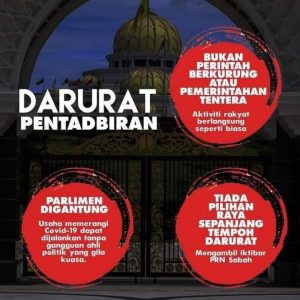
It was hoped that the Proclamation of Emergency sought by the government from the Yang di-Pertuan Agong would have provided both the frontliners as well as the rakyat with the same boundaries, but that never happened. From 12 January 2021 through July 2021, thousands of private vehicles were still allowed to cross state borders, giving rise to clusters outside the Greater Klang Valley. By the time the government reacted and put a stop to those abusing MITI letters to go back for both the Hari Raya, thousands were infected. It is unfortunate that it is the Yang di-Pertuan Agong’s image that has to absorb the flak.

The only good things to have hatched from the Emergency were the ability of the government to procure medical equipment including the various types of vaccines without having to go though the debates in Parliament. The Opposition has not been able to contribute anything worthy of mention, other than its hunger to wrestle back power from the PN government. That is all the interest that it has shown thus far, just as UMNO, unable to swallow its pride after the trashing it received three years ago, is not in favour of being led by a smaller party

WAY OUT

Statutory Declarations and press statements do not determine who gets to govern. The only way is through a vote on a motion of no confidence against the sitting Prime Minister in Parliament. That can be determined when Parliament assembles again. The worry is that if the Prime Minister loses support and his government imminently resigns, this vicious cycle of struggle for power will not end here. We have not yet achieve herd immunity to safely call for elections.

If the Prime Minister loses support and there is no one clear candidate with enough support to stymie an opposition to the formation of the candidate’s government, the Yang di-Pertuan Agong has a way out as per Article 150 (1) of the Federal Constitution, where only His Majesty has the right to proclaim an Emergency if His Majesty is satisfied that ‘a grave emergency exists whereby the security, or the economic life, or public order in the federation or any part thereof is threatened.’

A MAGERAN headed by a Director of Operations and supported by members chosen by His Majesty could administer and manage the country while politicians observe a cooling-off period. They can be professionals, economists, ex-military, ex-police as well as ex-judges, while the civil service shall continue to be headed by the Chief Secretary to the Government.

If there is a need to amend the Federal Constitution to reinstate measures previously removed so that the Executive does not have too much power as it does now, this is the time to do so. Only when things have stabilised will general elections be allowed to be held again to choose a civilian government. The mechanism of this MAGERAN and which parts of the Federal Constitution that need to be suspended, will have to be carefully thought out.

I find that the feeling on the ground is for such a council to come into existence. Everyone is now looking at a strong leadership by people who actually know how to handle the situation. We can take a cue from this call for the fight against COVID-19 to be given to the Army to handle. We cannot go on like this, locked within the four walls of our homes with our savings dwindling very fast, while our frontliners bathe in their sweat on a daily basis without an end in sight, and our politicians fight each other for power without giving so much as a hoot to the perils being faced daily by the people.

Someone asked me if it would be constitutionally legal for such a thing to be done. It has been done before. It worked then. And it is provided for by the Federal Constitution. How unconstitutional can that be?

Darurat? Kenapa Tidak PKP?

Gambar ihsan Malaya Post

Dulu kita dapat meratakan graf penularan wabak COVID-19 hanya dengan PKP tanpa perlu isytihar darurat sebab pada 18 Mac 2020, jumlah terkumpul kes COVID-19 ialah sebanyak 790 kes, kes baharu sebanyak 117 kes, 728 orang sedang dirawat dan purata kes sehari bagi 10 hari ialah 82.625 kes.

Kerajaan kerugian RM2.4 billion setiap hari semasa PKP dikuatkuasakan.

Kemudian kita laksanakan PKPP dan benarkan rakyat Malaysia teruskan dengan kehidupan dengan mematuhi norma baharu.

Shafie Apdal mengambil langkah drastik tidak menunggu keputusan mahkamah dan berjaya mendapat persetujuan TYT Gabenor Sabah untuk membubarkan DUN Sabah untuk memberi laluan kepada PRN Sabah walaupun terdapat banyak bantahan akibat khuatir kes COVID-19 akan naik mendadak.

Pada 13 September 2020, 13 hari sebelum PRN Sabah, Ahli Parlimen DAP Teresa Kok persoal cadangan kerajaan untuk kuarantin individu yang pulang dari berkempen dan mengundi di Sabah ( https://m.malaysiakini.com/news/542448 ).

Ada yang bertanya kenapa perlunya darurat sekarang sedangkan pada 18 Mac 2020 kita laksanakan PKP dan berjaya mendatarkan graf?

Jawapannya ialah keadaan tidak lagi sama. Jumlah terkumpul kes COVID-19 ialah 144,518. 2,985 kes baharu berbanding 117. 32,377 orang sedang dirawat berbanding 728 manakala jumlah kematian Ialah sebanyak 563 berbanding 2. Purata kes sehari bagi 10 hari ialah sebanyak 2,544.1 berbanding 82.625 sehari pada 18 Mac 2020.

Kita akhiri tahun 2020 dengan kadar 3,455.96 kes bagi setiap satu juta orang penduduk. Semalam (13 Januari 2021), kadarnya meningkat kepada 4,419.51 kes bagi setiap satu juta orang penduduk.

Katil-katil hospital semakin penuh. Sistem perubatan kita kini mengalami tekanan hebat. Kita tidak ada masa lagi untuk berbincang atau berdebat. Kita perlukan tindakan serta-merta.

Ada juga yang bertanggapan bahawa darurat ini diumumkan oleh Muhyiddin Yassin untuk memelihara kedudukannya sebagai Perdana Menteri. Persoalannya ialah, memandangkan kuasa eksekutif negara ini dan hak mengisytiharkan darurat adalah kuasa, hak dan mengikut budi bicara Yang di-Pertuan Agong, adakah suara-suara ini menuduh bahawa Seri Paduka itu bodoh dan hanya menjadi Pak Turut milik Perdana Menteri?

Kita baca apa yang dinyatakan dalam kenyataan yang dikeluarkan oleh Istana Negara mengenai hal ini:

“Setelah memperhalusi penjelasan YAB Perdana Menteri dan sembah taklimat daripada Ketua Setiausaha Negara Tan Sri Mohd Zuki bin Ali; Peguam Negara Tan Sri Idrus bin Harun; Panglima Angkatan Tentera Tan Sri Haji Affendi bin Buang; Ketua Polis Negara Tan Sri Abdul Hamid bin Bador, Ketua Pengarah Kesihatan Tan Sri Dr. Noor Hisham bin Abdullah dan Pengerusi Suruhanjaya Pilihan Raya Datuk Abdul Ghani bin Salleh, maka Al-Sultan Abdullah berpandangan bahawa penularan wabak COVID-19 di negara ini berada di tahap yang amat kritikal dan adanya keperluan Pengisytiharan Proklamasi Darurat berdasarkan Fasal (1) Perkara 150 Perlembagaan Persekutuan.

Perlu dimaklumkan bahawa perkenan ini juga telah mengambil kira rundingan Seri Paduka Baginda dengan Raja-Raja Melayu.”

——————————————

Bukankah sebelum ini Muhyiddin, disokong oleh ahli-ahli Majlis Keselamatan Negara, pernah memohon agar Yang di-Pertuan Agong isytihar darurat, namun ditolak oleh Kebawah Duli Tuanku?

Keadaan di hospital-hospital kerajaan amat kritikal. Tidak bolehkah kita bendung dahulu penularan wabak ini?

Untuk yang tak sabar nak jadi Perdana Menteri, kenapa tak ambil masa 24 bulan sebelum PRU15 ini untuk berkhidmat sebenar-benarnya untuk rakyat dan menangi semula kepercayaan rakyat? Sudahkah anda pelajari sebab-sebab anda ditolak rakyat tiga tahun lepas?