In another step for Malaysia into strengthening ties with its neighbours, the Royal Malaysian Air Force (RMAF) plays its part by strengthening its cameraderie with its Indonesian counterpart, the Tentara Nasional Indonesia – Angkatan Udara (TNI-AU).
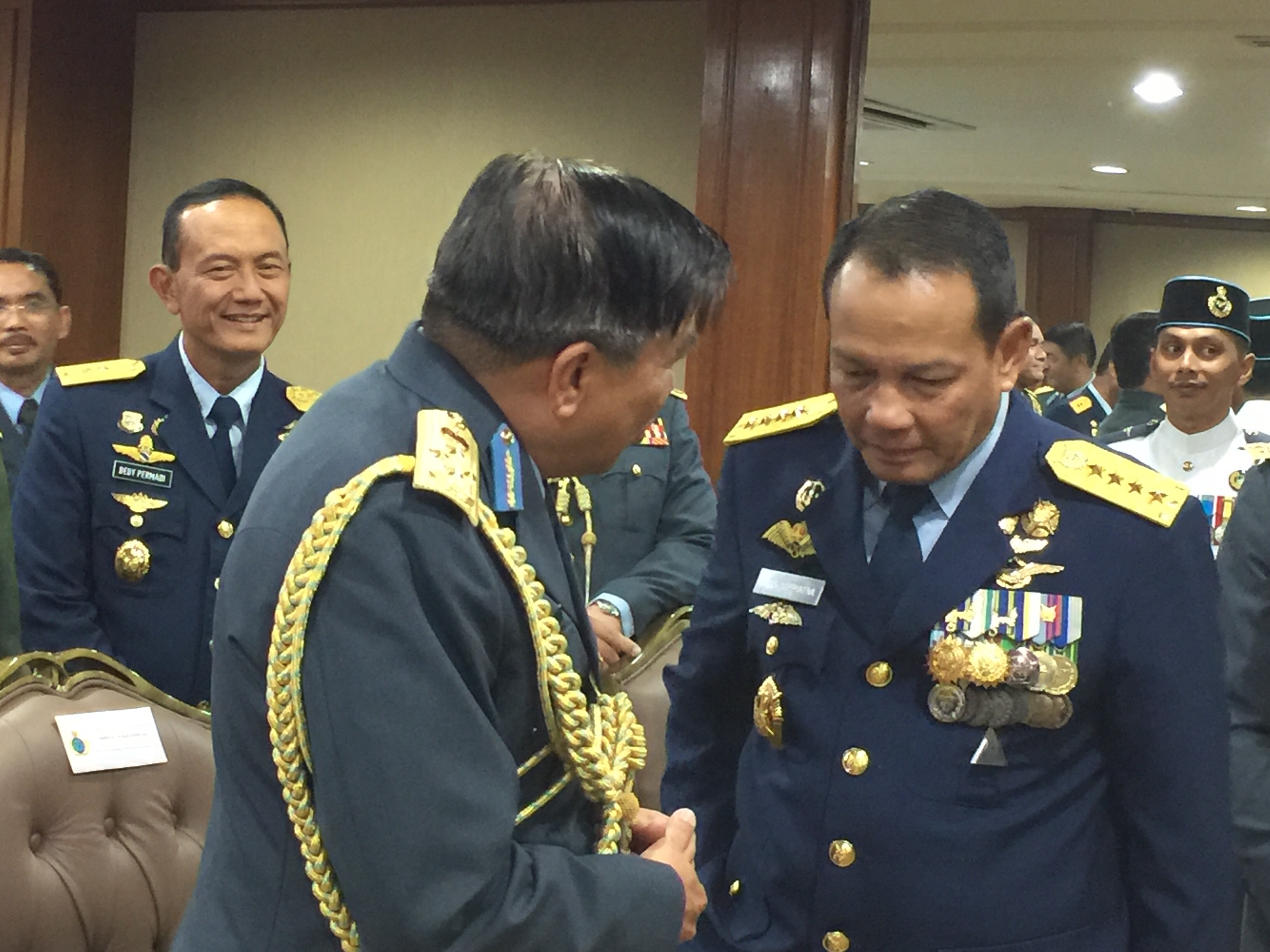
Seri Paduka Baginda Yang Di Pertuan Agong Almu’tasimu Billahi Muhibbuddin Tuanku AlHaj Abdul Halim Mu’adzam Shah Ibni Almarhum Sultan Badlishah as the Field Marshall and Commander-in-Chief of the Malaysian Armed Forces saw it fit to bestow upon the Chief of Staff of the TNI-AU, Air Chief Marshal Agus Supriatna, the honorary award of the Darjah Panglima Gagah Angkatan Tentera (PGAT).
To present the award on behalf of His Majesty was the Deputy Minister of Defence, Dato’ Sri Mohd Johari bin Baharum. The ceremony was held at the Ministry of Defence in Kuala Lumpur.
Air Chief Marshal Agus Supriatna saluting Dato’ Sri Mohd Johari bin Baharum after receiving the Darjah Panglima Gagah Angkatan Tentera
ACM Agus began his military career in 1983 and became a A-4 Skyhawk pilot from the No.11 Squadron based at the Lanud Iswahjudi Madiun (Iswahyudi Air Force Base) in East Java town of Maospati in the Magetan Province. He was promoted to his current post in 2015.
ACM Agus who is on a two-day working visit to Malaysia also paid a coutesy call to the RMAF Chief, General Tan Sri Dato’ Sri Roslan bin Saad TUDM at the latter’s office.
The ceremony was attended by senior officers from the RMAF, the Royal Malaysian Navy, the Malaysian Army as well as members of the TNI-AU delegation.
Good neighbours and brothers-in-arms: Chief of RMAF General Tan Sri Dato’ Sri Roslan bin Saad TUDM having a chat with his TNI-AU counterpart Air Chief Marshal Agus Supriatna at the Ministry of Defence
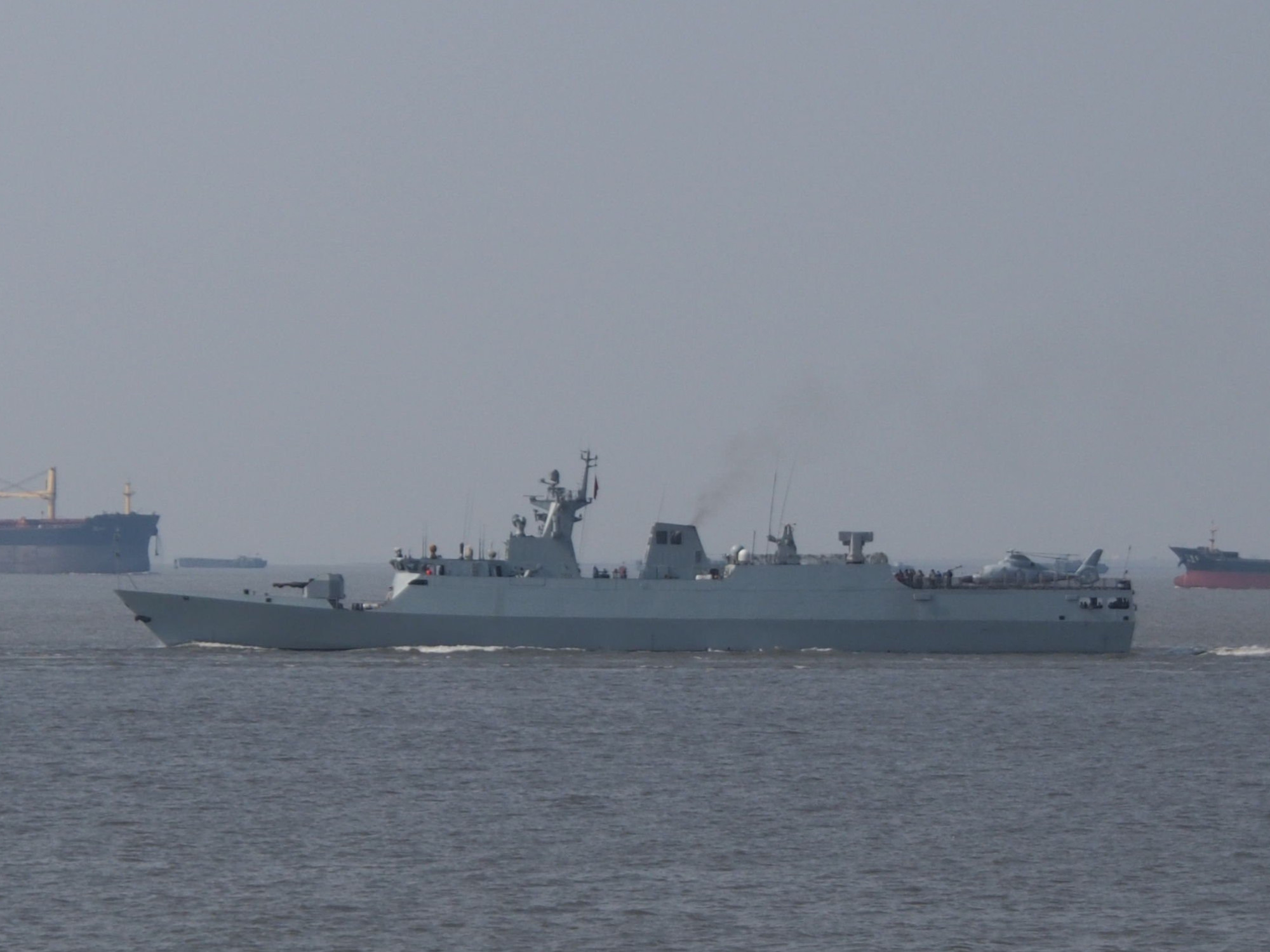
The Royal Malaysian Navy has announced the procurement of up to four vessels from China for its Littoral Mission Ships programme. The Type 056 corvettes virtually matches the requirements of the RMN (image by Wikipedia)The dust has yet to settle. Pro-US tweethandles have been lambasting Malaysia for its ‘shift’ in trade approach – a whopping RM143.64 billion (USD34.4 billion) worth of MoUs have been signed between the two countries that includes what Prime Minister Najib Razak termed as ‘a landmark deal’ – the purchase of four vessels from China to fulfill the Royal Malaysian Navy (RMN)’s ‘Littoral Mission Ship (LMS)’ programme. It is a ‘landmark’ deal because it is a departure from the usual military purchases from Western manufacturers.
However, shift it is not. Between January and August of 2016 Malaysian exports totalled RM500.33 billion (USD119.72 billion) with China being the second largest buyer of Malaysian products at RM58.93 billion (USD14.10 billion) surpassing the US by RM6.51 billion (USD 1.56 billion). In the same corresponding period for 2015, China imported RM18.52 billion (USD4.43 billion) more than the US. Malaysia has been trading with China since 1974.
Given the requirements of the RMN, the platform that would be most suitable for the LMS programme is the Type 056 Corvette. The RMN had embarked on several programmes such as the Kedah-class NGPV and the Samudera-class Training vessels with local yards being the preference. In both programmes, the local yards had failed to manage the projects efficiently and effectively causing delays the RMN could not afford. Extra funds had to be pumped in in order to complete the projects.
The ‘KD Perak’, first of the Kedah-class NGPVs to be constructed locally was laid down in March of 2002 and was launched on the 12th November 2007, more than five years compared to less than 18 months for the first two that were constructed at Blohm & Voss as well as the HDW yards. She was only commissioned on the 3rd June 2009, seven years and three months after being laid down! In the end, due to the rising cost to complete the vessels that had been laid down, only six of the Kedah-class was built out of the 27 planned. This had left the RMN barely able to patrol Malaysian waters as almost all the 40-year old patrol crafts had been taken out of service.
The Samudera-class programme in 2011 called for two training ships namely the Gagah Samudera and the Teguh Samudera to be constructed at a local yard in Sijangkang, Selangor. Due to a mismanagement of the programme the yard was unable to complete both vessels although both had been launched in 2012 and had to fold up when a creditor took them to court in 2013. In late 2015, funds were made available only for the Gagah Samudera and a yard in Lumut was selected to complete her fitting out. As of October 2016, she is still undergoing her testing phase. The fate of the Teguh Samudera is still not known.
The Chinese option gives the RMN the edge of procuring proven modern vessels that are common-of-the-shelf (COTS) for a lot less. This augurs well with the RMN as her assets are being stretched thin, with combat boats such as the CB90 doing crew change and supply runs to the various RMN stations located in the Spratlys. Two years ago last month one CB90 went missing for more than a day in rough seas. With the LMS coming online, these tasks could be handed over to these more capable vessels.
Despite being known as a strong ally of the US, the Royal Thai Navy has been using Chinese-made vessels since the mid 1990s when the first two frigates, HTMS Naresuan and HTMS Taksin were commissioned in 1995. Newer and more modern vessels such as the HTMS Pattani and HTMS Narathiwat were commissioned between 2005 and 2007.
Royal Thai Navy’s OPV HTMS NarathiwatBring COTS model the Type 056 corvette can be obtained quickly as compared to its American contemporary, the Freedom-class Littoral Combat Ship (LSC). The Type 056 corvette began production in 2012. To date People’s Liberation Army – Navy (PLAN-N) have commissioned its 25th vessel compared to three of the Freedom-class vessels which began production in 2005. With automation being the key feature of the Type 056, a single unit requires only up to 60 officers and men to operate with a mission endurance of about 21 days compared to the Freedom-class that requires 115 men with the same endurance. This will definitely reduce RMN’s cost of operating each LMS.
The purchase of the China-made vessels also fits into the RMN’s ’15-to-5′ armada transformation programme which aims at reducing the current fifteen classes of vessels built in seven countries to just five – the Littoral Combat Ships (LCS); New Generation Patrol Vessels (NGPV); Littoral Mission Ships (LMS); Multi-Support Ships (MRSS) and submarines.
The move offers the RMN a broader spectrum to choose from for platforms that are fit for purpose based on mission capabilities and the RMN doctrine. This would make the armada more cost-effective to manage and maintain. We have the leadership of the RMN to thank for finally taking the step to transform the organisation into a lean and mean fighting force.
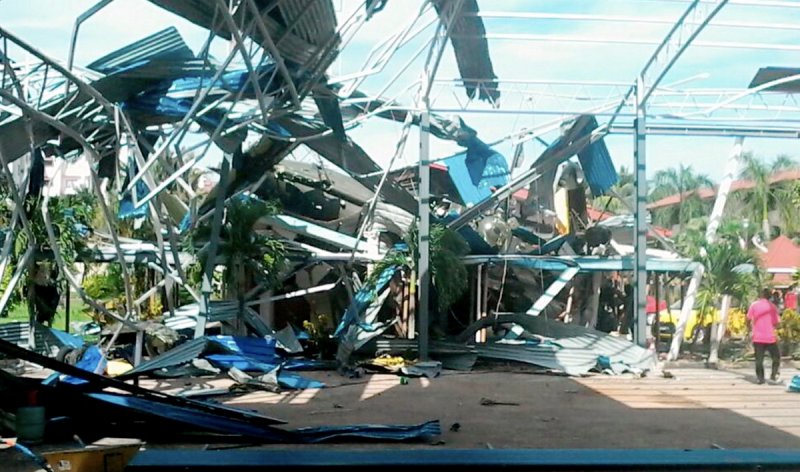
Helikopter Sikorsky S-61A4 Nuri milik TUDM yang telah melakukan pendaratan cemas di SMK Balung, Tawau
Hari ini saya diajukan beberapa soalan dari berbagai pihak mengenai kejadian yang melibatkan sebuah pesawat helikopter Sikorsky S-61A4 Nuri milik TUDM di Sekolah Menengah Kebangsaan Balung, Tawau. Untuk memudahkan penulisan, izinkan saya menulis dalam bentuk soalan-soalan yang telah diajukan kepada saya:
SOALAN 1: Media telah menggunakan perkataan “terhempas” namun pihak TUDM menggunakan istilah “mendarat cemas.” Boleh Kapten terangkan perbezaan kedua-dua istilah tersebut?
Istilah “terhempas” menggambarkan suatu situasi diluar kawalan. Sebagai contoh, pesawat mengalami kegagalan sepenuhnya fungsi alat kawalan yang mengakibatkan sesuatu pesawat itu terus jatuh diluar kawalan (uncontrolled descent).
Akibat kejadian “terhempas” kebiasaannya akan mengakibatkan kemusnahan total kepada kerangka pesawat, disertai kehilangan jiwa dan/atau kecederaan parah kepada majoriti penumpang.
“Mendarat cemas” ataupun “pendaratan kecemasan” ialah suatu tindakan yang dilakukan sebagai respon kepada sesuatu kejadian kecemasan, contohnya respon juruterbang kepada kegagalan fungsi enjin pesawat. Dalam kejadian semalam pada pengamatan saya, juruterbang telah bertindak untuk cuba mendaratkan pesawat di suatu tempat lapang di antara dua blok sekolah menggunakan kaedah “auto-rotation” namun telah tidak cukup masa untuk mencapai kawasan tersebut. Siasatan oleh pihak TUDM akan memberi lebih pencerahan mengenai kejadian ini.
SOALAN 2: Pada pendapat Kapten, apa punca kejadian? Adakah ia boleh dielak?
Semua kejadian boleh dielak. Namun kita tiak boleh menjangkakan sesuatu yang bakal berlaku walaupun semua langkah telah diambil untuk mengelak sebarang kejadian yang tidak diingini. Contoh terbaik: Lewis Hamilton terpaksa keluar dari perlumbaan F1 di litar Sepang baru-baru ini walaupun sedang mendahului para pesaing lain akibat kerosakan enjin walaupun penyelenggaraannya amat baik. Hanya siasatan terperinci dapat memberi gambaran punca kerosakan kepada pesawat Nuri tersebut dan juga kereta yang dipandu Lewis Hamilton tempoh hari.
SOALAN 3: Masalah teknikal dikatakan antara punca kejadian. Adakah wujud faktor tersebut atau Nuri itu sendiri tidak boleh diselenggarakan lagi kerana usianya yang sudah lanjut?
TUDM, sayap udara TLDM dan Pasukan Udara Tentera Darat mempunya rejim penyelenggaraan pesawat yang amat baik. Usia lanjut sesebuah pesawat itu tidak banyak memainkan peranan sekiranya penyelenggaraan adalah baik.
SOALAN 4: Adakah pesawat Nuri kita terlalu tua dan tidak sesuai lagi untuk latihan memandangkan komponen dan besi pesawat sudah uzur dan haus seperti didakwa sesetengah pihak?
Masih banyak varian Sikorsky S-61 yang masih digunakan di seluruh dunia termasuk juga yang digunakan oleh State Department Amerika Syarikat. Malah ianya juga salah satu helikopter yang digunakan untuk mengangkut Presiden Amerika Syarikat. Tentera Udara DiRaja New Zealand masih menerbangkan pesawat Hercules C-130 mereka yang sudah berumur 51 tahun. Usia pesawat bukan merupakan faktor.
SOALAN 5: Apakah sudah sampai masa Nuri digantikan bagi megelakkan insiden yang sama berlaku? Jika tidak, adakah Nuri masih lagi perlu digunakan?
Nuri adalah pesawat yang masih diperlukan. Aset-aset Nuri TUDM juga kini diserapkan ke dalam Pasukan Udara Tentera Darat untuk tujuan “air mobility.” TUDM menggantikan pesawat Nuri bukan kerana usia atau masalah penyelenggaraan tetapi adalah kesesuaian peranan yang dimainkan oleh TUDM seperti Combat Search and Rescue, Special Forces Insertion and Extraction yang memerlukan helikopter berperanan khusus. Pesawat Nuri juga telah melalui beberapa proses penambahbaikan kerangka dan avionics untuk menentukan ianya selaras dengan keperluan masa kini. Ini termasuk peningkatan upaya gearbox, bilah kipas utama dan bilah kipas ekor dan pautan data digital. Malah peningkatan upaya pesawat Nuri dengan memperkenalkan “glass cockpit” atau kawalan digital sepenuhnya yang sesuai digunakan dengan teropong kegunaan malam (night-vision goggles) telah dilakukan untuk sesetengah pesawat Nuri.
Ini menunjukkan pesawat Nuri masih lagi relevan, terutama untuk tujuan pengangkutan saiz sederhana atau penghantaran platun infantri ke medan.
SOALAN 6: Apa nasihat, cadangan, pandangan Kapten kepada TUDM demi masa depan aset seperti Nuri dan keselamatan pengguna helikopter tersebut?
Kementerian Pertahanan perlu menentukan “end-user” mendapat bajet yang diperlukan untuk menentukan perolehan, pengoperasian dan penyelenggaraan aset-aset bukan sahaja TUDM, malah untuk Angkatan Tentera Malaysia amnya, dapat diteruskan dengan baik dan memenuhi doktrin Angkatan Tentera Malaysia.
Pesawat Sikorsky S-61A4 yang telah diserap oleh Pasukan Udara Tentera Darat
Despite lesser budget, the annual joint exercise between the Royal Malaysian Air Force (RMAF) and the Royal Malaysian Navy (RMN) dubbed ANGSA (short for ANGkasaraya and SAmudra) for 2017 will be executed as planned. Asked at the closing ceremony of Exercise ANGSA 11/16, Chief of the RMAF General Tan Sri Roslan bin Saad TUDM said that there is no necessity for the joint exercise to be put on hold.
“Both the Air Force and the Navy who will become the host for next year’s exercise will ensure that the budget will meet the requirements of the objectives of the exercise,” he told reporters at the No.18 Squadron’s auditorium. “It is important that the Malaysian Armed Forces grasps its interoperability requirements especially when such need arises.”
On the question of the replacement of the medium-range surface-to-air missile for the RMN’s Laksamana-class corvettes, Vice-Admiral Dato’ Anuwi bin Hassan TLDM said the RMN Commanders Committee Meeting shall discuss the replacement of the ASPIDE system.
Exercise ANGSA 11/16 involved a Command Post Exercise and for the first time sees the involvement of elements of the Malaysian Army.
Will the 58th Air Force Day see the full retirement of the MiG-29N?
2016 has seen the Royal Malaysian Air Force lose two of its valuable assets – a CN235 transport aircraft, and a MB-339CM lead-in fighter trainer. To top that, there is still no announcement of a stop-gap measure to replace the MiG-29N.
The shortfall is very noticeable especially among observers whom have noted that in regional exercises, the RMAF would normally commit four fighters per squadron while a neighbour could easily muster ten.
The Royal Malaysian Navy has recently embarked on its Littoral Combat Ship program. This has been a long-awaited program given that China has forward bases in the Spratlys after reclaiming some 1,170 hectares. Commercial aircraft have been landing at the airstrips built there, we know what those airstrips are able to handle.
The Falklands War of 1982 and the Force ‘Z’ disaster closer to home on 10th December 1941 are poignant reminders that air superiority and the element of surprise are critical in modern air and naval warfare. Without the MiG-29s or their replacements force projection is somewhat limited. Maritime Patrol Aircraft play an important role in locating enemy surface assets, while airborne tankers will allow air assets to have longer loiter and patrol capabilities. As written in a previous article an Airborne Early Warning system would also help the RMAF to “see beyond” what it currently could. The RMAF has been in want of AEW assets since the 1980s, a dream yet to be fulfilled.
Also important would be a mobile radar in the Peninsular with at least three in Sabah and Sarawak would enhance our air defence capabilities. Passive radar system would also enhance aircraft identification process.
Importantly everything should be at a minimum operational and combat readiness level of seventy percent. And this number should include the spares we need to run these systems.
The RMAF has very good and skilled human assets but without the tools needed to make the organisation combat-effective. Again, it is hoped that the government can pay serious attention to the needs of the Armed Forces – the RMAF in particular. A stop-gap measure with over 70 percent operational and combat readiness is what the government needs to assist the RMAF with.
Only then the RMAF would truly be “Sentiasa Di Angkasaraya.”
Happy 58th Anniversary, RMAF. We hope your dreams will soon come true.
A flight of B-52 bombers from the USAF flew around Second Thomas Shoal and Mischief Reef in the Spratlys and were quickly challenged by Chinese Air Traffic Controller during the weekend of the 8th and 9th November 2015.
US PACAF released the transcript of the exchange between the bombers and the Chinese ATC and was reproduced by Alert 5 and are as follows:
Chinese ATC: “You have violated my reef. Change your course to avoid misjudgement.”
Chinese ATC: “You have violated the security of my reef. Change course to avoid misjudgment.”
Reply from the B-52: “I’m a United States military aircraft conducting lawful activities in international waters, and exercising these rights as guaranteed by international law. In exercising these rights as guaranteed by international law, I am operating with due regard to the right and duties of all states.”
China has been making de facto claims on the Spratlys by doing reclamation works on reefs that include the construction of airfields and enforcing its “Nine-Dash Line” policy all the way into Malaysian Exclusive Economic Zone. Being the sole regional Big Brother China has been flexing its muscle against its smaller neighbours economically and militarily. China’s runway at Fiery Cross reef has a runway that could land a H-6G bomber that could operate 5,700 kilometres from a home base, not to mention Shenyang J-11 fighters that could operate within a radius of 1,400 kilometres. Malaysia is now within a 45-minute strike distance.
As if that is not enough, the threat if asymmetric warfare from Sulu in the southern Philippines is also a clear and present danger. On the 15th November 2015, the Abu Sayyaf was reported to have met with elements from the IS to conduct terrorist attacks in Malaysia. The Abu Sayyaf is also notorious fir the kidnappings of westerners and Malaysians alike.
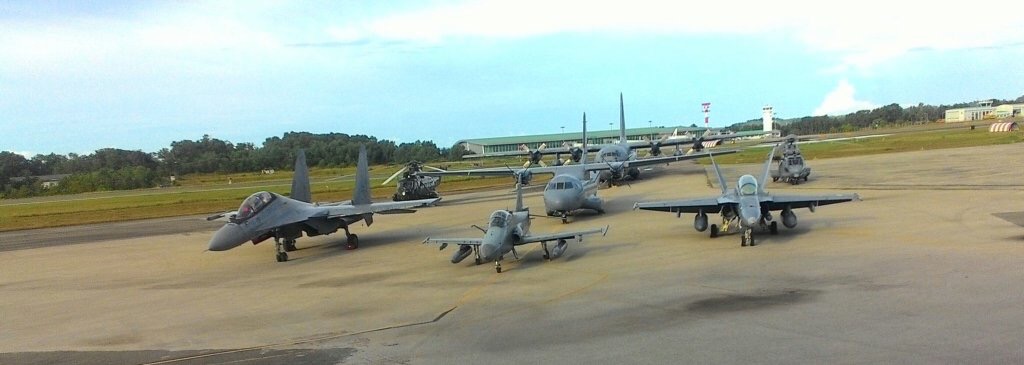
RMAF assets involved in Ex Paradise 2/15 – photo by Marhalim Abas
With the above in mind, the Royal Malaysian Air Force conducted and concluded Exercise Paradise 2/15 from the 9th until the 20th November 2015. With the objective to test its combat readiness and capabilities in the Second Air Region, the RMAF deployed assets such as the F/A-18D Hornet, Su-30MKM Flanker, BAe Hawk, 108/208, C-130H-30 transport aircraft, KC-130 tankers, CN-235 transport aircraft, helos such as the Sikorsky S61A4 Nuri and the Eurocopter EC725 and also involved the RMAF Special Forces regiment. The Malaysian Army’s 10th Brigade (Para) provided a team of air despatchers.
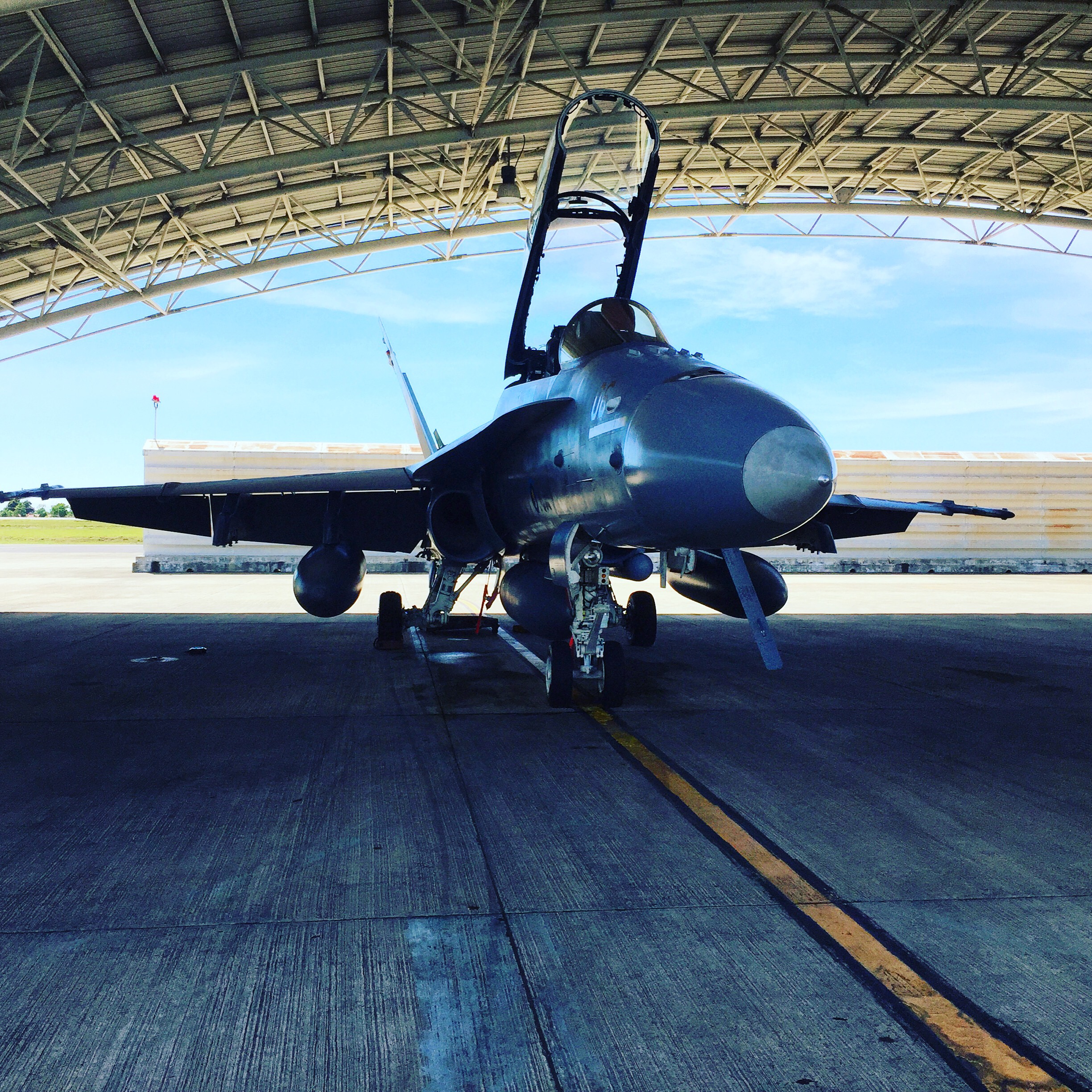
A RMAF F/A-18D Hornet from No.18 Squadron – pic by Capt Rahmat
Up until the 18th November 2015, a total of 198 air sorties had been flown. During the Field Training Exercise (FTX) RMAF assets successfully conducted Air to Ground firing exercises as well as Air Drop operations and insertion of special forces elements to support ground operations.
During the War Exercise (WAREX), the assets were then combined for Combat Search and Rescue (CSAR), High-Value Air Asset Protection (HVAAP), Combined Air Operations (COMAO), Mixed Fighter Force Operation (MFFO) and Large Force Employment (LFE).
According to Exercise Chairman, Major General Dato’ Mohd Shabre bin Haji Hussein RMAF, the exercise achieved more than 90 percent of its objectives in accordance with the Scenarios of Exercise (SOE) and was a success.
The media was also invited to witness the exercise in a bid by the Ministry of Defence as well as the RMAF in educating the media, and in turn the public, on the capabilities of the RMAF and the importance of public support towards the Malaysian Armed Forces in general.
Members of media had the privilege to take part in a Aircraft Force Down exercise involving fighter and transport assets.
Members of the media experiencing aircraft force down procedures in a side-exercise – photo by Fadzli Hafiz
In an observation by this writer, the Ministry of Defence has to seriously look at beefing up the assets of both the Royal Malaysian Air Force as well as the Royal Malaysian Navy. The Chinese government gets away with murder in the South China Sea simply because Malaysia lacks effective deterrence. The RMAF for example should be equipped with AWACS aircraft as well as the still-elusive MRCA.
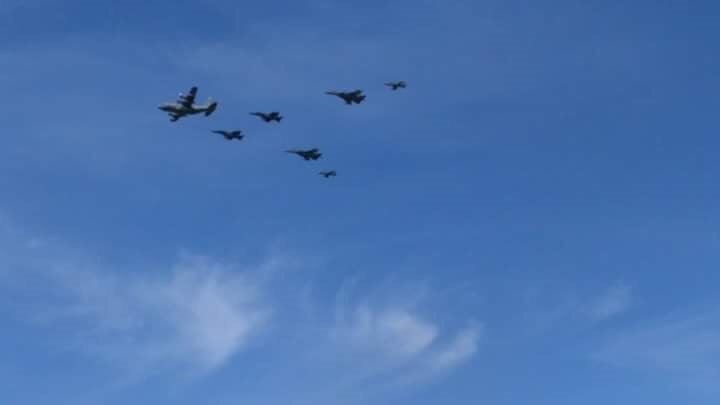
A KC-130 tanker leading a formation of F/A-18Ds, Su-30MKMs and Bae Hawks – photo by MINDEF
This writer opines that in line with the principles of force projection, MRCAs should also be based in Labuan in sufficient numbers to deter the advance of PLAAF and PLAN assets, while the Hawks concentrate especially in providing air support for the ESSZONE by having forward operating bases in Tawau and Lahad Datu or Sandakan. Without strong deterrence, Malaysia will never be able to have diplomatic bargainjng power against any larger forces in the region.






 SeaDemon Says
You must be logged in to post a comment.