Sarawak Memilih


Sarawak memilih lagi.
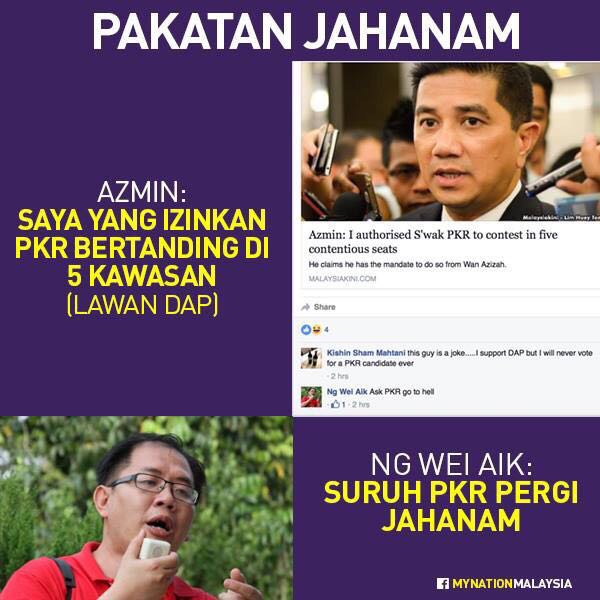
Kali tok, sifat tamak DAP dapat kita lihat bila sidak nya dengan sengaja sik peduli dengan rakan sidak dari PKR. Di sia sidak PKR bertanding, di sia juaklah sidak DAP tok bertanding juak. Pabila apa yang di maok sidak sik dipenuhi, lalulah DAP nyumpah seranah rakan sidak ya, lalu nak main ngembak sentimen hal perkauman dan ugama. Toklah yang membuktikan bahawa Pakatan Harapan Rakyat tok sebenarnya cuma topeng ajak untuk sidak DAP bagi mancapai kuasa memerintah.

DAP bukanlah suatu parti yang memperjuangkan nasib semua rakyat seperti apa yang dipadah sidak. Sidak DAP tok parti rasis yang memperjuangkan nasib sigek kaum ajak. Sebagai contoh, kerusi DUN Pending dimenangi hanya kerna DAP dengan terang nyebut sidak adalah parti untuk suara satu kaum ajak. 

Ternyatalah Sarawak yang sejak dolok lagik negeri yang harmoni, kinektok dah diperkenalkan dengan hasutan perkauman yang di embak sidak DAP tok, sebuah parti yang bukan nya asal dari Sarawak. Budaya pecah belah dan perkauman tok wajib kita tolak.

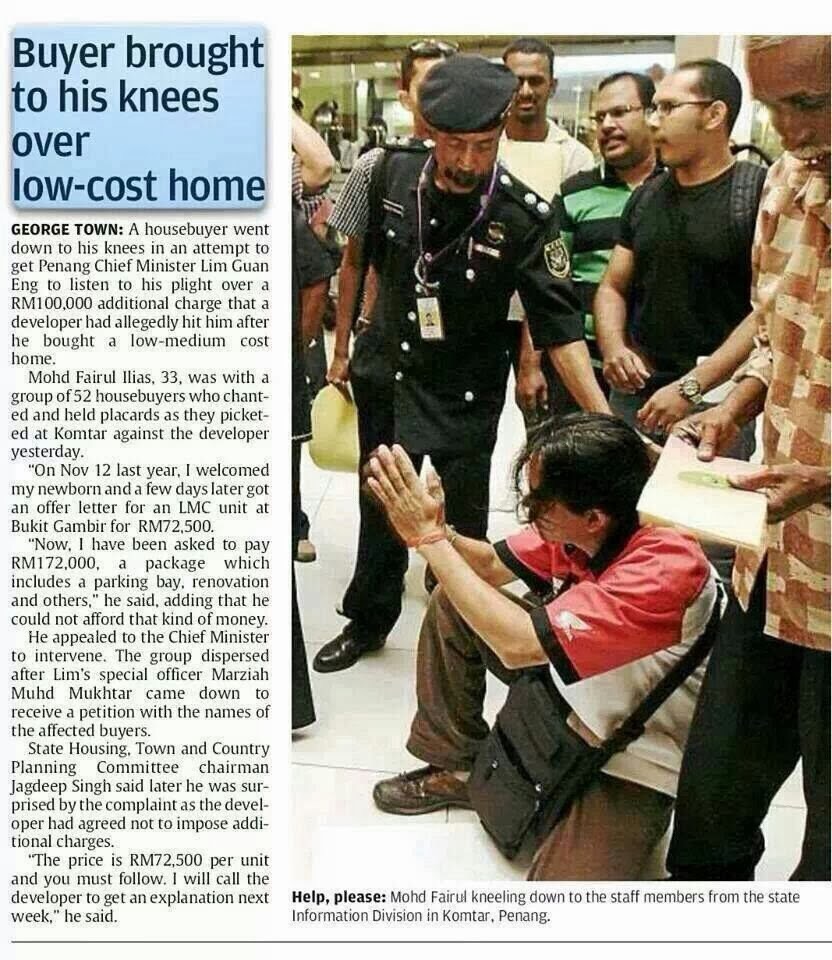
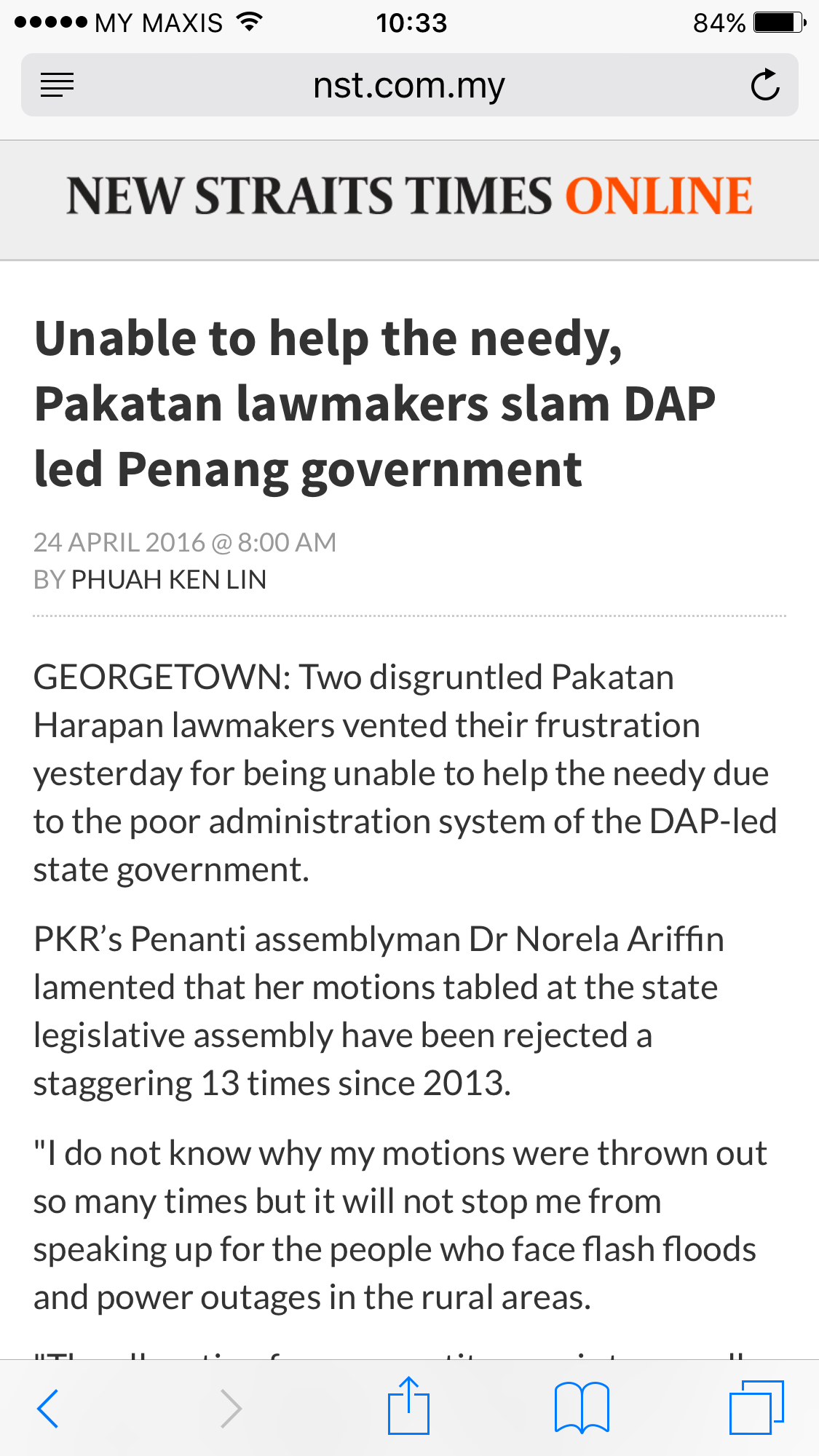
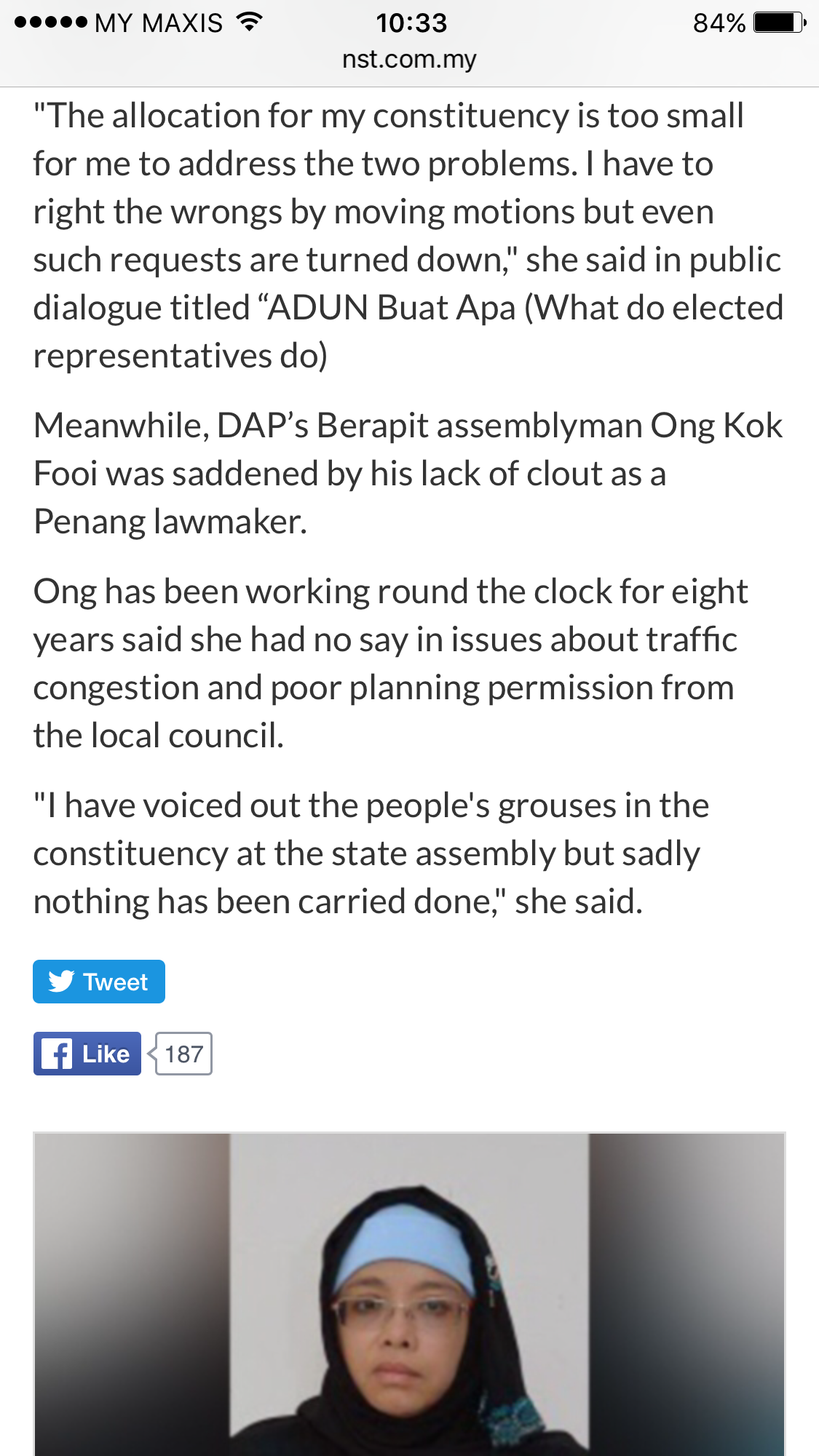
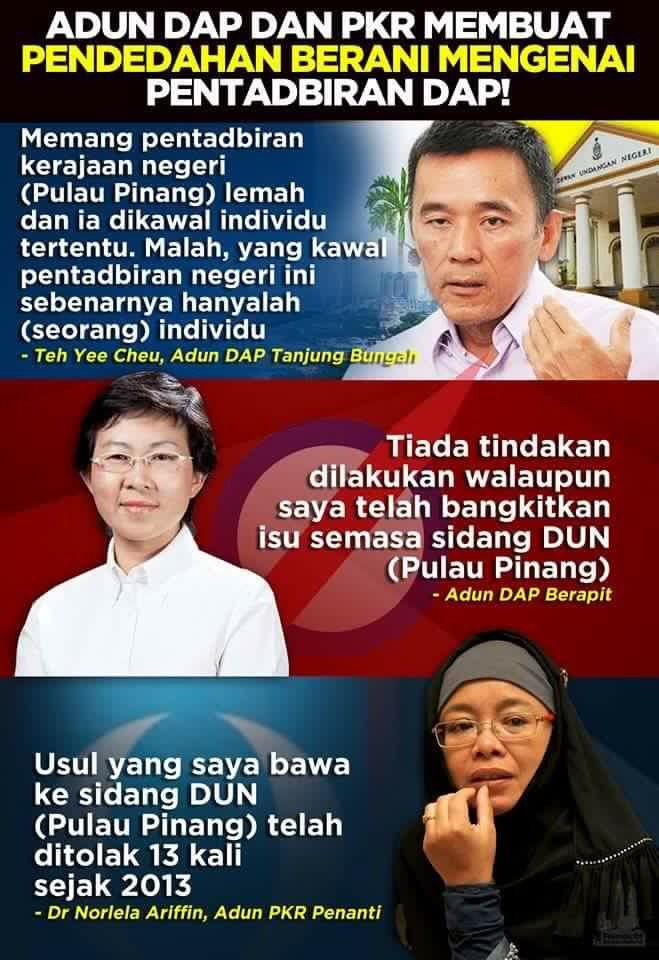
Di Pulau Pinang, bukan ajak kaum Bumiputera, kaum-kaum lain yang sik berkemampuan terpaksa pindah keluar dari sia sebab harga rumah dan hartanah yang melampau. Rakyat miskin memang sik ada peluang bersuara langsung. Malah, wakil rakyat Pakatan Harapan di Pulau Pinang yang maok memperjuangkan suara rakyat miskin pun sik diberik peluang meluah masalah rakyat.


Bayangkan ajak kalau Pakatan Harapan berkuasa di Sarawak tok. Parti bukan Sarawak seperti DAP akan berkuasa. Suara golongan Bumiputera Sarawak serta mereka yang miskin sik kira kaum, akan ditindas.
Sarawak akan memilih. Apabila Sarawak memilih pada 7 haribulan kelak, tentukan Sarawak memilih dengan tepat. Tolak parti dari Semenanjung nun seperti DAP yang tamakkan kuasa ajak dan akan membawa perpecahan .
Keluarga kamek urang urang Sarawak tok bukan seperti DAP. Kamek urang di sitok ada ahli keluarga yang Kristian, Islam, Buddha dan lain-lain, yang mewakili rupa wajah perpaduan negeri Sarawak tok. Bayangkan kalau kamek urang tok bergaduh, berkelaiee adik-beradik dan keluarga berpecah-belah hanya kerana oleh hasutan parti sidak DAP!
Tolak DAP! Tolak Pakatan Harapan! Kekalkan perpaduan keluarga Sarawak!

Taking Voters On A Free Ride


It seems giving things away for free is DAP’s way of making fools out if some voters.

Among the things promised to Sarawakians is to provide free transportation to school.

This reminds me of the same thing DAP promised to Penangites in 2011:


Penangites were delighted. Penang became the first state to provide free transportation for workers on both sides of the Penang Channel. Every single pro-Pakatan blog showered Lim Guan Eng’s administration with praises. DAP won Penang for a second term in 2013.

A mere four years later, came the crunch:


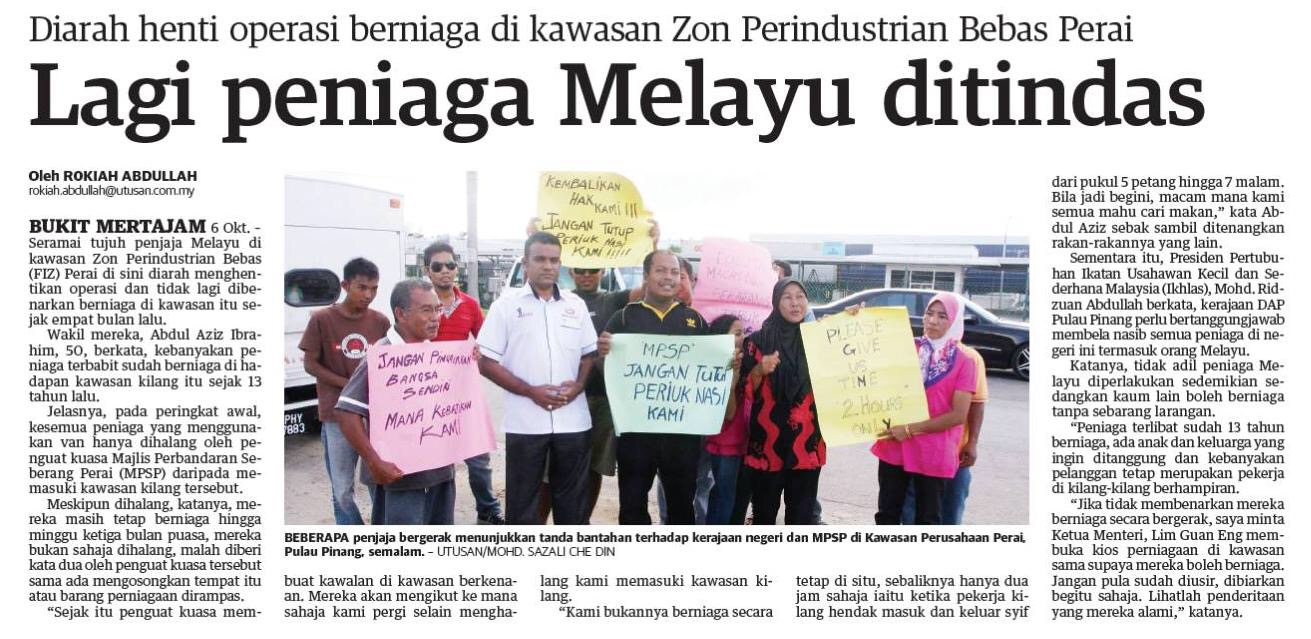
Now that the poorer Penangites no longer occupy the island because of rising costs of living, Lim Guan Eng could do as he pleases, just as he did with the land at Taman Manggis allocated for housing the poor. The BEST FIZ service he gave to voters to win the 2013 elections…well, fizzled. You can read more about it HERE.

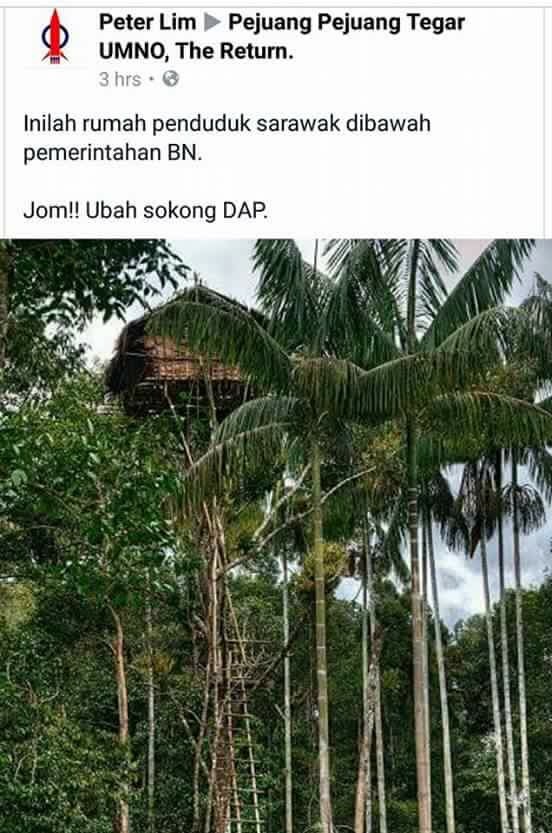
It would be interesting to see how DAP plans to give free transportation say for example in this remote village in Sarawak I visited earlier this month:


The distance from the farthest village to the school is about seven kilometers. Perhaps DAP people see Sarawak as a flat land as in the in-flight magazine’s map while flying to Sarawak.

DAP only has the urban voters in mind where a very small portion of the Sarawak Bumiputra would benefit from this.  And as Violet Yong, the DAP rep for Pending (a suburban area of Kuching) said in 2013, it is the voice for one race.

I would go with Adenan Satem’s manifesto for BN for being more people friendly, realistic and holistic – encompassing all races! So much for calling BN a racist party.

The Bittersweet Alliance – Part 1

The philosopher Jorge Agustín Nicolás Ruiz de Santayana y Borrás or George Santayana once said that those who do not remember the past are condemned to repeat it.  The recurrence of history is part of life’s cycle, but always in different forms.  Those who do not remember how certain historical lows were handled are bound to make even bigger mistakes.


Recently, there was a furor following the statement made by UMNO’s Ismail Sabri , the Agriculture and Agro-Based Industries Minister, asking consumers to boycott greedy Chinese businesses.  While it is normal to hear the communal-party-disguised-as-a-non-communal-party DAP lashing out at Ismail Sabri, the call by MCA’s Youth Chief, Chong Sin Woon, for the sacking of Ismail Sabri did not go down well with UMNO and 92 Divisions of the latter rallied behind Ismail asking for Sin Woon to be sacked instead.


While I refuse to indulge in a debate over what was said by Ismail Sabri, there is a need for consumers to boycott profiteering businesses who whine about high cost of fuel and pressured the government to allow them to increase the price of their services, but refused to lower prices when the price of fuel has gone down by half.  What I am more interested in is the bittersweet alliance between UMNO and MCA, and how history is repeating itself.


While the movement for the independence of Malaya had started decades before, there was no cohesion between races. In 1946 when the Malayan Union was formed, the republican-in-nature Partai Kebangsaan Melayu Malaya (PKMM) and the non-Malay Malayan Democratic Union (MDU) were quick to support the formation.  The PKMM, a spin-off from the Batavia-leaning KMM of Ibrahim Yaacob, was all for a Malaya not ruled by the Malay Rulers, while the MDU liked the idea of automatic citizenship (read more in Seademon’s The Road To Merdeka: Persekutuan Tanah China ) for the immigrants. On 1st March 1946, more than 40 Malay organisations met up and 41 decided to form the United Malays National Organisation (UMNO) to champion the Malay rights.  The Malays were then a minority in his own land, poor, sidelined from economic development, health care and formal education.  With the help and encouragement of the then-British High Commissioner, Sir Henry Gurney, the Malayan Chinese Association (MCA) was formed on the 27th February, 1949. Gurney aimed at winning the allegiance of the Chinese community away from the Communist Party of Malaya (CPM) (Colonial Office Record 537/773(1) Memorandum by Henry Gurney, 28th January, 1949).


There was apprehension and distrust between the Malays and Chinese.  The alienation of the Malays by Chinese mining tycoons and rubber estate owners, followed by the preference of the Japanese of the Malays over the immigrant Chinese, and this in turn followed by retribution against the Malays by Chinese sympathizers of the CPM after the Japanese surrender have had contributed enormously to this animosity between the two.


It was since 1950 that Henry Gurney had wanted to introduce some form of democracy to Malaya through elections to satisfy the public’s hunger for democracy versus the communist’s way of winning self-government.  Alas, he was only a High Commissioner and still had to go through the true rulers of the Federation of Malaya – The Malay Rulers.  So, during the 10th Malay Rulers Meeting on the 22nd and 23rd February, 1950, Gurney presented his recommendation, only to be met with reluctance of the Malay Rulers.  In the minutes of meeting, the Sultan of Kedah stated his reservation:


The most important prerequisite for democracy is education. Without enlightened public opinion a democratic system of Government will be liable to unsteadiness or even confusion and chaos. One danger is that it may be transformed into a single party government through a few skilled electioneers working among the apathetic population and this will work towards dictatorship.” (Colonial Office Records 537/6025(1))


The Malays, as mentioned above, were left behind educationally and may not know what is best for them.  For the same reason the PKMM and MDU were in full support of the Malayan Union four years prior to this event.  And whatever the outcome, the Malays would have ended up the biggest losers if no one champions their rights. Noted William L Holland in “Nationalism in Malaya” (WL Holland, 1953):


“There was already Malay discontent in the pre-war period over the poor economic position vis-a-vis the Chinese and Indians. Malay peasants and fishermen, noted S.H Silcock and Ungku Aziz, were dependent on Chinese middlemen while Malays worked as messengers in offices where Chinese and Indians were clerks.”


The phrases made bold above by me, still holds true today and became the basis of Ismail Sabri’s main grouse against profiteering businessmen.


Gurney had to bring about some form of democratic self-rule that would benefit all races.  Separately he discussed on numerous occasions with both MCA and Dato’ Onn and impressed upon them that self-rule would only happen if there is a closer relations between the communities (The Making of the Malayan Constitution, Joseph M Fernando, 2002, Page 15).  Gurney was all for the promotion of Sino-Malay talks to tackle long-term problems.  Gurney minuted the following:


“The outstanding issues at that stage were citizenship and the economic backwardness of the Malays.  The Chinese leaders sought a more liberalised citizenship than those contained in the 1948 Federation of Malaya Agreement.  Onn meanwhile , had approached the Colonial Office to secure financial assistance for the Malays.” (Colonial Office Records 537/773(1))


Onn Jaafar, however, was more open towards a better relationship between the Malays and other races if UMNO was to achieve the long-term ambition of self-governing the nation.  In the UMNO annual general meeting in Arau, Perlis, on the 28th May 1949, he said in his speech:


It is absolutely important for the Malays to obtain closer ties with the other people in this country.  It is time for us to take the view wider than the kampung view.  I ask of you, which will you choose, peace or chaos, friendship or enmity?” (Straits Times, 29th May, 1949)


It was at this meeting that UMNO had agreed to accept non-Malays as associate members.  Two years later, in June 1951, Onn went a step further by proposing that UMNO should open its doors to the non-Malays, and that UMNO be renamed the “United Malayan National Organisation.”  While the top echelon of the party was supportive of this idea, the grassroot felt it was too radical.  The bitterness resulting from the years of resentment and occasional interracial violence were too new for them to accept the non-Malays into their political fold.  As a result, Onn left UMNO to form a new party called the Independence of Malaya Party (IMP) despite Gurney’s insistence that the former should remain in UMNO.  Onn gambled that UMNO would fall apart and would rally behind him.  Instead, UMNO rallied behind its new leader, Tunku Abdul Rahman, who sought to retain and strengthen UMNO’s communal organisational structure.  The Tunku also threatened to expel from UMNO any member that joins or had joined the IMP (Straits Times, 18th September, 1951).


The MCA meanwhile remained a loose association of both “neutral” Chinese and the hardcore sympathizers of the CPM.  Gurney had felt that the MCA had not gained much support from the Chinese community and the CPM sympathizers especially to help bring about a speedy end of the First Emergency.  The Perak MCA Chairman, Leong Yew Koh, wrote to Cheng Lock on 1st June, 1950:


“Although the Perak MCA membership is 40,000 strong, the branch is a mere basin of loose sand.” (Tan Cheng Lock Papers, ISEAS Singapore, Folio IX)


Cheng Lock was quick to suggest that the MCA should become more political in order to better represent the Chinese:


“The MCA should not exist only for the limited, though vital, purpose of the meeting the emergency.  It is a living institution which should consolidate itself on a strong and broad democratic foundation, in order that it may be ready to play a part in Malaya of the future as well as the present.” (Colonial Office Records 1022/176)


Thus, the stage is set for two political giants to go against each other for political power, after which we will see whether it was the Tunku or not who played the pivotal role in making the alliance between UMNO and MCA come true.


Stay tuned.

Reduced To Ranks

An Indian man displays the indelible ink mark on his finger after casting his vote in Mumbai India - source www.dailymail.co.uk
An Indian man displays the indelible ink mark on his finger after casting his vote in Mumbai India – source http://www.dailymail.co.uk

Another Air Force personnel has been punished after being found guilty of more or less the same case as former Major Zaidi Ahmad. Quoting an unnamed source, the Malaysian Insider reported that Flight Sergeant Jamal Ibrahim “…was not brought to court but was still punished for the alleged offence,” something that I find outrageously absurd.  However, coming from the Malaysian Insider, I am not at all surprised.

The source said Jamal was given an option whether to fight his case in the martial court or be tried by the commanding officer and he chose the latter.
Before this gets blown by idiots who do not understand the system, first of all, whiners should not join the Armed Forces.  If you have problems following orders, get a pound for yourself at the SPCA or at a similar organisation.  Secondly, people are already starting to say that Zaidi’s dismissal from the service versus Jamal’s reduction of rank reeks of political arm twisting.
Zaidi was an officer. Jamal is not.  An officer holds the King’s Commission, an enlisted man does not.  An enlisted man’s rank is given by the service chief. An officer up to the rank of Captain gets his promotion from the Armed Forces Council, while Major and above get it from the King himself, as recommended by the Armed Forces Council.  Which is why you no longer have promotions exams once you have attained the rank of a Major.
So why was Zaidi tried by a court-martial and not given the option to be tried by his Commanding Officer like Jamal?  Why the harsh treatment?
Section 96 (1) of the Armed Forces Act, 1972 clearly states the following:
After investigating a charge against a commissioned officer below the rank of Lieutenant-Colonel or its equivalent, or against a Warrant Officer may, if an Authority has powers under the following provisions of this Part to deal with it summarily, be so dealt with by that Authority in accordance with those provisions
So, why didn’t that authority deal with Zaidi summarily?  Firstly, Zaidi did not have a Commanding Officer. He WAS the Commanding Officer. Furthermore, Section 89 (7) of the Act also mentions that “where an officer is sentenced to imprisonment, he is also sentenced to be dismissed with disgrace from His Majesty’s service.”  As only His Majesty has the power to dismiss an officer, only a Court-Martial could try him.
Jamal on the other hand is a serviceman. A non-commissioned officer. Not even an Appointed Officer or a Warrant Officer, let along a Commissioned Officer.  His Commanding Officer has the choice of giving him lesser punishments as prescribed by the Act including detention of not more than 90 days, or anything lesser.  He was also, at the beginning of his summary trial by the Commanding Officer, be given the choice of either being tried by a court-martial, or by his Commanding Officer.  We know he chose the latter. The normal proceeding would follow, in accordance to the law, with the unit’s Adjutant advising.  On arraignment, he will be read the charge according to the charge sheet and asked for his plea.  I would expect Jamal to plead guilty, given that that would give him a lesser punishment.  With his service taken into consideration, the Commanding Officer gave him the lesser punishment of reduction of rank (demotion, for those not well read) when it could have been any number of days in a gazetted detention center.
So, there you go.  No one was given a harsher treatment.  Everyone was given due process according to the law.  Now, please stop politicising the Armed Forces. That kind of thing is only done by anarchists bent on sowing the seeds of a civil war, unless you are one.
And for those in the Armed Forces, if you think you cannot serve the country apolitically, get out at the earliest opportunity you can get and once you get your NRIC, go ahead and peddle your political agenda.

Conduct Unbecoming

2015/01/img_1121.png

“Loose Talk Could Sink This Ship”

“The Walls Have Ears”

The above are among reminders you would normally see then in a military establishment. Whether or not these reminders are being repeated today remains to be answered. At least such reminders should be repeated in all courses attended by military personnel.

Back in the 1970s, at the height of the Second Emergency, soldiers got killed after wives talked eagerly in public about the husbands going for operations against communist terrorists. Mind you, wives and children are the only people in any military establishment that are never vetted by security agencies.

One such wife was even employed as a typist at one military establishment. For years she mailed the carbon papers of each important military correspondence to the intelligence service of a neighbouring country before she was arrested.

In the late 1980s, 10 officers and men of the Armed Forces were nabbed by military intelligence after they were found to have sold strategic defence files to the intelligence agencies of a neighbouring country. The highest amount paid for a file was USD96,000 for a document on contingency defence plans of a particular state. The rest were defence plans of an Air Force Base, a naval base, and the layout of a military hospital.

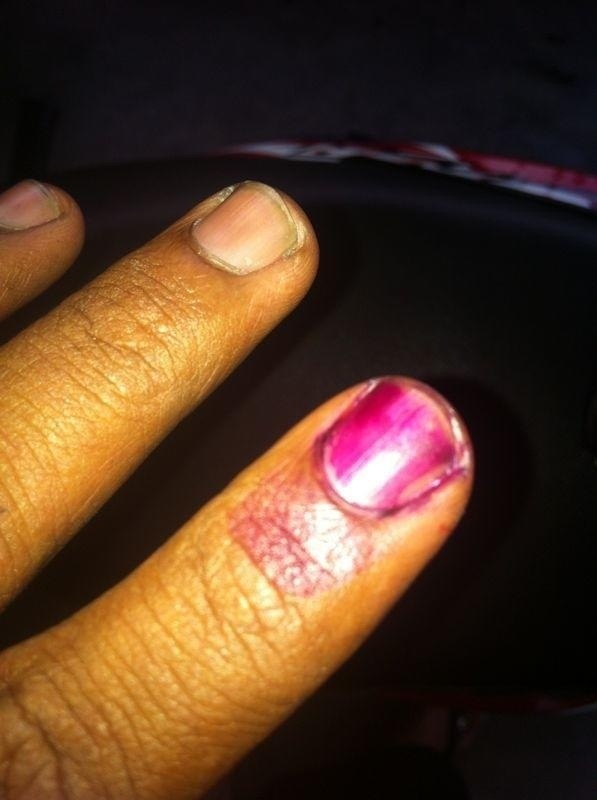
In the Armed Forces too you have channels to complain or air your grouses. Your quarters is leaking, you complain to the Facilities Officer. Your mess food sucks, you complain to the Mess Messing Member, or in the case of the other ranks (rank and file if you must), complain to the Duty Officer who is supposed to eat the food you eat with you. Your senior officer has wronged you, the Armed Forces Act, 1972 allows you to seek redress of wrong. Your indelible ink wears off your finger in less than a day, you complain to the Officer Commanding the Administration Branch. Better still, if it is on the same day of voting, you complain to the Elections Commission officers at your place of voting.

There is a reason that you are an Armed Forces member and not a civilian. It means that you are not a civilian. You come from a highly disciplined institution that lives by its codes of rules, regulations, standing orders and orders. You cannot whine like an old lady in public, more so when you are in uniform.

Former Major Zaidi bin Ahmad was a good officer, until the day he appeared in the photo above. He was my junior by two intakes. He was a good pilot. He flew the F-5E Tiger II before progressing to a F-18 Hornet driver, after which he was picked to lead No.12 Squadron (F-5E Tiger II) as its Commanding Officer. He was a quiet man, well-mannered, and according to those who know him, it was no secret that he is a staunch supporter of PAS.

There is nothing about being a military man and have a liking for whichever political party. When I was a serving officer, I told my men that they were free to vote for anyone they wished, but as a member of His Majesty’s Air Force, they should remain apolitical in their conduct.

Granted that Zaidi might have had good intention by talking about his experience with the indelible ink, he went against the Armed Forces Council’s Order No. 13 of 1960. What more, he was wearing his uniform. As a member of the Armed Forces, you are not to talk to the media unless you have prior clearance from the Public Relations Office at both the Air Force HQ and the Ministry of Defence. You might be subjected to unguided and mischievous questions and you might answer wrongly. You might give away more than you should, as the information you are privy to may cause harm to the defence of the nation if leaked whether intentionally or unintentionally.

After the episode above, he was under investigation I presume, and an orders signal was issued for him to be transferred to a lesser sensitive post pending investigation. Each signal (in the civilian world before the advent of the E-Mail is much like the telegram) is either an unclassified document (Pendarjahan TERBUKA), or RESTRICTED and above (Pendarjahan TERHAD ke atas). I would expect the signal pertaining to his transfer was classified as PERSONNEL-IN-CONFIDENCE (SULIT DARIHAL ANGGOTA).

A transfer is normal when one is under investigation. Policemen under investigation are always transferred to “desk” duties. The same applied to Zaidi. Instead, perhaps for political reasons, he decided to show the signal to journalists who do not have the necessary security clearance to be privy to the information on the signal.

One might argue that a transfer order is hardly detrimental to the security of the nation. Well, in this case, maybe it wasn’t. It is not so much the content that is in question but the act of showing any document to those unauthorised to view it. Imagine if his grouses are bigger, I cannot imagine what a Commanding Officer of a fighter squadron, charged with taking care of the nation’s defence, could and would reveal to unauthorised people. That act, to me, shows how this senior officer’s conduct was very unbecoming, and is not trustworthy to be looking after the nation’s defence.  To add insult to injury, Zaidi even sent out an SMS in the form of a political incitement; definitely unbecoming of a senior officer of the Armed Forces.

Was the punishment of being discharged from His Majesty’s service received by Zaidi harsh? My answer is a definite no. Firstly, Zaidi was a senior officer and a Commanding Officer. He was not some less-educated Private or Airman. He was charged under Section 50 (2) and Section 51 of the Armed Forces Act, 1972, for disobedience to superior officer and disobedience to standing orders.

If I may read to you the punishments prescribed by these sections. They read:

Every person subject to service law under this Act who, whether wilfully or through neglect, disobeys ny lawful command of his superior officer/standing orders shall, on conviction by court-martial, be liable to imprisonment or any less punishment provided by this Act.

The scale of punishments for an Officer of the Armed Forces prescribed by the Armed Forces Act, 1972, can be found in Section 89 (2) of the Act. They are:

Death,

Imprisonment to a term not exceeding 14 years,

Dismissal with disgrace from His Majesty’s service,

Dismissal from His Majesty’s service,

Forfeiture of seniority of rank,

Dismissal of an officer from the ship he belongs to,

Fine,

Severe reprimand,

Reprimand,

In the occasion of expense, damage, or loss, stoppages.

In the case of Zaidi’s, the gravity of his offences and his rank and position make only the first four punishments applicable to him.  However, since the death punishment is out of the question, the members of the Court-Martial chose the least: dismissal from His Majesty’s service, meaning that he is still entitled to his benefits.

Is that harsh? Not at all. There have been officers dismissed for lesser offences. Examplary? Yes. And very necessary.

Zaidi no doubt was a good guy. However, his political beliefs led him to do what every officer and man of His Majesty’s Armed Forces should not do: disobey orders and putting the uniform you wear to shame. A King’s Officer does not whine about his grouses in public like a yeast-infected aunt. He should live the organised life of his organisation instead of abusing his uniform for his own benefit. There were channels he could have gone through but no. He thought he knew best and in doing so he did injustice to his family.

He is now a political celebrity, a nicer way to call a donkey in politics. He will now be part of a circus act and may earn a bit from the collection made from the spectators of the nightly circus shows he will be performing in, all in the misguided name of justice. Once the next general elections is over, we hope he would have found a steady job by then.

 

Moving On

When the late Tun Razak saw a swimming pool at a friend’s house, he thought he should have one constructed at his official residence, Seri Taman, located on Venning Road (now the Tun Razak Memorial on Jalan Perdana). He asked his friend how much did it cost to get it built and was told something to the region of RM26,000, well within his budget. Since the “Seri Taman” belonged to the government, he had to go through the Public Works Department, more known here as the JKR (Jabatan Kerja Raya). He gave the JKR the contractor’s details for them to get a quote.

When the JKR came back with the quote, he had the shock of his life: in excess of RM100,000! He immediately told them to get another quote. The final quote was at RM56,000. Still higher than the quote he received directly from the contractor. He never got the swimming pool built. As the Prime Minister, he could easily have asked the JKR to pick up the tab, but as a man with integrity, he did not.

The late Tun was very careful when it came to spending money, personal and the government’s. He did not come from a rich family and was always aware of his origin. What the story above tells us is that when one mentions corruption and kickbacks in the government, one should be able to distinguish between the government machinery and the political party that forms the executive branch of the government. It also tells that although he was the Prime Minister, he did not abuse his position, something not many politicians let alone Ministers can brag about nowadays.

While the Barisan Nasional has formed the Federal government and in all but three states, it has failed to wrestle Selangor and Kelantan from the clutches of the Pakatan Rakyat. This despite the feel good reports that were given to the so-called BN War Room by the respective state’s BN leadership. For some weird reason, BN has fallen yet again to feel-good reports as it did in 2008. This is actually as bad as the one in 2008. Factions in Selangor and Perak were not checked, candidates were put based on how well they can talk (and in the case of Shah Alam, what the person has on Anwar Ibrahim) rather than what the ground feels like or prefer. Some were moved from where they were strongly supported, to a seat that they are not familiar with, or voters not being familiar with them (as in the case of the former DUN Anggerik assemblyman being contested at DUN Batu Tiga and lost). In that sense, Selangor BN lost twice: the seat contested, and the seat it held previously, in a classic case of Pakatan Rakyat killing two birds with one stone.

The Pakatan Rakyat had had a good running in the cyberworld; they made full use of blogs and SMS in 2008, and then Facebook and YouTube for 2013. BN, with the various internet media units was never able to keep up with the allegations thrown. There was no strategy employed by the BN team. UMNO in particular, had groups of bloggers reporting to various people. It is no guess what these people they reported to wanted, other than the recognition by Najib. Pakatan had one strategic director: all came from him. Some would blog allegations (offensive), while the rest would be on the defensive; all structured and “think” in unison.

BN’s on the other hand had everyone on both the offensive and the defensive. When one person blogs about an issue, everyone else jumps into the bandwagon either re-writing and re-phrasing the first blog, or outright Copy and Paste, or the lazy ones would just have a catchy headline and paste the URL of other blogs to read about the issue.

But never do I see people answering to allegations made by the Pakatan bloggers save for some who are not part of the BN cyberwarriors’ teams! I blame this on the “strategists” these BN cybertroopers report to, and also their lack of knowledge on institutional memory as well as current affairs. Not one person from the BN cyber units dared engage people on the issue of Budget Deficit, Economics, History, Law, Constitution etc. Most are contented with ridiculing Pakatan and their figureheads while fighting for ratings using scandalous headlines and sometimes even add scandals of artistes in their blogs just to keep their ratings up!

In short, BN failed to manage the perception of voters, especially the younger ones by not fully utilising the world wide web. No one wrote about how BR1M for example is good, not as a political tool, but in spurring economic activities. All I see written about BR1M is it is a gift from BN and the rakyat should appreciate it. Well, they should put themselves in the shoes of the voters: the voters turned and said it is their money anyhow so why is BR1M a gift?

The other reason of course is the Chinese swing (since they cannot accept the term “Tsunami”). For the past three elections it took me less than twenty minutes from parking my car at 9am, to casting my votes, to starting my car again. This time around, it took me more than two hours! And all around me were faces of Chinese people I never knew lived in my neighbourhood! Let us face the fact that the Chinese have found a bargaining chip in the Pakatan Rakyat. I think Annie’s summed it up real good.

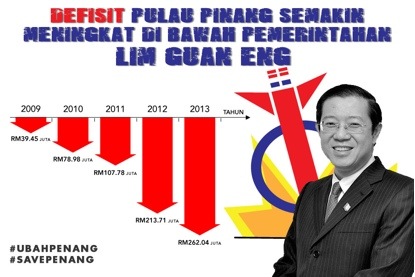
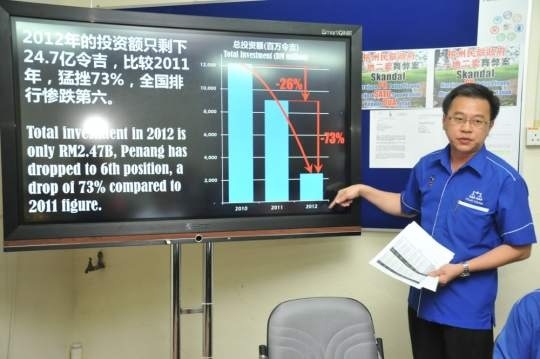
Having won five states in 2008 which we all know was beyond the expectation of the then Barisan Alternatif, the Pakatan Rakyat representatives went on a spree of ceramahs virtually every night since March 2008 until the 2013 elections. This is because they were not sure of repeating the same success, and had to win the perception of the people. And it is probably because of that they did not focus so much on work, but rather on roadshows. Penang, while managed to reduce its debt, saw a substantial increase in deficit, and decrease in investment (BN/UMNO cybertroopers, please learn here):

20130520-171822.jpg

20130520-171911.jpg

All the Pakatan Rakyat-controlled states have formed their respective government which means that all have accepted the results of the GE13, save for Anwar Ibrahim and his band of “boys” who still harp on the fact that the Pakatan Rakyat had won the popular votes. Well, that may be true but this is not a reality show. The formation of the government follows a set of law – the one with the most electoral votes forms the government!

20130520-173449.jpg

Else, would the Pakatan Rakyat want to concede defeat to a government formed by UMNO alone? UMNO as an individual party won 29.3% of the popular votes, and on its own won 88 electoral votes! DAP came in second very far behind with only 15.7% popular votes and only 38 seats! Maybe Anwar would like to see an UMNO-DAP coalition government instead! How much did PKR get?

Remember, in Malaysia, Parliament is not paramount; it is the Constitution that makes Parliament! Therefore, respect the Constitution and move on, or find another country that employs popular votes to live in!

Incredible Ink and Indelible Voters

Overseas registered voters as well as local postal voters have all cast their votes. Only the general registered voters will cast theirs five days from now. In six days time we shall all know the outcome, winners as well as losers.

Barely four hours have lapsed since the final postal vote was cast when photos of “disappearing indelible ink” rode the Internet waves, and accusations started flying. This could be pre-empting the outcome of the final ballot count come 5th May. Let me show you the pictures taken by a fellow blogger Hazrey of the finger of a personnel from the Johor Bahru Police Contingent HQ who cast his votes this morning, marked with the indelible ink:

20130430-212125.jpg

The above was the finger, picture taken at around 8.30am. He went home, tried washing it with soap, detergent, dishwashing liquid, and finally washed his car at 5.30pm, and his finger looked like this:

20130430-212512.jpg

It is still marked.

Nurul Izzah, the daughter of Anwar Ibrahim, tried to do a live demonstration on how to erase the indelible ink. She tried to scrub it off the finger of an army personnel who had voted, and failed. You can read more about it here.

Then, this was followed by a series of photos that was supposedly taken during the attempt. Initially to some, it may look convincing. But only the unwise would take things at face value:

20130430-213345.jpg

I don’t know why Pakatan people love to lie, and sometimes don’t even care if they get caught. There is also talk that the voting process overseas was flawed. My younger sister, who voted in Australia, had this to say:

I read some rumors about discrepancy with overseas voting. I’m a pioneer overseas voter. Had to go through thorough security check by OZ security guys who even used a metal detector, then had to go through I/C checks on three occasions by 3 different groups, could only open my envelope in the presence of witness and both of us had to acknowledge in writing there was no discrepancy in information on the envelope and on the contents of the envelope before I could proceed to vote. I even tugged the sack containing our votes just to be sure. I think you need industrial grade equipment to cut through it. It would’ve been impossible to go in and out of that room without possessing more than one I/C. It’d also be pretty hard to claim discrepancy with your acknowledgement in writing. Unless you wanna also claim that ghosts exist.

Come on, fools! If you want to form the government, you have to at least hide your stupidity!

Here, enjoy a video while you sulk!