The Malaysian Concord (Part 1) – The Sanctity of Islam

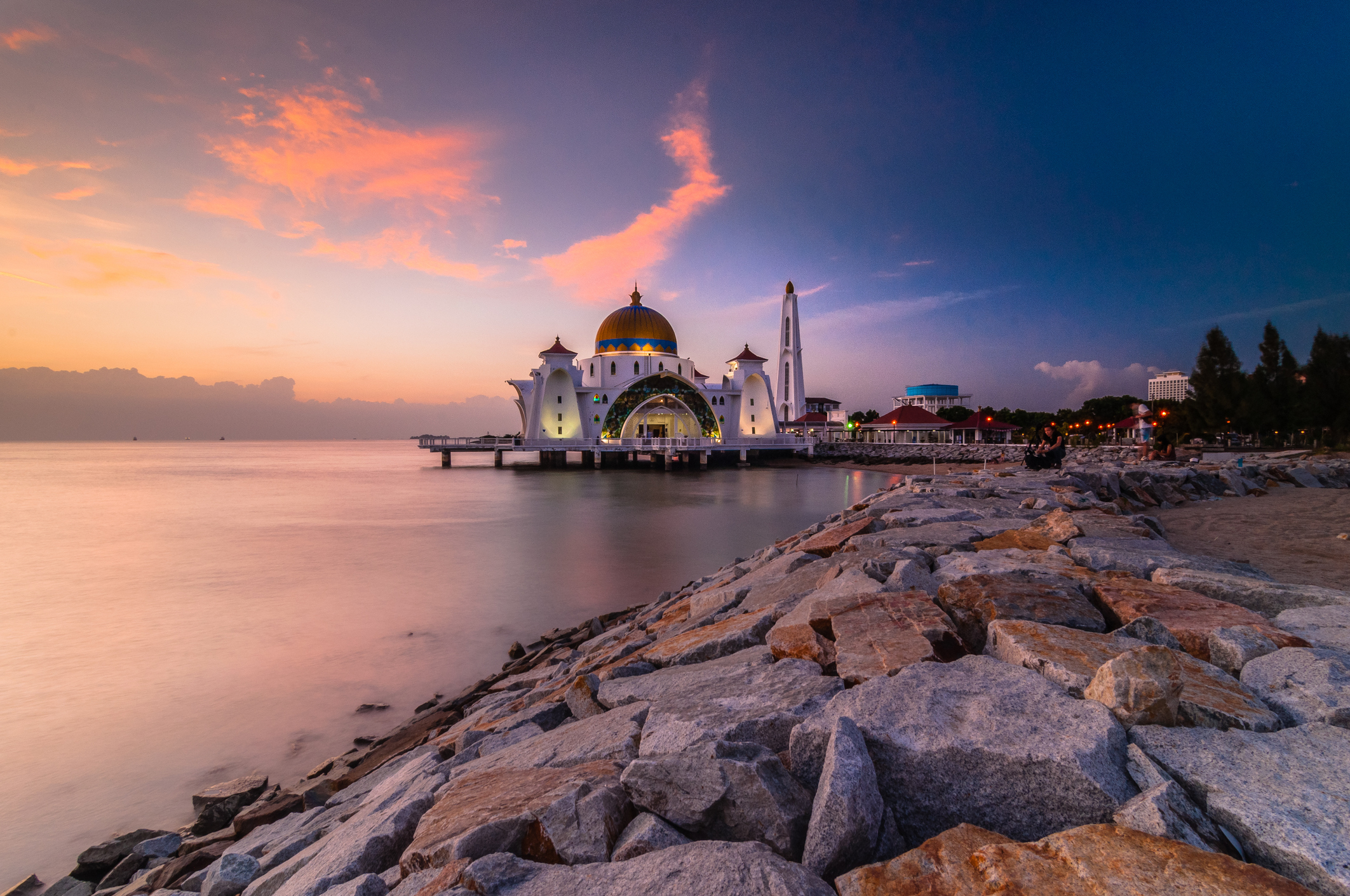
Islam is the religion of the Federation of Malaysia as enshrined in its Constitution after being agreed upon by all those party to her establishment (Photo credit: Azirull Amin Aripin/Getty Images)

HRH Sultan Sharafuddin Idris Shah is known to be a private person and rarely voices out.  The only times that he would voice out is when matters pertaining to the Constitution is touched upon, and yesterday was one of those times.

He said that the act of a certain group questioning the sanctity of Islam, the special rights of the Bumiputeras, the national language, and the function and position of the Malay Rulers enshrined in the Federal Constitution need to be immediately addressed and curbed.

I have come across such people, and unfortunately, many are young Malays.  They do not seem to understand that the social contract made between the various races of Malaya prior to 31stAugust, 1957 and Malaysia prior to 9thJuly 1963 are now part of the Federal Constitution.

Nor do they know the parties who signed both agreements for the independence of Malaya, and the formation of Malaysia, and understand why those agreements were made.  I put a partial blame on the education system where we were taught that we were all colonised by Britain when that is not true, except during the Malayan Union period.

Although Islam had been preached in the Malay Archipelago, Indo-China and China as early as the seventh century, it is largely held that Islam arrived in the Malay peninsula in the 12thcentury.  Syariah laws such as the Batu Bersurat of Terengganu, Hukum Kanun Melaka, Undang-Undang 99 Perak became the laws of the land.

In 1908, Richard James Wilkinson, a British colonial administrator who, with the backing of Sultan Idris I, was responsible for the establishment of the Malay College in Kuala Kangsar, and who was also a scholar of Malay and history, wrote on the status of Islamic law in the Malay states:

There can no doubt that Moslem law would have ended up becoming the law of Malaya had not British law stepped in to check it.” (William R. Roff, Patterns of Islamization in Malaysia, 1890s-1990s: Exemplars, Institutions and Vectors, Journal of Islamic Studies Vol. 9, Is. 2 (1998), 210-228, at 211).

This was reinforced by two British judges in the landmark case of Ramah binti Ta’at v Laton binti Malim Sutan 6 FMSLR (1927).

It is due to these facts that the sanctity of Islam was retained in the Federation of Malaya Agreement of 1948, and was introduced into the Federation of Malaya Constitution of 1957.

The English law was only introduced to Pulau Pinang as it was the original British colony.  It was on 25thMarch, 1807 that a Charter of Justice was granted by the Crown establishing a Court of Judicature in Pulau Pinang, with jurisdiction and powers of the Superior Courts in England. This was then introduced to Melaka and Singapore when they became part of the Straits Settlements under British rule.

Only with the arrival of the British residents in the Malay states in the last quarter of the 19thcentury was the English law introduced there in the form of Orders, Regulations and Ordnances, save for the laws and regulations affecting the Malay customs and the administration of Islam.  These laws provided for the administration of justice, the law of contract, sale of goods, bills of exchange, company law, criminal law and procedure, the law of evidence, land law, labour law, and the regulation of many matters of public interest.

The Civil Law Enactment, 1937 (No.3 of 1937, FMS) introduced the whole body of the common law of England and of equity of minor modifications.  It provided always that the common law and rules of equity are “subject to such qualifications as local circumstances render necessary”.  Local laws and custom were made applicable.

Islam was made the religion of the Federation of Malaya.  Although Lord Reid felt it was unnecessary to have such a provision as the Sultans would be the Head of Islam in their states, it was added to the draft of the Federal Constitution at the suggestion of Justice Hakim Halim bin Abdul Hamid of Pakistan, who was a member of the Reid Commission, because he said the suggestion by the Alliance party that represented the people of Malaya to have that proviso added was inoccuous.

Sir Donald Charles MacGillivray personally felt that such a provision would be advantageous because the Yang DiPertuan Agong could at the same time become the head of the faith in the Settlements of Penang and Malacca (CO 1030/524 (10), MacGillivray to Secretary of State, 25 February 1957; See also CO 1030/524 (18), MacGillivray to Secretary of State, 21 March 1957).

This accord was reached between those who were party to the discussion – the Malay Rulers, the British who administered the Rulers’ sovereign states on their behalf, and the multiracial government chosen by the people in 1955 to represent them.

There is even a separation of jurisdiction when it comes to the position of Islam in the Federal Constitution.

The Syariah Law comes under the purview of the respective Rulers, and the Attorney-General of Malaysia, under Article 145(3) does not have the jurisdiction over proceedings before a Syariah court, a native court of a court-martial.

This separation of jurisdiction is also present as provided by Article 121(1A) where both the High Court of Malaya and High Court of Sabah and Sarawak do not have any jurisdiction over Syariah matters.  Therefore, any claim that the Syariah law infringes on the rights of the non-Muslims is fallacious.

The Malaysia Solidarity Consultative Committee chaired by North Borneo’s (later Sabah) Donald Stephens (later Tun Fuad Stephens) stated in its memorandum dated 3rdSeptember 1962 that the acceptance of Islam as the religion of the to-be-formed Federation of Malaysia would not endanger religious freedom within Malaysia nor will it make the country less secular (Malaysia Solidarity Consultative Committee Memorandum on Malaysia, 3 Sep 1962, p.p 120).

And that is how Islam became the religion of Malaysia.

(This article was first published by The Mole)

Defence – Isu Seragam Komunis

lct02
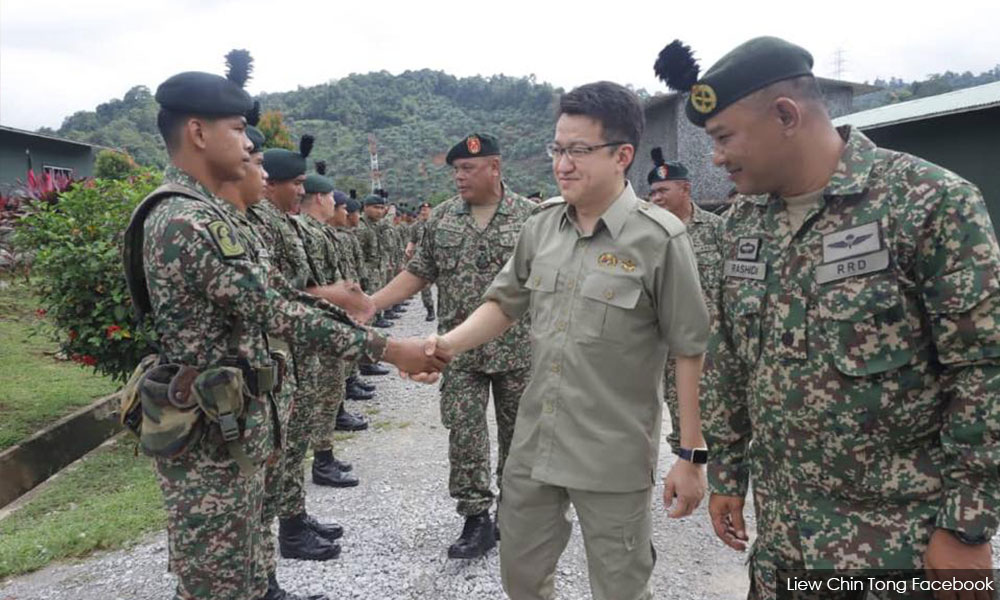
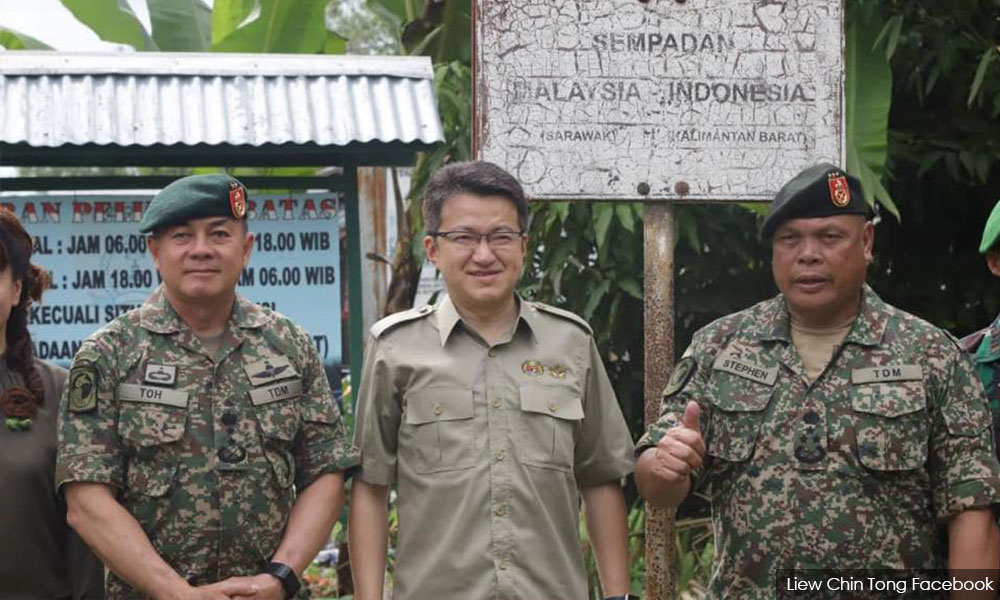
Timbalan Menteri Pertahanan memakai corporate bush jacket Kementerian Pertahanan semasa membuat lawatan. Beliau memakai bush jacket yang sama dalam gambar yang dikatakan pakaian seragam komunis

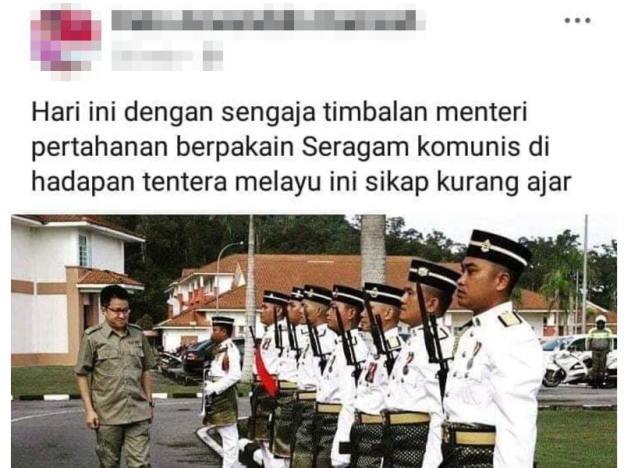
Heboh disebarkan di dalam media sosial sebuah gambar yang menampakkan Timbalan Menteri Pertahanan memeriksa kawalan kuarter Tentera Darat di mana beliau dikatakan memakan pakaian seragam Parti Komunis Malaya.  Saya terpanggil untuk menulis kerana saya perlu bersikap adil kerana menjadi prinsip saya agar hal ehwal pertahanan tidak dipolitikkan.

Bush Jacket Korporat – Satu Langkah Yang Wajar

Saya tak tahu sejak bila budaya Menteri memakai pakaian seragam tentera ini dimulakan.  Seingat saya, Dr Mahathir semasa menjadi Perdana Menteri Ke-4 hanya memakai pakaian seragam tentera darat semasa beliau dianugerahkan beret kehormat Grup Gerak Khas pada tahun 2001.  Selain itu tidak pernah saya lihat beliau mengenakan pakaian tentera.

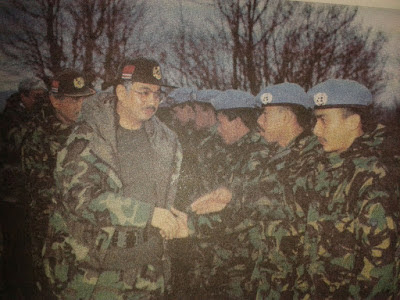
Begitu juga dengan Najib Razak semasa melawat para pegawai dan anggota tentera kita di Bosnia semasa beliau menjadi Menteri Pertahanan. Beliau tidak mengenakan pakaian tentera penuh, hanya memakai sebuah jaket celoreng untuk mengatasi cuaca sejuk di sana.

najib ke bosnia
Najib Razak melawat MALBATT di Bosnia semasa beliau menjadi Menteri Pertahanan

Bapa beliau yang menjadi Menteri Pertahanan sebanyak dua kali, juga tidak pernah memakai pakaian seragam tentera semasa melawat barisan hadapan.

Screen Shot 2018-10-31 at 18.23.27
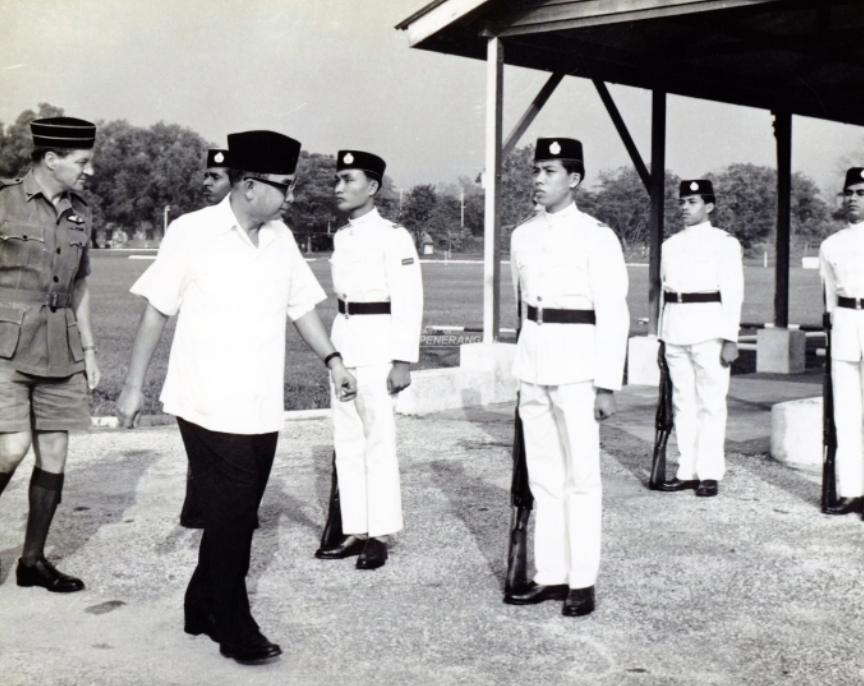
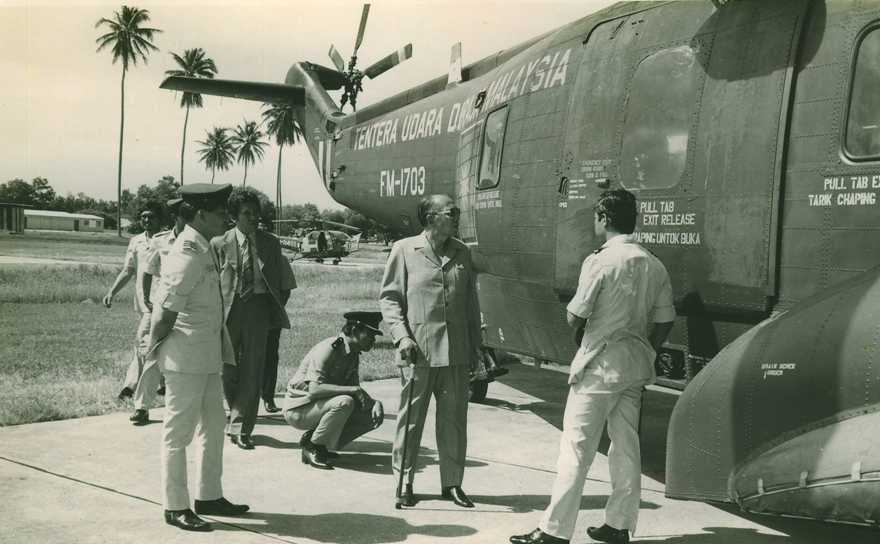
Dato’ Abdul Razak bin Hussein, yang ketika itu Menteri Pertahanan, melawat pangkalan Tentera Udara DiRaja Malaysia di Sungai Besi pada tahun 1963

Photo 02 - Tun Razak 31 Dec 74 Visit 3rd Sqdn
Tun Abdul Razak bin Hussein semasa menjadi Perdana Menteri, melawat No.3 Skuadron di Pangkalan Udara Butterworth pada 31 Disember 1974 memakai Bush Jacket berlengan panjang

Begitu juga dengan Perdana Menteri Ke-3, Tun Hussein Onn.  Beliau tidak pernah mengenakan pakaian seragam tentera semasa melawat unit-unit tentera.

photo 04 - stock-photo-perdana-menteri-datuk-hussein-onn-melawat-pusat-latihan-grantales-v-di-sungai-petani--kedah-366461
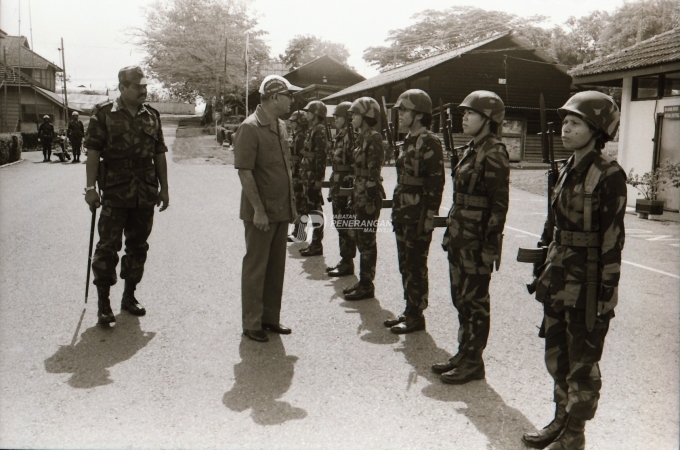
Dato’ Hussein Onn, Perdana Menteri Ke-3, memeriksa kawalan kuarter Tentera Darat memakai Bush Jacket berlengan pendek – foto ehsan Jabatan Penerangan

Pemakaian pakaian seragam tentera oleh individu-individu yang tidak berkenaan, yang tidak pernah menjalani sebarang latihan untuk berkhidmat untuk Angkatan Tentera Malaysia, selain di atas sebab khusus dan istimewa seperti semasa pengurniaan beret atau sayap kehormat, adalah dianggap mencemar pakaian seragam tersebut.  Ini disebabkan mereka yang tidak pernah dilatih tidak mengetahui pahit jerih serta nilai pakaian seragam serta lencana dan sayap tersebut.

Kadangkala sebagai seorang Veteran ATM, saya rasa terkilan dan sedih apabila mereka-mereka yang tidak pernah lalui sebarang bentuk latihan ketenteraan dan diberikan tauliah kehormat, bersikap lebih tentera daripada warga ATM, dan meletakkan pakaian kepala mereka seperti topi ataupun beret yang mempunyai lencana kor, di atas tanah atau di lain-lain tempat tanpa menghormati makna lencana tersebut.

Pada tahun 2015, DYMM Sultan Johor pernah menegur sikap ramai pemimpin tentera dan pegawai kehormat yang memakai pelbagai lencana dan sayap kehormat ma­sing-masing sepanjang masa kerana berdasarkan tata cara pemakaian, ia perlu dipakai semasa majlis yang berkenaan sahaja.

Jika betul-betul ingin memakai lencana sayap sepanjang masa, saya syorkan buatlah terjunan dahulu. Sekurang-kurangnya sayap yang tersemat di dada itu benar-benar mempunyai nilainya dan bukannya hanya sebagai hiasan yang memenuhi uniform,” titah baginda yang pernah mendapat latihan ketenteraan di Pusat Latihan Tentera Darat (PULADA), di Fort Benning dan Fort Bragg di Amerika Syarikat, dan menjalani kursus jurutrbang helikopter di TUDM Kluang.

Oleh itu, saya amat menyokong pemakaian pakaian korporat oleh Menteri dan Timbalan Menteri Pertahanan semasa membuat lawatan ke unit-unit Angkatan Tentera Malaysia.

Pakaian Seragam Komunis?

lct04
Gambar yang ditularkan yang mendakwa Timbalan Menteri Pertahanan memakai seragam Parti Komunis Malaya semasa memeriksa kawalan kuarter

Apakah pilihan pakaian yang ada untuk warga Kementerian Pertahanan yang bukan pegawai atau anggota tentera semasa berada di luar kawasan KEMENTAH?  Pakaian kemeja korporat mungkin kurang sesuai berbanding bush jacket sekiranya lawatan tersebut melibatkan mesyuarat dengan pucuk pimpinan ATM berkenaan hal-ehwal operasi.  Sekiranya ianya melibatkan perbarisan penuh bersama panji-panji maka lounge suit atau baju istiadat Ahli Parlimen lebih sesuai terutamanya dengan kehadiran Raja-Raja.

Tetapi, kenapa pakaian Bush Jacket korporat Kementerian Pertahanan itu mirip pakaian seragam Parti Komunis Malaya? Itu pertanyaan yang diajukan oleh mereka-mereka yang tidak pernah melihat pakaian seragam PKM.

pkm
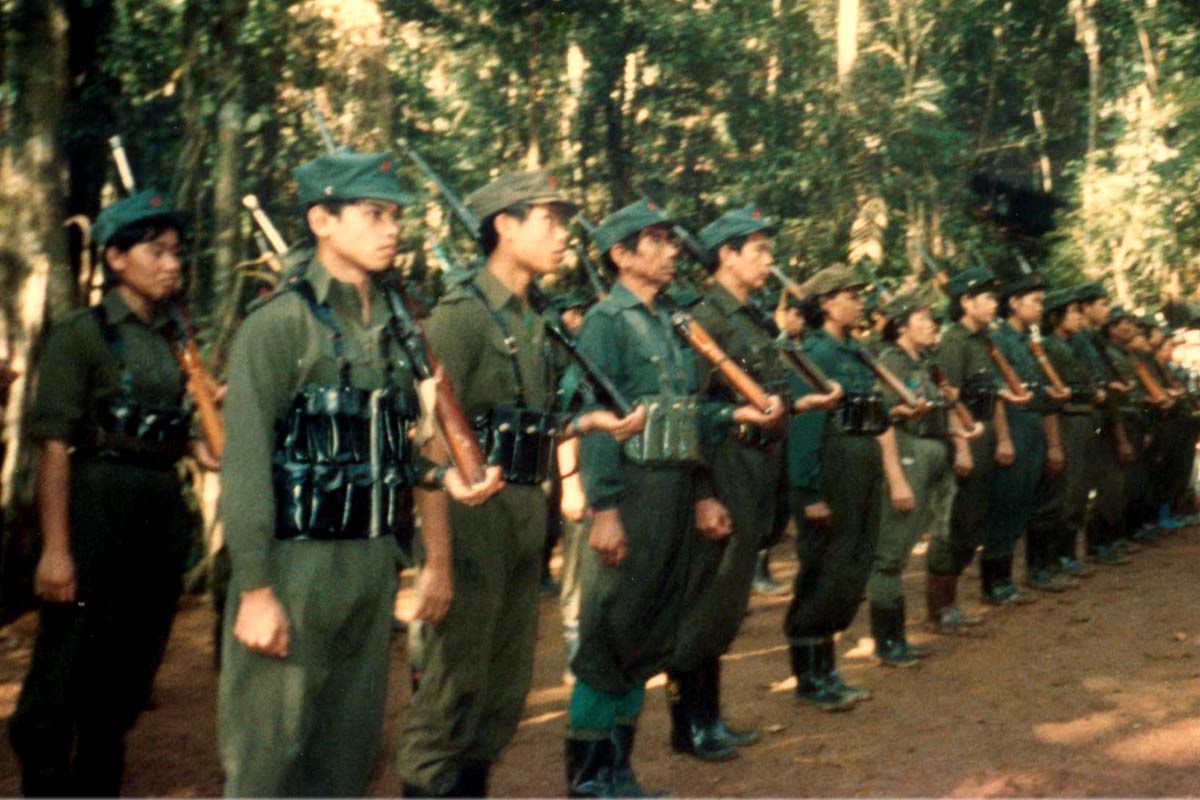
Pakaian seragam Ketumbukan Ke-10 Parti Komunis Malaya

Pakaian seragam Parti Komunis Malaya adalah berwarna hijau gelap.  Ianya hampir serupa dengan pakaian seragam tempur Tentera Darat ketika itu yang menggunakan warna ‘paddy green‘.  Hanya pada penghujung tahun 1970an barulah Angkatan Tentera Malaysia menggantikan pakaian tempur ‘paddy green‘ dengan pakaian tempur celoreng.

lct05


Bush Jacket yang dipakai oleh Timbalan Menteri Pertahanan adalah berwarna khaki dan bukannya hijau tua seperti seragam PKM.  Khaki adalah warna yang lebih sesuai digunakan untuk tugas-tugas di tengah panas berbanding di dalam hutan kerana elemen penyamaran yang lemah.

Elak Menjadi Lebih Tentera Daripada Tentera

Angkatan Tentera Malaysia adalah sebuah organisasi professional yang berpegang teguh kepada disiplin dan tradisi.  Walaupun tidak dinafikan Menteri Pertahanan sebelum ini banyak membantu dari segi kebajikan warga Angkatan Tentera Malaysia, dan warga ATM memang berterima kasih di atas usaha-usaha tersebut, namun ada beberapa perkara yang tidak disenangi oleh mereka.  Pemakaian pakaian seragam yang berleluasa oleh Menteri ketika itu terutamanya beret maroon kehormat dan sayap penerjunan kehormat di hampir kesemua majlis pernah menjadi sebutan warga ATM.

Penganugerahan tauliah kehormat dengan agak mudah kepada para pegawai beliau ketika itu juga menimbulkan rasa tidak puas hati di kalangan para pegawai dan anggota kerana mereka rasakan nilai pangkat yang dipakai itu terhakis.  Yang memakai itu mungkin hanya mempunyai kesetiaan politik, tetapi kesetiaan kami bukanlah kepada elemen politik.  Kami setia hanya kepada Raja dan Negara.

Begitu juga dengan pengenalan budaya ‘fist bump‘ serta laungan “Perkasa Perwira” yang berlainan dengan laungan semangat tradisi iaitu “Gempur Wira” yang menjadi sebahagian daripada istiadat ATM itu sendiri.

Kita faham usaha kerajaan ketika itu untuk memperkasakan ATM, tetapi cukuplah sekiranya ‘Perkasa Perwira‘ itu hanya sebagai hashtag di media sosial dan bukannya laungan semangat.  Begitu juga ‘fist bump‘ yang sememangnya bukan budaya mana-mana angkatan tentera walaupun separa-formal.  Mungkin tujuannya ketika itu adalah untuk menunjukkan kepada orang awam bahawa warga ATM ini sebenarnya cool.  Kami sememangnya cool, namun sebagai sebuah organisasi yang professional dan bertanggung jawab untuk mempertahankan kedaulatan negara, kami tidak boleh dilihat sebagai cool apatah lagi hip seperti hipster.

Oleh itu, langkah memakai Bush Jacket korporat oleh Menteri dan Timbalan Menteri Pertahanan sekarang adalah satu langkah yang betul kerana mereka adalah sebagai facilitator membantu warga ATM untuk mencapai sasaran doktrin mereka.  Benar, kerjasama baik di antara Kementerian Pertahanan dengan Angkatan Tentera Malaysia itu penting, namun tidak perlulah sehingga menjadi cool dan hip.  Dapatkan apa yang terbaik yang diidamkan oleh warga ATM sebagai end-user adalah lebih bermakna bagi mereka.

Perkasakanlah Angkatan Tentera Malaysia tanpa menjadi lebih tentera dari mereka.


E-Hailing versus Taxi Drivers: An Endless Contention

MAHATHIR_MOHAMAD_1540128271
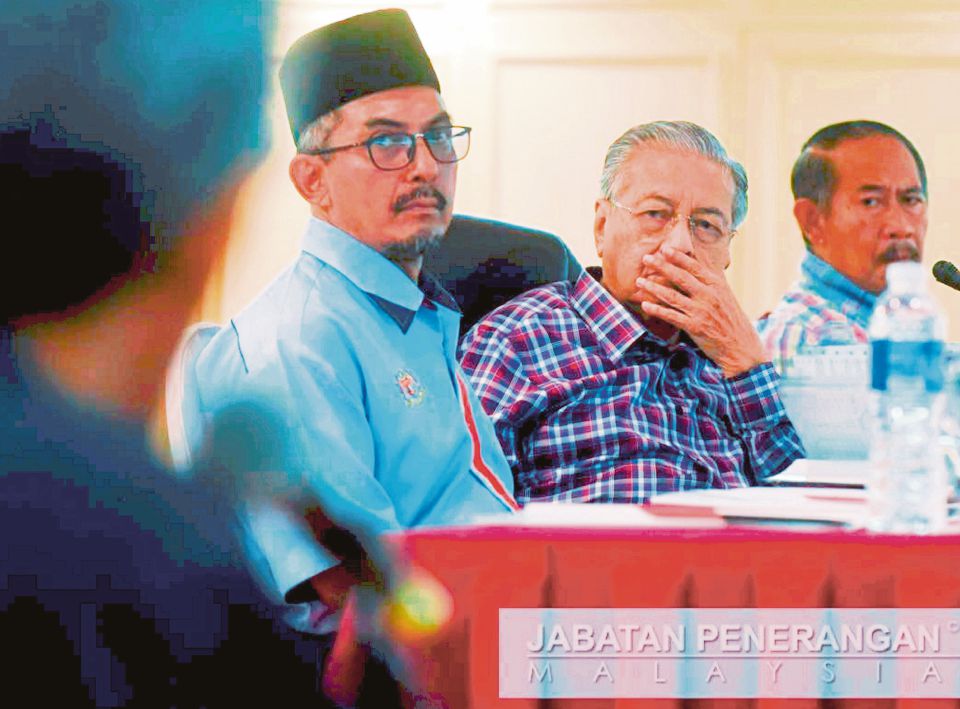
Mahathir reacts to the outburst by taxi drivers in Langkawi – courtesy of Sinar Harian

So, 10 Langkawi taxi drivers hurled abuses at the Prime Minister before walking out of the hall recently where they were to have a dialogue with the latter.

They were utterly dismayed at the government’s decision to allow E-hailing services, namely Grab, to continue its existence and complement the taxi services.

Their anger is understandable.  In March of last year, taxi drivers and owners staged a protest against the previous administration outside the Parliament building, for allowing Grab to operate, and were joined by the likes of Mahfuz Omar, Rafizi Ramli, while in 2015 Datin Seri Wan Azizah Ismail joined them at Padang Merbok.

Although the Prime Minister has denied ever wanting to abolish Grab and other E-Hailing services, the taxi drivers and owners feel as if the government has reneged on its promises to protect their interests.

Prior to the walk out last Sunday, there have been two rallies opposing Grab services organised by taxi drivers; one at Padang Merbok in July, and the latest was five days ago outside the Ministry of Finance.

Back in the 1960s and 1970s, you would either have to go to a taxi stand, or call up a taxi stand to have a taxi sent to your location, or wait for one to pass by.  With the advent of radio taxi services in the 1980s, getting a taxi was similar but quicker as the taxi could be roaming near your neighbourhood.

Not much has changed since, but with mobile phones, if you know the taxi driver personally, you could call him or her to come pick you up.

E-Hailing is not much different.  You have a car owner, registered with Grab for example, who would choose on the software whether he or she would like to pick up a passenger who has hailed for a ride using his or her mobile device.

A destination is given and the car owner drives the passenger to the given destination. The fare is fixed; so unlike with taxi drivers, you do not get the last-minute discussion for extra payments.

You can either opt for a credit/debit card payment, or pay by cash.

But E-Hailing is more attractive to the passengers.  Besides having the fare fixed, you don’t need to conduct a cash transaction, they can pick you up from anywhere and drop you off at your choice of destination at any time of the day or night.

With E-Hailing, more and more partygoers would be willing to not drive at night, thus increasing the size of the cake in contention.

It is late at night when the dissatisfaction with taxi drivers is at its peak.

Try hailing a taxi in the middle of the night: if your destination does not conform to their desired location, they could refuse you or reject you.

More often than not, they would prefer not to use the meter and throw you a figure. That figure could be more if they suddenly tell you that they will ‘balik kosong’, meaning that it would be difficult for them to get a passenger in your area after dropping you off.

It is not easy to find an equilibrium where both services can co-exist without losing much to each other.

While it may be true that E-Hailing also takes a slice from the same cake, I doubt that any taxi driver has gone unemployed since the introduction of E-Hailing services.

Swedish-German economist at Oxford Martin School conducted a study in 2013 in cities in the US of the impact Uber has had on the income of taxi drivers.

He found that though it is true that the income of taxi drivers had been affected, the drop was in the region of 10 percent, while E-Hailing services had resulted in a 50-percent rise in the number of self-employed drivers.

Frey expressed that traditional jobs have not been displaced.

In the case of Langkawi, it is difficult to get a taxi, especially if you venture out to the less touristy places.

The Langkawi Craft Complex for example, is almost half an hour away from the taxi stand in Kuah, and 25 minutes away from the one at the Langkawi International Airport.

I doubt if anyone would get a taxi if they waited by the road side.

Perhaps the answer to the plight of the taxi drivers is to subscribe to an E-Hailing service of their own, much like the radio taxi service.

Pay a certain amount as annual fee to a management company, they can download the application, and charge by the meter, and the payment goes into an account, just like Grab or Uber.

Like their counterparts in Singapore, they should be able to accept credit and debit card payments, and passengers get to rate them as well.  I am sure that such an application could be produced.

That way, they have a level playing field with the other E-Hailing services drivers, and maintain the quality of their service.

With two-thirds of the world’s population due to live in cities by 2050, the cake will keep on growing for both taxis and E-Hailing services drivers.  A combination of private providers and public mass rapid systems will be the imminent scenario.

My only wish for now is for foldable bicycle owners to be allowed to bring their bicycle on board our trains during peak hours.

That would increase the ridership of the trains, while both E-Hailing and improved taxi systems complement the process by moving workers from office to meeting venues and back.

(This article was first published on The Mole)

11th Malaysia Plan Mid-Term Review

atok

Yesterday, the Parliament’s website published the 11th Malaysia Plan mid-term review paper which was unveiled by Prime Minister Mahathir Mohamad which, among others, officially confirmed that the national debt as at end of 2017 stood at RM686.8 billion, and not RM1 trillion as announced by Finance Minister Lim Guan Eng.

That drew flak from the masses who felt that they were duped into voting out the previous Barisan Nasional government and lied to by the current government.  As a result, the document has been taken down.  This says a lot about transparency of the current government.

A quick check at the Economic Planning Unit’s website shows that a copy of the document is still downloadable by clicking on this LINK.

Anyway, if that is taken down too, you can click on the following link to download the pdf document.

Kajian Separuh Penggal RMK11

Food – Salve Of The Soul

Nasi Ambeng
Nasi Ambeng is a favourite amongst the Javanese community in Malaysia

MY wife is a Johorean – well, half-Johorean.  Her mother is from Kuching, Sarawak. So, when it comes to what is good as food, I trust her judgment.

Why am I writing about food this time? I see a lot of unhappy news lately and I think food is what makes us all happy.

I was brought up eating Johor-style cooking; with the cabbage, or bean curd and beansprouts in masak lemak putih, asam pedas, soto and lontong with kuah lodeh (lontong actually refers to the compressed rice, and not the whole dish).

I was picky when it came to food but going to the Malay College broadened my culinary horizon – Kuala Kangsar gave me Mi Bandung at Restoran Zabdi, Laksa Perak by our Makcik Canteen, Masak Lemak Kuning, Gulai Otak Lembu by the riverside, and not to mention the ulat-filled sayur bayam and stir-fried long beans from the dining hall.

My wife and I were once upon a time both married to spouses from Kedah. My love for curry is because of Kedah’s Gulai Kawah Daging cooked using either the Serbuk Kari Chap ‘O’ or Serbuk Kari Chap Tarbus. The owner of Serbuk Kari Chap ‘O’ drove a car bearing the registration number KAR 10.

I love the Nasi Lemak Kuning which is now more famously represented by Nasi Lemak Royale with the Daging Masak Hitam (it’s Nasi Kandar by the way, and tastes nothing like the Nasi Lemak).

For laksa I would drive to Kuala Kedah for the famous Laksa Teluk Kechai.  Not forgetting the Peknga Nyioq Gulai Ikan Termenung (Coconut Pancake dunked in Indian Mackerel Curry) and Pulut Sambal.

Try having lunch at Restoran Sri Pumpung, my all-time favourite lunch spot.  Top that with an ice-cold glass of Nira Nipah (Nipa palm sap) and your day is made.

Despite all the good food, my wife and I agree on one thing – Hari Raya in Kedah for us non-Kedahan was an omen for both our marriages.

Hari Raya for me means lemang, nasi impit, rendang, dodol, lempuk durianaccompanied by barrels of ice-cold soda. For my wife her Hari Raya food means Nasi Bariyani Gam, Laksa Johor, Mi Rebus, Lontong with Kuah Lodeh, assorted cakes, and endless flow of lamnet (soda water – a Malay contraction of the word lemonade – which is used to describe soda).

In Kedah back in the 1980s and 1990s, Hari Raya was ketupat palas (either plain, or with beans, or with corn) served with serunding (meat floss – not to be confused with the Indonesian serunding which is spicy fried coconut flakes), and squash (cordial drink, if you must).  And no matter which house you visit, they would serve you ketupat palas with serunding. And maybe cookies and mini-popiah or mini-karipap filled with serunding.

Only some houses would serve you something different – bihun goreng or the neither-here-nor-there Mi Kuah.

I cannot make out what the Mi Kuah is all about. Yellow noodles in pale-colour spicy but salty gravy.  And while the kids all ventured out to collect duit raya, the adults would flock in front of the television set watching either some Hari Raya concert or a Hindustani movie.

I always ended up with a bad bout of constipation. Little wonder our marriages to Kedahans did not last.

So, Hari Raya for us now depends on whose in-laws’ house we are at: hers or mine.  If it is at her in-laws’ place, then we’d be feasting on Nasi Impit, Lemang, assortment of Rendang, Laksa, Mi Rebus, Satay, Nasi Minyak; and if it is at my in-laws’ place it’s Lontong with Kuah Lodeh, Laksa Sarawak, Mi Kolok, Bubur Pedas Sarawak, Laksa Johor, Soto, Nasi Lemak with Spicy Beancurd Soup, Nasi Bariyani Gam, Mi Bandung.

Do you know it’s blasphemous to eat your Laksa Johor with fork and spoon? Laksa Johor is supposed to be eaten with the hand, just so you know!

If you drive into the kampungs to visit during Hari Raya, you would be served with Nasi Ambeng, Burasak, whatever meat in Masak Ungkep style.  Not forgetting the Tiwol with Sambal Bawang, Rempeyek, Kerepek, Kuih Ros, Kuih Deram.

And it is in these kampungs in Johor that I get my dose of excellent Mi Bandung, Nasi Goreng Daging, Mi Rebus Johor, Pepes Ayam (similar to Otak-Otak but is made of chicken instead of fish), ABC Degan (Javanese for coconut).

If you visit the houses of the aristocrats down in Johor Bahru, you’d get to sample the rarely-made Harissa which is a concoction of either tenderised beef or lamb meat cooked with oats for three hours, and is served with sambal and honey.  Not many Johoreans have tasted the Harissa.

Before the Kedahans slam me, remember that I said (apart from Hari Raya) Kedah food is excellent too.  In the early 1990s I would frequent the Nats (morning markets or called Pasar Tani elsewhere) and the Pasar Malam – Tuesdays in Kepala Batas, Wednesdays in Changlun, Thursdays in Tanah Merah, Fridays in Napoh and Sundays in Pekan Jitra. The locals call it PJ.  Coincidentally, PJ is right next to KL– Kubang Lembu.

It was at the Pasar Malam that I would get my supply of fresh meat and Ikan Kembung, and my favourite Kuey Teow Kerang.

A whole plate of Ikan Kembung cost RM2 a plateful. The eyes and skin were shining, gills pink.

Imagine the bitterness I felt when I was transferred to Kuala Lumpur and the Ikan Kembung had to be weighed before it was sold, red sunken eyes, darkened gills, slimy with strong fishy odour.  And costs a lot more than in Kedah, too!

So, no matter where you are, food soothes the soul.

And in times like this, if you feel down, just Google what you want to eat, Waze for the place, and make your day.

I promise you, you will end your day feeling much better.

(This article was first published by The Mole)

Beautiful Malaysia

kgkota01
Char Kuay in the morning brings people together to the table

Malaysia turned 55 last weekend.  Although the electronic and social media platforms are filled with rancorous exchanges, the general population is nice to each other, no matter the political leaning.

We come from a somewhat mixed family. My father was attended to by an Amahwhen he was little.  His eldest sister married a wonderful Chinese man whose last words were, “Tell the world that I lived and died as a Muslim.” Two Chinese and an Indian were married into my family.

Slightly more than four decades ago I went to a Chinese kindergarten somewhere in Melaka.  It was just a couple of years after 13 May 1969 but the relationship between races then was good, or so it seemed to this little boy then.  Although I cannot recall any of my schoolmates’ name, we played together.  Almost every evening my father would take me to Uncle Ah Boon’s house where I would converse with them in beginner’s Mandarin before stopping for some Putu Piring at the foot of Bukit Peringgit.

I went to the St John’s Primary School on Jalan Bukit Nanas and had great classmates such as Yong Choon Wah, Chow Kah Sung, Michael Foo.  While waiting for the bus to go home, Choon Wah and I and a few others would go up and down the escalators at the neighbouring AIA building where an A&W outlet was once located until the Sikh jaganabbed us and threatened to send us to the police station. Not once did my friends and I see each other, other than as fellow Malaysians.

That jagabecame famous on 4 August 1975 when he was shot beneath the eye by a Japanese Red Army terrorist who had taken 35 people there as hostages.  His name was Sukdave Singh.

My favourite Nasi Lemak from then till now is the Nasi Lemak Tanglin.  I often jogged to where it was located, a small stall in front of a Chinese kopitiam and a plate of Nasi Lemak accompanied by the kopitiam’s glass of Sirap Ais and Lengkung were the highlight of my week, almost every week.

kgkota02
Not Nasi Lemak Tanglin. This was at the kampung kopitiam, downed with a cup of Kopi Cap Rambutan

A few years later when I was at The Malay College, I realised that 80 percent of the teachers there then were Chinese.  Ask any MCKK alumni who went there between 1972 to 2005 and they can tell you that the Additional Mathematics guru then was Mr Tan Gim Hoe.  Every one of his students would remember his famous “Tatapa. Tatapa” (Tak Apa, Tak Apa) as he tries his best to make you understand his lesson.  He even wrote the Additional Mathematics textbook! MCKK was Mr Tan’s first and only posting, and in the 33 years and 10 months that he was there he helped produce brilliant Malay students such as the former Khazanah head Tan Sri Azman Mokhtar.  I used to meet Mr Tan in town every Saturday for Add Maths tuition when I was in Form 4.  While some of the boys would be upstairs at Kuala Kangsar’s famous Yut Loy restaurant for a quick smoke, I would be with my Pau Daging, Add Maths books and Mr Tan.

TanGimHoe
Mr Tan Gim Hoe taught at The Malay College for three decades until his retirement, and nowhere else

Unlike back in the 1970s, we hardly see Malays and Chinese dine together these days.  Not only do we look at each other with contempt, we also now question each other’s rights that are enshrined in the Federal Constitution. I blame the education system – the Arabisation of the National Schools, and the existence of vernacular schools. Children who do not grow up together will never learn about each other.

Just when everything seems bleak, my wife and I made a road trip along the coastal road in Selangor to attend a wedding in Sabak Bernam.  We stopped for breakfast at a nice kopitiam in Kuala Selangor.  For tea, we crossed into lower Perak where we found a kampung sundry shop that doubles as a kopitiam that has a mix of Malay and Indian clientele.

Michael, the second-generation proprietor, spoke to us in lower Perak Malay accent.  He told us that the suppliers of the Nasi Lemak, noodles and kuih are local Malays.  “It is the way of life here. We live in our community where we don’t see each other as Malay, Chinese or Indian,” he stressed. Prosper thy neighbouris his motto.

kgkota03
Pulut Sambal, made by the kampung Malays, sold at this Chinese kopitiam

“Come back tomorrow morning for some Char Kuay,” he said before we left. “I’ll make them fresh for you.”  And we did! Michael and his son CJ served us one of the best Char Kuay ever, complemented by his homemade Seri Kaya.  But it was not just the food and kampung coffee that had us in awe, it was how Michael and his clients enjoy their banter.

It was there and then that I was transported back to the 1970s, where Malaysians eat and drink and joke together, without a hint of any political divide.

And that made it the most beautiful Malaysia Day ever.

Lest We Forget The Alliance

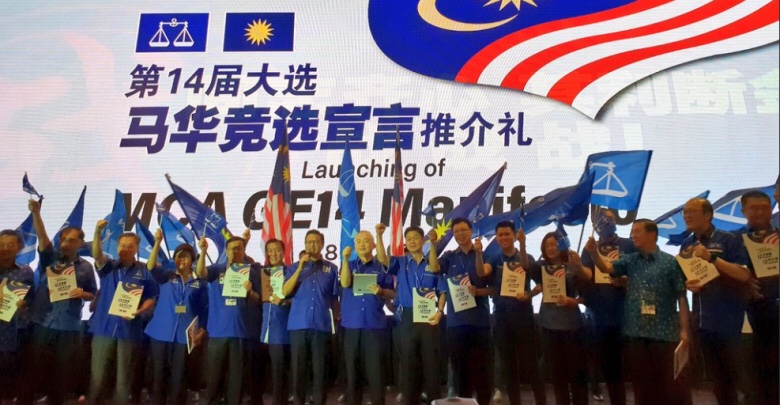
I don’t know what prompted the Malaysian Chinese Association (MCA) to go it all alone in the recent Balakong by-election.

Perhaps, it did not want to be seen as an Umno lackey as it had always been labelled as. But this was the first time that it had contested under its own party logo since the first general election in 1955.

As we can now see, there is a general lethargy among the masses in respect of politics.

We have had three by-elections since the downfall of the Barisan Nasional government and the turnout during the by-elections have been rather poor.

On the 87th day, the Sungai Kandis by-election saw a drop of 18,476 voters compared to the numbers during the 14th general election.

Umno had initially wanted to contest using its own logo but changed its mind. Under the BN banner, the Barisan Nasional saw an 11.49 percent swing compared to 5.84 percent for Pakatan Harapan.

Umno was helped by Parti Islam Se Malaysia (Pas) although the latter still showed a certain amount of distrust towards the former.

There was very little or no involvement at all by MCA and MIC. The majority was reduced by 5,842 compared to 12,480 on May 9.

In the Seri Setia by-election which was held 22 days after Pakatan Harapan’s failure to fulfil its election manifesto promises, Pas saw a 31.01 percent swing for the party, helped by the fact that BN did not contest but assisted Pas during the campaign period.

Pakatan saw a swing 8.02 percent votes against it. The majority was reduced to 4,027 compared to 19,372 during the 14th general election.

MCA, which contested under its own banner against Pakatan, saw a swing of 4.11 percent for it compared to Pakatan’s 7.46 percent.

This means that even with a very much reduced turnout (49.16 percent of the total turnout during the 14th general election), MCA had failed to make a significant impact on the voters.

The philosopher, Jorge Agustín Nicolás Ruiz de Santayana y Borrás or George Santayana, once said that those who do not remember the past are condemned to repeat it.  In this case, the MCA had forgotten its own history.

Before the independence of Malaya, both the MCA and Umno were political enemies.  There was already a feeling of discontent among the Malays in the pre-war period over their poor economic position vis-à-vis the Chinese and Indians.

Professors T.H Silcock and Ungku Aziz noted in 1950 that the Malay peasants and fishermen were dependent on Chinese middlemen while Malays worked as messengers in offices where Chinese and Indians were clerks.

However, Umno knew that in order to achieve independence, a long-lasting relationship with other races needed to be forged. It was during the Umno general assembly of 1949 that Onn Jaafar said,

“It is absolutely important for the Malays to obtain closer ties with the other people in this country.  It is time for us to take the wider view than the kampung view. I ask of you, which will you choose, peace or chaos, friendship or enmity?”

Although the grassroots of Umno was against Onn Jaafar’s idea that led him to leave the party two years later, it opened up a door for both the MCA Selangor Branch and Kuala Lumpur Umno branch to work together in the Federation’s first local elections.

Both Umno and MCA competed against each other and against other parties in Pulau Pinang in December 1951.

MCA had only managed to obtain the support from the Chinese while Umno the Malays. It was Datuk Yahya Abdul Razak from the Kuala Lumpur Umno branch who approached Selangor MCA branch chairman, H.S Lee to discuss the possibility of a cooperation of the two parties.

In January 1952, both branches of the two parties announced that they were jointly-contesting the Kuala Lumpur elections.

The Umno-MCA alliance won 10,340 votes while Onn Jaafar’s IMP won 6,641 votes. MIC joined the alliance in 1954.

This alliance went on to win all but one seats in the 1955 general election.  The rest is history.

In the past, MCA relied on the English-speaking, urban-dwelling portion of the Chinese community who make up about 10 percent of the seven million Chinese people in this country.

That 10 percent is now drowned in smugness and disconnect as they now have the DAP to represent them in the Pakatan Harapan government despite how telling it is that the Pakatan Harapan government is not really interested in reforms.

MCA now needs to go down to the rural ground to try and win the voters back.

There is no way that the MCA can do this all alone by itself. It still needs Umno, MIC and even Pas to help it make a breakthrough.

This can only come about with a rebranding of the approach, and the fight for a common good, with the protection for all races remaining intact.

(This article first appeared on The Mole)

There Is Nothing Wrong With Our Sukhois

When the Defence Minister revealed to the world that we only had four Sukhoi Su-30MKMs that could fly out of the 18 that we have, I kept quiet because no one was interested in listening. This problem of the Sukhois had already been anticipated by both the Royal Malaysian Air Force (RMAF) and by defence observers such as myself.

The RMAF was never told by Russia that once the fighters reach their 10th year, a major maintenance was required before they reach another milestone.

This problem had been anticipated from a couple of years back, even as early as under the leadership of the previous Chief of RMAF. The RMAF had since then made sure that all the other assets could make up for the Sukhois being offline for some time.

Today, news portal Free Malaysia Today reported an anonymous RMAF source saying that the problem of the Sukhois is not the weakness of the organisation’s maintenance regime, but more because of the way the Russians do business.

The deal with Russia for the Sukhois were made in 2003 during the final year of the administration of the 4th Prime Minister, and were delivered to the RMAF in 2007 and 2009. Receiving good support initially, Russian bureaucratic ways soon set in and made things difficult.

Although Western countries have offered Malaysia their fighters, buying from them always come with strings attached. When we purchased our earlier Boeing F/A-18 Hornets, the US did not allow them to come with the advanced weapons. We only received those after the Russians sold us their version of those weapons.

Coupled with slashed budgets, the RMAF had found it difficult to ensure that the Su-30MKMs undergo their 10th year undisclosed maintenance.

Russia needs to learn to rid itself of the bureaucracy that riddles its defence industry if it wants to continue having developing nations’ trust. Else there is no choice but for their air forces, including ours, to seek fighters elsewhere.

Why Malaysia Should Not Derail China

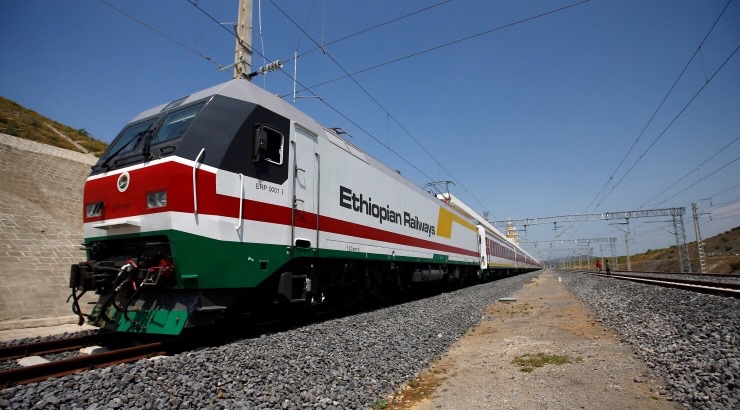
The Addis Ababa – Djibouti railway now cuts down the journey time from the landlocked nation to a port access to just 12 hours

THOSE born before 1978 would probably remember the song “Do They Know It’s Christmas?” written by Bob Geldof (of the Boomtown Rats) and Midge Ure (of Ultravox) with the opening verses sung by Paul Young, Boy George and the late George Michael.

The song was released in late 1984 with the aim of raising unds for the famine-struck people of Ethiopia.  Famine had struck the country from 1983 and killed more than one million people, with eight million more becoming victims. It was the worst famine of the 20th Century.

That was 34 years ago.  In the capital Addis Ababa according to a CNN report, dirt roads are being replaced by six-lane highways, and the recently-opened Addis Ababa to Djibouti electrified rail services connects the landlocked nation to the Port of Djibouti.

The projects were carried out by China through EXIM bank loans.

Architect Alexandra Thorer, who lived in Addis Ababa as a child wrote her thesis on the city’s urbanisation – “The speed at which Addis grew mirrored the pace of 21st-century urban explosion in China.”

Back in the 1980s, Malaysia was one of the examples of an economic powerhouse, modernisation and moderation.  Globally, we were seen as the voice of the Non-Aligned Movement, where the fourth Prime Minister spoke up against the West.

But that was three decades ago, just as how Ethiopia was back then when Bob Geldof and friends raised £150 million to help its people through Live Aid.

Most of the Non-Aligned Movement nations have now sought for development aid from China, especially those in Africa.

Ian Taylor, a professor in African political economics at Scotland’s University of St Andrews noted that Africa as a continent lag behind other developing regions in virtually all infrastructure sectors.

He says that Western companies and organisation are not offering any money for the development of these infrastructures.

The 32-kilometer Kuala Lumpur to Klang railway line was opened for use in 1886.  It started at the old Kuala Lumpur Railway Station, initially ending at the temporary terminus at Bukit Kuda, and onto Klang when the Connaught Bridge was completed in 1890.

This alignment passes the tin mining areas of Petaling and Sungai Way. As a result, development in these two areas boomed, and so did the other towns serve by the Federated Malay States railway, just as rivers and roads have contributed tremendously to other areas in the Malay states.

The East Coast Rail Line (ECRL) and the High-Speed Rail (HSR) would have allowed not just developments, but also businesses to boom.

The ECRL would have allowed businesses from Kota Bharu to arrive in Kuala Lumpur, and vice-versa, in just four and a half hours.

The HSR would have allowed people living in Kuala Lumpur to commute to work in Muar, Batu Pahat and Johor Bahru, and even Singapore on a daily basis.

Just as the Kajang sate businesses have been brisk since the completion of the MRT Sungai Buloh to Kajang line, both the ECRL and the HSR would have had that effect for thousands more.

But claims of neo-colonialism in view of Chinese investments in this country are not going to make us great.

Three decades ago, people would have stood up and applauded such claims, but those times are long gone.

If we want to see economic recovery and growth, we need to learn how to keep an open mind towards foreign investment.

After all, China is only our third largest foreign investor. Western companies including Boeing and Airbus now treat China as a key production and processing base, but China does not treat their presence as a form of colonisation.

Nor does the US, which has received $175 billion from China up until June 2018, has been turned into a colony.

The China-built Addis Ababa Light Rail system now cut through the heart of the city, carrying at least 113,500 passengers daily.

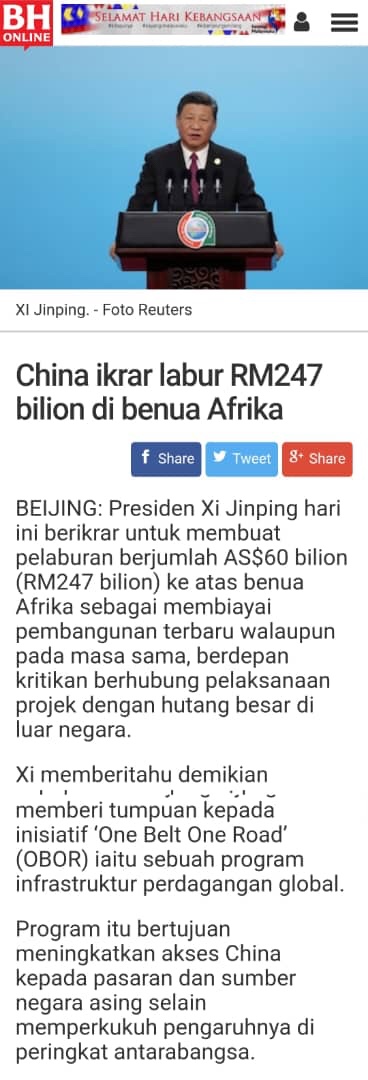
Norway is now mulling the idea of having China build a new Stockholm to Oslo high-speed rail. Bangkok plans to build a 2,506-kilometer high-speed rail linking Chiangmai, Nong Khai, Rayong and Padang Besar – all with China’s assistance.

Other China-assisted railway projects now include the China-Laos railway, the Jakarta to Bandung high-speed rail, the Serbia and Hungary rail link, Moscow to Kazan high-speed rail, and the Lahore automated rapid transit metro system.

Meanwhile, Malaysia, it seems, is contented in playing hero like a mouse threatening an elephant while completely missing the train.

(This article was first published by The Mole)

Hoping For Better Healthcare

doctor

Among the more important aspects of welfare that the government has to look after without fail is healthcare.  Fortunately, public healthcare in Malaysia already has a good foundation.  The only thing that needs to be done is for it to be better enhanced.

Among the issues that has to be addressed is of the issue of the glut of medical practitioners in this country.  Every year, about 5,000 new doctors are produced, including 1,000 from overseas universities and colleges.  The problem now is that these new doctors have to do two years of housemanship in government hospitals before they can be recognised as general practitioners.  The problem is, government hospitals could only take in 10,000 housemen at any one time.  Therefore, new doctors would have to wait between eight months to a year before they could do their housemanship.

Health Minister Dr Dzulkefly Ahmad’s recent announcement that the Klinik 1 Malaysia will be enhanced by locating doctors and proper drug-dispensing units could help the situation.  Not only that, it would alleviate the congestion that we see at almost all Klinik Kesihatan on a daily basis.  There are 196 Klinik 1 Malaysia currently operating on a 24-hour basis manned by an Assistant Medical Officer and nurses.  Having at least twelve doctors doing three eight-hour shifts would allow for more medical graduates to be absorbed.

If the financing mechanism could be formulated, the Skim Peduli Sihat nationwide extension could also help private clinics, especially those in the urban and suburban areas whose business is affected by the presence of Klinik 1 Malaysia.  The idea is for the B40 group to be able to seek basic healthcare at private clinics for RM500 per family per year, or for individuals above the age of 21 earning above RM1,500 a month, RM200 per person per year.  This would certainly help private clinics and help alleviate the congestion at Klinik Kesihatan.

I certainly hope that the government would roll these initiatives out soon.  The government must be seen to be serious in making reforms, and not look back and blame the previous government.  Pakatan Harapan is now the government and has all the means to improve the situation.  For now, Dr Dzul is on the right track.  I hope he would be able to move forward with healthcare reforms.