Just Ranting, Laaaaaaawwww!

Let me just rant.

If you read the title above with a Malaysian-Chinese accent, you’ll get the effect.

What is unique about our Federal Constitution and the laws made under it?  That it has both the “secular” and “Islamic” features.  The “secular features include Articles that give the Federal Constitution its supreme status, that the provision of Islam as THE religion of the Federation of Malaysia does not depart from any other provision, that the Syariah courts have limited authority, so on and so forth.  Meanwhile, its theocratic features include provisions that allows the independent nature of the Syariah courts from the civil courts (Article 121 (1A)), ALL Muslims are subject to the Syariah laws, State support for Islamic religious institutions, preaching of any religion to Muslims is regulated, that the concept of Malay and the religion of Islam are intertwined, and several other provisions made pertaining to Islam being the religion of the Federation. Bear in mind that Articles 4(1) and 162(6) of the Federal Constitution affirm the supremacy of the Federal Constitution over Parliament – contrary to popular belief.

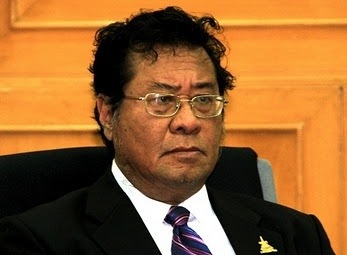
Now, what am I ranting about? Initially, I wanted to rant about ESSCOM and the latest kidnapping, but since two recent issues are more pressing than Mentek’s failure-blame-placed-on-the-police-army-and-navy issue.  They are the comment made by Tan Sri Khalid Abu Bakar, the Inspector-General of Police on the issue of the custody of two children to two sets of parents of different religion as well as Menteri Besar of Selangor’s plan to seek audience with HRH The Sultan of Selangor on the possible return of Bibles confiscated by MAIS/JAIS to the Bible Society of Malaysia.

A bit of background on the first issue: custody.  Two couples namely Muslim-convert Izwan Abdullah and ex-wife S.Deepa, and M. Indira Gandhi and her ex-husband, also a Muslim-convert Mohd Ridzuan Abdullah. Both men converted to Islam without the knowledge of their respective wife resulting in the latter claiming for custody of their children.  Well, it is slightly more complicated than how I have described the case but that is the gist of it. The civil courts have granted custody to the wives while the Syariah courts sided with the husbands. In both cases, the children were converted to Islam without the respective wife’s prior knowledge.

How did the IGP get into the line of fire?  The IGP has refused calls from certain quarters of the public to get the Royal Malaysian Police involved by upholding the various courts order and suggested for the Welfare Department to take custody of the children instead.

I agree with the IGP that the police should not get involved in the custody struggle, but on the other hand the police cannot ignore an arrest warrant issued by the court.  The dilemma here is that the police is expected to uphold both laws, civil and syariah. However, we must all look at the broader picture.  What the IGP said is right.  The children in the custody fights should be under the care of the Welfare Department.  People from the Welfare Department who say otherwise are either ignorant of the law, or are just trying to wash their hands in this matter.  Section 17(1)(h) says that a child is in need of care and protection if there is a conflict between the child and his parents or guardians, that family relationships are seriously disrupted, thereby causing the child emotional injury. Section 18 of the same Act gives the provision for the Welfare Department to take the child into temporary custody.

Why am I in agreeable with this measure?  Even with Ridzuan arrested and placed in custody for contempt of court, he is still entitled to the normal legal channels and can file an appeal against the custody order made in favour of his ex-wife by the High Court.  Only when ALL legal channels have been exhausted, and a final court decision has been made regarding these two cases then the Police should carry out the final order. With the children in custody of the State, the parents can have equal and neutral access to the children at pre-determined times, regulated by the Welfare Department.  All conversions should go through a process where the original Identification Card be held by the religious officer performing the conversion, and the conversion to be registered at the National Registration Department for the converted to receive an Identification Card.  The process should also include a meeting with the spouse/family of the person wanting to convert before any conversion to take place.

Now, back to the issue of the confiscated Bibles.

I have written at length on this issue earlier this year.  I even provided the background why they can use Allah in Sabah, Sarawak and even Indonesia but not in Peninsular Malaysia here ,here and here.

The Majlis Agama Islam of Selangor (Selangor Islamic Religious Council) and the Jabatan Agama Islam Selangor (Selangor Islamic Religious Department) or known to many simply as MAIS and JAIS respectively, are adamant to uphold the Control and Restriction on the Propagation of Non-Islamic Religions Enactment, 1988 under which the Bibles in the Malay language are confiscated.  May I remind everyone that the Enactment is a strict-liability State law, and not a law made under the Syariah context. It applies to all, non-Muslims and Muslims alike.  On 11th June, the Attorney-General, Abdul Gani Patail announced that JAIS had erred in seizing the Bibles, and that no charges would be made, rendering the case closed.

Just as I thought the A-G as a useless human being in this particular post, I strongly believe that the statement he made and how he came to this decision are driven by grave errors.  Firstly, the A-G had made irrelevant introductions to the case by treating the case as one that involves national security. This is because the A-G’s Chambers had recorded statements made by Home Ministry officials indicating that the Bibles do not fall under their purview, therefore do not involve national security. This, my dear A-G, is not about national security. It is about the dangers to public order and moral. Due to the statement made by the A-G on this matter, the Menteri Besar of Selangor, Khalid Ibrahim, will be meeting His Royal Highness the Sultan of Selangor to discuss the issue of returning the Bibles to the Bible Society of Malaysia. Making matters worse is the Prime Minister himself has seen fit to get involved in the melee that is a State prerogative by suggesting that MAIS meet up with the A-G to discuss way forward.

Here is what MAIS and JAIS should do in the case of the useless Attorney-General: go to court and apply for a writ of mandamus to compel Gani Patail to do the right thing. Gani has erroneously digressed from the crux of the issue and have added to the confusion of many, with the possibility of creating a wrong precedence.  The A-G as a public officer should have carefully studied the issue AS IT IS, and not introduce irrelevant matters such as national security before coming to a decision.

May I remind MAIS that in the case of the A-G, to refer to Teh Cheng Poh @ Char Meh v. PP  case where Lord Diplock who was a member of the Privy Council opined in 1978 that the Attorney-General had erred in allowing for the trial of a 14-year old juvenile in the High Court. The 14-year old was represented by the late Karpal Singh. Therefore, MAIS should apply for a writ of mandamus. Meanwhile, MAIS should also file a police report against Shah Alam MP, Khalid Samad, who suggested that MAIS’s authority over JAIS be removed, effectively usurping the powers of the Sultan of Selangor in an unconstitutional manner.

In both cases mentioned above, the rule of law must prevail and should not be allowed to be manipulated by anyone, especially by the politicians, and cool heads should prevail.  Government agencies should also act without fear or favour in exercising the provisions of the law.  Meanwhile, public officers who cannot perform tasks expected of them should be removed.

Gani said statements recorded from Home Ministry officials also indicated that the books did not fall under their purview and, thus, did not involve national security. – See more at: http://www.themalaysianinsider.com/malaysia/article/bible-seizure-case-closed-no-prosecution-says-a-g#sthash.J58v3D4q.dpuf

ESSCOM’s Failure: Who To Blame?

20140404-195043.jpg

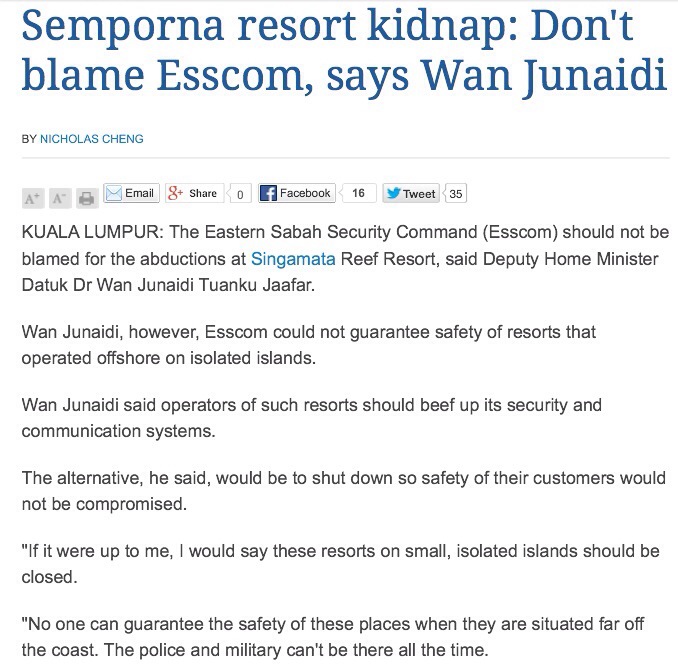
If you think it is disgusting that armed men believed to be from the terrorist group Abu Sayyaf could infiltrate our borders of the east coast of Sabah last November, shoot dead a tourist from Taiwan and kidnapped his wife, then again a few days ago taking a tourist from China and a resort worker away, guess what is even more disgusting? That the man above, the Deputy Minister of Home Affairs, had the cheek to say the following (as quoted by The Star:

20140404-200102.jpg

Who are we to blame then, Wan Junaidi?

May I remind the Deputy Minister that ESSCOM was created on 7th March 2013 to ensure the security of the ESSZONE is taken care of in a holistic manner so there would be no recurrence of the Lahad Datu incursion and of other similar incidents. Maybe I can provide the Deputy Minister with a statement by the Prime Minister on Police Day 2013 that was posted on ESSCOM’s website.

20140404-200958.jpg

ESSCOM is an agency under the Prime Minister’s Department to undertake the enhancement of security in the ESSZONE defined as 10 districts from Kudat to Tawau spanning 1,733.7 kilometers, to prevent recurrence of any form of intrusion by unwanted foreign elements.  The method that should be employed to affect this is by applying the Defence-in-Depth concept that I wrote about in March of 2013 when ESSCOM was first formed.  The military has worked with the police in a support role on numerous occasions starting with the First and Second Emergencies of 1948-1960 and 1968-1989 periods respectively, in various UN missions such as to Cambodia, Liberia, and Timor Leste. The military also supported the operations conducted by the police in Ops Daulat last year, and since then the military and police have conducted basic recruit training jointly at the Army Recruit Training Centre in Port Dickson to enhance better understanding between the two.  Therefore, the issue of one not being able to accept orders by the other does not arise.  In any case in peacetime, the command of the police prevails and the military plays a supporting role, and this has always been case.  The Immigration however, does not have any experience in operational security as they only act as filters to immigration, and not experienced nor trained in deploying combat assets.  It is no secret that the southern Filipinos have no respect nor fear for our Immigration Department. They only fear our police and the military.

I don’t subscribe to Wan Junaidi’s remark that the resorts should close down. They have been in existence even before the formation of ESSCOM. They are still located within our littoral zones. Should they not be protected? Should there not be security forces stationed at these resorts as there is on Mataking, Mabul, Sipadan, SiAmil and other islands?  If the resort owners do not cooperate, what is the problem? Who makes the policies? Can’t action be taken against resort owners who do not respect policies? Stop giving stupid excuses, Wan Junaidi, and start behaving like a Deputy Minister.  If ESSCOM cannot even get the buy-in because it does not have the will to enforce and execute policies, it should be disbanded and leave it to the police and military to run an enhanced version of Ops PASIR. The Immigration Department should just go back to stamping passports and weed out illegal immigrants.

So, who is to be blamed, Wan Junaidi?  Who is to be blamed for appointing a non-combatant to take charge of a combat situation? Who is to be blamed if as a result of the appointment two armed incursions have taken place resulting in the kidnapping of three people and the death of one?  I will blame Wan Junaidi for making stupid statements, one after another, and blame the government for making him a Deputy Minister.

MH 370: Is It Fair To Blame Malaysia By Saying She Was Slow To React?

Prologue

On Sunday, 23rd Monday, 24th March 2014, the Malaysian Prime Minister announced that based on the findings of the UK-based Aircraft Accidents Investigations Board it was concluded that the flight of the MH370 ended in the southern Indian Ocean.

This was met by heavy criticism in particular by families and relatives of the passengers who are in Beijing. This is understandable. As humans, we always cling on whatever glimmer of hope there is that our loved ones will somehow appear unscathed. I went through this when my brother passed away three months ago. I kept thinking that this was all a bad dream and that I would wake up to my brother’s jokes, laughter and hugs again. However, such hope should be balanced with situational logic – the acceptance of reality and that should help overcome the pathological grief a person would have. The sooner one accepts reality, the sooner the trauma will heal.

This pathological grief will get prolonged not only if one refuses to accept reality, but also by irresponsible acts to promote hope. Hope is the act of prolonging the arrival of the inevitable. I will here chide the opposition parliamentarians who call upon the government to provide physical proof that the MH370 had indeed crashed. May I just forcefully drag everyone to the reality that the aircraft cannot fly for 19 days; based on the Doppler effect triangulation the last possible location of the aircraft points to the extremely unforgiving southern Indian Ocean. If anyone, just any one person could survive the extremities of the whole situation, then let us just call that a bonus from God. While hope is good to a certain extent, my only hope is for the black boxes to be located before the batteries run out.

The search for debris is not going to be an easy task even on a normal day. Australia’s Prime Minister has described it as “looking for a needle in a haystack, but having to find the haystack first.” I would take that a step farther by saying it is like looking for hundreds of pieces of one single needle in a haystack that has yet to be found. How is that as a perspective? Now add nine-metre waves with lots and lots of whitecaps into the equation.

I take offence at a statement by representatives of the families in Beijing, as well as members of the foreign media, AND the Quislings amongst us here in Malaysia that we (Malaysia and its military) have murdered the passengers and crew, and that we have either been hiding or not been forthcoming with information or both. Malaysia has been providing all information pertaining to this incident on a daily basis, and even to the extent of sharing sensitive military data that has jeopardised its defence just so to render search and rescue efforts more effective. With the information made available to me as well as by Andak Jauhar’s analysis of the MH370 incident I shall draw a timeline so readers would understand why was the SAR conducted in the South China Sea, when exactly was SAR expanded to the west of Peninsular Malaysia, and how fast did information flow in. All times quoted in this timeline is Malaysian time (UTC +8):

08 March 2014

0041 – MH370 took off from the Kuala Lumpur International Airport with 227 passengers and 12 crew members bound for Beijing with an endurance of approximately eight hours.

0107 – the Aircraft Communications Addressing and Reporting System (ACARS) made its last transmission on the aircraft’s performance. All systems were running as per normal. Next transmission was due at 0137 hours.

0119 – a person believed to be the co-pilot acknowledged the handing over of the MH370 from Malaysia’s Flight Information Region (FIR) to Vietnam’s FIR. His last words were, “Alright, goodnight.”

0121 – the secondary radar at Subang’s Air Traffic Control centre lost contact with the MH370 over waypoint IGARI at 06.5515N 103.3443E, after a deliberate act of turning off the transponder as well as other communications equipment. The aircraft was then at 35,000 feet above sea level. However, the aircraft continues to be tracked by the Royal Malaysian Air Force’s (RMAF) primary radar and had its flight path towards waypoint VAMPI monitored and recorded by RMAF’s Air Defence Centres.

0215 – RMAF’s primary radar consistently monitored the path of the MH370 from waypoints VAMPI, GIVAL before finally losing track of it after waypoint IGREX while flying at 29,500 feet above sea level.

As a Contracting State to the ICAO Convention of 1944, Malaysia assumed the role of the Rescue Coordination Centre under Annex 12 of the Convention for the MH370 Search and Rescue efforts because the MH370 had yet to enter Vietnamese FIR control (its radar had not detected the MH370 yet when she changed her flight path). Based on sightings of debris, the Search and Rescue efforts concentrated at its last known position near waypoint IGARI.

0630 – MH370 was to have arrived in Beijing.

0811 – the last handshake between the MH370’s navigation system and an INMARSAT satellite was made.

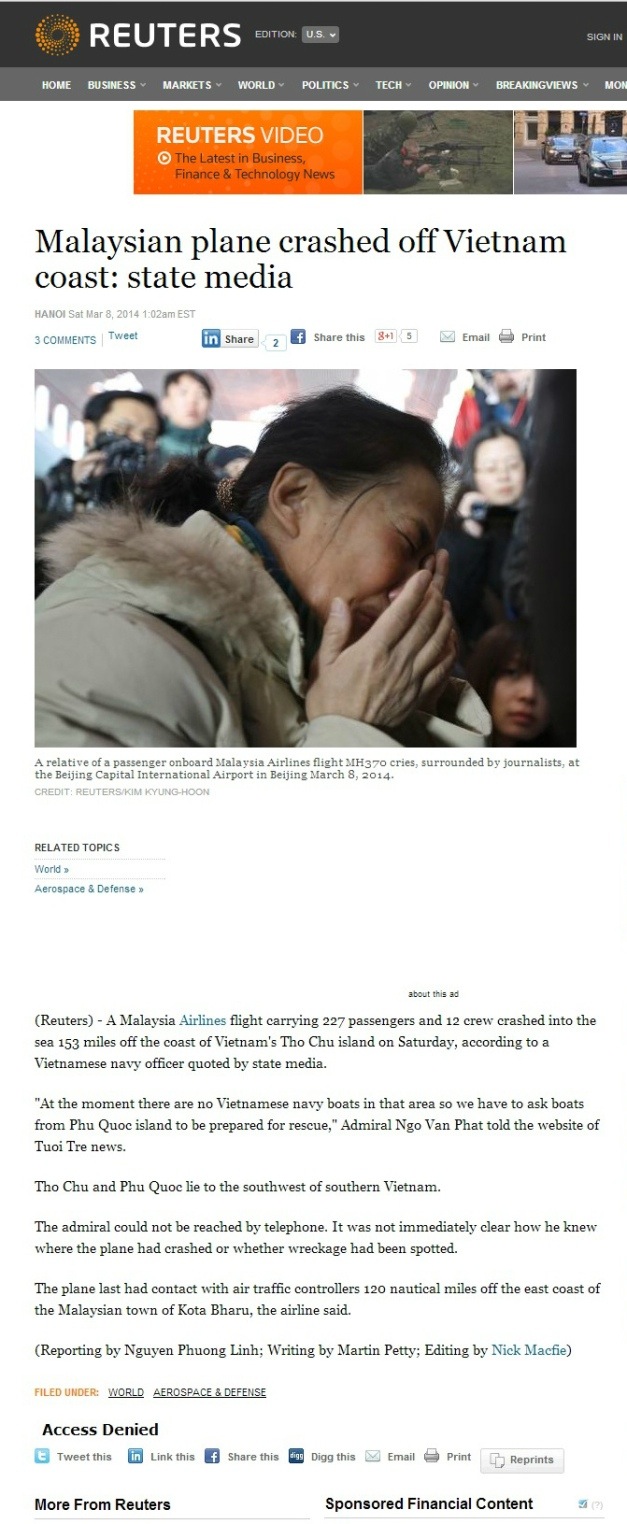
1017 – Rear Admiral Ngo Van Phat of the Vietnamese Navy announced that the MH370 may have crashed about 153 nautical miles (300km) from Tho Chu island, near Ca Mau. This statement was carried by Tuoi Tre News and was subsequently picked up and released by Reuters at 1302 hours, sending SAR assets into the area.

20140326-130701.jpg

1730 – based on the flight path monitored by the RMAF, the SAR effort was also expanded into the Strait of Malacca.

09 March 2014

– search around Tho Chu island failed to yield anything.

– the SAR efforts were expanded into the Andaman Sea. The RMAF’s sensitive radar data recordings have been shared with the SAR authorities.

10 March 2014

1343 – Vietnamese news agency Tuoi Tre reported that a passing aircraft from Singapore spotted an orange object possibly a liferaft or a lifejacket 177km northwest of Tho Chu island. SAR assets deployed later identified this object as a cable wrap.

11 March 2014

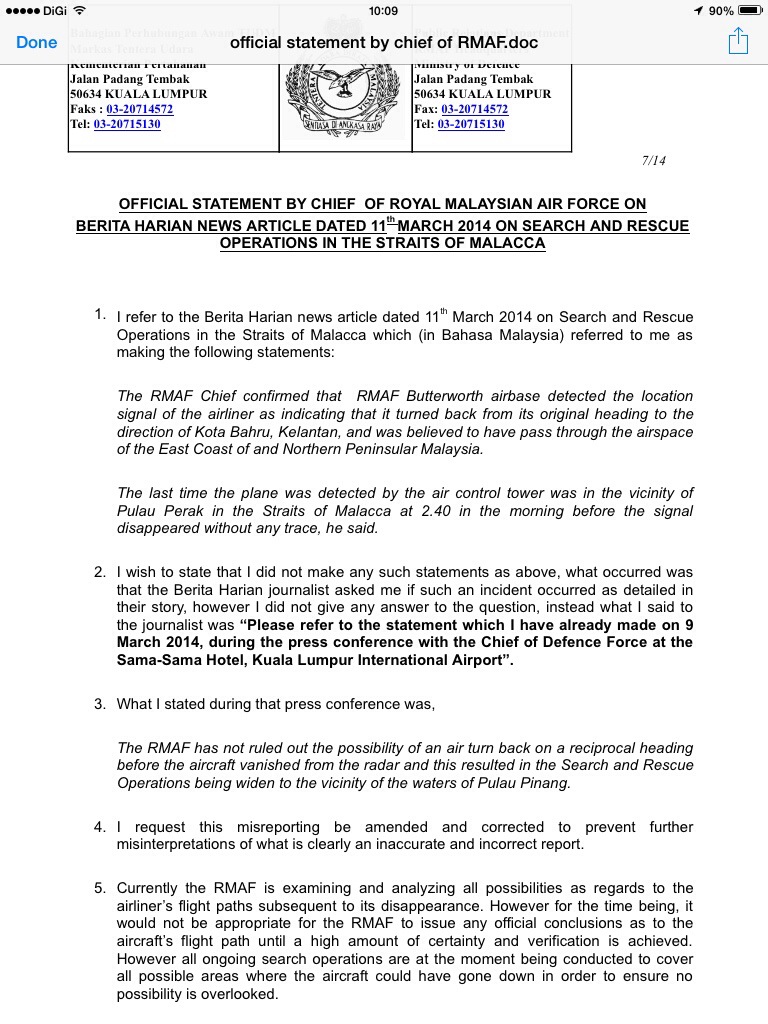
The Malaysian Chief of Air Force issued a press statement refuting a report by the Malaysian daily Berita Harian that quoted him as supposedly saying the aircraft had flown towards Pulau Perak.

20140326-131528.jpg

12 March 2014

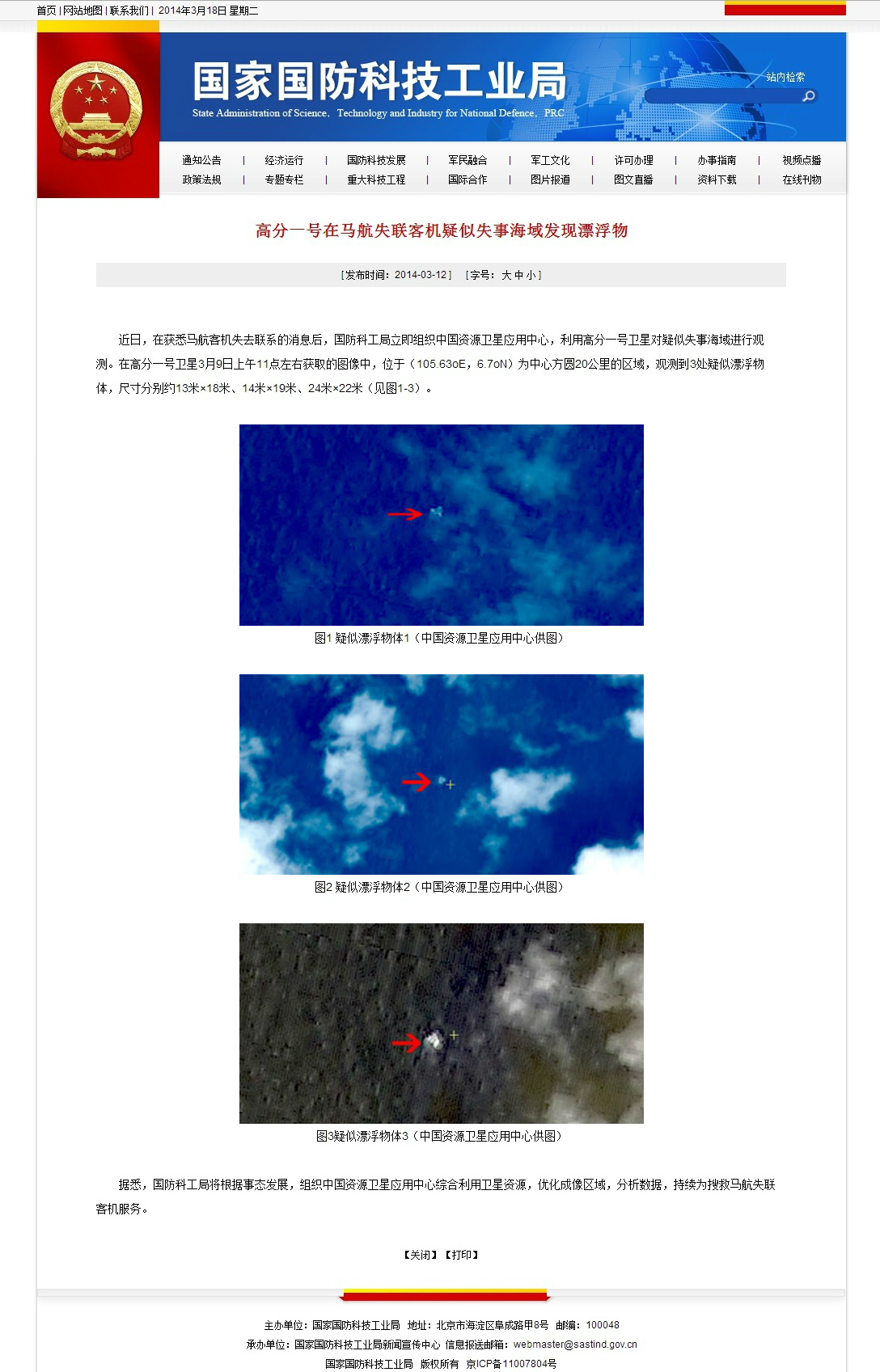
The official website of the State Administration of Science, Technology, and Industry for National Defence of China (SASTIND) showed pictures of three objects spotted in the South China Sea believed to be related to the MH370.  These photos were then shown to the public by the China Central Television (CCTV), Xinhua News Agency, CNN, BBC and also by other foreign news agencies.  According to SASTIND, these images were taken at latitude 6.7N 105.65E at 11.00am on 9th March 2014.

SASTIND website showing debris thought to be related to the MH370

Hence, SAR assets were again sent to verify the findings which we now know were false sightings, but not before more time and concentration of vital resources have been wasted.

14 March 2014

– search was expanded into the Indian Ocean.

15 March 2014

The Malaysian Prime Minister announced that the object tracked by the RMAF’s primary radar was indeed the MH370. This conclusion was made based on processed data acquired from INMARSAT and concurred by the FAA, NSTB, AAIB and the Malaysian authorities.

20 March 2014

The Australian Prime Minister announced satellite images showing large debris in the southern Indian Ocean. The image was taken four days earlier.

22 March 2014

The Chinese government announced that its satellite had found debris in the southern Indian Ocean. That image too was taken four days prior to the announcement.

24 March 2014

The Prime Minister of Malaysia announced that based on triangulation of handshakes between the MH370 and satellites, the flight ended in the southern Indian Ocean.

The rest is academic.

Epilogue

The timeline displayed above shows how Malaysia has, from Day One, been moving as fast as it could to get to the correct pointers only to be side-tracked by false and unverified sightings.  Malaysia has also been sharing everything, and literally everything including data of its sensitive military capabilities, as well as air bases so the search and rescue effort would benefit the best out of the information made available to them by the Malaysian authorities.

The timeline above also displays the average time of four days needed for satellite images to be processed before they can be safely suggested to the search and rescue teams.

What the timeline above suggests is that while the authorities are working hard to find the missing aircraft, the families as well as the public in general ought to exercise patience and restraint in their quest to know what happened. The media should be more responsible in reporting the incident as well as the search and rescue efforts as not only will the effects be adversely negative, but irresponsible reporting provides false hopes to the family that are put on an emotional roller-coaster ride on a daily basis.

And to those who call themselves Malaysians but continue in bashing whatever effort the government offers in bringing this episode to a closure, I doubt you qualify even a place as a zoological display for despicable animals.

Shame on you.

MH370: I Speak Out

20140319-225404.jpg

This posting is made with the above in mind. A lot has been said about the disappearance of the MH370. Most of what has been said are purely speculations, with some that might have qualified to be nominated for best screenplay at the Academy Awards. I, too, have some idea of what might have happened but I put them aside so I could listen to the daily press conference with an open mind. I will also attempt to maintain some form of ethics because I also have the feelings of the family of the passengers and crew in mind when I write this.

The Royal Malaysian Air Force (RMAF) has come under intense attack by both foreign and local media alike. The Air Defence system has also come under intensive fire by members of the opposition party for its failure to detect the MH370 upon deviating from its intended path and the subsequent failure to scramble our fighters. Some even say our air defence personnel were asleep on the job, and that at least one air defence radar was not working.

It is easy for keyboard warriors to criticise the RMAF without knowing what or how our air defence systems work. Perhaps when they think of an air defence system, they had the following in mind:

20140319-230523.jpg

Why I write this is to give a general understanding of how our air defence system works, and what really happened that night. I have been generally quiet on this matter as at the time of writing, I am grieving the passing of my younger brother exactly 100 days today. But duty calls, I guess.

I left the RMAF almost 20 years ago. A handful of my squad-mates are still serving senior officers. Back in September 2012, a number of bloggers (including I) and some senior editors of the Malaysian media (including those that are opposition-leaning) were invited to a media open day organised by the then Minister of Defence. Everything was displayed to us, including some of the very sensitive information, so that we could acquire enough background and understand how the RMAF works. Out of the 80 or so people who were there that day, I guess I am the only one to come to the defence of the RMAF.

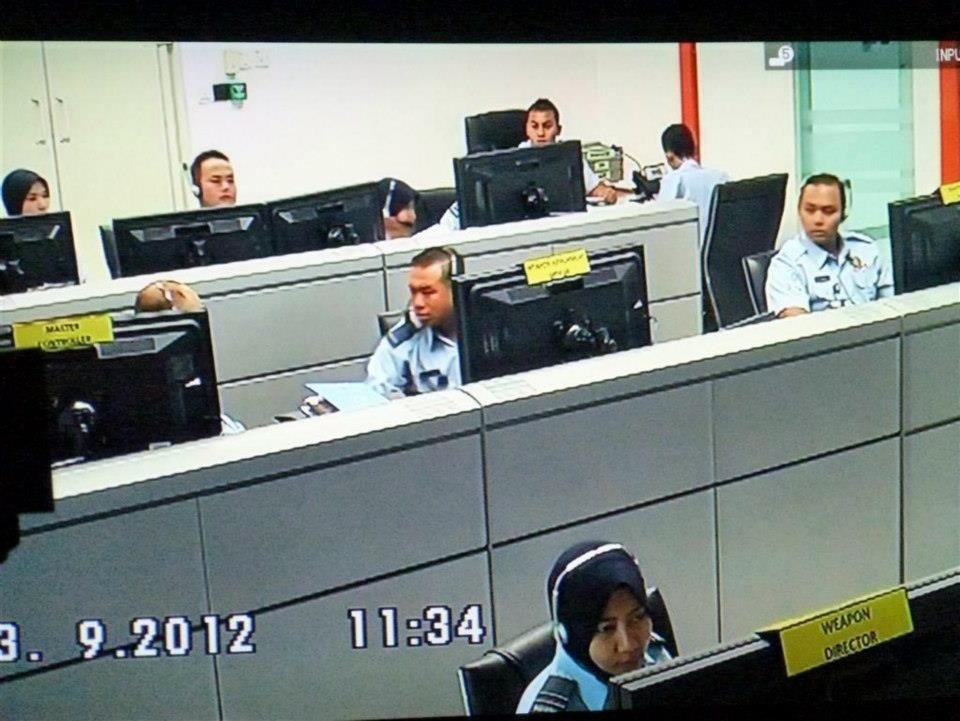
First of all, this is how a typical air defence centre looks like from the inside:

20140319-231314.jpg

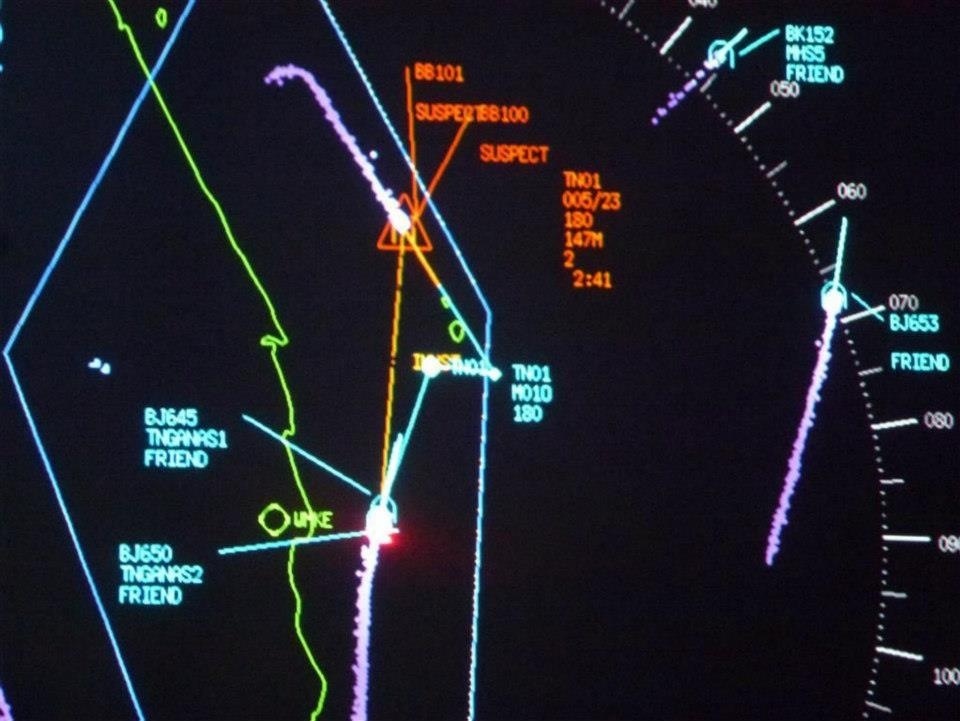
It is no longer the one-man show you see in the movie “Tora! Tora! Tora!” There are several air defence centres around Malaysia covering both the Peninsula, Sabah, Sarawak and FAR beyond. I have a photo of how far our air defence radars reach, but although I was allowed to take photos of the main display, I opt not to put it up here. Suffice to say, what we have is enough to tell us way ahead if a hostile aircraft is approaching our airspace. When we were at the air defence centre, we were shown a live interception of two bogeys by two of our MiG-29N interceptors.

20140319-231902.jpg

If I may say, what we all saw on the screen was what would have been seen by all the operators of the other RMAF Air Defence Centres around the nation that if one failed, it would not jeopardise what the others could see.

During this display, not one journo nor blogger could come up with a sane question related to what was shown to them. In the end, I and a few of my blogger friends had to ask the questions to get the RMAF clarify on issues that the media and bloggers have been attacking them on. Even the Deputy Chief of Air Force, Lieutenant General Dato Seri Haji Roslan bin Saad thanked me for my participation and for helping the RMAF clarify some issues.

Let us go back to that wee hours on Saturday, 8th March 2014. MH370 took off from Kuala Lumpur International Airport at 0041 hours (Local Time). At 0107 hours, the Aircraft Communications Addressing and Reporting System (ACARS) transmitted that all was well with the aircraft.

The aircraft soon after arrived at waypoint IGARI, about 78 nautical miles from Redang island, bearing 056 degrees) which is a point in the South China Sea between the Malaysian border with Vietnam. At this point, Lumpur Flight Information Region (FIR) would hand over the control aircraft to Vietnam. At 0119 hours, a person believed to be the co-pilot transmitted the final vox transmission, “Alright, good night.” At 0122 hours, the aircraft disappeared from secondary radar coverage without any distress call suggesting its transponder had been switched off by someone on the flight deck. However, it was only at 0240 hours that Malaysia Airlines was notified.

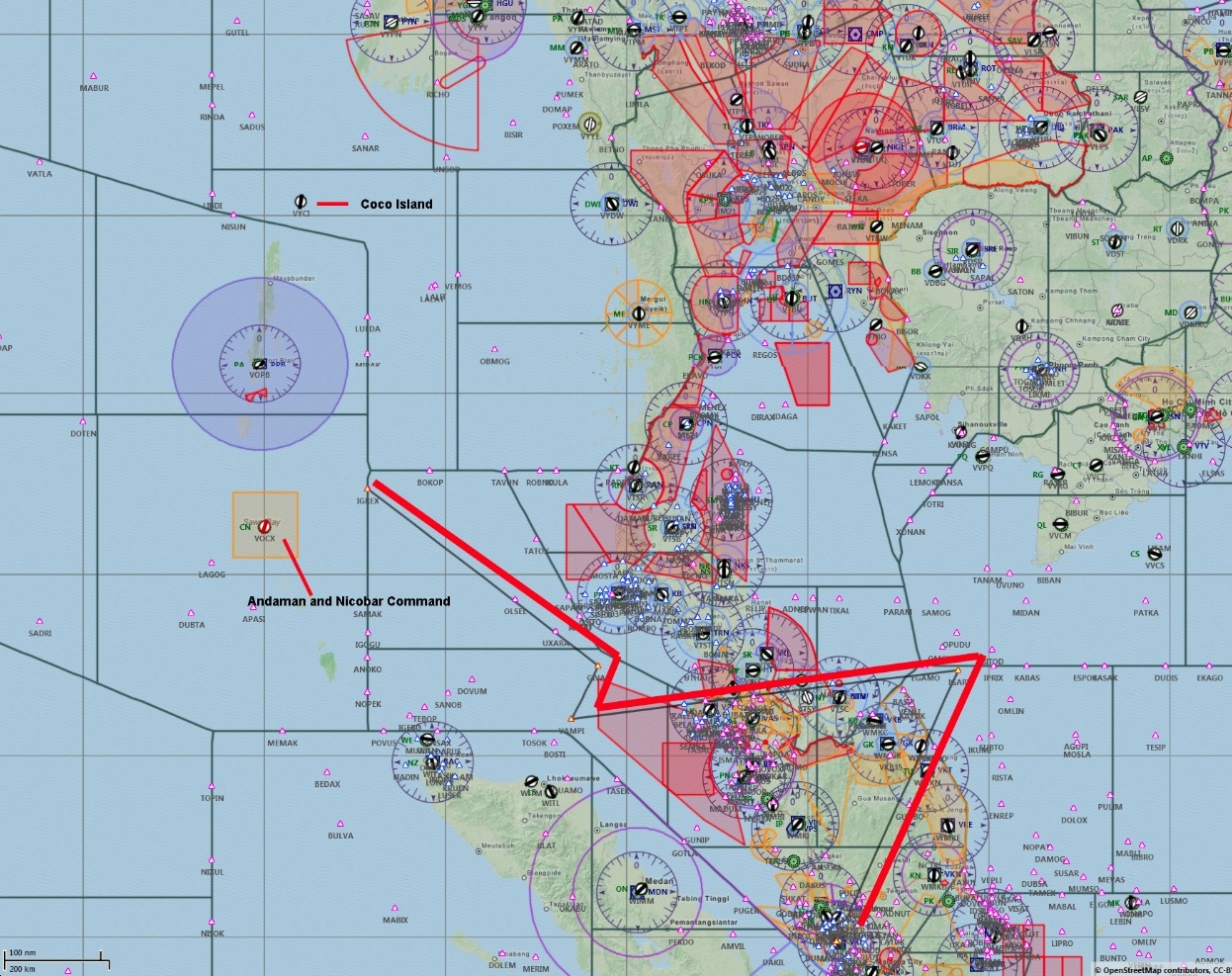
The RMAF Air Defence radars saw the MH370 tracked West Southwest to waypoint VAMPI (68 nautical miles East Northeast of Lhokseumawe, Indonesia), then Northeast to waypoint GIVAL (69 nautical miles South Southwest of Phuket International Airport) before tracking Northwest towards waypoint IGREX (100 nautical miles East Southeast of Car Nicobar airport on India’s Nicobar Islands), the last known position according to the primary radar. Where MH370 went to after this point is unknown at this point, but I believe the Indian Air Force’s Andaman and Nicobar Command’s primary radar there would have caught the MH370 in its scope.

So, if the MH370 was seen to deviate from its intended course, why didn’t the RMAF scramble its fighters to intercept the airliner?

Every bogey (unknown aircraft) would be tagged by an Air Defence Officer and this data will be processed to ascertain whether it was a threat to air defence or otherwise. In the case of the MH370, it was not regarded as hostile. Is this a weakness on the part of the RMAF? Mind you three jetliners took down the World Trade Centre towers as well as the Pentagon in the sophisticatedly-defended United States of America.

Should our fighters have been scrambled? If you remember, the MH370 was no longer in our airspace. When the MH370 tracked West Southwest from IGARI to VAMPI, she did not cross Malaysian airspace. She flew over Thai airspace and into Indonesian airspace, then tracked up to GIVAL near Phuket and subsequently to IGREX near India’s Nicobar Islands (see below).

20140320-001239.jpg

When she tracked from IGARI to IGREX she entered an area with two Royal Thai Air Force fighter bases namely the RTAF 7th Wing in Surat Thani and the 56th Wing in Hat Yai. They, too, were not scrambled. Nor were the fighters of the Indonesian Air Force (TNI-AU) scrambled from Lhokseumawe or Banda Aceh in Aceh, or Suwondo in Medan. If you think the Indonesians are as incapable as the RMAF, they forced a US military transport down without scrambling their fighters at their base in Banda Aceh on 20th May 2013 for entering Indonesian airspace without proper clearance.

The Chief of Air Force, General Tan Sri Dato Seri Rodzali bin Daud have explained that the RMAF did not see the need to scramble its fighters as the blip on the primary radar was deemed not hostile, and that there was nothing wrong with the air defence system. I just find this attack on the RMAF as another cheap publicity shot by a bunch of losers who do not know how things work and why, and would just take pot shots and see what gets hit.

I know the RMAF I see now is a far advanced RMAF than the one I left almost 20 years ago, and I have faith in the officers, men and women in their capability to defend this nation. I cannot say the same for the group of losers bent on hitting out at any institution of His Majesty Yang DiPertuan Agong.

To these losers, please just STFU!

20140320-003529.jpg

Enough Water For All In Selangor

20140224-143904.jpg

I did not say that. Khalid Ibrahim did, on 19th July, 2010! In fact, he and his band of experts including Elizabeth Wong refuted claims that Selangor would need water rationing come 2014, dispelling claims by experts from the water industry that it would. Khalid went on to say that there is no need to hasten the Langat 2 water treatment plant project citing his experts’ view that there would be enough water in the state until 2019! Best still, his sympathisers went to town planting seeds of hatred and paranoia saying the BN government would pull no punches in proving that there would be water rationing come 2014.

20140224-142847.jpg

Oh, guess who said what on the 24th February 2014?

20140224-143127.jpg

Again, I did not say that. Khalid Ibrahim did. I guess by now people should realise that even with a god-sent character in PKR, God has decided to side those who are in favour of the Langat 2 water treatment plant project.

Just quit playing politics and give us our treated water!

Read more at:

Water, Water Everywhere

Water, Water Everywhere – Part 2

Ikan Kering

Your move now, Khalid!

20140224-145114.jpg

Stop The Killing

“Killing, whether it is one man, or one million men, is a crime.”

The world we live in is said to be a civilised one. In the old days, uncivilised people resolve conflicts by killing each other. Nowadays, civilised nations impose their will on other nations, especially when they do not like who is leading these nations. And this is accepted by the world as the civilised way to resolve conflicts; ironically this does not differ from the ways of our uncivilised ancestors.

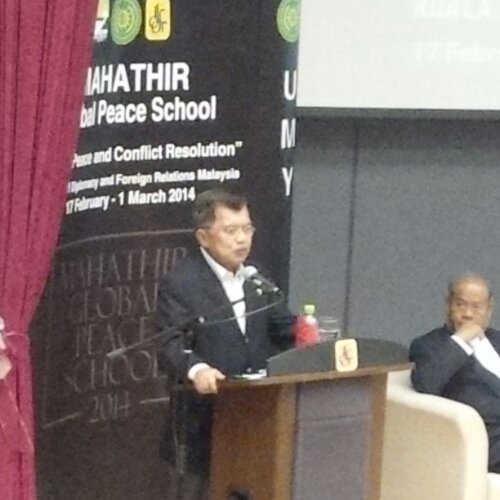
This message was conveyed by Tun Dr Mahathir Mohamad at the launching of the 14th Mahathir Global Peace School and Public Lectures at the Institute of Diplomacy and Foreign Relations in Kuala Lumpur. The MGPS14 consists of several programmes and lectures aimed at discussing the criminalisation of war.

He added that it took 20 years for a politician to convince the lawmakers of his nation to accept that slave trading is illegal, therefore it is not impossible to get the general public as well as nations to agree to criminalise war.

Conflicts should be resolved through discussions, tribunals, and courts of law. It would be better for nations to resolve conflicts by sitting down together as civilised people should. Of course, the outcome of some decisions of the courts of law may turn out differently as the international court is not independent of the most powerful nations who call the shots.

The vote of one country out of five holders of the veto power holds the whole world at ransom, determining the fate of this world. This is what the civilised nations call “democracy.” We can never have peace in this world when the fate of the majority lies in the hands of these five nations.

Tun Dr Mahathir added that the world can only be civilised if all politicians are also elected because they object to war. Children must also be educated on the efforts to criminalise war.

The launching of the MGPS14 was also attended by Dr M Jusuf Kalla, the former Vice-President of the Republic of Indonesia who delivered a lecture on peace and diplomacy.

image

In his lecture, Dr Jusuf Kalla said that the two World Wars were very costly. In the old days, in order to have peace one must be prepared for war. However, security can now be better achieved by maintaining good relationship between countries.

Dr Jusuf Kalla said about half a century ago Indonesia and Malaysia faced the same scenario. However, behind-the-scene diplomacy prevailed and stopped the Confrontation from escalating further. During the Ambalat stand-off, Dr Jusuf Kalla called upon Datuk Seri Najib to help diffuse the situation by mutually agreeing to order the respective naval units to end the standoff and return to base. This is due to not just the good relations between the two nations, but also the good personal relations between the leaders of the two nations.

“Weapons will have less meaning if the relationship is good,” he added. “A good relationship will never bring about wars. Diplomacy and good relationship will bring about many benefits. Malaysia has helped Indonesia tremendously as one of the major foreign investors there.”

Economic equality and non-exploitation of other nations should be the fundamentals to be exercised in order to achieve inter-nation peace.

When there are too many weapons available, peace is not easily achievable. Malaysia has been helping out in government between the factions and the government but the availability of weapons have hindered the southern Philippines from achieving true peace. The absence of a recognised leader in South Thailand coupled with the availability of weapons have caused many negotiations there to fail. The Southern Thais do not identify themselves as Thais, whereas the government of Thailand treat them as Thai nationals. The exact opposite happens in Myanmar where the Rohingyas say they are Myanmarese but the Myanmar government would rather identify them as Bangladesi-descendants. Without a common understanding, peace can never be achieved in these three regions. Therefore, weapons will always remain as the definition of security.

The MGPS14 will see a series of visits and public lectures starting on the 17th February 2014 and ends on the 1st March 2014. Among the invited lecturers include Dr Chandra Muzaffar (President of International Movement for a JUST World), Prof Johan Galtung (Professor of Peace Studies), Prof Dr M Din Syamsuddin (Chairman of Muhammadiyah) and Prof Ahmad Syafii Maarif (former Chairman of Muhammadiyah).

2013 in review

The WordPress.com stats helper monkeys prepared a 2013 annual report for this blog.

Here’s an excerpt:

The Louvre Museum has 8.5 million visitors per year. This blog was viewed about 97,000 times in 2013. If it were an exhibit at the Louvre Museum, it would take about 4 days for that many people to see it.

Click here to see the complete report.

Bekor: Prelude to 13th May

During the 13th May 1969 tragedy, a well-known Imam in Kampung Baru by the name of Dahlan made an amulet to protect his brother, Abdullah (a.k.a Abdullah Botak) who was a senior police officer, from harm as the racial clashes escalated.  Abdullah declined and asked Dahlan to use it to protect himself saying:

Don’t be fooled by the Chinese. I have seen what they are capable of in Bekor!

Not many young Malaysian would know where Bekor is, let alone what had happened there.  But Bekor was witness to what was to come 23 years later.

A subtle reminder of the atrocities that had taken place in Bekor

The incident in Kampung Bekor, near Manong in the district of Kuala Kangsar was not the first incident that had involved the killing of Malays by the Chinese, led by the Malayan People’s Anti Japanese Army. What is even sadder is the fact that some Malays were also involved in assisting the Chinese slaughter their own kind.  To understand the mood of the day, we would need to go back in time to when migrant Chinese workers started flooding into the Malay states.

According to a paper jointly written by Mohamed Ali Hanifa and Mohammed Redzuan Othman of the History Department, Faculty of Arts and Social Sciences, the University of Malaya, the Chinese immigrants first came to the Malay states in 1777, and first settled in the state of Perak in 1830 (Patrick Sullivan, 1982: 13). Within 44 years, they numbered 26,000 in Perak alone.  In 1921, the number of Chinese immigrants in the Malay states numbered 1,171,740.  Ten years later, it was 1,704,452. In 1941, it became 2,377,990 while the Malays were at 2,277,352 (Paul H Kratoska, 1997:318).  The explosion of numbers of Chinese immigrants brought about social ills.  In 1901, the ratio of Chinese women to men were 1:100 in the Federated Malay States alone (Victor Purcell, 1948: 174) and this brought about the setting up of prostitution dens.  According to the Straits Settlement Annual Development Record 1906, there were 543 prostitution dens in the Straits Settlement alone, employing 3,894 women (Siti Rodziah Nyan, 2009:200). The Malays remained a minority in their own land until 1970.

When the Japanese invaded Malaya, they portrayed themselves to the Malays as liberators, getting rid of the pseudo-colonialistic British, and began hunting for the Chinese whom were known to have sent money back to assist the Chinese in their war against the Japanese.  As such, the Malays did not face as much hardship as the Chinese did during the Japanese occupation. Although the Malays and Chinese share the same hatred towards the Japanese, it was the Chinese that ran a boycotting campaign against the Japanese. This led to the execution of 70,000 Chinese in Singapore labelled by the Japanese as Communists (Colonial Office Records CO 537/3757: 27-28).  As a result, many Chinese formed the Malayan People’s Anti Japanese Army (MPAJA), a subversive organisation that was administered by the Communist Party of Malaya (CPM) (War Office Records WO 172/9773, No 23: 384).

After the war, the Sino-Malay relations took a turn for the worse.  The Chinese, known for their coarse and rude behaviour began upsetting the Malays. Kenelm O.L Burridge quoted the Malays as saying:

Before the war we and the Chinese lived in peace. But now they want to swallow the people (makan orang). We Muslims do not chase money. That is the Chinese way. They are not Muslims and they do not have the same understanding (faham). If they became Muslims it would be all right (Kenelm O.L Burridge, 1951:163)

Economic competition caused the Chinese to spread rumours about the Malays to put the latter in bad light (War Office Records WO 172/9773, No.30:479). In Batu Pahat, Johor, there was a community that did not respect the local culture (Kenelm O.L Burridge, 1951: 166) and brought about the culture of drinking alcoholic drinks and gambling, and were often found meddling in the affairs of the Malay customs (Seruan Ra’yat, 17 November 1945: 2).

Between the Japanese surrender in August 1945 and the formation of the British Military Administration on 12 September 1945, the MPAJA/CPM left the jungle and occupied police stations and towns and displayed its authority (WO 172/1784, No.51: 180). They took the opportunity to take revenge on the Malays.  Throngs of Imams, religious teachers, Malays who had worked in Japanese offices, and commoners were captured and executed.  Many Malay houses were burnt at night while their occupants were fast asleep (Mohamed Ali & Mohammed Redzuan, 2011:280).

The violation of the sanctity of Islam also became a factor in the bloody Sino-Malay conflict (WO 172/9773. No.30: 478) when the Bintang Tiga/CPM disrupted religious activities in Muslims places of worship.  This started in Batu Pahat, Johor, just before the surrender of the Japanese occupiers, during the Muslim month of Ramadhan.  Muslims were forbidden from congregating at mosques or suraus to perform the Terawih prayers (Hairi Abdullah, 1974/5: 8-9).  The same occurred in Perak and some parts of Batu Pahat where Muslims were gunned down and burnt together with the mosque they were in during Friday prayers.  Mosques and suraus were often used as places of meeting for the Chinese community (WO 172/9773, No.30: 478) and were tainted by incidents such as slaughtering of pigs, and mosques’ compound was used to cook pork, where Malays were forced to join the larger Chinese groups. Pages were torn from the Quran to be used by the Chinese using these mosques as toilet paper.

Facing the atrocities by the Chinese communists, and the betrayal by the British through the formation of the Malayan Union, the period between 1945-46 saw the Malays struggling for the survival of their race and religion.

According to Dr Cheah Boon Kheng, a historian at the School of Humanities, University Sains Malaysia, who is also the author of “Red Star over Malaya”, the Sino-Malay conflict in Johor began between march and August of 1945 (Cheah Boon Kheng, 1981:109). In May 1945, a Moain bi Saridin @ Shahidin, and a Hassan Akasah were brutally murdered by the Chinese communists. When found, they were just a mixed pile of bones without their head. They were murdered for not supporting the CPM. In another incident, a group of Chinese communists attacked the house of the penghulu of Kampung Sungai Tongkang near Batu Pahat, where 30 Malays sought refuge and shot them repeatedly before burning down the house. This conflict spread to the towns of Semerah and Sungai Balang.

On 10th June 1945, the Chinese killed the District Officer of Batu Pahat, Ismail Abdullah; the Kadi of Batu Pahat, Tuan Haji Hasbullah; and Dr Woodhull, the Medical Officer for Batu Pahat) while they were negotiating with the MPAJA Chinese in Benut, Johor (Ho Hui Ling, 2006: 3).  In response. Kiai Salleh from Simpang Kiri in Batu Pahat, who happens to be the grandfather of a close friend, united the Malays, the Javanese and the Banjars to form the Tentera Sabil Selendang Merah (Holy War Army of the Red Bands) to protect the Muslim community. Assisted by Kiai Wak Joyo, Kiai Kusin, Kiai Mashudi, Kiai Mayor, Kiai Saudi, Kiai Maskan, Kiai Sarbini, Kiai Mustahir, Kiai Haji Shamsuddin and Kiai Haji Shukor, Kiai Salleh waged war against the Chinese, the MPAJA and their Malay counterparts (CO 537/1580:3).

When the Japanese announced their surrender on 15th August 1945, the CPM assisted by the Chinese in the MPAJA began to round up Malays suspected of working or assisting the Japanese.  Many Malays had their hands and feet bounded and put into gunny sacks before they were thrown into the sea alive (Ibrahim Mahmood, 1981: 32).  The Chinese community in Kampung Koh, Sitiawan, Ipoh, Kampar, Langkap and Chuchap assisted the Chinese community in Sungai Manik.  Several small skirmishes ensued.  In one incident, two of my granduncles were slaughtered by the Chinese near the Sungai Manik railway bridge, while their friend was put into a suitcase alive before he was thrown over into the Bidor river.  In another incident, two Malay men returning to Sungai Manik were attacked by a group of Chinese who stabbed and slashed to death one of them while the other jumped into the Bidor river and hid for four days, moving only at night, before he reached safety.

In Bekor, near Manong in the Kuala Kangsar district, alarmed by the growing attacks by the Chinese, the villagers united and held a discussion with the Chinese in January 1946.  Pressured by the Chinese who outnumbered them, the Malay representatives stated three demands to the Chinese:

Sa-orang guru Tauhid di-Manong di-dalam suatu mashuarat antara China dengan Melayu kerana hendak mendamaikan perkelahian di-situ telah mengeluarkan 3 tuntutan dengan chakap yang keras dan menghentam-hentam meja dengan tinju-nya sa-hingga China-China yang di-dalam mashuarat itu puchat muka-nya (Suara Ra’yat, 7 Januari 1946: 1)

The first demand was to return all the Malays captured by the Chinese and held in the jungles. If they were executed, the Malays demanded that their grave be shown. The second demand was for the return of their belongings confiscated by the MPAJA, while the final demand was for the Chinese to surrender all their weapons to the government.

Shamsiah Pakeh, a former Quran teacher, and member of the Communist Party of Malaya, approached the villagers of Kampung Bekor to persuade them to join the CPM. In a blog by Amam Fuadi, a descendant of one Haji Hassan bin Khatib Mat Sin who was present when the Chinese attacked Kampung Bekor, he described the story as told by the late Haji Hassan:

” Shamsiah Pakih pakai baju kebaya putih datang kerumah mengajak Tok masuk komunis Tok tak mahu. Pada masa itu siapa yang tidak mahu masuk kominis akan di bunuh. Orang Bekor banyak terlibat dan berdosa kerana bersubahat dengan kominis dan membunuh orang melayu yang tidak mahu masuk kominis. ” (Akhirnya mereka juga mati dibunuh komunis dalam perang Bekor- Penulis)
” …………….dibekor Ada telaga yang di panggil telaga lubang raya tempat memancong orang yang tak mahu masuk kominis.”
”Tok ngah juga hampir hendak dimasukkan kedalam lubang.
Salah seorang penduduk Semat yang mati dalam lubang raya ialah yeob tali”

On 5th March 1946, the Chinese began their attacks on Kampung Bekor. At 10am, approximately 100 armed Chinese attacked the village, but this attack was repelled by the defending villagers (WO 172/9773, DT00 07:281). This attack was believed to be the CPM’s gauging the village’s defence.

On 6th March 1946 is what Abdullah Botak was talking about to his brother, Imam Dahlan, on 13th May 1969.

Between 5am to 5.30am, Kampung Bekor was again attacked by the Chinese, assisted by the CPM. All roads leading in and out of the village were guarded by members of the CPM while the Chinese, reinforced by 500 Chinese from Kelian, attacked the villagers.  It was a well-planned and orchestrated attack (CO 537/1580: 21 and Majlis, 24 Februari 1947:5).

The attack lasted two hours.  57 men and women who were about to leave the Kampung Bekor mosque after Subuh prayer were murdered by the Chinese (WO 172/9773, No.19: 234-235). From this figure, only one had gunshot wounds while the rest had slash and stab wounds. 24 children were murdered while they were sleeping in their homes, while 15 men, seven women and eight children were missing. The defence of Kampung Bekor was quickly organised by Tuan Haji Abdul Rahman bin Abdul Manan, Tuan Haji Kulub Alang, Tuan Haji Salleh bin Abdul Manan and a few others who managed to kill several Chinese attackers.  The Chinese moved in three waves: the front-most attacked, followed by a second wave whose duty was to retrieve bodies and injured Chinese attackers, then move behind the third attacking wave to carry out the dead and wounded.  As a result, not one single body of the Chinese attackers could be found in the aftermath of the attack.

The above was what senior police officer Abdullah Botak had described to his brother, Imam Dahlan.

More Malays were attacked and killed by the Chinese in Kota Bharu (Kelantan) on 19th September 1945, in Alor Gajah (Melaka) on 26th September 1945, in Selangor, the districts of Selama, Taiping, Parit, and Sitiawan in Perak, and in Terengganu.  In Batu Malim, Raub (Pahang), a skirmish at the local market on 11th February 1946 involving 200 Malays and 150 Chinese caused the death of 30 Chinese including 10 children, while 16 Chinese and 10 Malays were injured.

So heightened was the anger of the Malays towards the Chinese that when the British formed the Malayan Union and planned to grant Chinese and Indian immigrants with automatic citizenship, the Malays united for a common cause, and that is to return the power of the Sultans and reinstate the ownership of the land to the Malays. Left behind economically and lacking education, as well as being the minority in their own land, the Malays never saw any good in granting citizenship to the outsiders.  To appease the Malays, the administration saw it fit for the Chinese to be sent back to China.  Some 15,000 were sent back until Mao Zedong proclaimed the People’s Republic of China in October 1949.  This led to closure of ports, and subsequently beaches, to prevent overseas Chinese from returning. Hence, the Chinese in Malaya had no choice but to learn to live with the Malays. The administration insisted that only those Chinese who would pledge loyalty to Malaya would be granted citizenship.

The Malays and Chinese lived peacefully side-by-side. But when China launched the Cultural Revolution, the Communist Party of Malaya issued a directive on 1st June 1968: Hold High the Great Red Banner of Armed Struggle and Valiantly March Forward. This brought about the Second Emergency and again, the Malays being minority, prepared to defend themselves and their religion.  Almost every weekend strikes and rallies would be organised by opposition parties, supported by the Communist Party of Malaya, and this culminated in the 13th May 1969 tragedy.

The history of Malaysia, contrary to belief, has been filled with bloodshed.  We, as a growing nation, have seen more than enough to last us a life time. And as time goes by, piece by piece our history is being forgotten.  When we are a nation without a past, we will become a nation without soul.  The above demonstrates how dangerous racial strife can be, and how easy it is to explode again if sensitivities and assimilation is not done or handled well.  I strongly believe that both vernacular schools and Islamisation of the National schools do not benefit anyone in Malaysia, and will only contribute to greater rift between the races.  Children who do not grow up together will never learn about or respect each other.

As for the Malays, we seem to feel comfortable hiding behind the fact that we make up 71% of the population of this country (including the Bumiputras of Sabah and Sarawak) but we fail to see that we are in fact split into various groups.  I doubt if ever an event such as the above were to happen, that the Malays would unite, as we now have the Malay liberals, the so-called Islamists, and the pro-Malays.  I won’t be surprised if only 20 percent of the Malays would be prepared to defend their race and religion again.The Malays, are once again, minorities in their own land. But this time, they are asleep as the villagers of Kampung Bekor were almost 68 years ago.

Malaysia’s Day: Death of the Psychopathic God (Part 2)

20130925-001101.jpg

I blame the skewed understanding of history among Malaysians, as well as attempts to rewrite history, on the Malaysian education system. The best way to get the nation together is to say that Malaya was colonised. The only times Malaya was wholly colonised was between 1942 and 1945, then again in 1946 until 1948. The Portuguese colonised Malacca, so did the Dutch. The rest of the Malay Peninsula were divided into various sovereign states.

Let me give you a brief history lesson on the MALAY peninsula:

The British came here for want of economic materials, and as a result of the various treaties with the respective states’ Sultan and Raja, the various states in Malaya became protectorates, administered by British Residents who were employed by the various Sultans and Rajas. Save for the Strait Settlements, the rest of the Malay Peninsula were never British colonies. Initially, the states of Perak, Selangor, Pahang and Negeri Sembilan all had their own Resident, but decided to have a common Resident as mentioned in Clause 4 of the Treaty of the Federation, 1895:

The above named Rulers agree to accept a British officer, to be styled the Resident General as the agent and representative of the British government under the government of the Straits Settlement. They undertake to provide him with a suitable accommodation with such salary as determined by Her Majesty’s government and to follow his advice in all matters of administration other than those touching the Mohammadan religion. The appointment of the Resident General will not affect the obligations of the Rulers towards the British Resident now existing or hereafter to be appointed to offices in the above mentioned protected states.

In return for the access to economic gains, Britain promised the states protection against threats. The protectorate over the Malay states does not amount to colonisation and sovereignty but prevents occupation or conquest of the protectorate by other nations (as evident during the Japanese invasion of Malaya). This differs from a colony in that the protectorates do not form an integral part of the territories of Great Britain.

As mentioned, the Malay states were made up of nine sovereign states, headed by the Sultan/Raja, and advised by a British adviser, with Negeri Sembilan, Selangor, Pahang and Perak forming the Federated Malay States, while the rest were termed as the Unfederated Malay States with individual treaties with the British. Malacca, Penang and Singapore became part of the colonies as part of the Straits Settlement. Three legal cases became the test for the independent-nature of the sovereign states, namely the Mighell vs Sultan of Johore (1894), Duff Development Co. Ltd vs Kerajaan Negeri Kelantan & Anor (1924), and the Pahang Consolidated Co. Ltd vs State of Pahang (1931-32).

Therefore, on 31st August, 1957, the independence we gained was from feudalism, and not colonialism as we were brought up to believe in. On that day, the Sultans and Rajas were removed of their British advisers who administered their state on their behalf, and were now advised by the Prime Minister and the Cabinet (Chief Minister and Executive Councillors on state level). The constitution of rulership was continued but modified to include parliamentary democracy.

Since the independence we gained on 31st August, 1957 was from feudalism (the governing of the nation by a government elected by the people as opposed to British-appointed advisers), when did the nationalist movement for this independence actually began? It was upon the formation of the Malayan Union of 1946, an idea conceived during the Second World War and first presented to the British War Cabinet in May 1944 which required the Malay rulers to concede ALL powers to the British Crown, another indicator of the independent nature of the Malay states before the Japanese occupation. That started the ball rolling for the independence we now have.

Characters such as Burhanuddin Helmi, Ibrahim Yaacob, Hassan Manan, Mokhtaruddin Lasso, Ahmad Boestamam, Shamsiah Fakeh all fought for an independent Malaya under Javanese rule under the banner of Melayu Raya. You can read more on this in my posting The Road to Merdeka: Persekutuan Tanah China dated 6th September 2013. There you can read more about the characters mentioned, and also how that movement is linked to Chin Peng’s attempt to turn Peninsular Malaysia/Malaya into a communist state aligned with China.

The question whether Chin Peng was a contributor to the independence does not arise at all; he only assumed command of the Communist Party of Malaya when his predecessor, Loi Tak a.k.a Loi Tek a.k.a Lai Teck absconded with the movement’s funds in 1947. Why would the staunchly anti-communist British regard the Communist Party of Malaya as brothers-in-arms fighting the Japanese? Loi Tak, the Secretary-General of the CPM was a spy for the French colonial authorities in Vietnam to penetrate the Vietnamese freedom fighters and communists. You can read more in British Intrigue & The CPM: Some Characters.

And the remark made by Mariam Mokhtar that without the CPM, the Japanese in Malaya would not have been defeated is a feeble and shallow attempt to rewrite history. On 13th August 1945, Sukarno and Drs Hatta met up with Burhanuddin Helmi and Ibrahim Yaakob in Taiping to discuss the independence of Malaya under Javanese rule. In attendance was Major General Hirokichi Umezu of the Imperial Japanese Army. Ibrahim Yaakob was a Lieutenant Colonel in the Japanese Volunteer Army (Giyuugun). That effectively says that from that date, until the formal surrender of the Japanese military on 2nd September 1945, the Imperial Japanese Army remained undefeated.

Chin Peng fought against a collectively independent Malaya in 1948, a Malaya that was not colonised. Therefore, what was he fighting for? Was he planning to drive out the British advisers and become advisers in turn to the Malay rulers? According to Prof Dr Cheah Boon Kheng, the ratio of Chinese to Malays in communist-front organisations was 15:1, and as high as 50:1 in the CPM itself (The Star, Red Star Over Malaya, Sunda, 29th November, 2009). Do we honestly think they had the support of the whole population of Malaya? Whose interests would have been protected or preserved had they gotten their way then? Therefore the label “Chinese communists” as mentioned by Mariam Mokhtar is an apt description.

Mariam Mokhtar should also get her facts right (Chin Peng Has The Last Laugh, Malaysiakini, 23rd September 2013). Because of the ratio above, the Emergency was in essence a battle between the Malays who were trying to preserve their identity and religion, and the non-Malays who were against the CPM, against the Chinese-majority CPM that was bent on setting up a satellite communists state here. Mariam mentioned that atrocities were not just committed by Chin. Peng, but by both sides because “Malaya was on a war footing”. Since when was Malaya on a war footing? Who committed the first atrocity in 1948? Why was he fighting against an independent Malaya? And why did he not stop after the Tunku had announced our independence in 1956?

Chin Peng betrayed the people of Malaya. At the Baling talks, he promised the Tunku that the CPM would lay down their arms immediately if the British agreed to transfer power over internal security and defence into the hands of the Tunku’s Umno-MCA-MIC Alliance Government. Did he do it? No. He continued to kill Malayans/Malaysians for a further 34 years after the talks.

Chin Peng may be gone. And on every 16th September, Malaysia Day would be more meaningful – the day the man who butchered 10,000 of the people he had wanted to liberate, finally kicked the bucket on foreign soil.

Good riddance to bad rubbish!

In the final instalment, I will cover non-Malaysian Chin Peng’s request to be allowed to visit Sitiawan.

Malaysia’s Day: Death of the Psychopathic God (Part 1)

20130923-193724.jpg

The greatest news I received on Malaysia Day was of Chin Peng’s death. I was some 250 nautical miles from Kuantan and had been sailing for more than a week without receiving any form of news from home, so imagine my feeling of jubilation.

Yes, it has almost been 24 years since the signing of the peace treaty in Hatyai between the Government of the Federation of Malaysia and the Communist Party of Malaya. I will cover more on the treaty in the second part. Many do not understand that the treaty was about the ending of hostilities between the two parties, but not about the CPM having to give their ideology up. So, when The Sunday Star decided to ask 19-year olds if the thought the communist is still a threat my mind instinctively asked, “what is the purpose of asking those who were still swimming inside testicles when the treaty was signed?” It just hinted malicious intent. Of late, the popular mainstream daily and ASTRO’s Awani sound like some leftist publications.

Many in KL would not remember the bombings, and shootings of police officers that occurred in KL itself. The last I heard of a gun-battle between the police and the CPM was in May 1983 on the old trunk road between Gombak and Janda Baik, near Mimaland. One policeman died, the other wounded but managed to kill both Min Yuens.

I read with disgust both on the mainstream media as well as on the online social media how sympathisers asked the government to allow for Chin Peng’s ashes be brought back to Sitiawan. After all, “the man is more a threat alive than when he is dead” quoted a member of a BN component party. If that was supposed to have moved me, then it had failed miserably.

Equally disgusting was the comparisons made between the bodies of the Sulu terrorists, bomb-making terrorists Azahari and Nordin Mat top, with Chin Peng. Nobody ever claimed the bodies of the Sulu terrorists, Azahari and Nordin Mat Top were Malaysian citizens and never did they wage war against their people – unlike Chin Peng whom I believe was never a citizen of the Federation of Malaysia, nor was he a citizen of the Federation of Malaya, as described in Part 1.1 (a) of the Second Schedule of the Federal Constitution of Malaysia. I doubt Malaysian-born Kamahl calls Malaysia home!

Worst is when PAS members also went to Bangkok to attend the wake of the man so determined to eradicate the Malays and their religion. I suppose in the name of politics and power, God comes second. After all, God is intangible, unlike Chin Peng.

And the statement made by a former Inspector-General of Police on the matter saying that the world would laugh at us if we do not allow Chin Peng’s ashes to be brought back for final rites is an insult to us servicemen (police and military), especially to those who continue to suffer as a result of the loss of limbs, or loss of a father, husband, or son. Perhaps this is why an ex-IGP was made an Ambassador while this ex-IGP continue to find recognition for the things he had done; but all he was famous for was punching Anwar Ibrahim while in custody!

20130923-205026.jpg

Hitler killed Jews for only five years. Chin Peng waged war against the people he was supposed to liberate for 41 years. Why did not Chin Peng stop as soon as the Tunku had announced Malaya’s independence in Melaka in 1956? Why did he continue to wage war against this nation and her people? The British government servants were all serving the Sultans and Rajas and were answerable to the latter, with the exception of Penang, Melaka and Singapore that were colonies of the British Empire. So Chin Peng was not interested in fighting against colonialism, the Japanese also did that in Malaya!

20130923-205217.jpg

Chin Peng was more interested in assuming this nation under communism, as a satellite nation to the People’s Republic of China. And thousands died fighting this man who was adamant to destroy their religion and way of life.

20130923-205129.jpg

To those who continue to ask for Chin Peng’s ashes to be allowed a final trip to Malaysia, and ask others to move on, forgive and forget, do ask the Jews to forgive Hitler for the five years of atrocities committed against them. Then we should be able to move on eight times the amount of time taken for the Jews to forgive Hitler.

Chin Peng never showed any compassion, nor did he ever exhibit remorse. He was a psychopath worshipped by idiots who deserves not even a single whiff of sympathy.

Therefore, he should just stay out forever and not tarnish the soil of this beloved nation.