I have no respect for the perfidious people above. I have no respect for people who leave their party and form or join another and go against their former party.
Nor do I have respect for people who go back on their words after spending a lifetime making others believe those words.
Spineless. Principle-less.
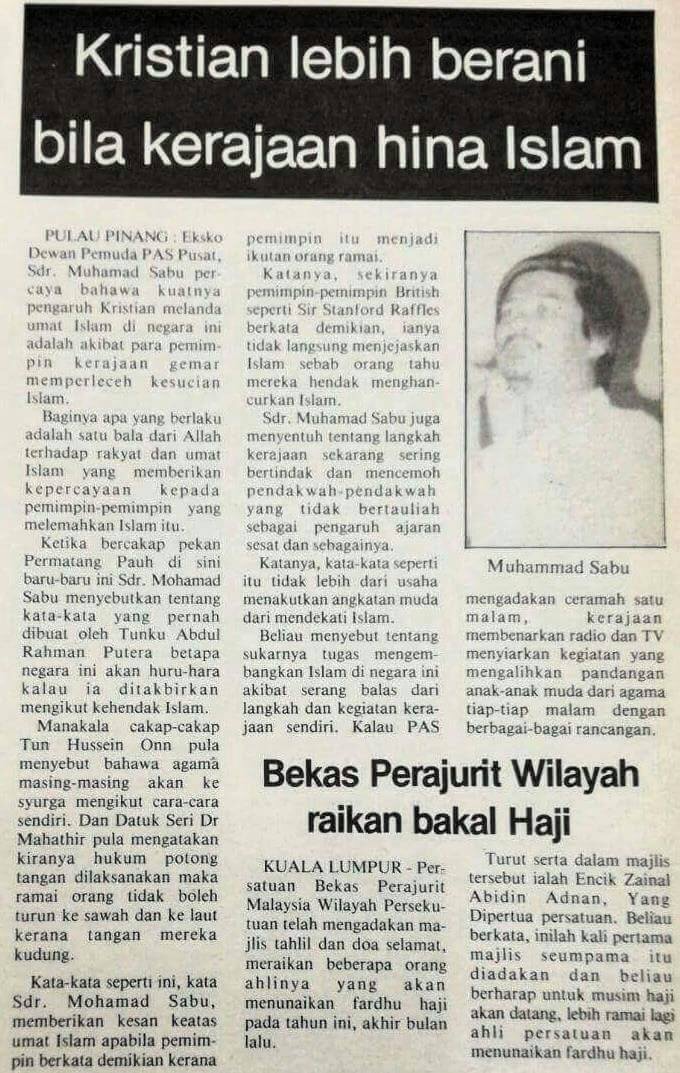
Look at Mat Sabu for instance. Once he was speaking out loud against the Christians.
He even spoke against the proselytising of Muslims by Christian evangelists, giving speeches against the act.
Now he is subservient to the party that is run by evangelists – becoming their loyal dog that does their biddings.
Then you have this 92-year old man who once claimed that Anwar Ibrahim is too old to become a Prime Minister.
Suddenly he is thinking of becoming the Prime Minister again, after saying he’d never return to the Premier seat again.
Probably that is the reason he did not lift the “Anwar As The 7th PM” placard at the recent PKR convention and pretended he was takkng a video with his phone.
We are, I guess, living in the age of the auld lang swine.
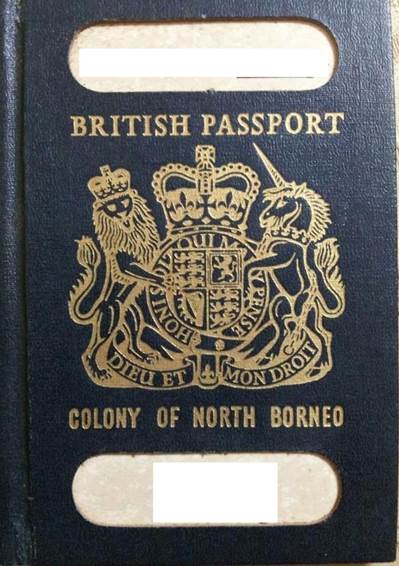
Colonial passport for the colonised people of North Borneo
For the previous installment on the background, please click here.
In his book on Page 101, Dr Jeffrey Kitingan wrote that although there is no objection to Islam being the religion of the Federation there should not be a STATE RELIGION in North Borneo. Therefore, anything pertaining to Islam in the MALAYAN CONSTITUTION cannot be applied to NORTH BORNEO.
His grouse on this matter came about as a result of the late Tun Datu Mustapha expelling Christian priests from Sabah and accused both Tun Datu Mustapha and Datuk Harris Salleh of acting in such manner to strengthen their political position with the Federal government, therefore Islam should not be the religion of the state of Sabah.
The above controversial statement goes against the agreements reached as recorded by the Cobbold Commission, the Malaysia Solidarity Consultative Committee (MSCC) , and the Inter-Governmental Committee (IGC) in 1962.
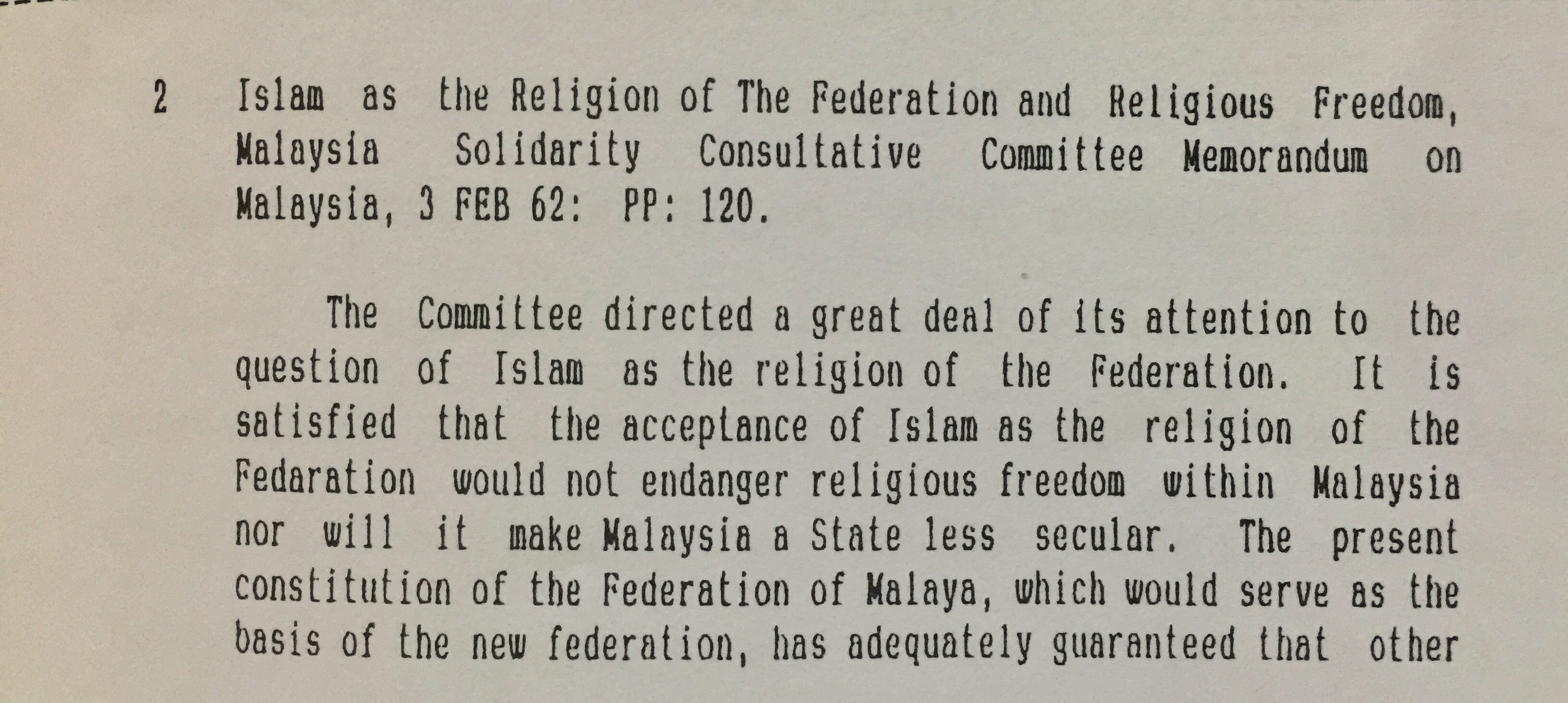
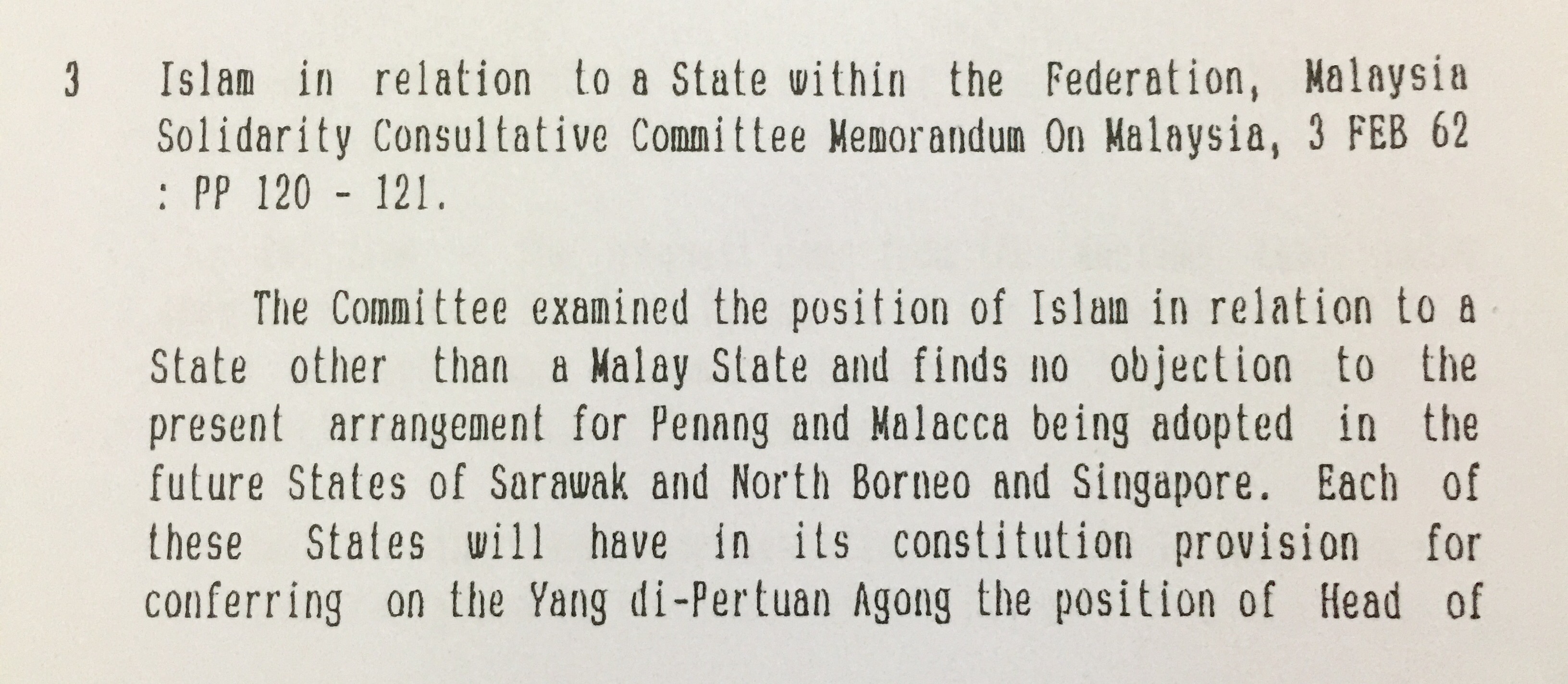
According to the memorandum of the MSCC that was chaired by Donald A Stephens (later Chief Minister of Sabah, Tun Fuad Stephens) with representatives from Singapore, Malaya, Sarawak and North Borneo, the MSCC found that the acceptance of Islam as the religion of the Federation does not endanger religious freedom as evident on Page 120 of the MSCC memorandum dated 3 February 1962:
MSCC Memorandum dated 3 February 1962 PP 120MSCC Memorandum dated 3 February 1962 PP 120
The MSCC had scrutinised the position of Islam in respect of states other than the Malay States and found no objection was made against the then-present arrangement for Pulau Pinang and Melaka to also be adopted by North Borneo, Sarawak and Singapore.
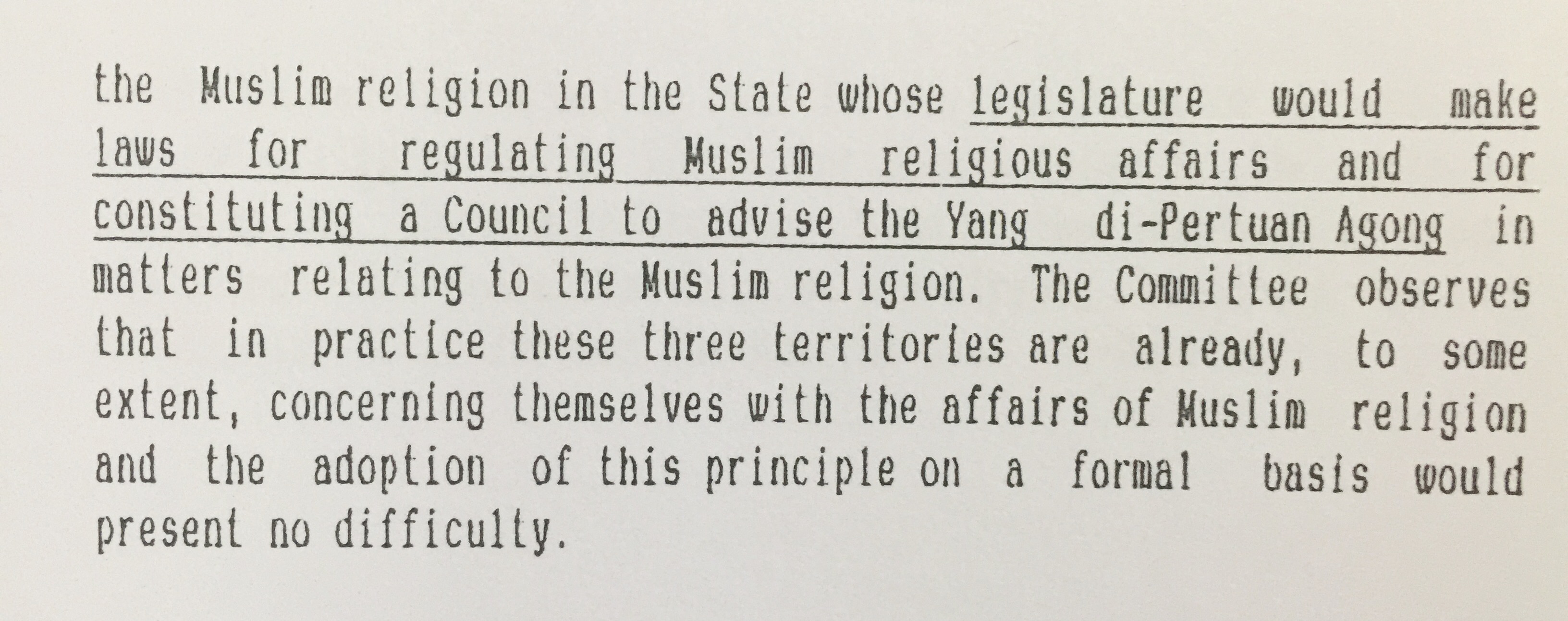
Each of the states above would have its own constitution to address the requirement with Yang DiPertuan Agong as the Head of Islam in those states. The respective State’s Assembly will enact laws to govern Islamic affairs and form a Board to advise the Yang DiPertuan Agong on matters pertaining to Islam.
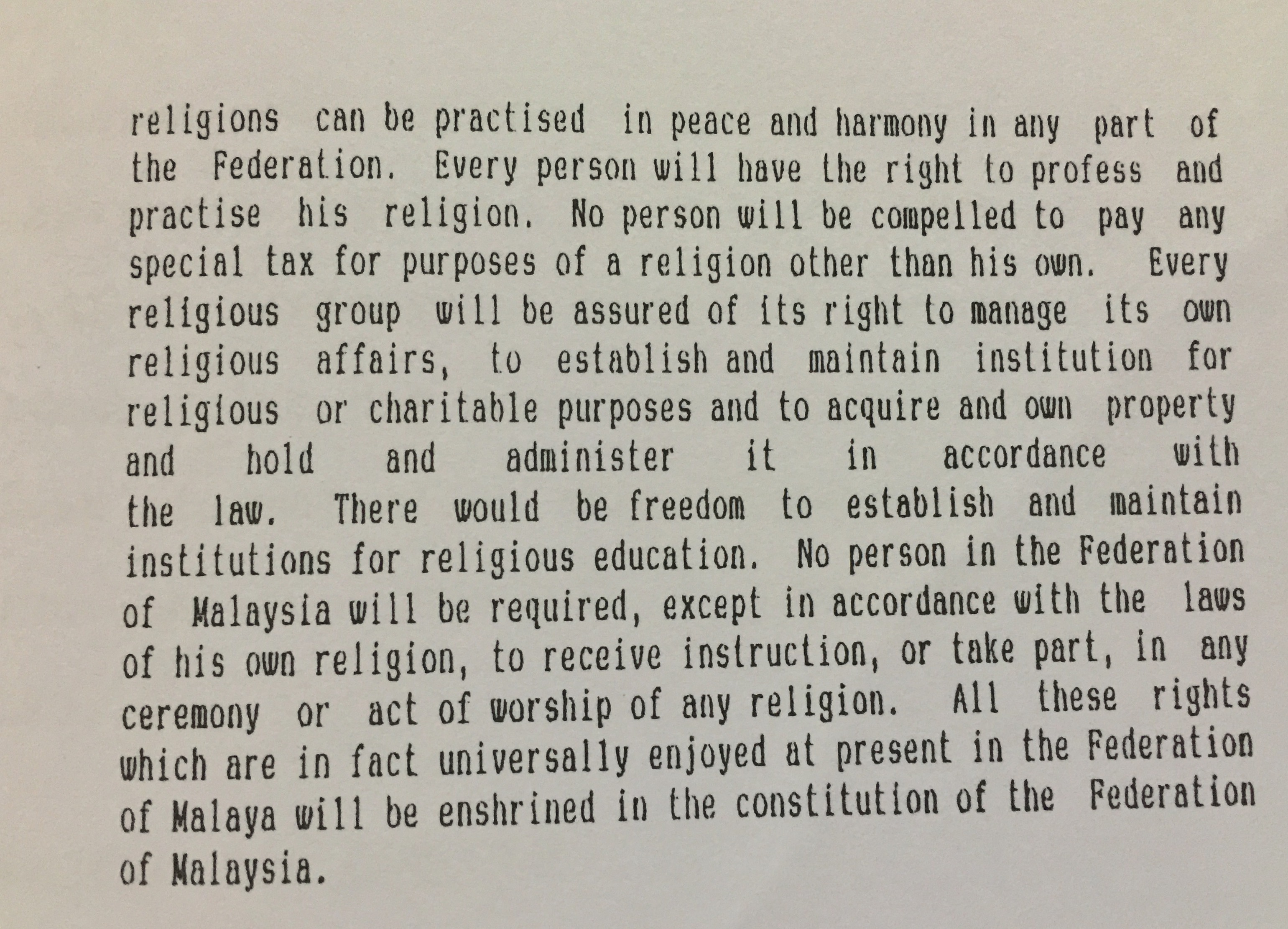
On pages 120 and 121 of the memorandum mentioned it is stated so:
MSCC Memorandum dated 3 February 1962 PP 120-121MSCC Memorandum dated 3 February 1962 PP 120-121
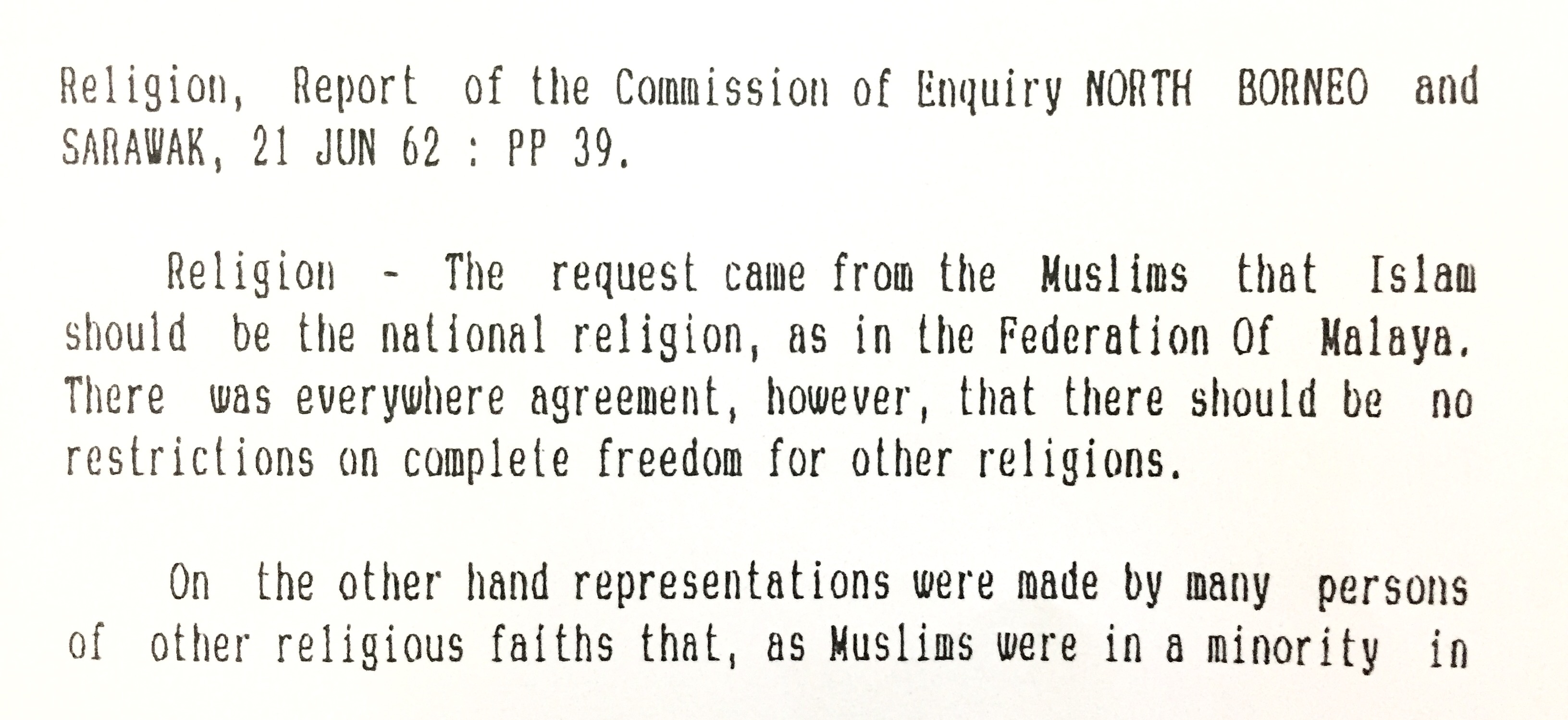
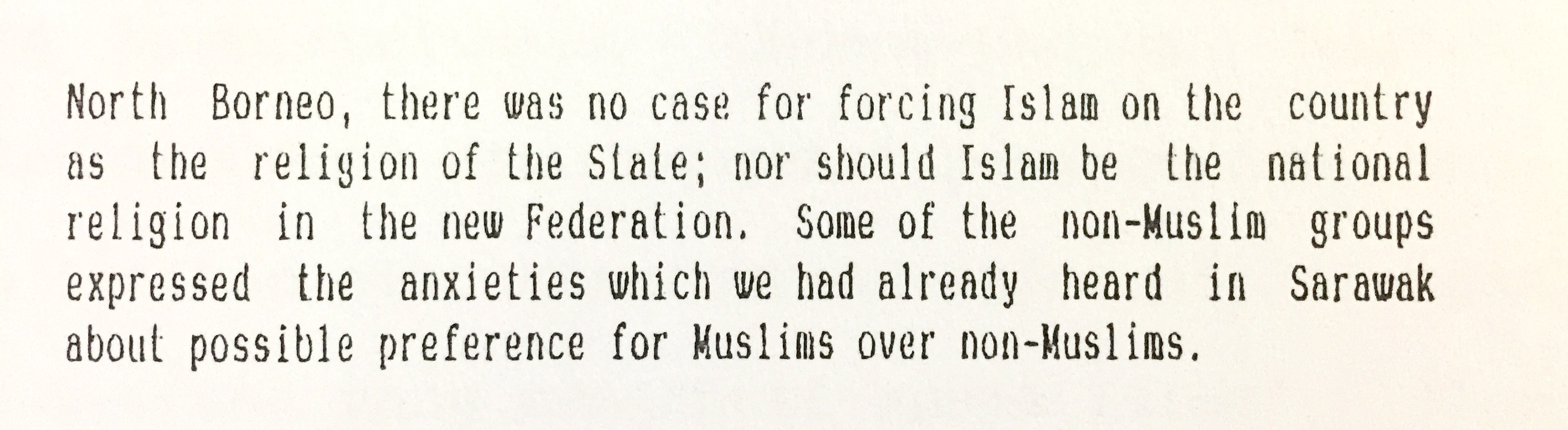
In the Report of the Commission of Enquiry (Cobbold Commission), North Borneo and Sarawak, dated 21st June 1962 found that there was everywhere agreement that as the Muslims are minorities in North Borneo and Sarawak, there should be no restrictions on complete freedom of other religions in those states.
Cobbold Commission Report dated 21 June 1962 PP 39Cobbold Commission Report dated 21 June 1962 PP 39
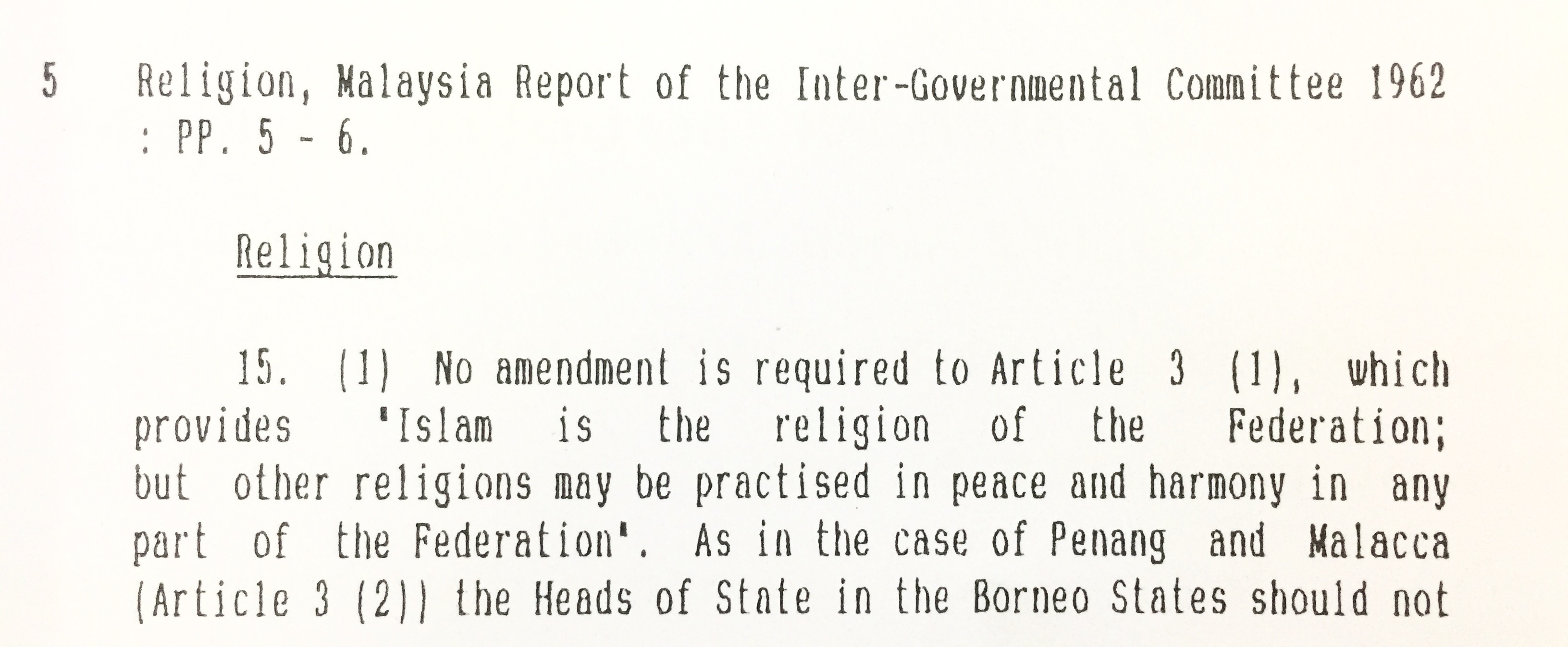
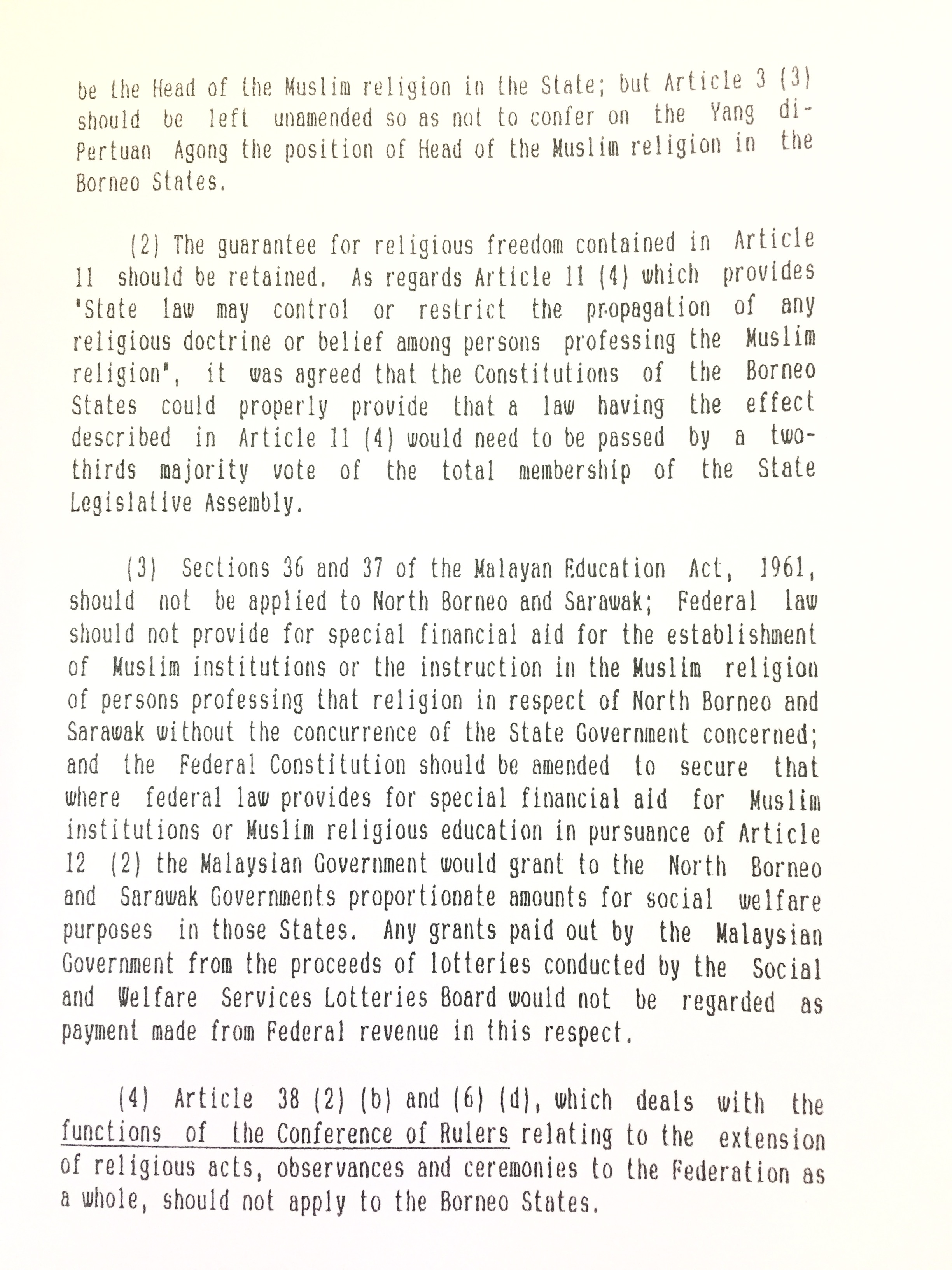
In relation to that, the Inter-Governmental Committee, headed by Lord Landsdowne produced a report in 1962 and made the following recommendations on religion on Pages 5 and 6 which have been passed by the Sabah (and Sarawak) state assembly as follows:
IGC Report 1962 on Religion PP 5-6IGC Report 1962 on Religion PP 5-6
The IGC, which has representation from the Federation of Malaya representing the states in the Federation, Singapore, North Borneo and Sarawak, recommended that Article 3 needed no amendment. However, the provision of financial aid to Muslim establishments should only come with the concurrence of the states of North Borneo and Sarawak. This has since been provided for via Section 3 of the Sabah Islamic Laws Administration Enactment, 1992 where the Yang DiPertuan Agong is the Head of Islam in Sabah, and a Council (Majlis Agama Islam Sabah) was formed to manage and administer the Islamic affairs in Sabah. This has also been provided in the Sabah State Constitution (Articles 5B(1) and 5B(2)).
As mentioned at the beginning of this article, Dr Jeffrey Kitingan was angered by Tun Datu Mustapha’s action to chase out Christian missionaries from Sabah in 11972. Dr Jeffrey used this as the basis of raising the religion issue that was presented as part of the 20-point memorandum for the inclusion of Sabah into the Federation of Malaysia.
Having understood the reason for his raising the issue again, we must also understand the events that had taken place after Tun Datu Mustapha’s ousting of the Christian missionaries.
Parti Bersatu Sabah (PBS) won the state elections and formed the Sabah state government in 1985. From that point up until 1991, the Sabah state government built 825 churches compared to only 216 suraus and mosques.
The state government’s refusal to entertain a request by the Sabah Islamic Council made on the 2nd August 1986 and again on the 12th August 1986 to amend the state’s Shariah Law (Administration) Enactment No.15/77 to accord to the Yang DiPertuan Agong the power to administer Islam in the state of Sabah as required by Article 3(3) of the Federal Constitution (as amended on the 12th August 1976) and Article 5B of the Sabah State Constitution (as amended on the 28th December 1985) clearly denied the Yang DiPertuan Agong His Majesty’s prerogative that was agreed by the Malaysia Solidarity Consultative Council, the findings of the Cobbold Commission as well as the Inter-Governmental Committee, and the wishes made by the Muslims of North Borneo in 1962.
The ousting of the Christian missionaries in 1972 was made because the nine missionaries who were foreigners abused the work permit given to them to work in Sabah, not to conduct evagelical missions. They were Roman Catholics, Anglicans, the Basil Mission and from the Borneo Evangelical Mission.
As Immigration affairs is a Sabah prerogative as accorded in the Federal Constitution of Malaysia, the first act by the Sabah state government under Tun Datu Mustapha was to deny them an extension of their work permit. They were then given a 14-day special pass to enable them to make arrangements to leave Sabah. However, the missionaries refused to obey the 13-day order.
Consequently, they were removed from Sabah through a Removal Order issued by the Sabah Immigration Department made under Section 32 of the Immigration Ordinance 12/59.
The Federal government had no role whatsoever in the removal of these missionaries. It was purely a state decision that was made based on a sound reason – the people of Sabah, regardless of race or religion had been living harmoniously. However, these missionaries have been sowing the seeds of hatred among the Christians of Sabah towards the Muslims by telling them to fear the “Islamisation” of Christians through forced conversions, a claim the missionaries themselves could not substatiate.
There was a plea made by the Christians in Sabah to the then-Prime Minister for the missionaries to be allowed to remain in Sabah. Tun Abdul Razak however recommended to the Christians of Sabah to instead allow priests from the Peninsular and Sarawak to replace the nine missionaries.
In his book, Jeffrey Kitingan had profusely spoken about alleged digressions from and breach of the Federation of Malaysia Agreement but avoided on the issue of the Sabah state government of 1985 breaching agreements made by the MSCC, findings of the Cobbold Commission, the IGC as well as the Federal Constitution of Malaysia.
On the contrary, the Federal government has been fulfilling its end of the agreement by allowing the freedom for other religions to be practiced by its followers as per the agreement.
At no point was there any intrusion made by the Federal government in the affairs of Sabah, and that the removal of the missionaries from Sabah for violating the conditions of the work permit was totally a state issue, made using the powers accorded to the state of Sabah, as agreed by all parties that had agreed on the formation of the Federation of Malaysia.
In the next installement, we shall talk about the second point – LANGUAGE.
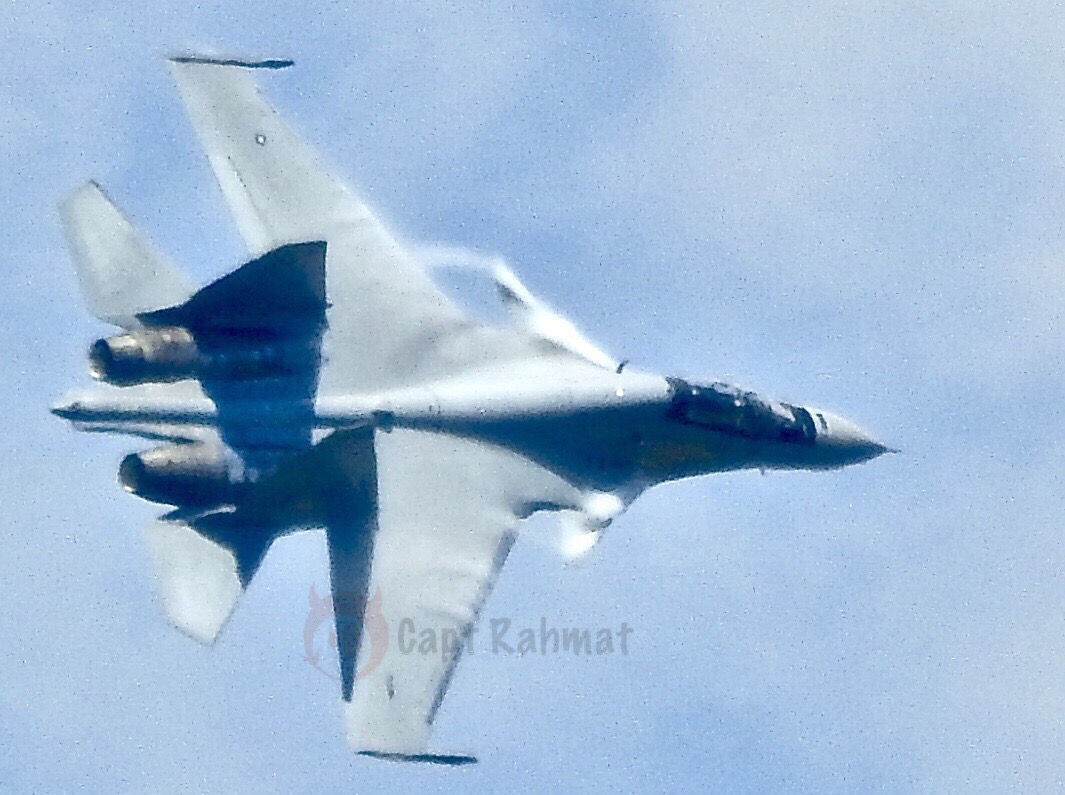
An RMAF Sukhoi Su-30MKM multirole combat aircraft performs a tight turn on a hot afternoon
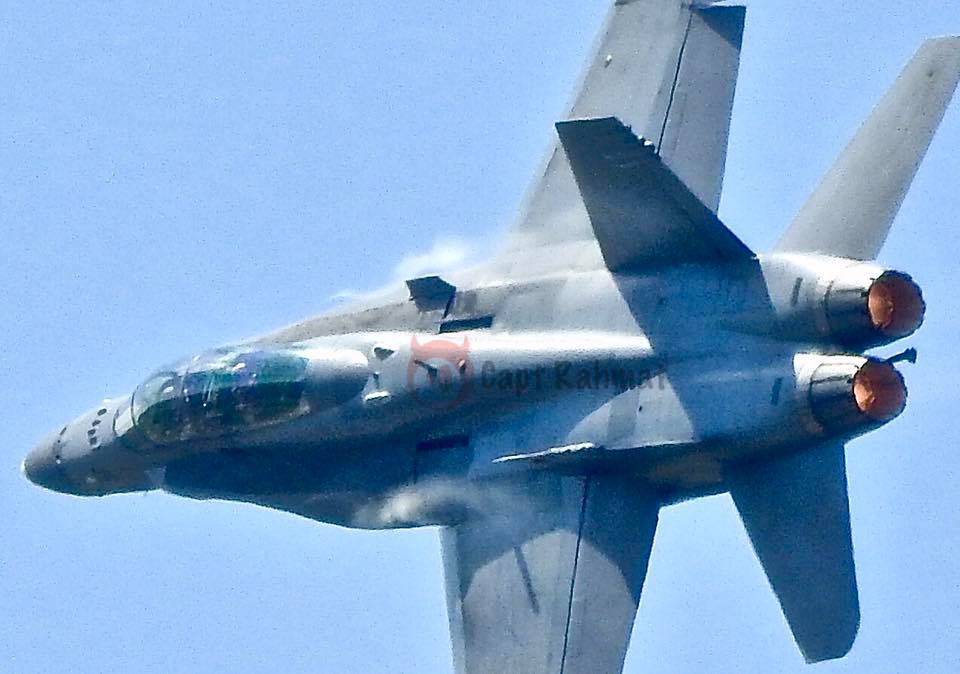
Many are awed by the performances put by the Royal Malaysian Air Force’s stars at the Langkawi International Maritime and Aerospace 2017 exhibition – the Sukhoi Su-30MKM Flanker and the Boeing F/A-18D Hornet.
Many can imagine the manoeuvres these mighty aircrafts could do in combat, but not many know who or what makes them tick.
They are the Air Defence Controllers, the guardians of Malaysian airspace.
An air defence radar basks in the sunset
Majority of Malaysians are not aware of their existence until the MH370 disappeared. Suddenly, this silent service came under an intense spotlight, especially when shone by those who do not have an iota of idea of how airspace and air defence in Malaysia work.
When Malaya gained independence in 1957, the airspace of the nation was only monitored by two long-range radars located at Western Hill in Pulau Pinang and Bukit Gombak in Singapore through the Anglo-Malayan Defence Arrangement which ended in the late 1960s.
The Royal Malaysian Air Force (RMAF) set up three air defence centres (ADCs) namely the No.1 ADC at the Butterworth airbase, No.2 ADC at Bukit Jugra, and No.3 ADC at the Kuantan airbase. These three ADCs shouldered the responsibility of monitoring our airspace.
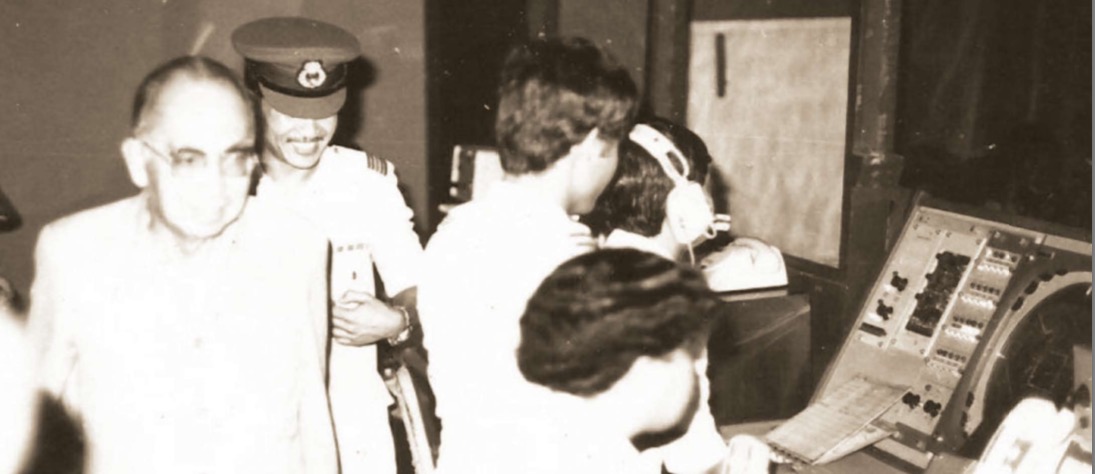
The late Tun Haji Abdul Razak visiting the No.1 ADC accompanied by the Chief of RMAF, Air Vice Marshall Dato’Sulaiman bin Sujak (later Tan Sri)
The RMAF has since expanded its air defence by creating five squadrons to also cover Sabah and Sarawak, and one Ground-Based Air Defence Squadron.
So how is it that it is the Air Defence Controllers who make the fighters tick?
There are two types of radar in use by the RMAF, Primary and Secondary. While the radar rotates 360-degrees, radio waves are transmitted and will bounce off targets as an echo and is received by the radar system’s receiver unit.
The Primary radar is the one that transmits the energy waves that bounces off targets while the Secondary radar interrogates the signal from the target’s transponder. This is then processed and the data is fed into the Command and Control system which is displayed on a screen and the target is then tracked by a Surveillance Officer who tracks and labels the target.
An Identification Officer then conducts identification procedures by correlating both radar and track data with information received from other agencies such as the Department of Civil Aviation. If the target does not correspond with a non-hostile or non-civilian target, then the unidentified target will be reported to the Officer-in-Charge.
An RMAF radar Command and Reporting Centre (CRC)
The Officer-in-Charge then conducts a threat assessment and evaluation of the unidentified target. Simultaeneously, the recognised air situation data is also displayed in the National Air Defence Centre to enable the Higher Authority to monitor the situation and assist effective decision making.
A visual identification of the unidentified target may be needed, or if the target poses a threat, the Officer-in-Charge then scrambles fighters to intercept the target. If threat exists, the RMAF’s surface-to-air defence systems would be put on the highest alert to anticipate a hostile act by the said target.
A fighter is scrambled to intercept the target
The pilot intercepting the target will then make a visual identification of the target and report back to the Fighter Controller. Instructions and orders from the Higher Authority are also relayed back to the intercepting pilot who will then execute either a Force Down procedure or chase the target out of our airspace while comunicating with the target either through the radio or signals.
Only if the instructions are not obeyed will the pilot escalate the rules of engagement. If the instructions are obeyed and a force down is required, the intercepting pilot will escort the target to the nearest airfield or airport where the target will be investigated.
The elaborate and complex systems that the RMAF Air Defence Centres employ are among the best, and therefore need the continuous support and understanding of not only the higher management of the RMAF, but also of the Government to ensure that hardware, software and its operators remain dynamic, well-maintained and trained.
And although they are mostly trained locally by the RMAF, some do get their training elsewhere in the world. For example the RMAF has had officers do their Basic Air Defence Operator Course in Australia. Some get trained as Air Weapons Controller in the United States of America. Some attend their Master Controller Course in England, Advanced Defence Weapons Controller in Bangladesh to name a few.
RMAF Air Defence Officers attending their Basic Air Defence Operators Course in Australia during the earlier days of the RMAF
And when you spend your time with your family, friends, or sleep at night, and while the interceptor pilots are on standby inside their crew room, remember this – you only get to go about living a happy life and going about with your personal business because of these glamourless silent sentinels who watch our airspace round the clock.
General Dato’ Sri Haji Affendi bin Buang RMAF, Chief of Air Force speaking to reporters at the ‘Media with RMAF Day’ recently. To his right is Lieutenant-General Dato’ Sri Haji Abdul Mutalib bin Dato’ Haji Ab Wahab RMAF, Commander of RMAF Operations Command“We shall prioritise our needs and ensure that the sovereignty of this beloved nation is NOT compromised in any way despite the budget constraints.”
The above was said by the Chief of the Royal Malaysian Air Force (RMAF), General Dato’ Sri Haji Affendi bin Buang RMAF when asked to comment about the effects of the budget constraints on RMAF operations.
“True to this year’s 59th anniversary theme which is ‘Kuasa Udara Tonggak Kedaulatan Negara’ (Air Power Pillar of National Sovereignty) the RMAF’s assets will always be ready in any situation and time to deal with any eventuality.”
The absence of any stop-gap measure since the RMAF took the MiG-29Ns offline, coupled with the lack of funds for the acquisition of new MRCAs have been worrying. Although the Royal Malaysian Navy (RMN) has gotten its boost in assets with the purchase of six Littoral Mission Ships, the lessons of Force Z that ended some 47 nautical miles northeast of Tioman island must never be forgotten.
Force Z comprised of the brand-new battleship HMS Prince of Wales, the battlecruiser HMS Repulse, and destroyers HMS Electra, HMS Express, HMS Tenedos and HMAS Vampire. On 10 December 1941, Force Z was decimated by Japanese aircraft from Saigon with only the destroyers making it back to Singapore.
Lack of air cover and underestimation of the Japanese force were key reasons to its decimation.
The RMAF has been wanting for a new MRCA and the two strongest contenders are the Dassault Rafale and the Saab Gripen. There is a need to maintain the number of airframes to meet the doctrine. However, it does not seem as if the RMAF would be getting any in the near future.
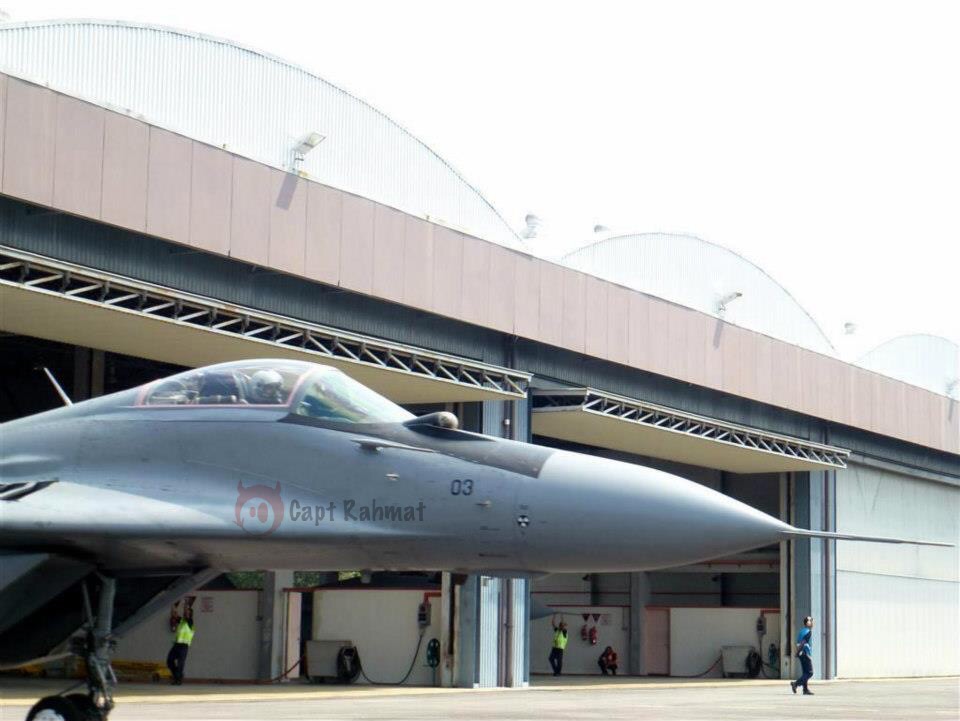
This has prompted the RMAF leadership under General Affendi to bring the MiG-29N back online. “We will make sure that we have sufficient airframes to conduct the priority missions and not compromise our sovereignty,” added General Affendi.
A senior RMAF MiG-29N jock confided that it is very necessary to have the MiG-29N back online no matter the short-term cost of operating them.
“We’ll see probably six to ten of them flying missions soon,” he said.
“Maybe you’ll see the return of the Smokey Bandits at the next LIMA!” quipped another, referring to the RMAF’s MiG-29N aerobatic team that used to wow the crowd at previous Langkawi International Maritime and Aerospace exhibitions.
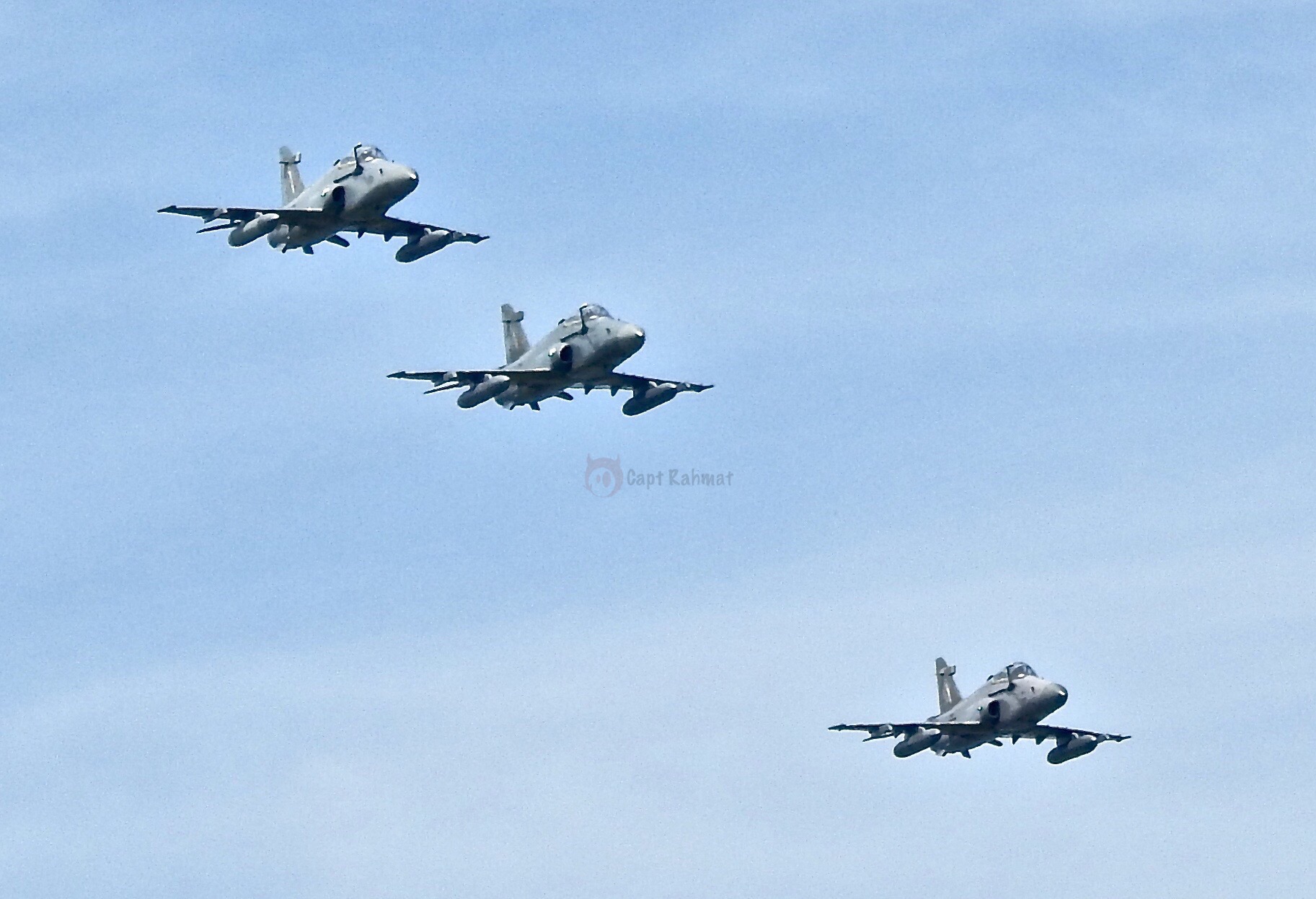
The MiG-29Ns will come back online to ensure that the sovereignty is not compromisedMost of the fighter squadrons are based in the Peninsular with only the No.6 Squadron based in Labuan operating the Hawks 208s. The Hawks have been succesful in intercepting foreign military aircraft in the eastern South China Sea.
“There has not been that many incursions by the Chinese. It’s the countries that are observing the Chinese that have made the most incursions,” confided another senior officer. “The Hawks are doing a good job at intercepting and directing them out of our airspace.”
Even so, the Hawks are limited in terms of endurance, firepower and range to perform such task. The squadron not only has to cover the development in the Spratlys but also the east of Sabah.
“You mean for ESSCOM?” I asked another senior officer.
“Not just there. To watch over the Ambalat area too,” he replied. “We could do with at least two G550 AEW equivalent to cover our waters and borders.”
Therefore, it makes real sense to have the MiG-29Ns back online, perhaps based in Labuan, while some Hawk 208s could go on rotational deployment at Sandakan for interdiction missions.
“The RMAF is also seeking to develop its capabilities especially in maritime patrol and the use of Unmanned Aerial Vehicles,” General Affendi explained. “We need to look for other longer-endurance aircraft and systems that is better than the Beechcraft that we have.”
The RMAF fleet of the Beechcraft 200T MPA have been reduced to just three aircraft after a crash on the 21 December 2016 killed the aircraft commander while two other aircrew survived with injuries. The Beechcrafts have been in service for almost two decades.
Asked if the recent offer by the Japanese Maritime Self-Defence Forces (JMSDF) of its almost three-decades old P-3C Orions, General Affendi said that a team will be sent to evaluate the aircraft offered.
“It is not just about operating the aircraft but also the cost of upgrading if needed and maintenance as they are not new aircraft,” he replied. “We do need better MPA capabilities which is why we will scrutinise the JMSDF MPAs and compare them to purchasing and operating newer systems.”
The Japanese Maritime Self Defence Forces has offered Malaysia its decommissioned P-3C Orion MPAs (Photo courtesy of Wikipedia)General Affendi thanked the government for its support and understands the constraints faced by the government as a result of a sluggish global economy. Nevertheless, he said that the RMAF would work within its means to ensure that all systems needed to monitor and intercept incursions as well as to carry out other missions such as Humanitarian And Disaster Relief (HADR) required from time to time.
“The Airbus A400M is a good buy. We can carry more load than the C-130Hs ever could and go places the (Boeing) C-17 (Globemaster III) cannot,” said General Affendi of the RMAF’s latest acquisitions. “Imagine how many stops the C-130H needed before getting to the Middle East. The A400M can fly straight to Dubai from here.”
The RMAF says its current strength of four A400M is sufficient to carry out foreseen missionsThe RMAF had brought 80 media practitioners from all over the country to witness the capabilities of the force. Performing Close Air Support displays were F/A-18D Hornets and Hawk 208s while a EC-725 Caracal helo inserted a PASKAU GFAC team to perform GLTD mission for the above aircraft before being extracted via SPIE-Rig method.
No matter the situation, the RMAF will fulfill its motto “Sentiasa Di Angkasaraya” and with a good leadership under the Chief, General Dato Sri Haji Affendi bin Buang RMAF, the RMAF will continue to be rejuvenated at 59.
Selamat menyambut Hari Ulangtahun Tentera Udara DiRaja Malaysia ke-59.
An F/A-18D Hornet makes an aggressive turn An Eurocopter EC-725 Caracal positions itself to extract the PASKAU GFAC team Three Hawk 208s orbit the airfield prior to landing A PASKAU GFAC team is extracted using the SPIE-Rig method










 SeaDemon Says
You must be logged in to post a comment.