The Political Hyena

Hyena-Main-1000x469
Hyenas are opportunistic killers as well as cadaver feeders


The Keralan Rise

In June 1969, a month after the 13 May tragedy, Mahathir wrote a letter to Tunku Abdul Rahman and began it with the following sentence:

“Patek berasa dukachita kerana tujuan patek membuat kenyataan kepada akhbar telah di-salah faham oleh Y.T.M. Tunku. Sa-benar-nya tujuan patek sama-lah juga dengan tujuan Tunku, ia-itu untok menyelamatkan negara ini daripada bahaya yang menganchamkan-nya.”

The Tunku’s popularity was at an all-time low.  He had lost control over the issues that were dogging the population and had allowed that to spiral into a nationwide communal violence.  Mahathir saw that as an opportunity to finally conclude a personal battle against the Tunku that had begun 27 years earlier, and end the latter’s political career.

That letter earned the Tunku’s wrath.  Mahathir was expelled from UMNO.  Seeing that the end is nigh, the Tunku chose to step down a day after his nephew, Tuanku Abdul Halim Mu’adzam Shah, was sworn in as the Yang DiPertuan Agong.

Mahathir was brought back into UMNO’s folds by the Tunku’s successor, Tun Abdul Razak, with the recommendation by Selangor Menteri Besar, Harun Idris.  When Razak died in January 1976, his cousin Hussein moved up and Mahathir became his deputy.

In 1981, Hussein had had to go for a coronary bypass surgery at the Harley Street Clinic in London.  Mahathir saw this as an opportunity to have Hussein out of the way.  In a post taken from Tian Chua’s Malaysia Chronicles, it is said that the DAP mysteriously received documents alleging that Hussein’s wife, Suhaila, was running Petronas from their residence in Sri Taman (now Memorial Tun Razak).  There were also documents alleging that Exxon was stealing oil from Malaysian oilfields without Petronas’s knowledge.

In the same article, it was reported that it was Mahathir himself who started a rumour when Hussein was seeking treatment in London saying that the latter had a “terrible heart condition” and would be stepping down as Prime Minister upon his return from London “for health reasons”.

Purging of Cabinet Members and Interference in the Judiciary

After Hussein was gone, Mahathir had to remove other obstacles.  The biggest obstacle was in the form of Tengku Razaleigh Hamzah.  The ‘Team A’ versus ‘Team B’ rivalry saw Mahathir being returned after beating Razaleigh 761 votes to 718, Mahathir took further steps to eradicate Razaleigh’s influence by purging all Team B members from his cabinet.

This led to 12 Team B members to bring the matter to the High Court alleging that 78 of the delegates had been selected by branches not registered with the Registrar of Societies, and as a result were not eligible to vote. They also claimed that certain documents related to the election had been “tampered with”. Although Razaleigh was not among the twelve plaintiffs, he was widely believed to be funding and co-ordinating the suit

As a result, Justice Harun Hashim declared UMNO “an unlawful society” in 1987, but it took Mahathir, who was also the Home Minister then, just two weeks to have UMNO (Baru) registered – a process that would have taken months, if not years.  The Registrar of Societies come under the Home Minister’s purview after all.

Mahathir did not take Harun Hashim’s judgment lightly.  In an attack on the judiciary, he had several judges, including Harun Hashim, reassigned to other divisions.  Salleh Abas, who was the Lord President of the Supreme Court, was pressured to convene a meeting with 20 Supreme Court and High Court judges where they agreed that the Lord President should write to the Yang DiPertuan Agong and the Malay Rulers expressing their grievances against Mahathir’s interference in the Judiciary.

Being the opportunist that he is, Mahathir knew that the then-Yang DiPertuan Agong was not in favour with Salleh Abas, over an issue about the noises that came from the construction of His Majesty’s private house which was in Salleh Abas’s neighbourhood, took advantage of the situation to agree with the Yang DiPertuan Agong that Salleh be removed.

A tribunal was set up. Five Supreme Court judges were removed – Tan Sri Azmi Kamaruddin, Tan Sri Eusoffe Abdoolcader, Tan Sri Wan Hamzah Mohamed Salleh, Tan Sri Wan Suleiman Pawanteh and Datuk George Seah.  With the Supreme Court suspended, the challenge toward the legality of the tribunal could not be heard.

Salleh Abas was removed as the Lord President.  Soon after, two other Supreme Court judges were also removed.  They were Tan Sri Wan Sulaiman and Datuk George Seah.

Removal of Dissent via Ops Lalang

In 1987, tensions between the Malays and Chinese were high, partly as a result of Anwar Ibrahim’s education policies in particular the replacing of Chinese-educated assistant headmasters of Chinese schools with those unversed in Chinese language (Mandarin)  On 5 September 1987, Lim Kit Siang had to send a wire to Anwar Ibrahim asking him to stop all transfers until the issue had been resolved.  What did Mahathir do? Absolutely nothing to appease both sides.

Within a month, the tensions turned ugly and the threat of another 13 May loomed.  The police had to take drastic action by executing Ops Lalang.  A list of troublemakers and potential trouble makers were drawn up in a meeting between senior police officers in Fraser’s Hills, away from the eyes of the public, and when the danger of a racial clash was imminent, the police arrested those shortlisted.

The police did not have to seek the blessing from the Home Minister (who was Mahathir then) to conduct the arrests.  However, the police would have to brief the Home Minister on the person(s) arrested.  According to the now defunct Internal Security Act, 1960, only the Home Minister could sign a detention order to put a person behind bars without trial for a period not exceeding two years, IF THE HOME MINISTER IS SATISFIED WITH THE REASONS FOR ARREST. If not, they should be released.

And only the Home Minister was given the power to review the detention of a person, and extend the detention period for a period not exceeding two years each time. Not the police.

Turning the Brits into Suckers

The UK economy was in a bad shape back in the 1980s.  Mahathir took the opportunity to strike at the UK by starting the ‘Buy British Last’ campaign in order to launch the infamous “Dawn Raid”.  It was a time when Thatcher was trying to tackle high inflation. She tightened up her fiscal policy and aimed at reducing inflation by increasing taxes and interest rates, and cut spendings.  As a result, the British government decided to increase foreign students’ fees by threefolds, from around £300 to £900.  That was one of the reasons for the “Dawn Raid”.

In the end, it was an excuse to get the already weakened British government to provide financial aid to Malaysia in what is now known as the ‘Pergau Dam Affair‘.  According to UK’s The Independent, Thatcher’s determination ‘to bat for Britain’ led her to agree to a huge development aid package as part of an arms deal which she negotiated during a visit to Kuala Lumpur in September 1988. The deal, at that time involving the sale of Tornado jet fighters, artillery, radar, submarines and Rapier missiles, was so sensitive that civil servants were banished from the room during the final stages of the negotiation.

The original Tornado jets deal, worth more than £1 billion, was cancelled when Mahathir decided to buy instead 18 MiG-29N fighters from Russia and eight F/A-18 Hornet fighters from the US.  The deal with Britain was reduced to a mere £400 million sale of 28 BAe Hawk 108s and 208s.

More Treacheries In The 1990s

In 1986, Mahathir persuaded the docile Ghafar Baba to become his deputy.  This move was to appease those who were against him in UMNO, and was made of want to be seen to welcome some form of neutrality.  But really Anwar was his choice for a deputy.  But Anwar was still “too young” then in political terms.  Furthermore, Ghafar pledged his loyalty to Mahathir – a weakness that Mahathir exploited very well.

In 1993, Anwar was ready to take on the seasoned Ghafar Baba. When asked why did he not fight back, Ghafar had this to say:

“I had no means to fight, no money. Also, I did not want to attack Anwar then. How could I? We were in the same party. It would have only benefited the Opposition. My mistake was I did not see that politics had changed. In the past, they supported you based on your track record. Now it’s something else –this money politics.”

What did Mahathir do to stop Anwar from attacking Ghafar?  As usual, nothing.

Anwar Ibrahim’s meteoric rise to the No.2 spot made him a very popular man especially with the youth.  Many were already disenfranchised with Mahathir who not only by then had been in power for 12 years, but had two deputies removed before Anwar.

Soon, Anwar’s popularity became a threat to Mahathir.  When the Asian Economic Crisis caused a financial meltdown, Mahathir allowed it to go on.  On 3 December 1997, a cabinet meeting was held in Langkawi.  Mahathir got a shock when, upon arrival, seeing that the meeting had been chaired by Anwar and had already been concluded. The cabinet members had decided to adopt an austerity plan similar to those imposed on neighbouring Thailand and Indonesia by the International Monetary Fund. The plan would cut public spending and halt infrastructure projects championed by Mahathir.

Mahathir agreed to go along with the cabinet’s decision.  However, the very next day he announced that he would proceed with a controversial USD2.7 billion rail and pipeline project, effectively shooting down the cabinet decision.  That sent alarms to investors and caused the Malaysian Ringgit to tumble to a new low.

As Prime Minister, Mahathir did nothing to arrest the fall of the Ringgit. At one point in January 1988, the Ringgit was traded at RM4.88 to the USD.  Anwar being the impatient Anwar, launched a veiled attack on Mahathir with his “cronyism, nepotism” war-cry.  Mahathir was then handed on a silver platter two reasons to get rid of Anwar.

The Opportunistic Hyena Now

Observers commented that Mahathir now spits at the sky.  When his successor Abdullah Ahmad Badawi made errors of political judgment and received salvoes of fire from the Opposition, Mahathir saw that his successor may not win the 12th general elections – an event that would not augur well with Mahathir.  Furthermore, Abdullah refused to interfere in the Federal Court’s decision to quash the sodomy conviction against Anwar.  Anwar would then be released and was free to launch attacks on his former boss.

When Najib Razak was being attacked over the 1MDB issue, Mahathir thought that there was no way that the former would be able to explain himself.  Naturally, the Barisan Nasional could even lose the next general elections.  In the run up to the 13th General Elections, the Opposition promised that they would bring Mahathir to trial for his sins as the 4th Prime Minister.  If BN loses, Mahathir would be sitting duck.

Being the opportunistic political hyena, Mahathir launched an all-out attack on Najib.  At one point, political observers were very sure that Najib was going to crumble.  However, when Najib fought back and started to gain grounds, Mahathir was left with no choice but to align himself with the very people he sent to prison without trial.

Mahathir’s fear has always been of being prosecuted in a court of law for corrupt practices during his tenure as the Prime Minister. He needs a strong Prime Minister who could protect him.  By getting on the wrong side of Najib, he had lost all the protection he could get from the BN government. His solution was to form an alliance with his enemies, form a political party and join the Pakatan coalition.  At least if Pakatan wins the next elections, he would be protected.

But at the back of his mind he knew that someone in Pakatan might turn his or her back on him and decide that he should stand trial for corruption – and that the billions his family owns would be frozen and confiscated.  Therefore, he made his other move – be Pakatan’s Prime Minister-designate.  All he needs is about two years if he lives that long, to escape the law.

As for now, Mahathir would say just about anything to show his relevancy, and to plead to the voters to accept him as their Prime Minister again – just as how his long-time friend Robert Mugabe has decided to form his own political party.  It does not matter how damaging his words may be to the country, as long as he gets to fullfil his personal mission.

This brings me to remember the time when the Tunku launched attacks on Mahathir.  Anwar Ibrahim was interviewed on the matter by foreign journalists.  Anwar said the Tunku is a voice of the past, speaking for a style of politics that no longer exists. ”A grand old man who has done his bit,” he said to the journalists ”But I don’t know if he’s even conscious of what he is saying.”

We don’t know what Mahathir the Hyena is saying either.
madeytersasul

Saving Sarawak

I see several Sarawak-related pages claiming that no one, including the mainstream media, cares or has given coverage to the flood situation in Sarawak.

Comparing the response both the government and non-governmental organisations gave to the floods on Kelantan and Pahang to the ones now in Sarawak, the Sarawak-related pages say that there is very little that is being done by the Federal Government.

Government Assistance

All Federal Government agencies in Sarawak have been put on flood watch standby as early as December 2017. This includes, but not limited to, the Army 1st Division, the Royal Malaysian Police (PDRM), and the Fire and Rescue Services Department (FRSD).

The FRSD has been evacuating people from flooded areas, and in one particular instance, evacuated Suriah Bakar, 35, of Kampung Parong, Kota Marudu, who was in labour.

Prime Minister Najib Razak himself is constantly monitoring the flood situation in Sarawak and has promised to ensure that relief reaches all flood victims.

As at noon today (Thursday 8 Feb 2018), only five areas in three divisions in Sarawak have recorded water level above the Alert level. They are in the Miri, Bintulu and Kapit districts.

Only the Bintulu-Belaga road in Bintulu, and Long Jegan and Long Panai in Miri have water levels that are above the Danger level, while Ng Merurung in Kapit and Kuala Binyo in Bintulu have water levels that are above the Alert level.

The areas that are affected by the floods are Samarahan. Sarikei, Sibu, Serian, Bintulu, Mukah and Limbang.

Malaya-Biased Media?

While the Borneo Post has been actively updating the flood situations in Sarawak, Sarawakians complain that the Peninsular-based media, especially the electronic media, have not been giving ample coverage.

This is absolutely not true. Just yesterday I pointed to a Sarawakian friend URLs of mainstream media reports on the flood situations there, including the ones by NST, Berita Harian and Utusan Malaysia.

BERNAMA and RTM have been airing the plight of Sarawak flood victims. Even the station most hated by the Opposition, TV3, has been consistently reporting on the flood situations in Sarawak, covering flood relief centers as well as the latest evacuation operation this morning by the Civil Defence Force (APM) involving a woman in labour at Klinik Entabai, in Julau, Sarikei.

Social Media and Floods Fever

As far as social media is concerned, there is very little that the ordinary Semenanjung folks can do. While we can start collection centers here, sending stuff over there would not be economical at all.

Whilst there have been many flooding in the Peninsular, I made myself available for three – the Johor floods of 2006-2007, the Pahang floods of 2013, and the Kelantan floods of 2014. Those were the flood disasters that Peninsular people got together and helped government agencies to provide assistance to flood victims.

In Johor, I provided assistance between Parit Botak and Rengit. In Pahang, I assisted Her Highness the Tengku Puan Pahang in the Kuantan and Pekan areas. In Kelantan, my former classmates and I brought supplies from Putrajaya to the hospitals in Gua Musang, Kuala Krai and Jeli.

In Johor back in 2006-2007, two waves of floods hit the state. In the first wave, 90,000 people were evacuated. Just when they thought it was safe to return home, a second wave struck and caused 109,831 people to evacuate.

In 2013 Pahang, 40,819 people were evacuated.

In 2014 Kelantan, more than 170,000 had to be evacuated. The scale of destruction that I saw with my own eyes in Gua Musang, Manek Urai and Kuala Krai was just beyond comprehension. Even Kuala Muda in the aftermath of the 2004 Tsunami did not look as bad. Yes, I was there too in 2004 with a Malaysia Airlines aircraft captain friend (he now flies for Air Asia).

I took the above photo at Kampung Bukit Tebuk near Chiku while on the way from Kuala Krai to Gua Musang on 31 December 2014 because I saw this man at the Manek Urai relief center queuing for food for his family earlier in the morning. At this point he had walked 14 kilometres to get home.

Pulau Pinang in November 2017 saw 71,294 people evacuated. This was when Lim Guan Eng was seen crying for help…literally.

In comparison, the total number of evacuees in Sarawak as of last night was 4,859 people. It is a number that is still very manageable by the state government and its NGOs.

I have not seen any NGO in Sarawak running a donation campaign to collect cash and kind for flood victims there. If there is such a fund I am sure people in Malaya (a term fondly used by Sarawakians for Peninsular people which isn’t a nice term) would be glad to chip in. After all, I have relatives in Samarahan, Kuching, Miri, and friends working on the Pan Borneo Highway project that are affected by the floods.

Nor do I see throngs of 4X4 vehicles (which happens to be in abundance in Sarawak) carrying relief items to affected areas like it was done in the Peninsular.

How can anyone start anything if the Sarawakians themselves don’t do anything for fellow Sarawakians? I promise not to ask how many Sarawakians actually donated to flood victims and relief missions in Kelantan, Pulau Pinang, Johor and Pahang. To where should we Malayans send our donations to?

So, the feverish pace you saw in the Peninsular was because of the magnitude of the floods and the destruction they caused. The absence of any social media hype by socmed practitioners in Sarawak on the flood situation says all that.

I am not saying that the flood situation in Sarawak is not bad. Any flood is bad. But it doesn’t do justice when people sit and complain about it on social media expecting to be spoon fed. Just start something instead of whining. There are many here on this side of the South China Sea who would want to help.

Don’t Be Jumud, Jomo

I read with amusement a recent article posted on an Opposition-leaning news portal how Jomo Kwame Sundaram’s answer to address a ballooning debt is by cutting the Prime Minister’s Office’s spending, and also to reduce the number of mega-projects.

Jomo, who is Visiting Senior Fellow at Khazanah Research Institute, said that what Malaysia needs now is more appropriate development expenditure, not yet more operating expenditure, especially for the PMO, which has grown more than tenfold and has centralised power like never before.

According to the article, the PMO was allocated RM17.43 billion in Budget 2018, almost double the RM8.938 billion it received in 2008.

The Prime Minister’s Office or the Prime Minister’s Department?

The Visiting Fellow at Khazanah Research Institute apparently finds it difficult to distinguish between the Prime Minister’s Office and the Prime Minister’s Department.

According to Budget 2018, RM17.43 billion was allocated to the Prime Minister’s Department, and not the Prime Minister’s Office.

The Prime Minister’s Office is only one of 56 agencies under the Prime Minister’s Department.

I don’t know what was Jomo also trying to imply by saying that the PMO has more centralised power like never before.

Since the budget is for the PMD and not the PMO, the centralised power and authority to spend the budget comes under the Chief Secretary to the Government of Malaysia, who is appointed by the Yang DiPertuan Agong.

Major agencies under the Prime Minister’s Department include the 7,000-strong Malaysian Maritime Enforcement Agency, the 3,000-strong Civil Defence Force as well as the Eastern Sabah Security Command (ESSCOM).

All these agencies have been tasked to look after our security and well-being.

In 2008, there was no MMEA nor was there the ESSCOM.

The MMEA, for example, has since added more capable blue-water assets to replace its ageing heritage assets handed down from other agencies such as the Royal Customs Department, Royal Malaysian Police, Royal Malaysian Navy and the Fisheries Department.

The heritage assets’ average age was 30 years old and consisted mainly of coastal and brown-water assets.

ESSCOM has also added more assets such as surface-search radar, build installations for security units to operate from, to combat border incursions by illegal immigrants as well as by terrorist groups.

The Malaysian Civil Defence Force, or Angkatan Pertahanan Awam Malaysia (APM), has gone on a massive recruitment drive and assets procurement.

With a permanent force of only 3,000 there is not enough of them to go around in the case of an emergency or disaster.

It was reported that in Kuala Kangsar, there is only one permanent APM staff who is the ambulance driver when responding to an accident or other emergency medical cases, and is also the coxswain for the rescue boat when there are floods.

Surely the men and women of the agencies I mentioned above also deserve a raise when due.

Then there is of course, the Parliament.

The budget for Parliament also comes under the Prime Minister’s Department, in case Jomo is not aware of that.

Operating costs, staffing costs, allowances and pensions for current and former members of Parliament come from the Prime Minister’s Department.

So, when your MP walks out of a debate or does not attend bills voting sessions, don’t ask why is the government spending unnecessarily.

Ask why is the government paying for your lazy MP. Ask also why was your MP a one-term MP, and why is there so many one-term MPs especially from the Opposition.

And please also ask why is the government still spending on the secretariats of two former Prime Ministers – one who made so much noise when the government reduced the budget allocated for his staff, while he goes around running down the current government as well as the country.

Debts? Can’t We Pay?

Jomo, described as a prominent economist in the article, also mentioned about the fast-rising government debt which is now hitting almost RM700 billion (USD178 billion).

He said that the mega-projects that are now being constructed have added to the burden of debt that Malaysia has to shoulder.

While it is true that our debt is actually at RM687 billion, domestic debt is at RM492 billion (or 72 percent of total debt) while external debt is at RM195 billion (28 percent).

Our International reserves stand at RM417 billion.  I am looking at the latest report issued last week by the Bank Negara Malaysia.

But you do not just look at debt to know how we are performing economically.

Our debt to GDP ratio is at 53.2 percent, down from 54.5 percent the previous year, year-on-year.

So Jomo is off the target when he said the government is not addressing its debt issue.

Market consensus of our GDP expansion was at 5.4 percent.  Yet, it was at 6.2 percent year-on-year in September 2017, making our economy one of the most robust expanding economy.

Private consumption increased by 7.2 percent in the same reporting period where Malaysian spend mostly on food, communication, housing and facilities.

So how is that possible if the economy is not doing well?  Our exports grew by 12 percent; manufacturing sector rose 7 percent; services rose 6.6 percent; construction 6.1 percent.

At 53.2 percent debt to GDP ratio, it means that the government is still able to pay off its debts.

As a comparison, Japan’s debt to GDP ratio is 250 percent; the US is at 106 percent; France is at 96 percent while the UK is at 89 percent.

Among ASEAN nations, Singapore has the highest debt to GDP ratio which is at 112 percent.  Any country that has its debt to GDP ratio exceeding 100 percent means that it has debts more than it could make money.

But do we hear anyone from the countries mentioned above complain?

Epilogue

Every day we hear of ill-informed Malaysians complaining that our country is in such huge debt that the country will soon be in ruins.

Selective statements by the likes of Jomo is not helping the situation. And it certainly does not help especially when his statement was intentionally directed at the Prime Minister’s Office, and not the Prime Minister’s Department where the budget was given.

Perhaps, it was malice on his part to intentionally and falsely painting the wrong picture, to make the Prime Minister look bad.

Or perhaps it was the editor of the said portal who spun Jomo’s statement to make it look as if Jomo implied that it was the PMO instead of the PMD.

Either way, Jomo’s intentional or unintentional non-mention of the debt-to-GDP ratio shows the bad blood he has with the Najib administration.

A true economist would give the WHOLE picture.

Jomo is not.

(This article was first published by The Mole)

Otak Katak Puru

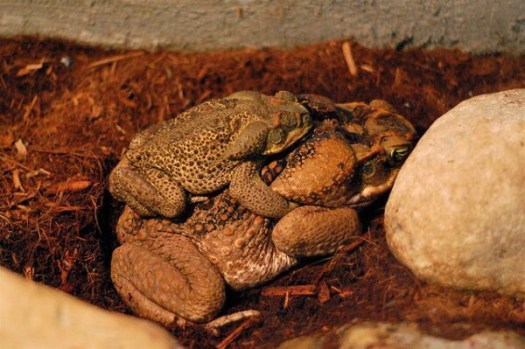
Katak Puru adalah di antara lima binatang terbodoh di dunia. Walaupun saiznya yang besar yang bermakna saiz otaknya juga besar, ianya amat bodoh. Ianya dikatakan terbodoh kerana tidak dapat membezakan di antara haiwan lain yang masih hidup mahupun yang telah mati, terutamanya di musim mengawan.

Di Australia, Katak Puru jantan jenis Cane Toad biasa dilihat cuba bersenyawa berjam-jam lamanya dengan Katak Puru betina yang telah penyet digelek tayar kereta. Dan kebodohannya tidak terhad hanya kepada katak puru lain, ianya juga pernah dilihat cuba bersenyawa dengan cicak kobeng yang sudah mati, ular yang sudah mati, dan juga tikus yang telah dilenyek tayar kenderaan.

Dan kegigihan katak puru ini cuba bersenyawa dengan haiwan yang telah mati dapat dilihat apabila ia sanggup menghabiskan masa berjam-jam untuk menarik minat haiwan-haiwan yang telah mati ini untuk bersenyawa dengannya.

Begitulah keadaannya dengan segelintir haiwan bergelar manusia di Malaysia ini. Tengahari tadi saya disajikan dengan hiburan Whatsapp dari seekor katak puru versi manusia yang bekerja sebagai seorang jurutera di salah sebuah syarikat minyak dan gas swasta terkemuka.

Berikut adalah mesej Whatsapp yamg dikirim beliau dalam grup Whatsapp kami:

“Zahid Hamidi said : “Forget the past and vote BN.”

Maksudnya, lupakan yang telah lepas dan undi lah BN.

Eh, 1MDB bukan sejarah… GST bukan sejarah… Harga ikan kembong RM21 sekilo bukan sejarah…. Harga barang keperluan naik melambung bukan sejarah… Kenaikan harga petrol dan diesel bukan sejarah….

Orang UMNO kata, harga petrol dan diesel bergantung kepada harga minyak dunia….

Bila kita tanya berapa harga minyak dunia sekarang…? haram tak tahu….

Harga minyak dunia sekarang ialah USD68.85 per barrel.

1 barrel tu banyak mana…? 1 barrel = 159 liter.

USD68.85 = RM268.14

Jadi, 159 liter = RM268.14

Jadi, 1 liter = RM1.68

Harga sepatutnya : RM1.68/liter

Itu harga yang sepatutnya, tanpa subsidi dari kerajaan… iaitu RM1.68 seliter, kalau nak ikut harga pasaran dunia.

Tapi berapa harga runcit yang dijual kepada rakyat sekarang…? RM2.31 seliter…!!!

RM2.31 – RM1.68 = RM0.63

Jadi, sebenarnya rakyat yang memberi subsidi kepada kerajaan sebanyak RM0.63 bagi setiap 1 liter petrol yang dibeli….!! Sekarang…!!

Ini yang Zahid suruh rakyat lupa….?”

———————————————————–

Kalau mesej ini datangnya dari seorang pelajar sekolah, saya boleh maafkan. Tetapi ianya datang dari seorang jurutera syarikat minyak dan gas. Beliau hanya mengambil kira harga minyak mentah, dan tidak mengambil kira kos-kos lain.

Setelah minyak dikeluarkan dari perut bumi melalui proses penggerudian, minyak mentah yang dikeluarkan ini diuji tahap kelekitan (kepadatan) dan tahap kandungan sulfur. Minyak mentah yang padat dan tinggi kandungan sulfur adalah sukar untuk ditapis.

Minyak mentah ini dibawa ke loji-loji penapisan untuk ditapis. Kos pengangkutan ini juga perlu diambil kira.

Kemudian kita ada kos penapisan. Dari setiap barrel minyak tersebut, ianya ditapis untuk menghasilkan bahan-bahan seperti minyak pelincir, tar untuk membuat jalan, gas penapis cecair, minyak kapalterbang dan hanya sekitar 51 peratus menjadi minyak petrol dan disel. Setiap jenis penapisan mempunyai kosnya yang tersendiri yang mesti juga diambil kira.

Kemudian, minyak yang telah diproses ini perlu dihantar kepada para pemborong atau terminal penapis. Ini juga mempunyai kosnya.

Minyak ini kemudiannya diedar kepada para pengedar di mana ia dicampur dengan bahan campuran (additives). Ini melibatkan dua jenis kos.

Akhirnya, minyak ini dijual kepada stesen-stesen minyak kepunyaan syarikat-syarikat minyak terkemuka dan pengedar terbuka. Kos penghantaran juga mesti diambil kira.

Sebelum ianya dipam dari stesen minyak ke dalam kenderaan kita, kos dan keuntungan pengusaha stesen minyak juga perlu diambil kira.

Jadi, berapakah kos akhir yang dikenakan kepada para pengguna setelah semua kos proses-proses di atas diambil kira? Sudah tentu bukan RM1.68 seliter.

Hal ini pernah dibangkitkan sejak tiga tahun lepas dan telah diterangkan beratus atau beribu kali. Kalau ini kaedah perkiraan yang digunakan, kenapa tak guna harga susu getah bila membeli tayar kereta?

Namun ianya masih dikongsikan okeh mereka-mereka yang berkelulusan tinggi yang seperti katak puru tadi, masih cuba menghidupkan isu yang sudah mati.

Ada Faham, Rais?

raisthehutt
“I don’t know if i have a brain!”

Recently, 14 European Union ministers and 3 Charges D’Affaires met with members of Pakatan Harapan. Rais Hussin (above) who heads the Policy and Strategy Bureau of Pribumi wrote that the claim of Foreign Minister Anifah Aman that Pakatan had breached the sovereignty of Malaysia was ludicrous and off target. He went as far as quoting the Vienna Convention on Diplomatic Relations, 1961.

Very laudable, Rais. Good effort in trying to at least look clever. They say ‘The Devil is always in the details‘, Rais. The very least you could do is read the statement by the Foreign Minister properly.

He said ‘mengundang campur tangan‘ which, if translated properly, means ‘inviting interference‘ in Malaysia’s domestic issues as well as the issues raised to the delegates would effect the image and sovereignity of the country.

The concern of the Malaysian Government is why is Pakatan Harapan members, especially PPBM members who do not even hold seats in Parliament (with the exception of self-proclaimed Brunei citizen Mukhriz Mahathir who is the ADUN of Jerlun), air domestic issues to representatives of foreign nations? What is the intention here?

Years ago, Mahathir chide the west for poking their noses into Malaysia’s domestic affairs. Now you are asking foreign nations to interfere but at the same time chide the Government for inviting foreign investments from China and the Middle East. That is blowing hot and cold at the same time.  It is a known fact that you are full of hot air anyway but you are undoubtedly a qualified and proven strategist. Just look at how spectacular Muhyddin is doing now (that was being ironic and sarcastic in case it escaped your alleged intellectual mind).

Did Mahathir chide Anwar for seeking support from Al Gore, Estrada etc? Wait! You reformed! Of course! That is why Mahathir has done a U-turn and is doing what Anwar did. So was Anwar right? Did Mahathir actually screw Malaysia for 22 years?

Bad mouthing our country to outsiders is simply in bad taste. Sabotaging the country for your own political gain? And it was thought that Mahathir and PPBM could sink no lower.

Are you hoping for the EU to place an embargo on Malaysia? It would definitely affect the Palm Oil industry which will in turn affect the small producers. So, when these people lose their income and can’t provide food on the table, will you be answerable?

You talk about 1MDB, SRC and Felda without any hint of knowledge concerning the matters. The US, Singapore, Switzerland took action after Bank Negara hit 1MDB with heavy penalties.

The SRC, Felda and Mara are still under investigation in case you are unaware. Any form of investigation would not happen if Mahathir were the Prime Minister because he would just instruct the MACC to turn a blind eye just like in the case of the BNM Forex scandal.

By the way, do you even understand what 1MDB is all about? You probably do a little after all those hours of trying to memorise and parrot what the blogs alleged. Or perhaps you received advice from Pakatan’s renowned economists i.e. Mat Sabu, who coincidentally is the person who coined the term ‘Mahafiraun‘ for your beloved ‘Prime Minister’-designate, a name that is still being used by the original reformasi people in reference to him.

With regards to the 1MDB, not one individual has been charged or arrested in the US despite all attempts by Pakatan to get the DOJ to take action. A civil action has been taken, which the DOJ had applied to the US courts but even that, further action had to be postponed. Why is this so? It is because although Pakatan sent its goons over to the US to report about the loss of money from 1MDB, the US DOJ is having problems trying to ascertain where the money is actually from as 1MDB has not lost any money.

However, you can be proud of the constant use of the word ‘kleptocracy’ which shows that you are capable of some form of basic intelligence – amoeba level, that is.

Those arrested and charged in Singapore were all bank employees who flouted the local financial regulations.  Sorry to spoil your stupid fun but those people are NOT related to, nor are they employed by the 1MDB.

Perhaps, if you were to put in some effort to properly read the Foreign Minister’s  statement (two months should do for you given your level of comprehension), the concerns were regarding the good name, integrity and guaranteed sovereignty of the country.  It did not at all touch on electoral monitoring groups.

The point is, both the Prime Minister and Foreign Minister were disturbed by the actions of Pakatan bad mouthing Malaysia to outsiders.  And this begs a question from me: IF YOU ARE SO CONFIDENT OF FORMING THE NEXT GOVERNMENT, AND HAVE THE NUMBERS WHY DO YOU HAVE TO SEEK THE HELP OF FOREIGNERS?

Surely a person like Anifah Aman who has served two terms as the Malaysian Foreign Minister and widely respected on the world stage knows, unlike you, his subject matter. Anifah spoke facts on possible ramifications of the shallow-minded actions Pakatan had made.

The Foreign Minister made no mention that it is wrong for the EU Ambassadors to meet with MPs of the Opposition as this is the norm in democratic nations but the Vienna Convention on Diplomatic Relations allows the Government to take the necessary action if any diplomat intervenes in the internal affairs of a country.

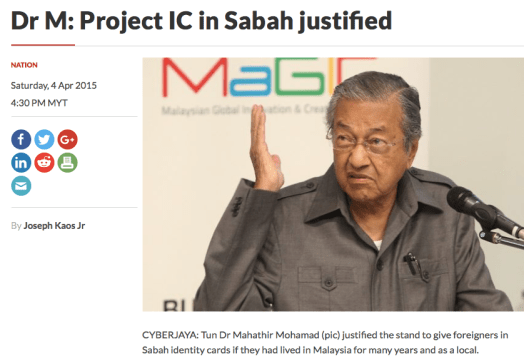
Unlike you, the Foreign Minister is a man who is not just a politician, but more so that he is a very well respected diplomat. He is well respected around the world, and in the US is well received by both the Democrats and Republican Senate reprentatives. Therefore, it should not come as a surprise to you that he also holds several important international portfolios and, unlike your master who gave Malaysian identity cards to foreigners in Sabah, has the undeniable loyalty and affection of the majority of Sabahans.

Stop behaving as if you are intelligent. Allah Knows. Ada faham, Rais?

Screen Shot 2018-02-02 at 01.41.15
Mamak penjual kerakyatan Malaysia

Isu Pangkalan Udara Strategik

ISU PANGKALAN UDARA STRATEGIK

Nampaknya sedang tular di media sosial video Majlis Paluan Berundur ATM dari Kem TUDM Sungai Besi, Kuala Lumpur sehingga ada pihak yang membangkitkan isu bahawa kem tersebut telah dijual kepada China. Sesungguhnya, ia dakwaan yang tidak berasas sama sekali. Baca penjelasan berikut untuk mengetahui fakta sebenar.

1. Pemindahan TUDM Kuala Lumpur ke Pangkalan Udara Sendayan dibuat berdasarkan faktor rasionalisasi daripada aspek operasi dan keselamatan, dan juga TUDM Kuala Lumpur sudah terlalu lama dan usang, dibangun sejak tahun 1940-an.

2. Operasi penerbangan di TUDM Kuala Lumpur tidak berapa selamat disebabkan kepesatan pembangunan Bandaraya Kuala Lumpur, dengan adanya bangunan tinggi dan kepadatan penduduk.

3. Kawasan TUDM Kuala Lumpur amat terdedah dengan ancaman luar disebabkan lokasi berhampiran lebuhraya dan kawasan perumahan. Dengan ancaman yang ada sekarang ini, ia boleh dilancarkan daripada kawasan-kawasan tersebut.

4. Pendedahan TUDM Kuala Lumpur kepada umum turut menyukarkan pihak TUDM untuk memberi perlindungan mantap sebagai kawasan operasi ketenteraan kerana terdedah kepada aktiviti pengintipan.

5. PU Sendayan & 31 Rejimen Artileri Kem Tun Ibrahim, Kajang adalah antara tapak-tapak relokasi TUDM Kuala Lumpur. Penempatan di beberapa pangkalan udara yang ada adalah mengikut misi dan kesesuaian seperti yang dibuat di PU KL sebelum ini.

6. Ini adalah kali pertama sebuah Pangkalan Udara (Sendayan) dibina untuk keselesaan para pegawai dan anggota TUDM di mana mereka akan mendapat kawasan kerja, kediaman dan infrastruktur yang baru untuk memberi sokongan atas misi-misi latihan TUDM. Selain itu, dengan adanya PU Sendayan ini, TUDM akan dapat menempatkan pusat latihan TUDM di mana buat masa ini latihan-latihan tersebut berpecah dan ada yang dibuat di Subang, Alor Star serta di Kinrara.

7. PU Sendayan ini apabila siap dibina dapat menyatukan TUDM yang akan meletakkan semua ini di bawah satu bumbung bagi tujuan uniformiti dan latihan manakala perintah dan kawalan akan menjadi lebih berkesan.

ISU KEHILANGAN ASPEK SEJARAH PU KUALA LUMPUR

1. Sejarah TUDM Kuala Lumpur akan dikekalkan selepas dipindahkan ke PU Sendayan kerana ia merupakan landasan antarabangsa yang pertama digunakan semasa zaman kemerdekaan. TUDM akan memelihara artifak-artifak sejarah TUDM Kuala Lumpur ini di muzium TUDM. Ini akan dilakukan bagi memastikan sejarah TUDM tidak akan terlupus.

ISU PROJEK BANDAR MALAYSIA DIKUASAI SYARIKAT CHINA

1. Dakwaan kononnya projek Bandar Malaysia di bekas TUDM Kuala Lumpur di ibu negara dikuasai oleh syarikat China kini bukan lagi isu. Sebaliknya tapak strategik seluas 198 hektar itu dikuasai 100% Kementerian Kewangan, berikutan terbatal perjanjian jualan saham (SSA) Bandar Malaysia dengan pihak pemegang saham projek tersebut sebelumnya.

2. TRX City, dengan mengambil kira kepentingan nilai tanah Bandar Malaysia, akan mengekalkan pemilikan penuh terhadap kawasan itu demi memastikan rakyat Malaysia meraih manfaat hasil pembangunannya.

3. Adalah fitnah berniat jahat dengan mengatakan kem TUDM KL diserah kepada Cina dari China.

RUMUSAN

1. Adalah tidak benar kerajaan mengenepikan sejarah penting negara dengan menyerahkan Pangkalan Udara Kuala Lumpur kepada pihak pemaju untuk dibangunkan. Banyak sejarah dan artifak TUDM akan dipelihara untuk pengetahuan generasi akan datang.

2. PU Kuala Lumpur telah hilang nilai strategiknya dan tidak sesuai lagi untuk menempatkan unit-unit tentera. Kedudukannya juga menjadikan pengintipan dan serangan oleh musuh menjadi begitu mudah.

3. Angkatan Tentera Malaysia memperolehi kemudahan-kemudahan yang jauh lebih baik dan bersesuaian setelah perpindahan ini berlaku.

4. Malaysia bukan satu-satunya negara yang menutup pangkalan-pangkalan tentera. United Kingdom telah dan bakal menutup sebanyak 56 pangkalan-pangkalan tentera termasuk Woolwich Barracks dan Fort George yang berusia hampir 300 tahun dan kaya dengan unsur-unsur sejarah. Berbeza dengan Malaysia, penutupan pangkalan-pangkalan tentera di UK tidak melibatkan sebarang penggantian.

Oleh itu janganlah kita mempolitikkan pertahanan negara dan hargai Angkatan Tentera Malaysia serta hak mereka untuk bertugas dan tinggal di pangkalan-pangkalan yang jauh lebih moden dan selesa sesuai dengan tugas mereka yang berat untuk menjaga kemananan, kesejahteraan dan kedaulatan negara.

Adakah Pakatan Bercadang Untuk Mensabotaj FELDA?

Satu delegasi Pakatan yang digambarkan diketuai oleh ‘Perdana Menteri’ Mahathir telah bertemu dengan 14 orang duta dari negara-negara European Union (EU).

Delegasi Pakatan tersebut yang juga dianggotai oleh Saifuddin Abdullah, Tan Kok Wai, Xavier Jeyakumar dan Mat Sabu telah membuat pertemuan tersebut di kediaman Duta dan Ketua Delegasi EU ke Malaysia, Maria Castillo Fernández.

Dalam perbincangan tersebut, Mat Sabu dikatakan telah mencadangkan agar Malaysia didesak untuk membenarkan negara-negara EU tersebut menerima pemerhati semasa pilihanraya umum yang akan datang.

Apa yang kita ketahui ialah negara-negara EU telah melarang minyak sawit dari diperdagangkan di negara-negara mereka untuk pembuatan biodiesel dua hari yang lepas. Langkah ini bukan sahaja menjejaskan para peneroka FELDA serta para pekebun kecil di Malaysia, malah juga para peneroka dan pekebun kecil di negara jiran kita, Indonesia.

Persoalannya sekarang ialah adakah Pakatan Harapan, dalam kegilaannya untuk merampas tampuk kuasa, telah bersekongkol dengan EU untuk memberi tekanan terhadap kerajaan Barisan Nasional?

Jika kita ambil kira kesanggupan Mahathir untuk menjilat ludahnya sendiri serta bersekongkol dengan mereka yang lazim memburuk-burukkan Raja, Islam dan institusi-institusi Melayu, tidak menjadi pelik sekiranya benar mereka bersekongkol dengan negara luar untuk menjahanamkan ekonomi negara.

The China Mahathir So Loved

stock-photo-lawatan-rasmi-perdana-menteri-datuk-seri-mahathir-mohamad-ke-china-158640
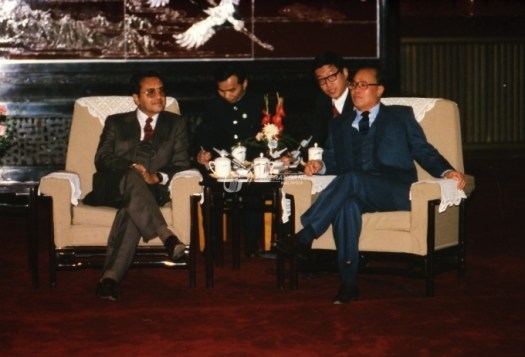
Mahathir visiting China in 1985 (courtesy of Penerangan Malaysia)

The ‘Ping Pong Diplomacy’ between Malaysia and China that happened in 1971 was a marked departure from the policy on China set by Tunku Abdul Rahman.  While Tunku blamed China for its support for the Communist Party of Malaya (CPM), Tun Abdul Razak saw it necessary to engage China to end its support for the CPM.

When Mahathir took over the premiership in 1981, he placed importance on economic development and not so much foreign policy.  Three years earlier, Deng Xiao Ping had also placed China under a process of economic modernisation.  However, although there was an increase in bilateral economic and trade exchanges with China, the percentage of that compared to the overall trade declined.  In the 10 years since the beginning of formal diplomatic relations, economic and trade exchanges between the two countries was at 3.5 percent of Malaysia’s total trade.  This number fell to just 1.5 percent in 1984 (Stephen Leong, “Malaysia and the People’s Republic of China in the 1980s: Political Vigilance and Economic Pragmatism”, Asian Survey, Vol. 27, No. 10, October 1987, p.1114).

In a speech at Qing Hua University, Beijing in November 1985, an alarmed Mahathir said: “My own country`s bilateral trade with China has in fact declined since 1980 and this is despite the widely held view that China`s modernisation would increase the opportunities for trade and economic links.”

Mahathir saw China as a very important partner that could help the modernisation of Malaysia’s economy so much so that the delegation that he brought with him on that first visit in 1985 was huge. In a speech given during that visit he said:

I have brought with me a large delegation of leading Malaysian entrepreneurs and businessmen. It is my hope that with your cooperation they would be able to fully explore further opportunities for trade and economic cooperation.

Mahathir made six other visits to China between 1993 and 2001, a display of the importance of China in his economic policies.  A year after he began his administration, trade with China stood at USD307 million.  This jumped to USD1.4 billion ten years later.  A year before he stepped down, it was at USD14 billion.

Mahathir led another large trade delegation to China in 1993 and 1994 with China returning the favour towards the end of 1994.  Of China’s communist ideology, Mahathir in his speech during the 2nd Malaysia-China Forum in Beijing in August 1996 said:

China has come in for special attention. For years it had been condemned for being Communist and isolationist, practising a close centrally planned economy. Now it has opened up and has adopted a version of the universally acclaimed market system. Instead of being welcomed to the fold, it is looked upon with fear and suspicion. The World Bank has sounded the alarm by predicting that China will emerge in the 21st Century as the greatest world economic power. And fear of China has mounted.”

stock-photo-lawatan-rasmi-perdana-menteri-datuk-seri-mahathir-mohamad-ke-china-332796
Mahathir’s visit to China (courtesy of Penerangan Malaysia)

Hence, we can see that it has never bothered Mahathir that China is a communist country, and working with China does not turn a country into a communist one.  China was so important to Mahathir that he wanted to see his proposal for a regional consultative group, namely the East Asia Economic Group (EAEG) take flight with US and US-leaning countries accepting China.  This, however, was not to be.  To his dismay, Japan refused as it was closely linked to the USA which had formed APEC; South Korea refused as the EAEC proposed by Mahathir would have placed Japan at the centre of the organisation.

During the Asian Financial Crisis of 1997-98, the Chinese Government assumed a highly responsible attitude. It provided assistance to all the affected countries including Malaysia within the framework of the IMF arrangements and through bilateral channels.  The decision of not devaluating the Renminbi, for which China paid a high price, assisted ASEAN countries affected by the crisis to pull through.

During his visit to China in August 1999, Mahathir thanked China in his speech:

China`s concern for the well-being of East Asia in the financial crisis has been most laudable. The regional economies and the global community at large greatly appreciate China`s decision — despite strong pressures — not to devalue the Yuan. Beijing`s cooperation and high sense of responsibility has spared the region of a much worse consequence. Renminbi devaluation would almost certainly result in a new round of currency devaluation by the affected economies.”

The crisis had brought both Malaysia and China closer together, both Mahathir and China promised better cooperation.  In June 1999, Malaysia and China agreed to invest around USD2.5 billion to develop a Trans-Asia Railway from Singapore to Kunming passing, without doubt, through Malaysia.  Mahathir welcomed China to play an active role in the railroad construction.

When Premier Zhu Rongji visited Malaysia in November 1999, an overwhelmed Mahathir said in his speech:

We appreciate the decision of the PRC to participate in the pulp and paper projects in Sabah. I understand that this project is valued at RM4.3 billion is the PRC’s largest investment in the region. We hope as many PRC companies will try to explore the investment opportunities available in Malaysia.”

However, it is so wrong now for China to help Malaysia build the East Coast Rail Link (ECRL).  Every single investment by China in Malaysia is seen as ‘selling away our rights and sovereignty’ but it was not the case back then.

I often wonder if Mahathir is jealous that Najib Razak is doing better, or if he (or his agents) is not getting a slice of the cake?  He seems to be the only one making noise about China’s investments in Malaysia although, at less than three percent of the total FDI, is at the 10th place of the largest Foreign Direct Investments in Malaysia – the largest being Singapore.  Why is China being made the scapegoat?

stock-photo-lawatan-rasmi-perdana-menteri-datuk-seri-mahathir-mohamad-ke-china-336069
Mahathir, Siti Hasmah, and a very young Marina visit the Great Wall of China. We wonder what post Marina held that she tagged along on an official trip and if she had travelled by normal flights herself as Najib’s family did. If not, who foot her bill for her? (courtesy of Penerangan Malaysia)

Which is why DAP supremo Lim Kit Siang has been silent on the issue of Forest City for the longest time – as he can see how it benefits his parliamentary constituency, very much unlike Mahathir whose hatred for Najib surpasses the needs of his political partners and voters.

During a conference on Assessing ASEAN’s Readiness by Country at the Napalai Ballroom, Dusit Thani hotel in Bangkok on 17 September 2013, the nonagenarian said:

We have been trading with China for almost 2,000 years. China was very big, most developed nation in the past, they could have conquered us but they didn’t. They came and lived in Malaysia but they didn’t conquer us. And I don’t want to be in any confrontation with China. China is a good trading nation with 1.4 billion people.

And suddenly after 2,000 years of peaceful co-existence, just because Najib Razak is now the Prime Minister of Malaysia, the China that Mahathir so loved wants to invade us?

That, to me, sounds blatant hypocrisy.

(This posting was first published by The Mole)

Pakatan Hampas

Kerajaan Persekutuan berhasrat untuk membina sejuta rumah mampu milik di semua negeri di Malaysia, termasuk di negeri-negeri yang ditadbir oleh Pakatan Harapan.  Namun, nilai hartanah yang tinggi, terutamanya di negeri-negeri di bawah pentadbiran Pakatan Harapan, menjadi batu penghalang hasrat tersebut.

Masalah Di Selangor

Semasa di bawah pentadbiran Barisan Nasional, rumah mampu milik merupakan tanggungjawab badan-badan kerajaan negeri seperti Perbadanan Kemajuan Negeri Selangor (PKNS).  Namun, sejak pentadbiran diambil alih oleh Pakatan Rakyat pada tahun 2008, PKNS bertukar menjadi sebuah agensi yang mengejar keuntungan.

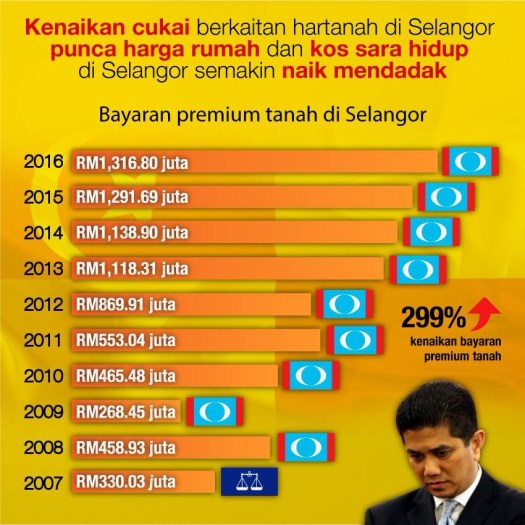
Pebangunan hartanah merupakan sumber hasil bagi kerajaan negeri dan pihak berkuasa tempatan melalui yuran tukar penggunaan tanah, pembahagian-pembahagian kecil dan lain-lain hal berkenaan dengan tanah.  Kesemua kos-kos ini telah meningkat sejak pengambil alihan pentadbiran oleh Pakatan.

2d7f4cc5-07fa-4819-9022-91f68461288b
Kenaikan bayaran premium tanah di Selangor sahaja adalah sebanyak 299 peratus sejak 2008

Penjualan tanah di bawah harga pasaran adalah salah satu cara untuk mengadakan rumah kos murah.  Namun, kebiasaan tersebut telah dihapuskan.  Malah, PKNS sendiri kini terpaksa membida untuk tanah pada harga pasaran?

Kita perlu meneliti prosedur-prosedur yang dikenakan terhadap para pemaju oleh pelbagai jabatan kerajaan negeri dan pihak-pihak berkuasa tempatan.

Birokrasi dan sikap berdolak-dalik merupakan sebab-sebab lazim yang melambatkan proses dan ini menambahkan lagi kos.  Perbelanjaan dan faedah pinjaman bank perlu dibayar walaupun projek belum dapat dimulakan.  Kita belum lagi berbincang mengenai  rasuah dan ini boleh memberi kesan besar terhadap kos kerana kadar yang diminta oleh ‘orang-orang tengah’ untuk ‘melicinkan proses’ boleh menjadi besar dan untuk setiap tandatangan yang diperlukan.

Tidak meghairankanlah jika sebahagian besar pemaju berpendapat bahawa pihak kerajaan negeri dan pihak berkuasa tempatan merupakan batu halangan terhadap rumah mampu milik kerana tanah merupakan hak dan kuasa kerajaan negeri dan bukan kerajaan persekutuan.  Maka, kerajaan persekutuan tiada hak untuk memperbetulkan keadaan ini.

Masalah di Pulau Pinang

Kalau gambarajah di atas menunjukkan bayaran premium tanah yang meningkat di Selangor, kita lihat gambarajah seterusnya yang menunjukkan lonjakan caj cukai hartanah di Selangor dan Pulau Pinang sejak 2008:

03a7f838-0a50-4723-8078-47328d86f2c2
Lonjakan caj cukai hartanah kepada penduduk tempatan sejak Pakatan mentadbir Selangor dan Pulau Pinang

Kerajaan negeri dan pihak berkuasa tempatan perlu serius dalam mengotakan janji mereka untuk mengadakan rumah-rumah kos rendah dan rumah mampu milik.  Di penghujung penggal kedua berkuasa di Pulau Pinang, DAP masih belum menyerahkan rumah mampu miliknya yang pertama, malah menyalahkan kerajaan persekutuan di atas kegagalannya sendiri.

Kampung-kampung tradisi, terutamanya penempatan tradisi orang-orang Melayu, dirobohkan untuk memberi laluan kepada para pemaju membangunkan kondominium mampu tengok dan lain-lain pembangunan komersil.  Kerajaan negeri Pulau Pinang juga bersikap tidak bertanggung jawab menjual tanah-tanah milik kerajaan negeri kepada para pemaju hinggakan hanya tinggal baki tujuh peratus sahaja tanah kerajaan negeri di Pulau Pinang.  Ini bermakna peuang untuk mendirikan rumah-rumah mampu milik di Pulau Pinang semakin halus.

Para pemaju kecil juga tidak berpeluang untuk mengambil bahagian dalam pembangunan di Pulau Pinang akibat caj-caj yang dikenakan terhadap para pemaju begitu tinggi.  Kita lihat gambarajah seterusnya:

69d859e3-71eb-4371-8052-c3049c2fc1cb
Kenapa kerajaan negeri Pulau Pinang begitu galak menaikkan kadar caj-caj? Siapa yang membuat untung sedangkan rakyat tidak lagi mampu memiliki sebarang hartanah di dalam negeri tersebut?

Dari gambarajah di atas kita dapat lihat kerakusan kerajaan negeri Pulau Pinang di bawah pentadbiran DAP hanya mementingkan keuntungan dan membelakangkan keperluan rakyat.

Di bawah kerajaan DAP, sumbangan perumahan kos rendah dikenakan sebanyak RM150,000 bagi setiap unit.  Di bawah BN tiada caj dikenakan.  Setiap gerai penjaja dikenakan RM58,000 – kenaikan sebanyak RM55,000 berbanding dengan semasa di bawah pentadbiran BN.  Untuk penyediaan kemudahan komuniti seperti padang, dewan serbaguna, masjid dan surau dan sebagainya, kerajaan DAP mengenakan caj sebanyak RM500 sekaki persegi berbanding RM25 sekaki persegi di bawah BN.  Untuk infrastruktur seperti jalan dan saliran, kerajaan DAP mengenakan RM15 sekaki persegi berbanding tiada caj di bawah BN untuk jalan, dan RM50,000 seekar untuk saliran berbanding RM10,000 di bawah BN.

Satu lagi bukti kerajaan DAP tidak menghiraukan keperluan rakyat ialah mengenakan caj sebanyak RM500 sekaki persegi untuk setiap tadika yang disediakan.  Tiada caj dikenakan oleh pentadbiran BN Pulau Pinang sebelum ini.

Berapa pula premium tanah yang dikenakan oleh kerajaan DAP Pulau Pinang?  Kita telah melihat lonjakan dahsyat di negeri Selangor sejak 2008, kita lihat pula keadaannya di Pulau Pinang:

b391f7f7-5a7d-470a-b9d1-ec8da7aa38aa
1,671 peratus kenaikan sejak 2008. Beginilah rakusnya DAP apabila berkuasa

Nampak gayanya premium tanah yang dikenakan oleh kerajaan DAP Pulau Pinang melonjak dengan begitu banyak sekali berbanding semasa di bawah pentadbiran BN pada tahun 2007.  Pengurangan hanya berlaku dua kali iaitu pada tahun 2008 semasa mula-mula memegang pentadbiran negeri.  Mungkin ketika ini mereka hendakkan maklumbalas positif mengenai cara DAP mentadbir negeri.  Kemudian kenaikan dikenakan sedikit demi sedikit dan melonjak besar selepas memegang tampuk pentadbiran kerajaan negeri selepas 2013, kemudian turun sedikit pada tahun 2016 selepas Lim Guan Eng dihadapkan ke mahkamah di atas satu perbuatan rasuah – salahguna kuasa dan jawatan untuk kepentingan dirinya.

Ringkasannya

Caj-caj dan bayaran premium yang dikenakan terhadap para pemaju di Pulau Pinang menyebabkan rumah mampu milik di Pulau Pinang yang berkeluasan 1,000 kaki persegi menjadi RM120,000 seunit berbanding RM42,000 seunit semasa di bawah pentadbiran BN.  Apabila dikenakan kadar faedah sebanyak 5 peratus setahun untuk tempoh pinjaman 30 tahun, bayaran faedah akan menjadi RM116,569.73 atau RM671.03 setiap bulan.  Kos keseluruhan akan menjadi RM236,569.73 setiap unit.  Adakah kadar bulanan ini mampu dibayar oleh mereka yang dari golongan berpendapatan rendah?

Keengganan kerajaan negeri Selangor di bawah PKR memberi kerjasama dengan agensi perumahan kerajaan pusat seperti PR1MA dan PPR mendatangkan masalah untuk kerajaan pusat membantu kerajaan negeri membina rumah-rumah kos rendah dan mampu milik.  Setakat ini hanya 11,000 unit rumah sahaja yang daat didirikan berbanding sasaran 70,000.

Ini berbeza sekali dengan kerajaan negeri Kelantan di bawah PAS yang menerima bantuan kerajaan pusat dengan tangan terbuka.  Setakat Ogos 2017, 418 unit PPR telah dibina di Machang manakala 1,000 unit telah dibina di Kota Bharu.  Ini menunjukkan walaupun berlainan fahaman politik, kerajaan PAS sanggup mengenepikan perjuangan demi kesejahteraan rakyat, tidak seperti Pakatan Harapan yang tidak langsung memberi harapan kepada para pengundi.

Pandai-pandailah anda menilaikan sendiri siapa yang mendahulukan kepentingan rakyat dan siapa yang mendahulukan kepentingan keuntungan.

Pakatan Can Promise Sarawak The World

The question is, can it even deliver those promises?

In a recent article posted on Tian Chua’s Malaysia-Chronicle, Pakatan made a promise to Sarawakians – a promise that they claim the Barisan Nasional can never match.

If you have problems accessing the website, don’t worry. It has been spread via WhatsApp as usual and the content is as follows:

———————————————-

A DEAL NAJIB CAN NEVER MATCH: SARAWAK TO KEEP 50% TAX REVENUE, 20% OIL & GAS ROYALTY, DECISION & EDUCATION RIGHTS TO BE RETURNED TO STATE GOVT – HARAPAN

Politics | January 20, 2018 by | 0 Comments

Pakatan Harapan’s Sarawak manifesto pledges that the state will retain 50 percent of all tax revenues collected in the state.

The state will also receive 20 percent from oil and gas royalties or its equivalent value from the federal government, according to the manifesto titled ‘New Deal for Sarawak Part Two’, which was released today.

“The government of Sarawak shall use these funds to shoulder the fiscal responsibility of the federal government in education and health,” the manifesto states.

Harapan also promised to set up a Petronas equivalent in the state, to be named Sarawak Petrogas, which would be wholly owned by the state government.

Sarawak Petrogas, which will be directly answerable to the Sarawak legislative assembly, will jointly manage oil and gas resources within the territorial borders and waters of Sarawak, together with Petronas, the manifesto says.

This is similar to Petroleum Sarawak, an oil and gas company started by the current Sarawak state government, which is meant to be an equal partner with Petronas for oil and gas activities in the state.

‘State can localise education syllabi’

With the decision rights returned to Sarawak in education and healthcare, the state can localise the education syllabi, review staffing and administrative policies, improve and upgrade the quality of all hospitals in the state and equip hospitals with cancer and heart centres, among others.

Harapan will also focus on speeding up the supply of clean water and electricity to all houses in Sarawak, both suburban and rural, as well as roads connecting rural native heartlands to stimulate economic growth in the interiors of Sarawak.

It will also ensure top priority is given to competent and eligible Sarawakians for employment and promotion in federal government departments and agencies in Sarawak.

World-class coaching facilities and a sports institute will be developed in Sarawak, the manifesto states, to equip and harness the potential of Sarawakian athletes.

Aside from its commitment to restore Sarawak to its original status within the context of the Malaysia Agreement 1963, Harapan said it would also form a Royal Commission to review various legislations that affect Sarawak’s rights to its natural resources.

These legislations include the Continental Shelf Act 1966, the Petroleum Development Act 1974 and the Territorial Sea Act 2012.

Harapan said Part Three of its New Deal for Sarawak would be released at a later date.

MKINI

—————————————-

Hallelujah!

But before you even start to dance with joy, let me remind you that this is another one of those ad nauseam promises made, which can never be fulfilled, and will later be blamed on the Federal Constitution and the Federal Government.

Pakatan Harapan Sarawak cannot deliver fully on this promise because it is merely a state entity and cannot arrogate to the state what are Federal rights. As usual, Pakatan Harapan will refer to its non-existent utopian Federal Constitution when making such promises.

Even if it is a Pakatan Harapan Federal Government promise, it cannot fully deliver without the consent of the 11 Peninsular Malaysia states and Sabah because the Malaysia Agreement 1963 is an agreement inter se.

Any increase in the rights of one state vis a vis its position with the Federal Government diminishes the position of the other states vis a vis that one state as well as with the Federal Government . It will need the agreement of the other states in the Federation.

Therefore, Pakatan Harapan should stop making false promises and giving the people false hopes just because they (Pakatan Harapan) have false intelligence.